
Required Materials
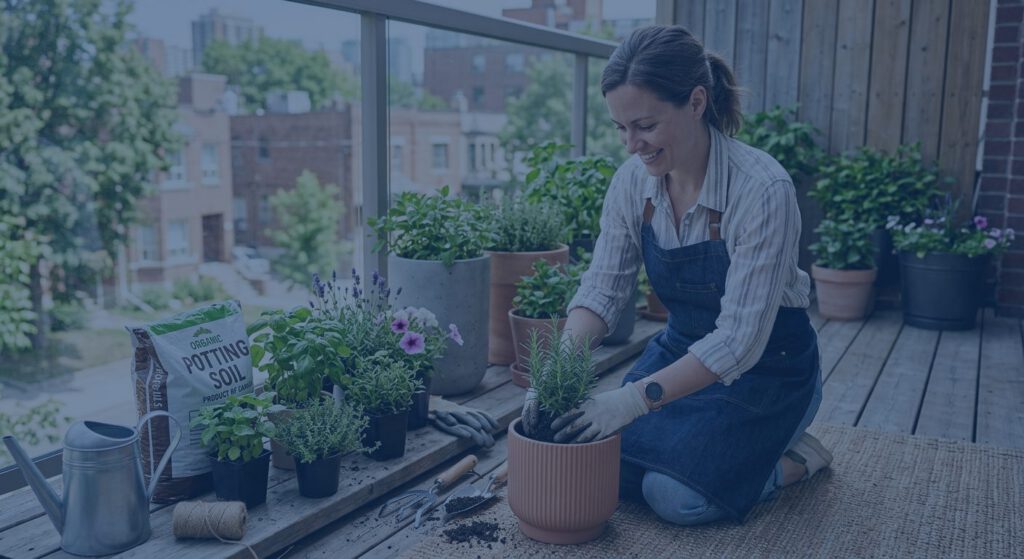
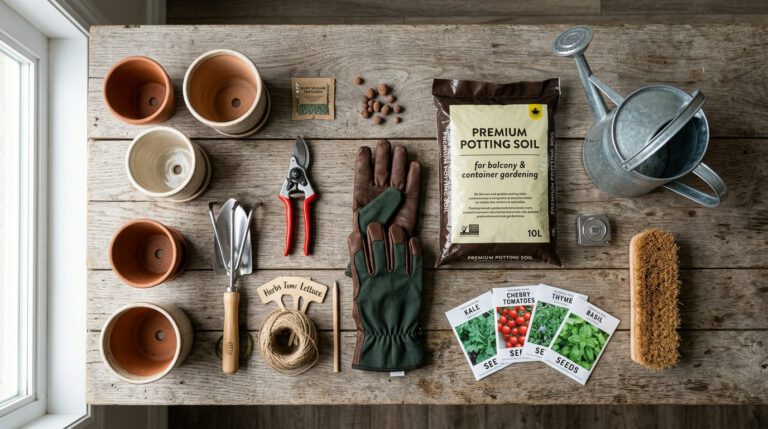
- 🪴 Large containers with drainage holes (minimum 30cm deep)
- 💧 Watering can with long spout or drip irrigation system
- 🌱 Quality potting mix suitable for containers
- 🌿 Cold-hardy plants adapted to your USDA zone
- ☀️ Plant support stakes and ties
- 🧤 Gardening gloves and basic tools
Setting Up Your Balcony Garden in Canada
Step 1: Assess Your Space and Climate
Begin your balcony garden in Canada by evaluating your specific conditions. Determine your USDA hardiness zone, which ranges from zone 2b in northern territories to zone 9a in coastal British Columbia. Check your balcony’s sun exposure throughout the day, noting morning versus afternoon light patterns. Measure wind exposure, as Canadian balconies often face strong prevailing winds. Consider weight restrictions for your building, especially in Quebec and Ontario condominiums where regulations may limit container gardens to specific weight loads per square metre.
Step 2: Choose Appropriate Containers and Drainage
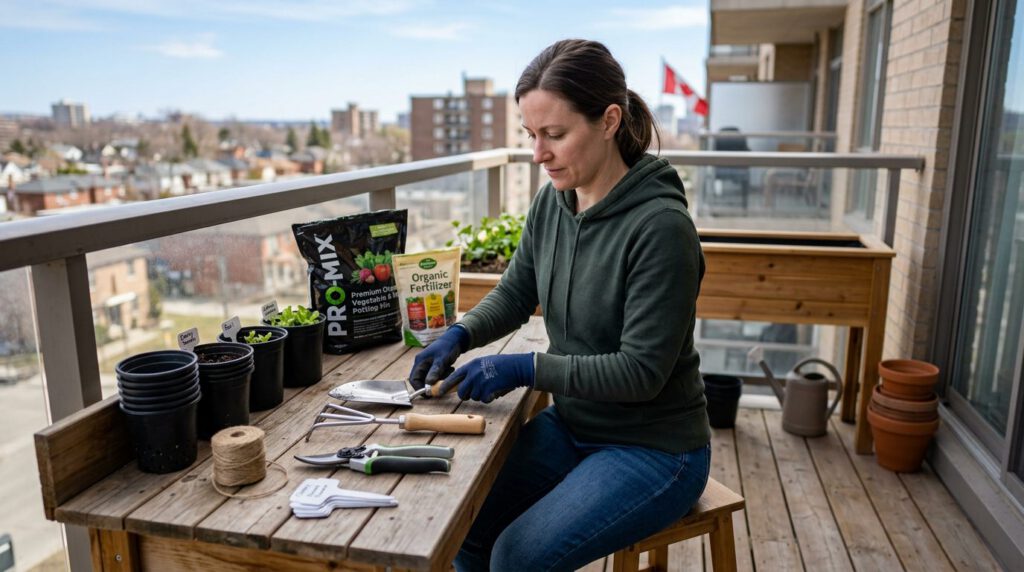
Select containers at least 30cm deep with multiple drainage holes to prevent waterlogging during Canada’s variable spring weather. Plastic and fibreglass containers work best for Canadian balconies as they resist freeze-thaw cycles better than terracotta. Install saucers under containers to protect balcony surfaces, but empty them regularly to prevent root rot. For Alberta’s chinook winds or Saskatchewan’s prairie gusts, choose heavier containers or anchor lightweight ones securely. Consider self-watering containers for busy schedules, particularly useful during hot Ontario summers.
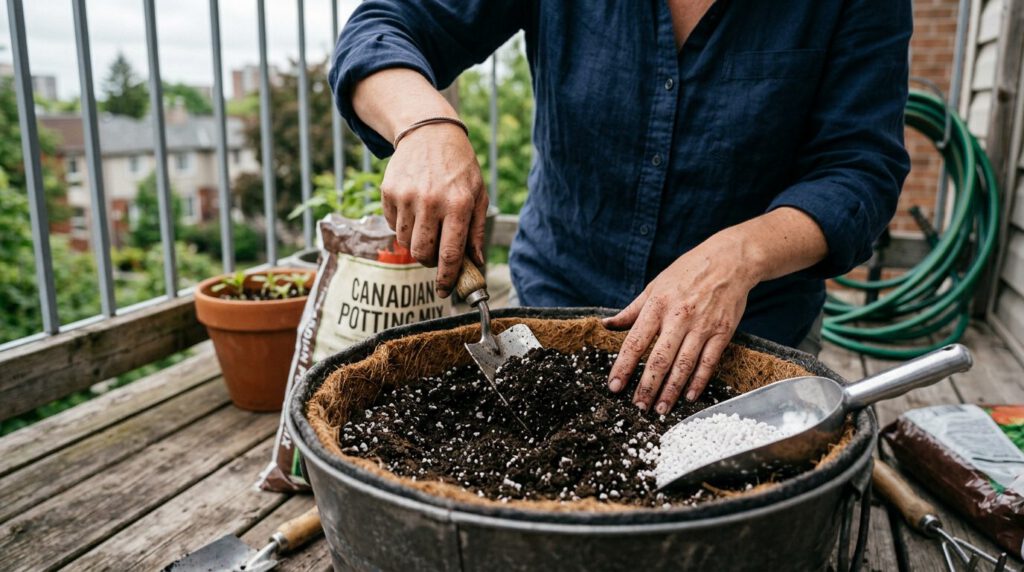
Step 3: Select Cold-Hardy Plants for Your Zone
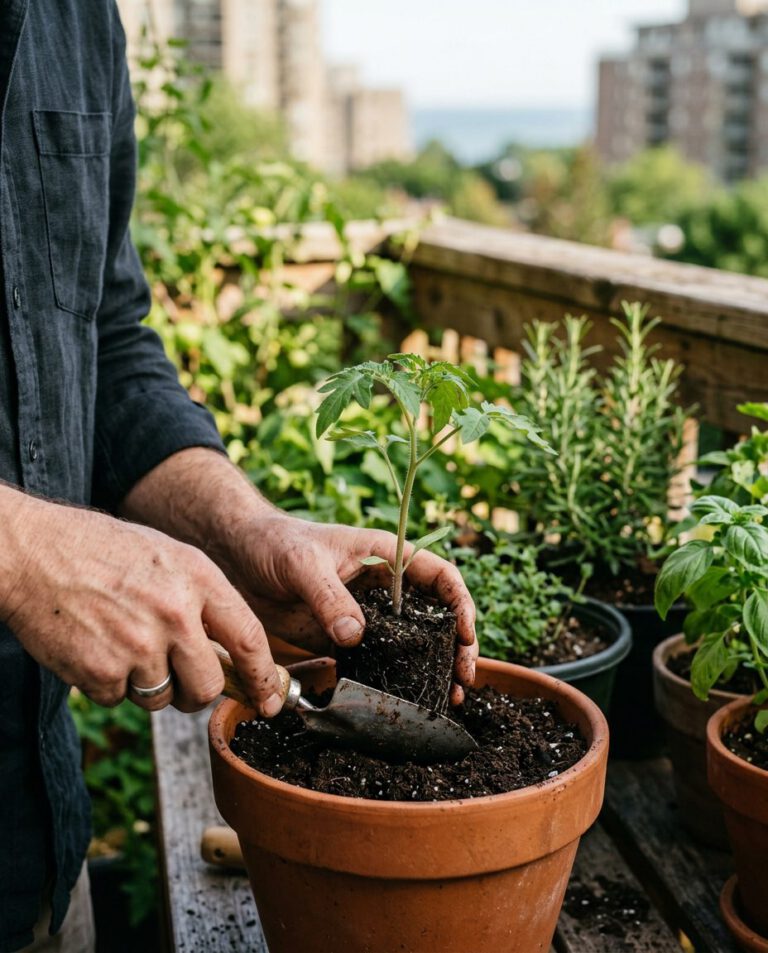
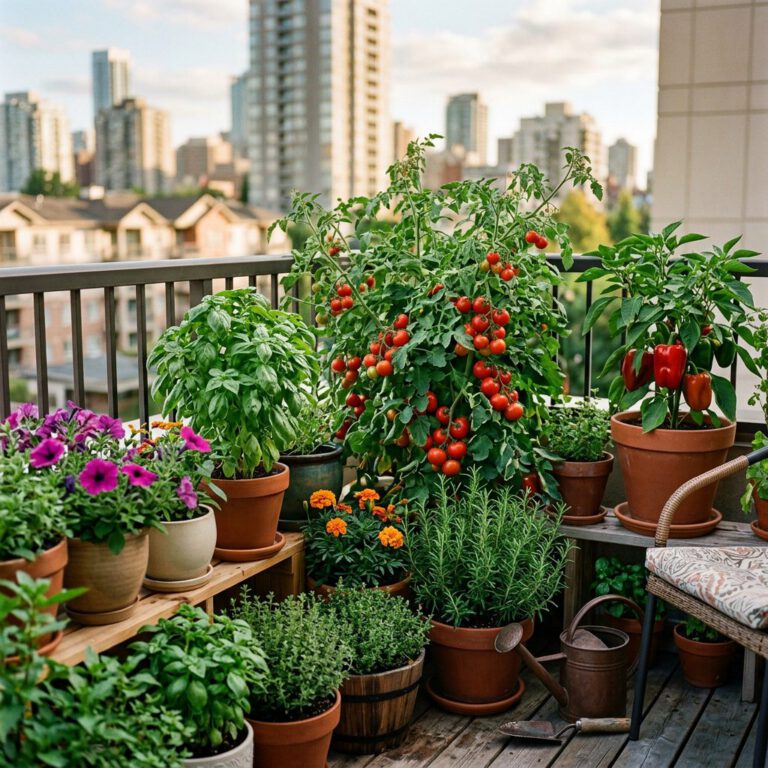
Choose plants suited to your specific Canadian zone for balcony garden success. In zone 4 areas like Winnipeg, focus on cold-hardy vegetables like kale, Swiss chard, and radishes that tolerate late spring frosts. For zone 6 regions including southern Ontario, add tomatoes, peppers, and herbs like basil after the last frost date in mid-May. Maritime provinces in zones 5-6 benefit from wind-resistant varieties and salt-tolerant plants. Always select compact or dwarf varieties suited for container growing, and consider succession planting throughout Canada’s shorter growing season.
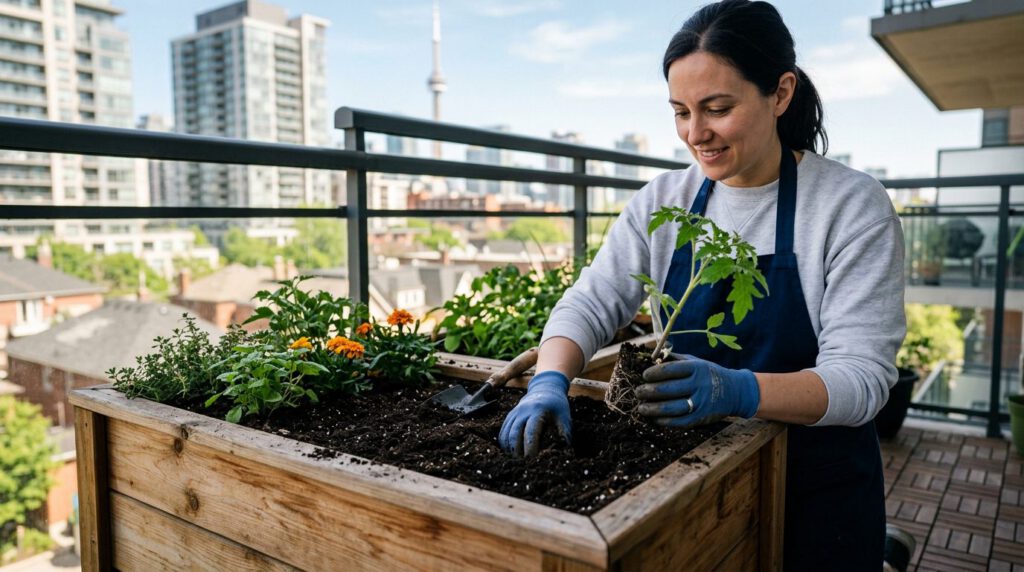
Step 4: Install Proper Support and Protection Systems
Install plant supports before your balcony garden reaches full growth to avoid root disturbance later. Use bamboo stakes or tomato cages for climbing varieties, securing them against Canadian wind conditions with additional ties. Create windbreaks using clear acrylic panels or garden fabric, particularly important for exposed balconies in prairie provinces. Install shade cloth for south-facing balconies during intense summer heat, especially in interior British Columbia. Consider rolling covers or cold frames for extending the season into Canada’s early fall, allowing harvest continuation through September and October frosts.
Common Mistakes to Avoid
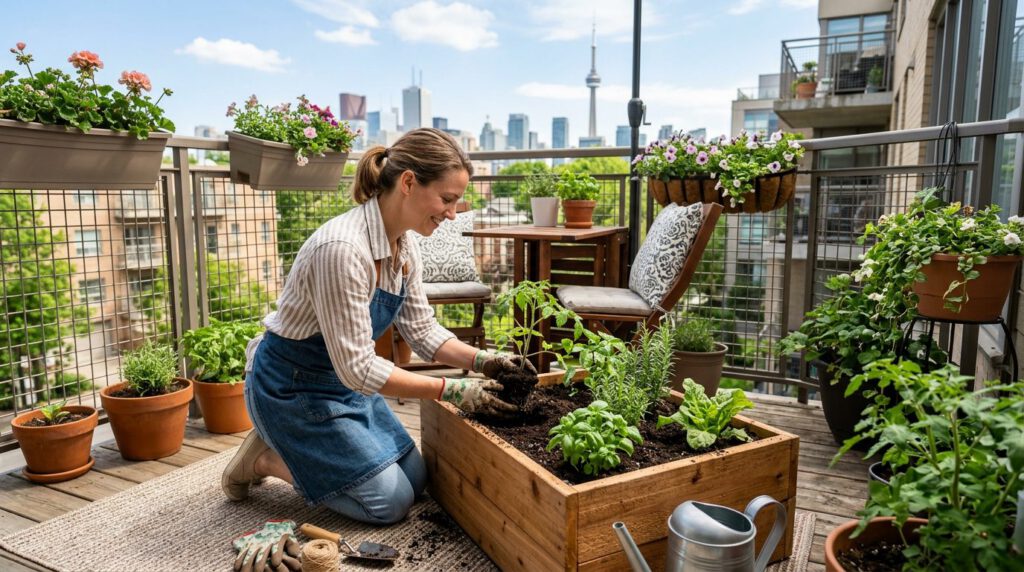
- Overcrowding containers: Allow proper spacing between plants as specified on seed packets, typically 15-30cm apart for most vegetables to ensure adequate air circulation.
- Ignoring wind exposure: Secure all containers and install windbreaks, as Canadian balconies experience stronger winds than ground-level gardens, especially in high-rise buildings.
- Poor drainage setup: Always use containers with drainage holes and avoid letting water accumulate in saucers, which leads to root rot during Canada’s wet spring periods.
- Wrong plant timing: Wait until after your area’s last frost date before planting tender vegetables, which varies from late May in northern regions to early April in southern British Columbia.
- Inadequate winter preparation: Move containers indoors or provide insulation before first frost, as container plants are more vulnerable to freeze damage than in-ground gardens.
Regional Tips for Canada
Quebec gardeners should start cool-season crops like lettuce and peas in early May, while waiting until late May for warm-season plants due to zone 4-5 conditions. Ontario balcony gardens benefit from succession planting every two weeks through summer to extend harvest, particularly effective for leafy greens. British Columbia coastal gardeners can grow year-round in protected containers, taking advantage of mild zone 8-9 winters by continuing cool-season vegetables through December. Prairie provinces including Alberta and Saskatchewan require wind protection and cold-hardy varieties, with container gardens performing better than expected due to urban heat island effects in cities like Calgary and Regina. Maritime provinces should choose salt-tolerant plants and provide extra drainage during heavy spring rains, while northern territories and northern Quebec focus on short-season varieties that mature quickly in their brief but intense growing period.