
Required Materials
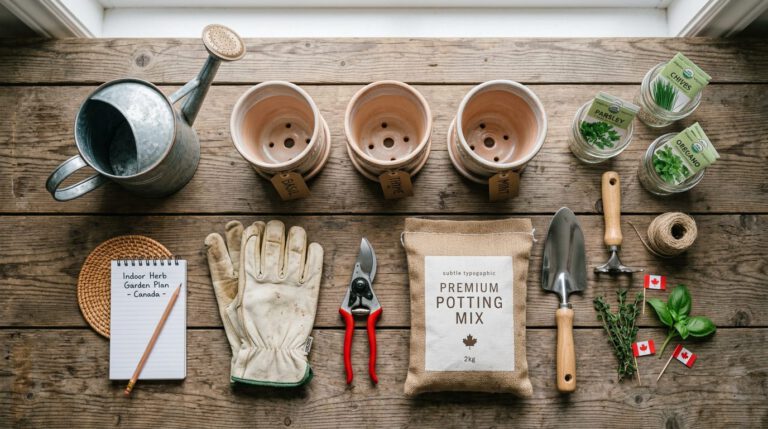
- 🪴 Large containers with drainage holes (available at Canadian Tire or Home Depot)
- 🌱 High-quality potting mix designed for herbs
- 💧 Watering can with narrow spout for precise watering
- 🌿 Herb seeds or seedlings (basil, parsley, thyme, chives)
- ☀️ LED grow light for winter months
Setting Up Your Indoor Herb Garden in Canada
Step 1: Choose Your Location and Containers
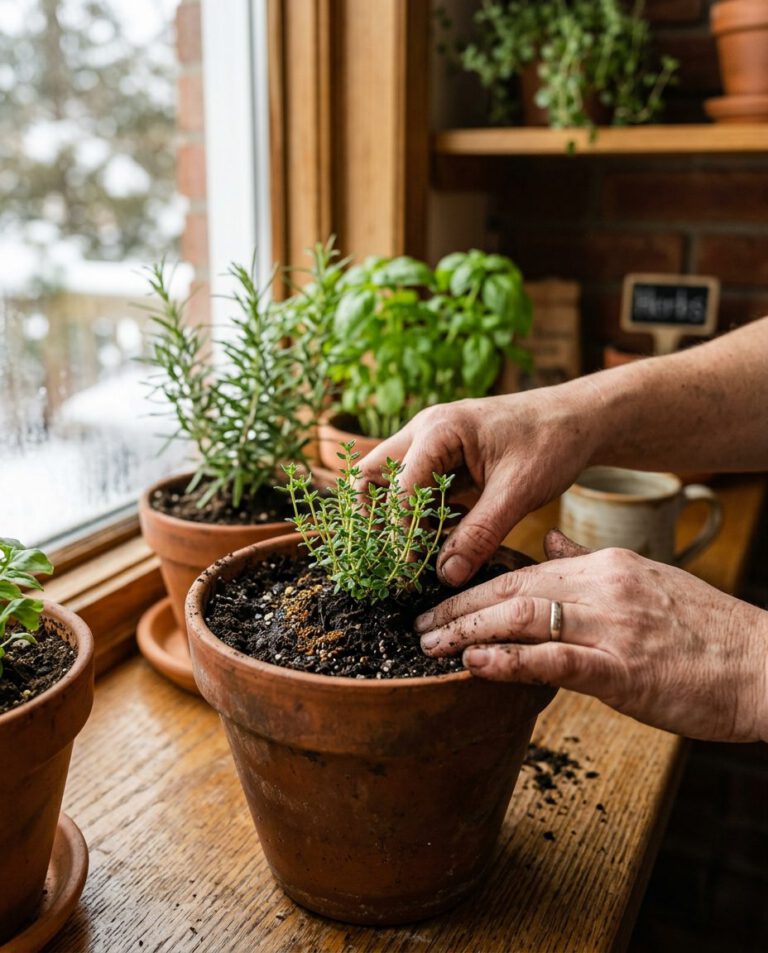
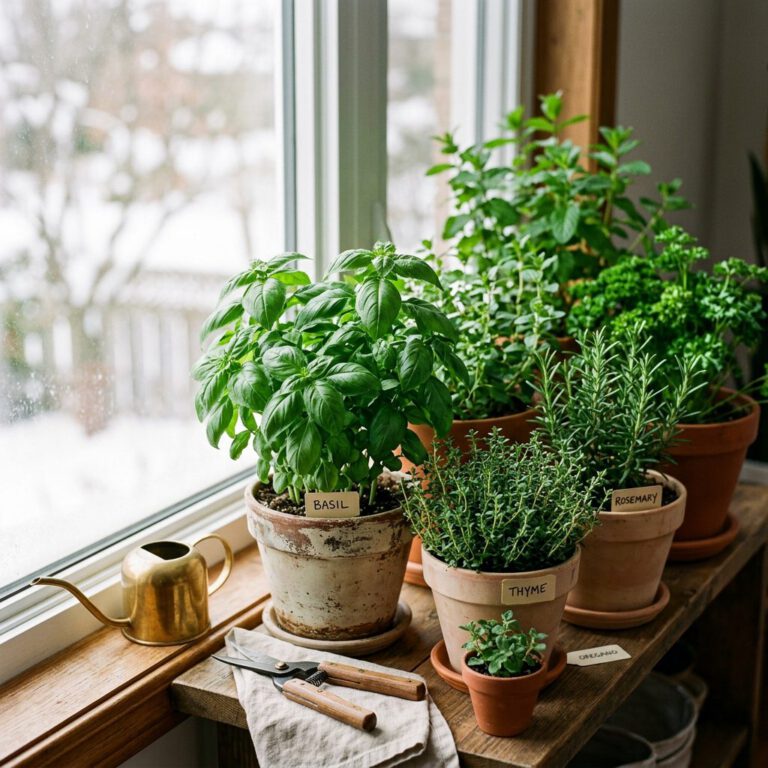
Select a south-facing window that receives at least 4-6 hours of direct sunlight daily. In provinces like Manitoba (zone 3) or northern Ontario (zone 4), winter light may be insufficient, requiring supplemental LED grow lights. Choose containers at least 15cm deep with proper drainage holes. Terra cotta pots work well as they allow soil to breathe, preventing the root rot common in Canadian homes with dry winter air from heating systems.
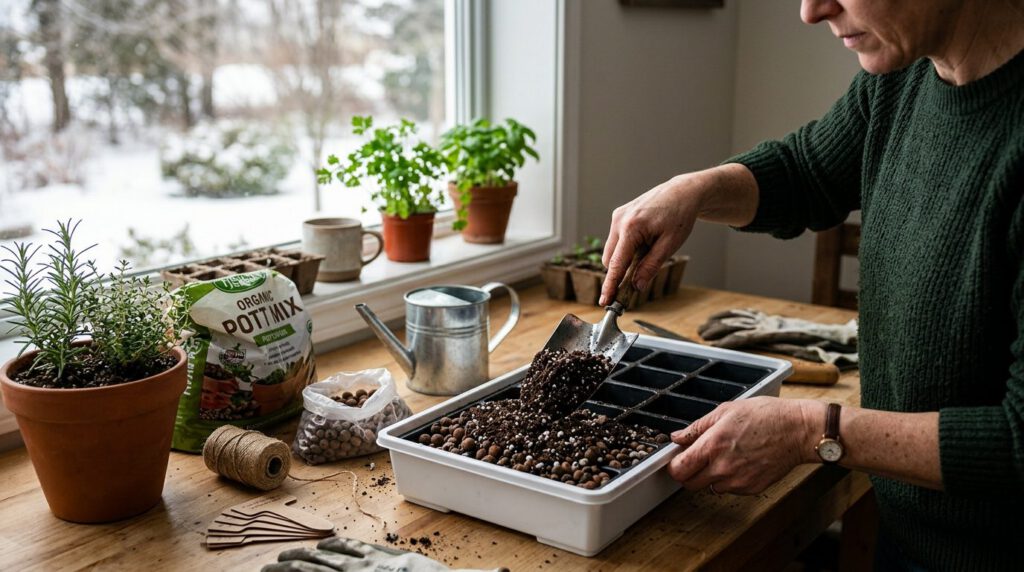
Step 2: Prepare Quality Growing Medium
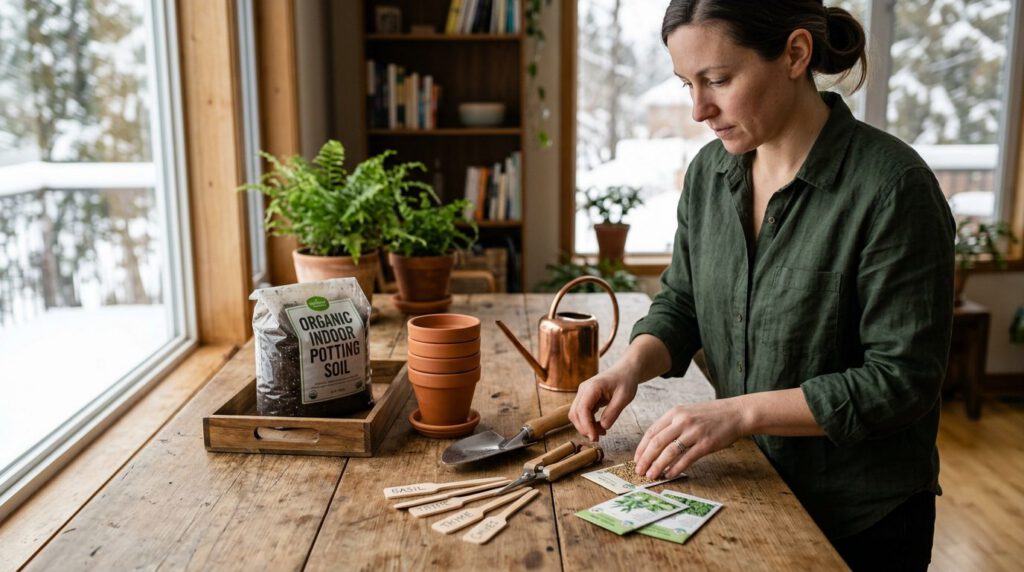
Fill containers with premium potting mix, avoiding garden soil which becomes compacted indoors. Canadian gardeners should look for mixes containing perlite and vermiculite for proper drainage. In Alberta’s dry climate (zones 3-4), add extra peat moss to retain moisture. Leave 2cm of space at the top of each container. The growing medium should feel light and crumbly, allowing roots to establish quickly in the controlled indoor environment.
Step 3: Plant Seeds or Transplant Seedlings
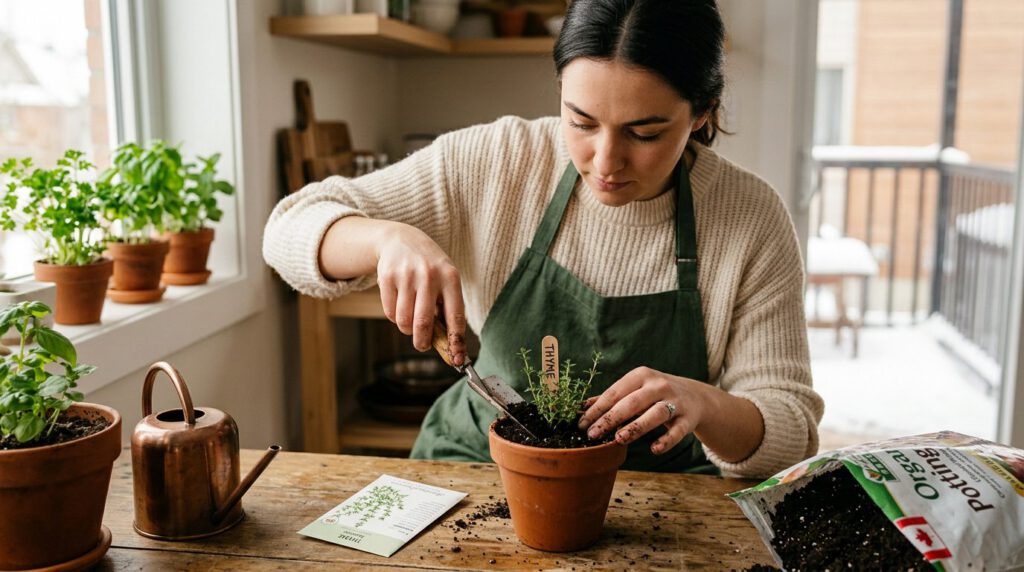
For year-round production in Canada, start with proven varieties like Genovese basil, flat-leaf parsley, and English thyme. Plant seeds 1cm deep and space according to package directions. In Quebec (zone 4-5), starting from seedlings in March gives better results than direct seeding. Water gently after planting, ensuring soil is moist but not waterlogged. Label each container clearly, as young herb seedlings can look similar during their first weeks of growth.
Step 4: Establish Lighting and Care Routine
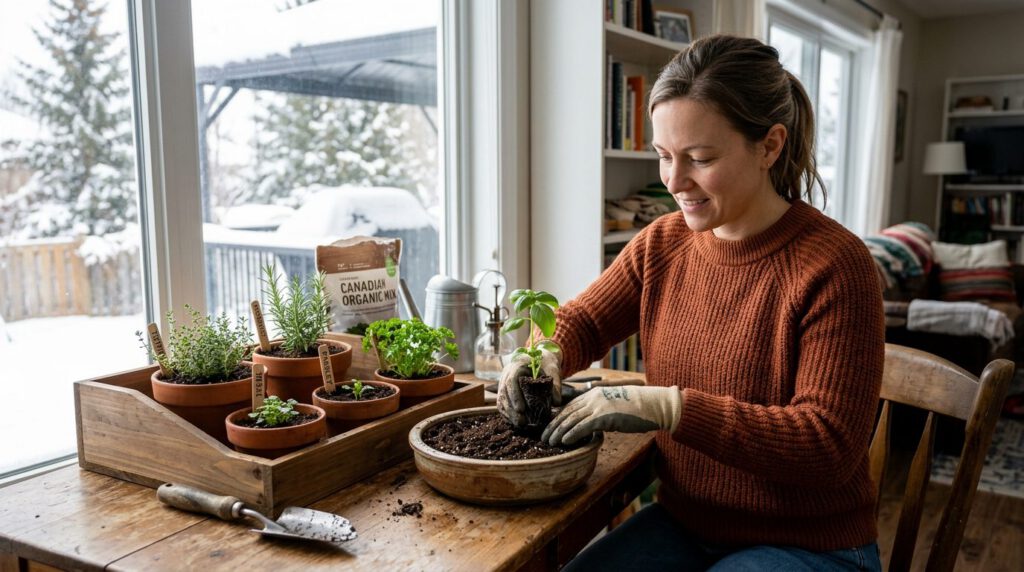
Position LED grow lights 15-30cm above plants, running them 12-14 hours daily during Canadian winters. In British Columbia’s coastal regions (zone 8-9), natural light may suffice from March to October, but interior areas need artificial lighting year-round. Water when the top 2cm of soil feels dry, typically every 3-4 days. Rotate containers weekly for even growth, and begin harvesting outer leaves when plants reach 10cm tall to encourage continuous production.
Common Mistakes to Avoid
- Overwatering: Wait until the top centimetre of substrate is dry before watering, as Canadian indoor air can be deceptively dry while soil remains moist.
- Insufficient Light: Provide 12-14 hours of LED grow light daily during winter months, especially in northern provinces like Saskatchewan and Manitoba.
- Overcrowding Plants: Space herbs according to package directions to prevent fungal issues common in heated Canadian homes with poor air circulation.
- Using Garden Soil: Always use quality potting mix designed for containers, as garden soil becomes compacted and poorly draining indoors.
- Harvesting Too Early: Wait until plants reach 10cm height before first harvest to ensure strong root systems that support continued growth.
Regional Tips for Canada
In Ontario (zones 5-7), start your indoor herb garden in late February to have established plants before the outdoor growing season. The province’s variable winter temperatures require consistent indoor conditions, so keep herbs away from heating vents and cold windows. Quebec gardeners (zones 3-5) benefit from choosing cold-hardy varieties like thyme and oregano, which tolerate the temperature fluctuations common in older homes during harsh winters. Position grow lights on timers to compensate for short daylight hours from December through February. In British Columbia (zones 6-9), coastal gardeners can often rely on natural light through winter, but interior regions still need supplemental lighting. The province’s mild climate allows for year-round harvesting, making herbs like rosemary and sage excellent long-term investments. Alberta gardeners (zones 2-4) should focus on maintaining consistent moisture levels, as prairie winters create extremely dry indoor conditions that stress herb plants. Consider using humidity trays filled with pebbles and water to create better growing conditions.