


Introduction
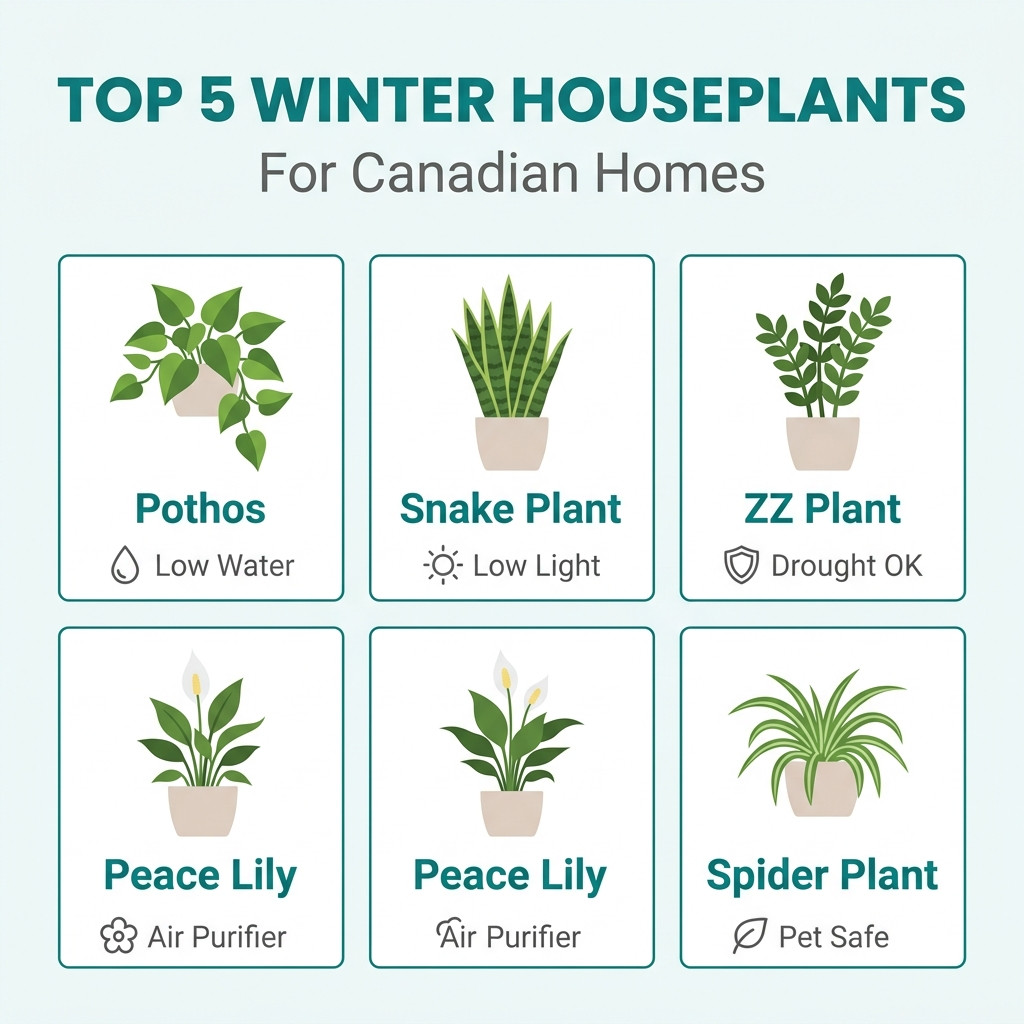
| Plant | Light Needed | Watering | Pet Safe | Winter Hardy |
|---|---|---|---|---|
| Pothos | Low–Medium | Every 2 weeks | ❌ | ⭐⭐⭐ |
| Snake Plant | Very Low | Monthly | ❌ | ⭐⭐⭐ |
| ZZ Plant | Low | Every 3 weeks | ❌ | ⭐⭐⭐ |
| Peace Lily | Low | Weekly | ❌ | ⭐⭐ |
| Spider Plant | Medium | Every 10 days | ✅ | ⭐⭐⭐ |
When winter settles across Canada, our homes become sanctuaries from the cold. Yet for plant lovers, this season presents unique challenges. The combination of shortened daylight hours, bone-dry indoor air from heating systems, and frigid temperatures near windows can stress even the hardiest houseplants.
But here’s the good news: you don’t need to give up on indoor gardening during winter. With the right plant choices and a few simple adjustments, you can maintain a thriving indoor garden from November through March. Whether you’re in a Vancouver condo, a Toronto apartment, or a Halifax townhouse, these low-maintenance champions will brighten your space all winter long.
Why Canadian Winters Are Hard on Houseplants
Understanding why our winters challenge houseplants helps us choose better varieties and provide appropriate care. The primary culprits are familiar to anyone who’s experienced a Canadian winter indoors.
First, there’s the dramatic reduction in daylight. In December, cities like Edmonton receive barely seven hours of daylight, while even southern Ontario sees just nine. Most houseplants evolved in tropical regions with consistent 12-hour days year-round. This sudden light shortage can trigger dormancy, leaf drop, or stunted growth.
Indoor humidity plummets when furnaces and baseboard heaters run constantly. While outdoor winter air holds little moisture, heated indoor air becomes even drier. Many homes drop to 20% humidity or less, while most houseplants prefer 40% to 60%. This desert-like environment causes brown leaf tips, wilting, and increased susceptibility to spider mites.
Temperature fluctuations near windows create additional stress. A sunny windowsill might reach 25°C during the day, then drop to near freezing at night when curtains trap cold air against the glass. These dramatic swings can shock tropical plants accustomed to stable temperatures.
Finally, our instinct to overcompensate with extra water often backfires. Plants grow slower in winter’s low light, requiring less water. Well-meaning plant parents who maintain summer watering schedules often cause root rot, the number one killer of winter houseplants.
Top 5 Low-Maintenance Houseplants for Winter
These five plants laugh in the face of Canadian winter conditions. Each one tolerates low light, dry air, and occasional neglect, making them perfect for beginners or busy plant parents.
1. Snake Plant (Sansevieria trifasciata)
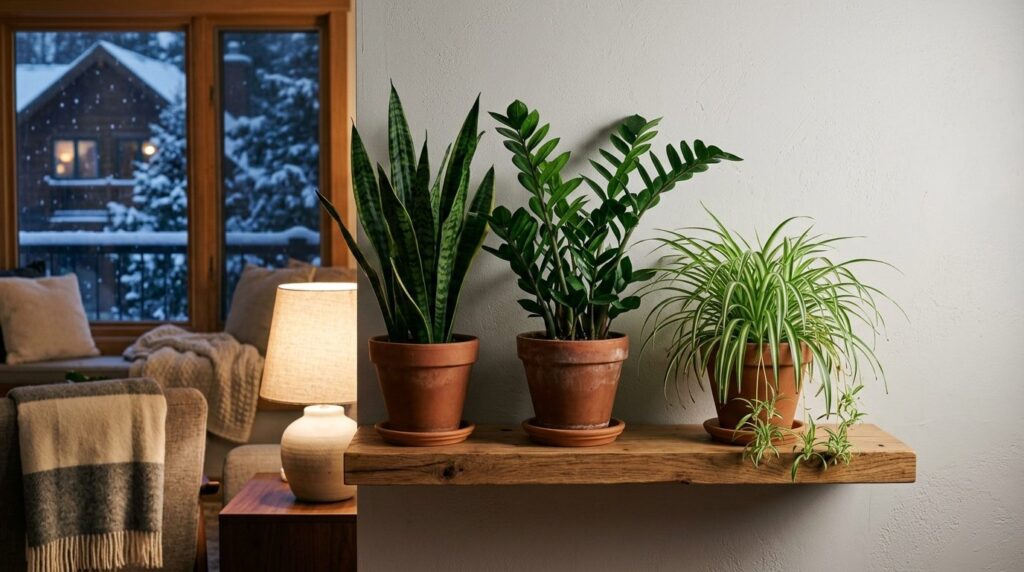
The snake plant might be the ultimate winter survivor. Its thick, upright leaves store water like a succulent, allowing it to go weeks without watering. This African native tolerates humidity as low as 20% without complaint and actually prefers the indirect light of winter.
Place your snake plant anywhere from a north-facing window to a dim corner. Water only when the soil feels completely dry, which might mean once monthly in winter. The biggest risk is overwatering: err on the side of neglect. Snake plants also help purify indoor air, a bonus during sealed-up winter months.
2. ZZ Plant (Zamioculcas zamiifolia)
The ZZ plant’s glossy, dark green leaves bring elegance to any room while demanding almost nothing in return. Its potato-like rhizomes store water underground, providing drought insurance that makes this plant nearly indestructible.
ZZ plants thrive in low to moderate light and tolerate the dry air of heated homes. Water sparingly, perhaps every three to four weeks in winter. They grow slowly even in ideal conditions, so don’t worry if yours seems frozen in time from December to March. Consider this dormancy period perfectly normal.
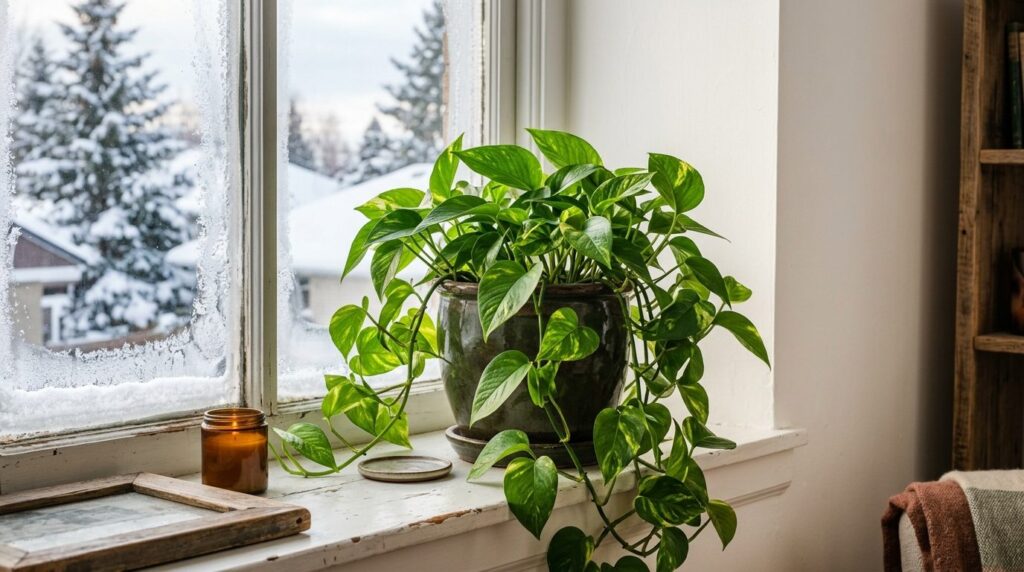
3. Pothos (Epipremnum aureum)
Pothos earns its reputation as an unkillable houseplant through sheer adaptability. While it grows faster in bright light, it tolerates dim conditions that would defeat other trailing plants. Its heart-shaped leaves come in various patterns, from solid green to marble queen variegation.
In winter, pothos appreciates slightly moist soil but forgives if you forget to water. Yellow leaves usually indicate overwatering rather than thirst. This vigorous grower also propagates easily in water, letting you create new plants from cuttings even during the darkest months.
4. Chinese Evergreen (Aglaonema)
Chinese evergreens offer striking foliage patterns in silver, pink, and red, brightening winter interiors without flowers. Native to Asian rainforest floors, they evolved to thrive in low light conditions that mirror Canadian winter indoors.
These plants prefer consistent moisture but won’t immediately wilt if you miss a watering. They tolerate dry air better than many tropical plants, though they appreciate occasional misting. Keep them away from cold drafts and heating vents for best results. Their slow growth rate means minimal maintenance through winter.
5. Cast Iron Plant (Aspidistra elatior)
True to its name, the cast iron plant survives conditions that would doom lesser species. Victorian homes nicknamed it the ‘parlour palm’ for its ability to thrive in dim, coal-heated rooms. Modern Canadian homes provide luxury by comparison.
This plant tolerates deep shade, dry air, and temperature fluctuations with remarkable grace. Water sparingly in winter, allowing soil to dry between waterings. Dust the broad leaves occasionally to maximize light absorption. While slow-growing, cast iron plants can live for decades with minimal care.
Care Tips for the Cold Months
Success with winter houseplants depends more on what you don’t do than what you do. These strategies help any plant survive until spring returns.
Adjust Your Watering Schedule
The cardinal rule of winter plant care: water less frequently. Most houseplants enter semi-dormancy during short winter days, dramatically reducing their water needs. Before watering, stick your finger into the soil. If the top two inches feel dry, water thoroughly until excess drains from the bottom. Then wait longer than you think necessary before watering again.
Use room-temperature water to avoid shocking roots. Cold tap water straight from Canadian pipes can damage tropical plants. Fill your watering can the night before and let it warm to room temperature.
Maximize Available Light
While you can’t create more daylight hours, you can optimize what’s available. Clean windows inside and out to remove film that blocks precious light. Dust plant leaves monthly, as clean leaves photosynthesize more efficiently.
Rotate plants weekly to ensure even light exposure. Move light-loving plants closer to windows, but watch for cold damage. A hand placed against the window at night reveals whether it’s too cold for tropical plants.
Combat Dry Air Creatively
Grouping plants creates a microclimate with higher humidity. As plants transpire, they humidify the air around their neighbours. Place plants on trays filled with pebbles and water, ensuring pots sit above the water line to prevent root rot.
Avoid misting directly, which provides only temporary relief and can encourage fungal problems. Instead, run a humidifier nearby or place plants in naturally humid rooms like bathrooms with windows.
Avoid Fertilizing
Resist the urge to fertilize during winter months. Dormant plants can’t process nutrients effectively, and unused fertilizer accumulates in soil, potentially burning roots. Resume feeding in March when increasing daylight triggers new growth.
Monitor for Pests
Dry winter air creates ideal conditions for spider mites, while overwatering invites fungus gnats. Check plants weekly for signs of infestation. Quarantine new plants for two weeks before introducing them to your collection, as pest problems spread quickly in the close quarters of winter.
Canadian-Specific Advice by Region
Canada’s diverse climate zones require tailored approaches to winter plant care. Understanding your regional challenges helps you anticipate and prevent problems.
Pacific Coast (British Columbia)
Coastal BC enjoys Canada’s mildest winters, but persistent cloud cover creates extreme low-light conditions. Vancouver receives just 57 hours of sunshine in December, compared to 88 in Toronto. Choose the most shade-tolerant plants like ZZ plants and snake plants. Take advantage of naturally higher humidity, but watch for fungal issues in poorly ventilated spaces.
Prairie Provinces
Alberta, Saskatchewan, and Manitoba face extreme cold and the country’s driest indoor air. Furnaces run constantly, dropping indoor humidity below 20%. Invest in a good humidifier and keep plants well away from windows during cold snaps that can reach -40°C. The silver lining: prairie winters often bring bright, sunny days between storms.
Central Canada (Ontario and Quebec)
The most populated regions deal with grey winters and moderate cold. Toronto and Montreal homes typically maintain 25-30% humidity, challenging but manageable for tough plants. Take advantage of bright days by moving plants closer to south-facing windows, but monitor for temperature shock during polar vortex events.
Atlantic Provinces
Maritime winters bring unique challenges: fluctuating temperatures, high winds that rattle windows, and homes that may be drafty. Choose the most cold-tolerant positions away from windows and doors. Coastal humidity helps, but nor’easters can create sudden temperature drops that shock plants near exterior walls.
Northern Territories
Extreme conditions require extreme measures. With just four hours of December daylight in Yellowknife, even low-light plants benefit from supplemental grow lights. The extremely dry air demands creative humidity solutions. Focus on the absolute toughest plants: snake plants, ZZ plants, and cast iron plants.
Conclusion
Winter doesn’t have to mean saying goodbye to indoor greenery. By choosing resilient plants and adjusting care routines for Canadian conditions, you can maintain a thriving indoor garden through the darkest months. Start with one or two low-maintenance varieties and build confidence before expanding your collection.
Remember that even ‘unkillable’ plants have limits. The key to winter success lies in understanding and working with your plants’ reduced needs rather than fighting against them. Less water, no fertilizer, and patience will carry your green companions through until spring’s return.
Most importantly, don’t let fear of winter challenges discourage you from indoor gardening. These tough plants evolved to survive adversity. With your support and the right choices, they’ll not only survive but continue bringing life and beauty to your home all winter long. When April finally arrives and you’re surrounded by healthy, happy plants, you’ll appreciate the resilient partnership you’ve built together.