


About Peace Lily
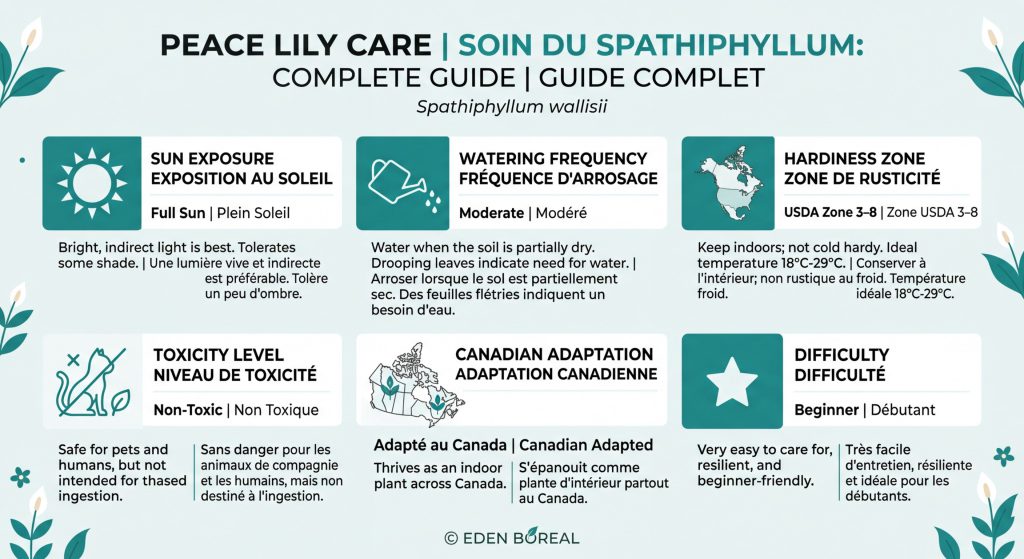
The peace lily (Spathiphyllum wallisii) stands as one of Canada’s most beloved houseplants, perfectly suited to our indoor environments from British Columbia’s mild coastal regions (USDA zone 9) to Ontario’s colder climates (zones 5-6). Native to the tropical rainforests of Central and South America, this elegant plant has adapted remarkably well to Canadian homes, where it thrives year-round as an indoor specimen. The peace lily produces distinctive white spathes that resemble calla lilies, creating a sophisticated focal point in any room. Its glossy, dark green foliage provides continuous visual interest even when not flowering, making it an excellent choice for Canadian gardeners seeking reliable indoor greenery during our long winter months.
Why Choose Peace Lily for Your Indoor Space?
Canadian homeowners consistently choose the peace lily for its exceptional air-purifying qualities and tolerance of lower light conditions common in our homes during winter. This plant excels in the dry indoor air typical of heated Canadian homes from October through April, particularly in provinces like Alberta and Saskatchewan where heating systems run continuously. Unlike many flowering houseplants that struggle with Canada’s variable daylight hours, the peace lily maintains its lush appearance regardless of seasonal light changes.
Air Purification Benefits
NASA studies confirm that peace lily removes harmful toxins including formaldehyde, benzene, and trichloroethylene from indoor air. This makes it particularly valuable in well-insulated Canadian homes where air circulation may be limited during winter months. The plant’s large leaves actively filter air pollutants while adding humidity to dry indoor environments, addressing two common concerns for Canadian homeowners during heating season.
How to Grow Peace Lily in Canada
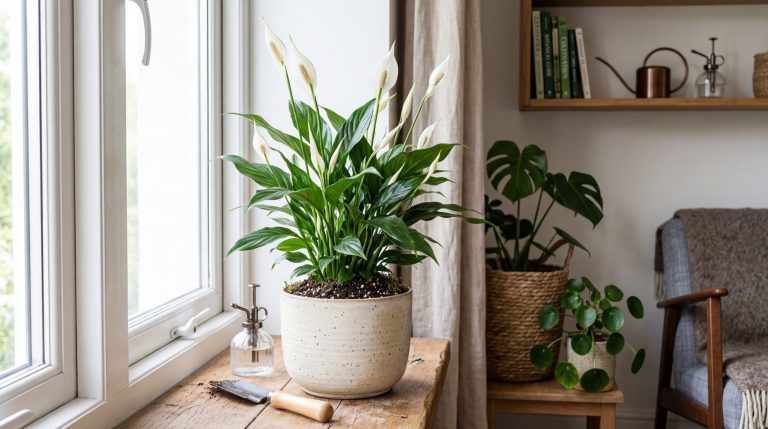
Light Requirements for Peace Lily
Your peace lily thrives in bright, indirect light typical of east or north-facing windows in Canadian homes. Avoid south-facing windows, especially in provinces like Alberta where intense winter sun reflecting off snow can scorch leaves. During Canada’s shorter winter days, position your plant within 3-6 feet of a window to ensure adequate light. If your home receives limited natural light, particularly in northern regions like Yukon (zone 1-2), consider supplementing with LED grow lights for 12-14 hours daily.
Watering Peace Lily Through Canadian Seasons
Water your peace lily when the top inch of soil feels dry, typically every 7-10 days during summer and every 10-14 days during winter heating season. Canadian tap water works well, but let it sit overnight to reach room temperature and allow chlorine to dissipate. During winter months when indoor humidity drops below 40%, increase watering frequency slightly and consider using a humidity tray filled with pebbles and water.
Soil and Repotting
Use a well-draining potting mix containing peat moss, vermiculite, and perlite, readily available at Canadian garden centers like Home Depot or Canadian Tire. Repot every 18-24 months or when roots emerge from drainage holes. Spring repotting works best in Canada, timing with increased daylight hours in March or April. Choose a pot only 1-2 inches larger than the current container to prevent waterlogging.
Temperature and Winter Care in Canada
Maintain temperatures between 18-24°C (65-75°F) year-round, avoiding cold drafts from windows or doors common in Canadian homes. During winter, keep your peace lily away from heating vents and exterior walls where temperature fluctuations occur. In provinces experiencing extreme cold like Manitoba (zone 2-3), ensure plants are positioned well inside the home’s thermal envelope, at least 3 feet from exterior walls.
Common Problems and Solutions
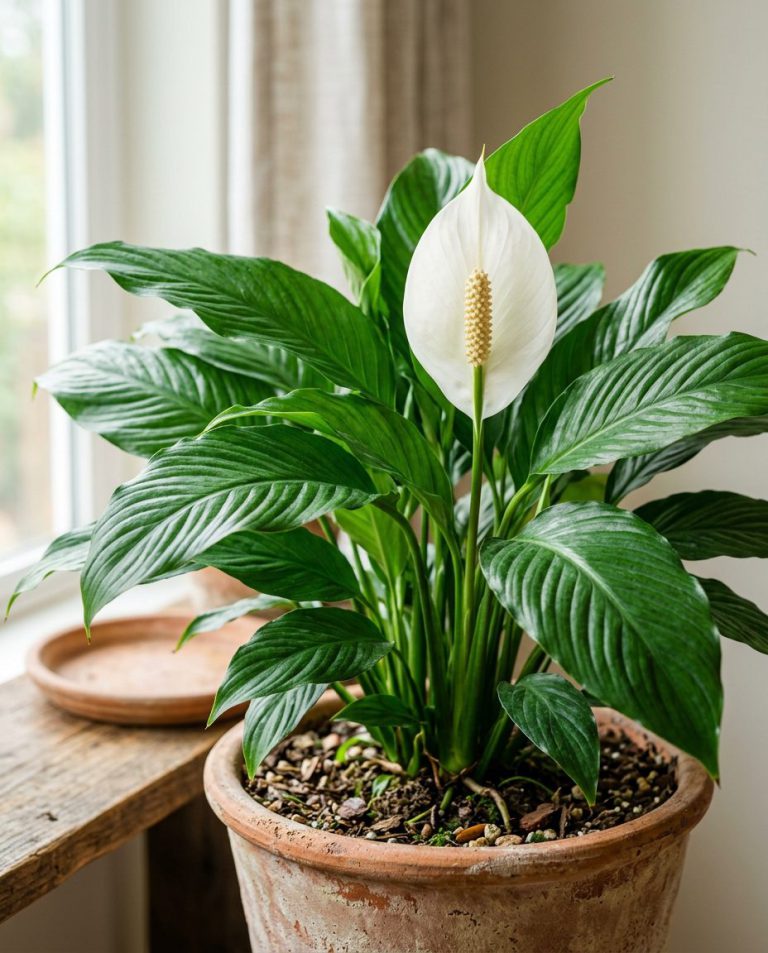
If you notice brown leaf tips, your peace lily is likely experiencing low humidity common in Canadian homes during heating season: increase humidity with a pebble tray or room humidifier. Yellowing leaves typically indicate overwatering: reduce watering frequency and ensure proper drainage. Drooping leaves signal underwatering: check soil moisture and establish a consistent watering schedule. Black or mushy stems indicate root rot from overwatering in cold conditions: remove affected portions, improve drainage, and reduce watering frequency. Lack of flowers often results from insufficient light: move closer to a bright window or supplement with grow lights during Canada’s dark winter months. Spider mites may appear in dry indoor air: increase humidity and rinse leaves monthly with lukewarm water.
Seasonal Care Tips in Canada
- Spring Resume monthly fertilizing in March as daylight increases, and repot if necessary using fresh potting mix available at Canadian garden centers.
- Summer Increase watering frequency during hot spells, and move plants away from air conditioning vents that create cold drafts.
- Fall Gradually reduce watering as temperatures cool and stop fertilizing by October to prepare for winter dormancy.
- Winter Monitor for dry air damage from heating systems, maintain consistent moisture, and clean leaves monthly to maximize light absorption during short Canadian days.
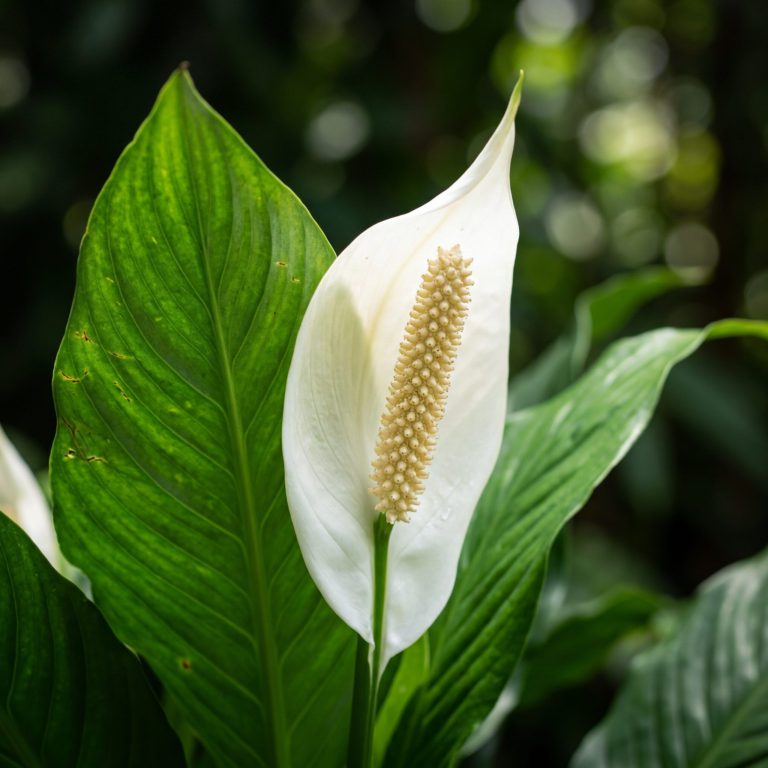
Recommended Peace Lily Varieties in Canada
Canadian nurseries typically stock several peace lily varieties well-suited to our indoor growing conditions. These cultivars perform exceptionally well in the temperature and humidity ranges common in Canadian homes, from apartments in Toronto to houses in Vancouver.
Spathiphyllum ‘Sensation’
The largest variety available in Canada, reaching 90cm tall with impressive 30cm leaves. Ideal for floor placement in living rooms or offices, ‘Sensation’ tolerates lower light conditions common in Canadian homes during winter. Available at major garden centers across Ontario and British Columbia.
Spathiphyllum ‘Domino’
A compact variegated variety growing 45-60cm tall, featuring green leaves with white streaks. This cultivar adapts well to the dry indoor air typical of Canadian homes during heating season and produces flowers more readily than solid green varieties under lower light conditions.