

About Philodendron
The philodendron genus encompasses over 400 species of tropical plants that have become staples in Canadian households from coast to coast. These versatile houseplants originated in the rainforests of Central and South America, where they naturally climb trees and thrive in filtered light conditions. In Canada, philodendrons have gained popularity as indoor plants because they adapt remarkably well to our home environments, particularly during our long winters when natural light is limited. Whether you’re gardening in Ontario’s zone 6 climate or managing indoor plants in Alberta’s zone 3 conditions, philodendrons offer consistent beauty and relatively simple care requirements. Their glossy, heart-shaped or deeply lobed leaves bring a touch of tropical elegance to Canadian homes, while their air-purifying qualities make them both beautiful and functional additions to any indoor space.
Why Choose Philodendron for Your Indoor Space?
Philodendrons excel as houseplants in Canadian homes because they naturally adapt to the indoor conditions we experience throughout our diverse climate zones. From British Columbia’s mild zone 8 coastal regions to Manitoba’s challenging zone 3 winters, these plants thrive indoors regardless of outdoor temperatures. Their tolerance for lower light conditions makes them particularly valuable during Canada’s shorter winter days, when many other houseplants struggle. Philodendrons also demonstrate remarkable resilience to the dry indoor air common in Canadian homes during heating season, typically maintaining their lush appearance even when humidity drops below optimal levels.
Air Purification and Health Benefits
Beyond their aesthetic appeal, philodendrons actively improve indoor air quality by filtering common household pollutants such as formaldehyde and benzene. This air-purifying ability proves especially valuable in Canadian homes during winter months when windows remain closed for extended periods. NASA’s Clean Air Study specifically recognized several philodendron species for their ability to remove airborne toxins, making them both beautiful and functional additions to bedrooms, living rooms, and home offices throughout Canada.
How to Grow Philodendron in Canada
Light Requirements for Philodendron
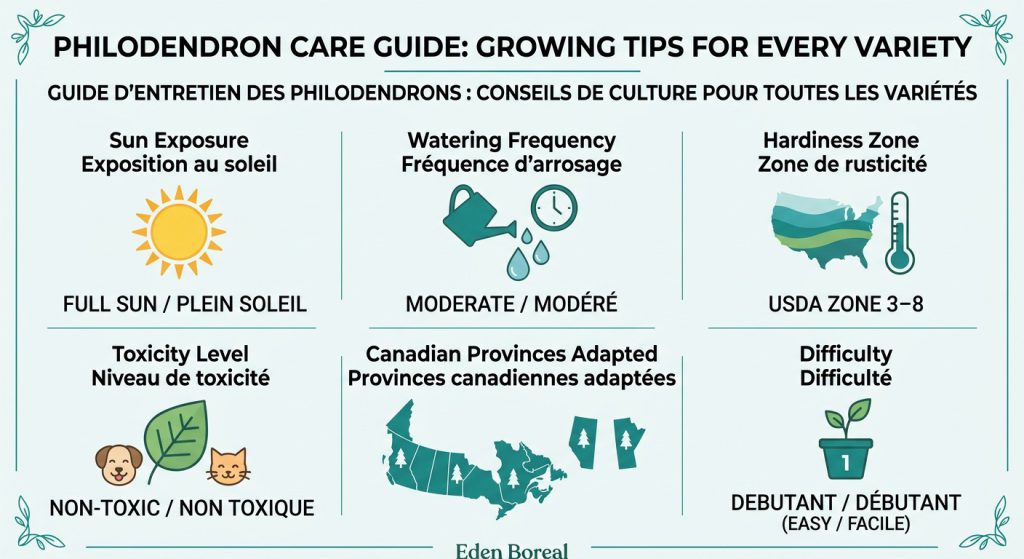
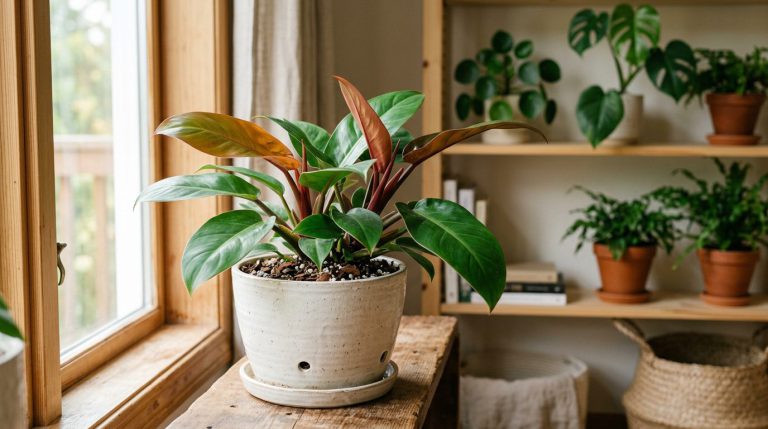
Philodendrons prefer bright, indirect light, which makes them ideal for Canadian homes where direct sunlight can be harsh through windows, especially during summer months. Place your philodendron near east or north-facing windows for optimal light exposure. In provinces like Saskatchewan and Alberta, where winter sunlight is particularly limited, consider supplementing with grow lights during the darkest months from November through February. Avoid placing philodendrons in direct southern or western sunlight, as this can scorch their leaves and cause brown, crispy edges.
Watering Philodendron Through Canadian Seasons
Water your philodendron when the top inch of soil feels dry to the touch, typically every 7-10 days during growing season and less frequently in winter. Canadian homes often have lower humidity during heating season, so monitor soil moisture more carefully from October through March. During summer months, when outdoor humidity in places like Ontario and Quebec increases, you may need to water more frequently. Always use room-temperature water to avoid shocking the roots, and ensure excess water drains completely to prevent root rot in our often humid basements and cooler indoor temperatures.
Soil and Repotting
Use a well-draining potting mix that retains some moisture while allowing excess water to escape freely. A combination of regular potting soil, peat moss, and perlite works excellently for philodendrons in Canadian conditions. Repot your philodendron every 2-3 years or when roots become pot-bound, typically in late spring when growth resumes after our long winters. Choose a pot only one size larger than the current container, as oversized pots can lead to waterlogged soil in our cooler indoor environments.
Temperature and Winter Care in Canada
Maintain indoor temperatures between 18-24°C (65-75°F) for optimal philodendron health, which aligns well with typical Canadian home heating during winter months. These plants can tolerate brief temperature drops to 13°C (55°F), but prolonged exposure to cooler temperatures will slow growth significantly. During winter in zones 3-5, keep philodendrons away from cold windows, exterior doors, and heating vents that create temperature fluctuations. In provinces experiencing extreme cold like Manitoba and Saskatchewan, ensure plants are positioned well away from windows during the coldest months to prevent cold damage.
Common Problems and Solutions
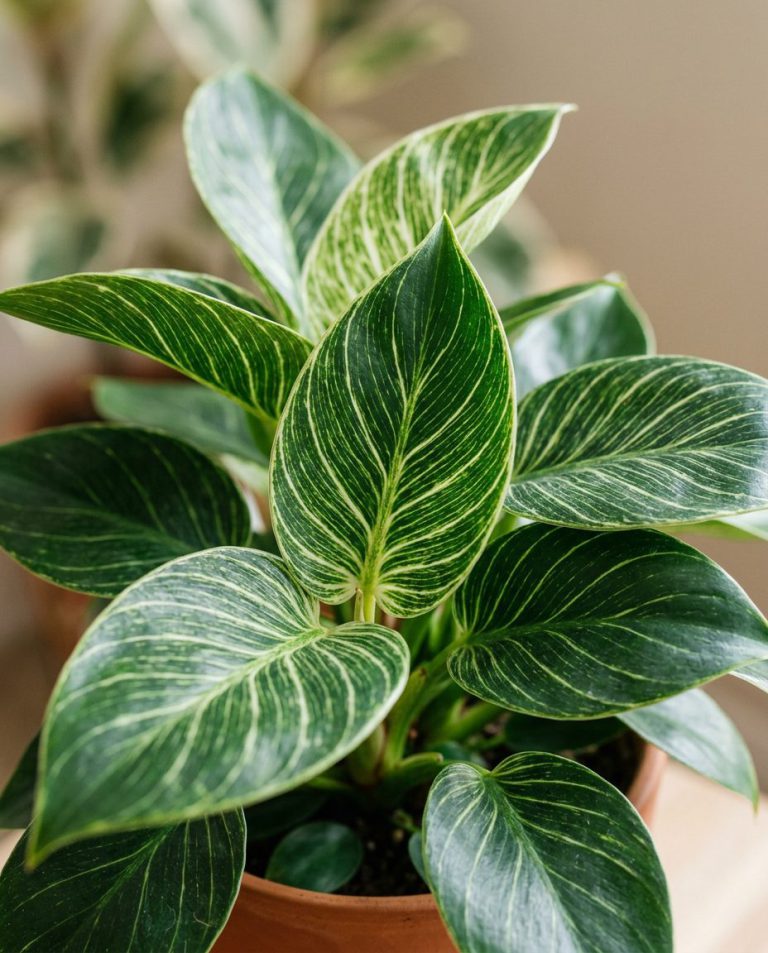
If you notice yellowing leaves on your philodendron, reduce watering frequency as this typically indicates overwatering, especially common during Canadian winters when plants use less water. When leaf edges turn brown and crispy, increase humidity around the plant using a pebble tray or humidifier, as dry indoor air during heating season is often the culprit. If your philodendron develops small, pale leaves with long stems, move it closer to a light source or provide supplemental lighting, particularly during our shorter winter days. Should you observe sticky honeydew on leaves along with tiny insects, treat for aphids or scale using insecticidal soap, checking thoroughly as indoor heating creates ideal conditions for pest reproduction. When stems become mushy and black at the soil line, remove affected portions immediately and reduce watering, as root rot can develop quickly in cool, moist conditions typical of Canadian basements and cooler rooms.
Seasonal Care Tips in Canada
- Spring Resume regular fertilizing schedule and begin weekly watering as daylight hours increase and growth resumes after winter dormancy.
- Summer Increase watering frequency and provide additional humidity through misting or pebble trays to counter air conditioning and lower natural humidity.
- Fall Gradually reduce watering frequency and stop fertilizing by October to prepare the plant for slower winter growth in reduced light conditions.
- Winter Water sparingly only when soil is dry and ensure adequate humidity using a humidifier to counter dry indoor heating air typical in Canadian homes.
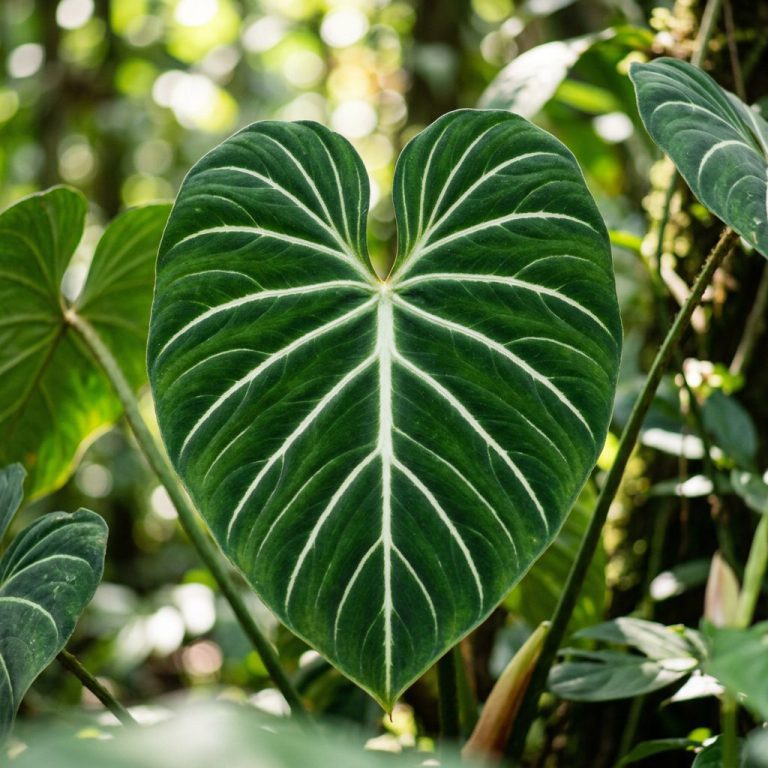
Recommended Philodendron Varieties in Canada
Several philodendron varieties perform exceptionally well in Canadian indoor conditions and are readily available at nurseries across the country. These selections have proven particularly adaptable to our climate variations and indoor growing conditions, from the maritime provinces’ humidity to the prairie provinces’ dry air.
Heartleaf Philodendron (Philodendron hederaceum)
The classic heartleaf philodendron remains the most popular choice for Canadian households, featuring glossy, heart-shaped leaves and trailing vines that create beautiful cascading displays. This variety tolerates lower light conditions exceptionally well, making it ideal for Canadian homes during winter months. It propagates easily in water, allowing you to expand your collection or share with friends throughout the year.
Philodendron Brasil
Philodendron Brasil offers striking variegated foliage with bright yellow and green streaking that adds visual interest to any Canadian home. This cultivar maintains its vibrant coloration even in the lower light conditions common during our winter months, though it may produce more solid green leaves in very low light. Brasil varieties have shown excellent adaptation to the dry indoor air typical in Canadian homes during heating season, requiring minimal special care beyond regular houseplant maintenance.