


About Rubber Plant
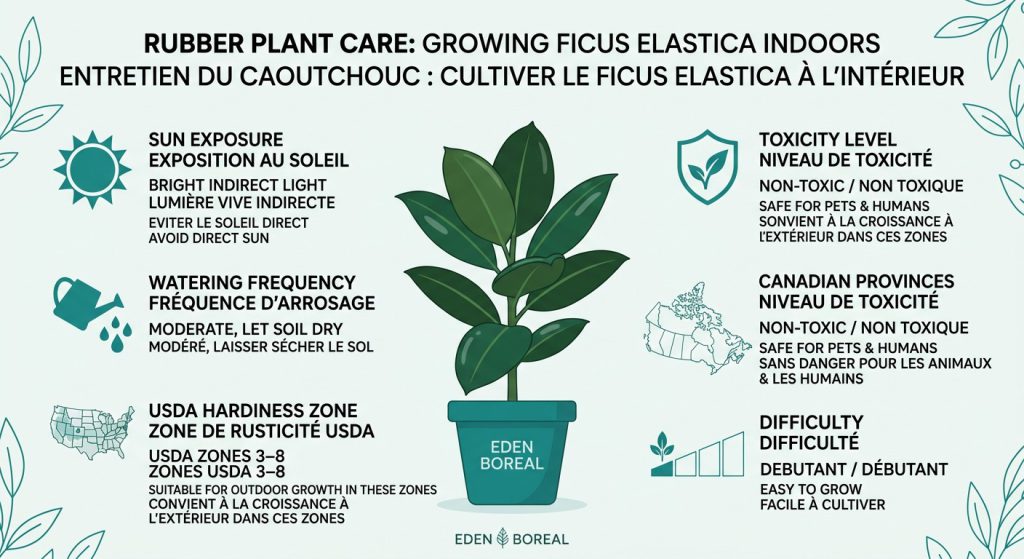
The rubber plant (Ficus elastica) stands as one of Canada’s most beloved houseplants, gracing homes from Vancouver’s coastal climate in USDA zone 9 to Winnipeg’s prairie conditions in zone 3. Originally native to northeastern India and southern China, this elegant fig tree has adapted beautifully to indoor Canadian living. The rubber plant earned its common name from the milky latex sap that was once harvested for rubber production before synthetic alternatives became available. Today, Canadian gardeners prize these plants for their glossy, leathery leaves and impressive stature, making them perfect statement pieces for living rooms, offices, and bright corners throughout our homes during long winter months.
Why Choose Rubber Plant for Your Indoor Space?
The rubber plant offers exceptional value for Canadian homeowners seeking a striking, low-maintenance houseplant that can withstand our unique climate challenges. Unlike many tropical plants that struggle with Canada’s dry winter air and fluctuating indoor temperatures, rubber plants demonstrate remarkable resilience. In provinces like Ontario and British Columbia (zones 5-9), these plants can even spend summer months outdoors on patios before returning indoors for winter protection.
Air Purifying Benefits for Canadian Homes
Research confirms that rubber plants excel at removing formaldehyde and other volatile organic compounds from indoor air, making them particularly valuable during Canada’s extended heating season when homes remain sealed for months. Their large, waxy leaves actively filter toxins while adding humidity to dry winter air, creating healthier indoor environments from Halifax to Calgary.
How to Grow Rubber Plant in Canada
Light Requirements for Rubber Plant
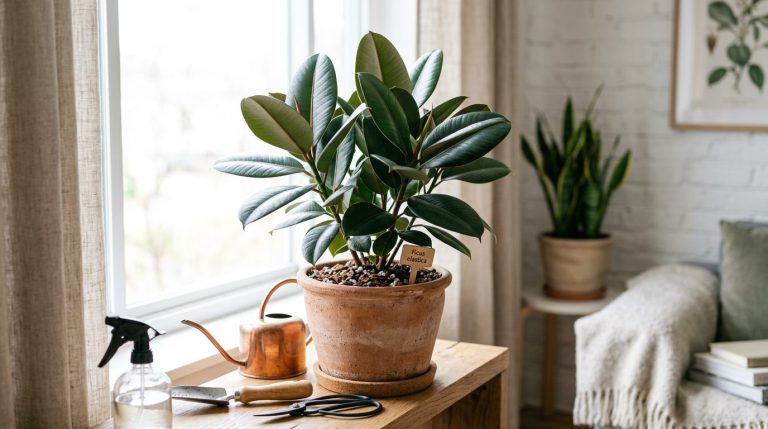
Your rubber plant thrives in bright, indirect light typical of east or west-facing windows in Canadian homes. During summer months, morning sun works perfectly, but protect from intense afternoon rays that can scorch leaves. In northern provinces like Saskatchewan or Manitoba, supplement with grow lights during darker winter months to maintain healthy growth and prevent leaf drop.
Watering Rubber Plant Through Canadian Seasons
Water when the top 2-3 cm of soil feels dry, typically every 7-10 days during growing season and every 10-14 days in winter. Canadian tap water works well, but let it sit overnight to reach room temperature and allow chlorine to dissipate. Reduce watering significantly from November through February when growth slows and indoor heating creates drier conditions.
Soil and Repotting
Use well-draining potting mix combining equal parts quality potting soil, perlite, and bark chips. Canadian nurseries often stock appropriate tropical plant mixes. Repot every 2-3 years in spring, moving up one pot size. Young plants may need annual repotting, while mature specimens prefer being slightly root-bound.
Temperature and Winter Care in Canada
Maintain temperatures between 18-24°C for optimal growth. Keep rubber plants away from heating vents, cold drafts near windows, and exterior doors during Canadian winters. In zones 3-5, protect from sudden temperature drops by moving plants away from windows on extremely cold nights when temperatures plummet below -20°C.
Common Problems and Solutions
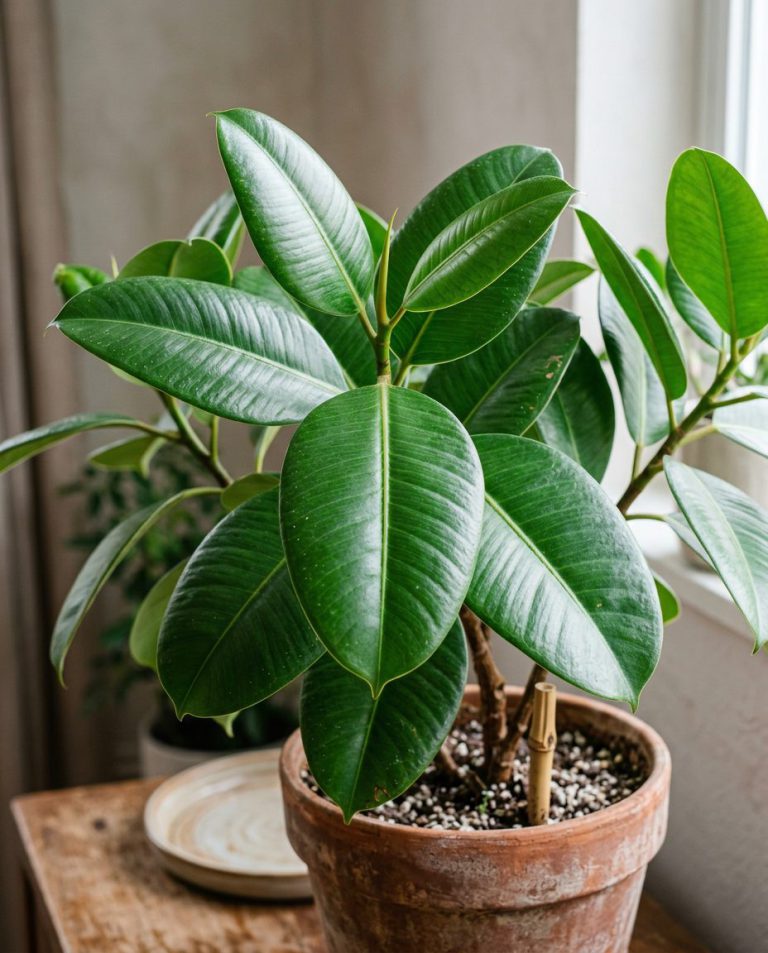
If you notice yellowing lower leaves, reduce watering frequency as overwatering commonly affects rubber plants during Canada’s humid summer months. When leaves develop brown edges, increase humidity by placing plants on pebble trays filled with water, especially during heating season. If you see small webs or stippling on leaves, spider mites have likely appeared due to dry indoor air, treat with insecticidal soap and increase humidity immediately. Should your rubber plant drop multiple leaves suddenly, check for drafts, temperature fluctuations, or watering issues that commonly occur when transitioning plants indoors each fall. When new growth appears pale or leggy, move closer to windows or supplement with grow lights during Canada’s shorter daylight periods from October through March.
Seasonal Care Tips in Canada
- Spring Begin weekly watering as daylight increases and move plants closer to windows for stronger light exposure after winter dormancy.
- Summer Move rubber plants outdoors to protected patios in zones 5-9, gradually acclimating them to prevent leaf burn from sudden sun exposure.
- Fall Transition outdoor plants back indoors before nighttime temperatures drop below 10°C, typically by late September in most provinces.
- Winter Reduce watering to every 10-14 days, maintain humidity with humidifiers, and supplement lighting in northern regions for healthy winter growth.
Recommended Rubber Plant Varieties in Canada
Canadian nurseries typically stock several rubber plant varieties, each offering unique characteristics suited to different indoor spaces. These cultivars maintain the species’ hardy nature while providing distinctive aesthetic appeal for Canadian homes.
Ficus Elastica ‘Burgundy’
Features deep burgundy-red leaves that mature to dark green with red undersides. This variety tolerates lower light conditions common in Canadian homes during winter months and creates stunning contrast in modern interiors. Widely available at major garden centers across Ontario and British Columbia.
Ficus Elastica ‘Tineke’
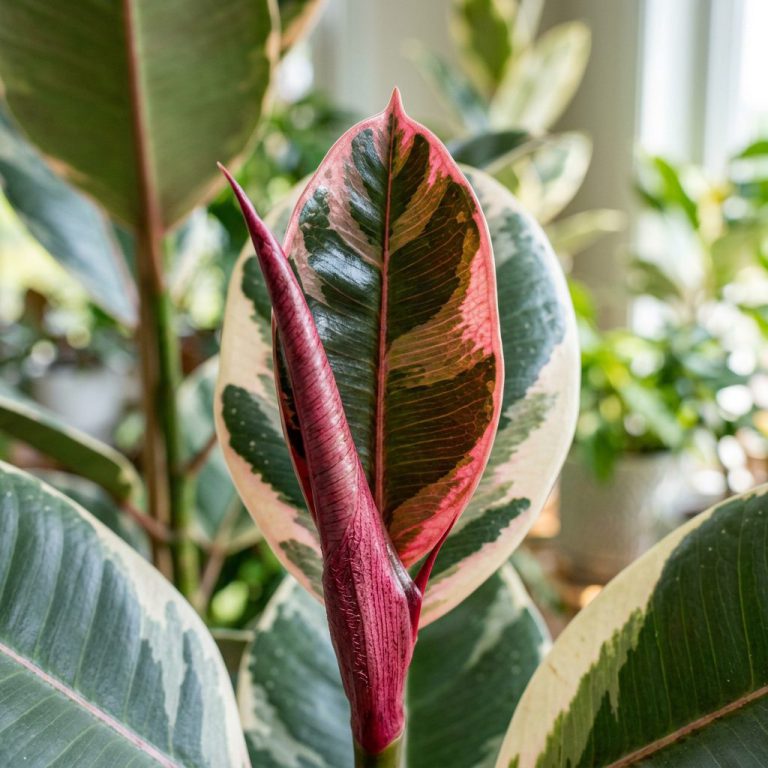
Displays beautiful variegated leaves with cream, green, and pink coloration. While requiring slightly brighter light than solid green varieties, ‘Tineke’ adapts well to Canadian indoor conditions and adds elegant color variation to any room throughout the year.