


About Spider Plant
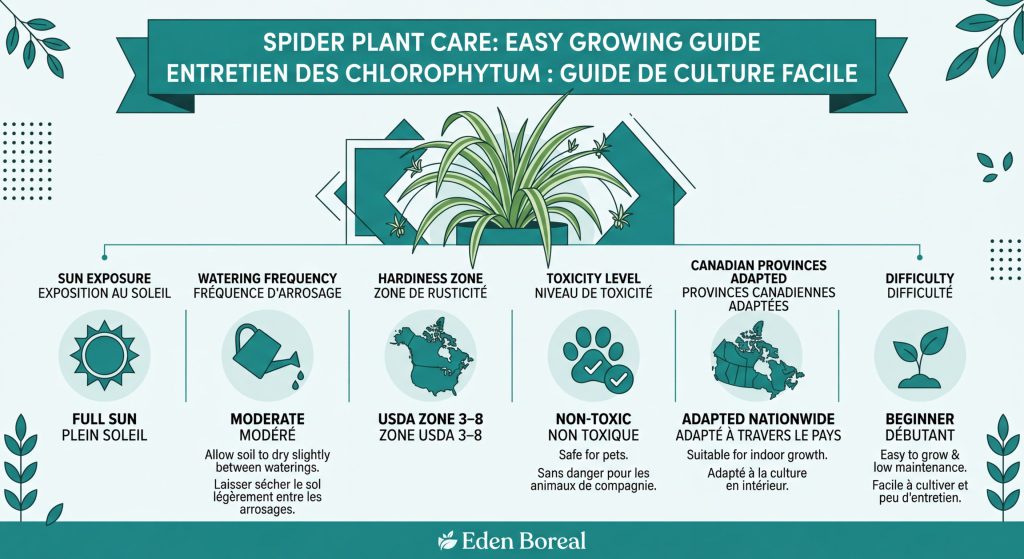
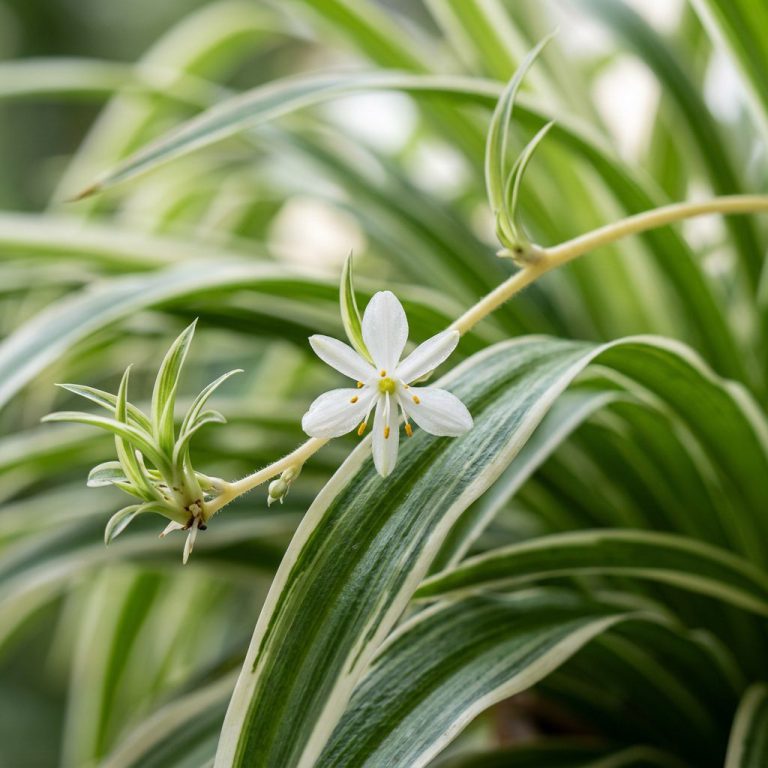
The spider plant (Chlorophytum comosum) stands as one of Canada’s most beloved houseplants, and for excellent reasons. This resilient perennial from South Africa has adapted beautifully to Canadian indoor environments, from the humid summers of Ontario (USDA zone 6) to the dry winter air of Alberta (USDA zone 3). The spider plant earned its common name from its distinctive arching leaves and cascading plantlets that dangle like spiders from a web. Also known as airplane plant or ribbon plant, this member of the Asparagaceae family produces striking variegated foliage with green and cream stripes. What makes the spider plant particularly appealing to Canadian gardeners is its exceptional tolerance for the temperature fluctuations and low humidity levels common in heated Canadian homes during winter months. Whether you’re a novice plant parent in Vancouver or an experienced gardener in Montreal, the spider plant offers reliable performance and stunning visual appeal year-round.
Why Choose Spider Plant for Your Indoor Space?
Choosing a spider plant for your Canadian home delivers multiple benefits that align perfectly with our unique climate challenges. This hardy houseplant excels in the dry winter air that characterizes heated Canadian homes from November through March, making it ideal for provinces like Saskatchewan and Manitoba where indoor humidity can drop below 20%. The spider plant’s air-purifying qualities, scientifically validated by NASA’s Clean Air Study, remove formaldehyde and xylene from indoor air, particularly valuable during Canada’s long heating season when homes remain sealed for months.
Low Maintenance Beauty
The spider plant’s forgiving nature makes it perfect for busy Canadian lifestyles and frequent travelers. Unlike more demanding houseplants, spider plant tolerates occasional watering lapses and adapts well to the varying light conditions found in Canadian homes, from the bright south-facing windows common in Ontario to the limited winter light in northern territories. The plant’s rapid propagation through plantlets means you can easily expand your collection or share with neighbors, creating a sustainable indoor garden that thrives in USDA zones 3-9 throughout Canada.
How to Grow Spider Plant in Canada
Light Requirements for Spider Plant
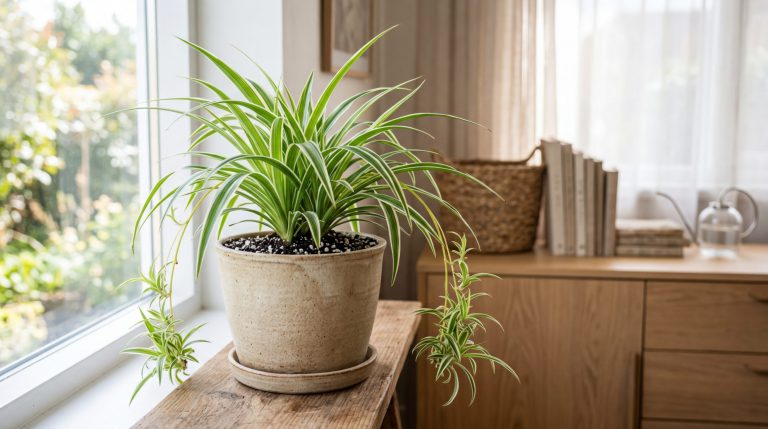
Your spider plant thrives in bright, indirect light, making it perfect for east or west-facing windows throughout Canada. In provinces like British Columbia where winter days are particularly overcast, place your spider plant within three feet of a south-facing window for optimal growth. During summer months, protect the plant from intense afternoon sun, especially in prairie provinces where UV levels can be extreme. If leaf tips begin browning, this often indicates too much direct sunlight rather than insufficient light. Consider rotating your spider plant weekly to ensure even growth and prevent the plant from leaning toward the light source.
Watering Spider Plant Through Canadian Seasons
Water your spider plant when the top inch of soil feels dry to the touch, typically every 7-10 days during growing season and every 10-14 days in winter. In Canadian homes, this schedule often shifts with our heating seasons: increase watering frequency from October through March when indoor air becomes dry, particularly in Alberta and Saskatchewan where humidity drops significantly. Use room-temperature water to avoid shocking the root system, and ensure proper drainage to prevent root rot. During summer months in humid provinces like Nova Scotia, you may need to water less frequently as the plant absorbs moisture from the air.
Soil and Repotting
Plant your spider plant in well-draining potting mix, ideally a combination of peat moss, perlite, and standard potting soil that drains quickly yet retains some moisture. Repot every 2-3 years or when roots begin circling the pot, typically in early spring before the growing season begins. Canadian gardeners should choose pots with drainage holes and add a layer of gravel at the bottom, especially important in provinces with hard water like Manitoba where mineral buildup can affect drainage. Use pots only slightly larger than the root ball, as spider plants actually prefer being slightly rootbound.
Temperature and Winter Care in Canada
Spider plants prefer temperatures between 18-24°C (65-75°F), making them well-suited to Canadian indoor environments. During winter months, keep plants away from heating vents, radiators, and frequently opened doors where temperature fluctuations are common. In provinces like Quebec and Ontario where homes can become quite dry during heating season, place a humidity tray filled with pebbles and water beneath the plant. Monitor for cold drafts near windows, particularly important in older Canadian homes where window sealing may be inadequate. If temperatures drop below 10°C (50°F), spider plant growth will slow significantly.
Common Problems and Solutions
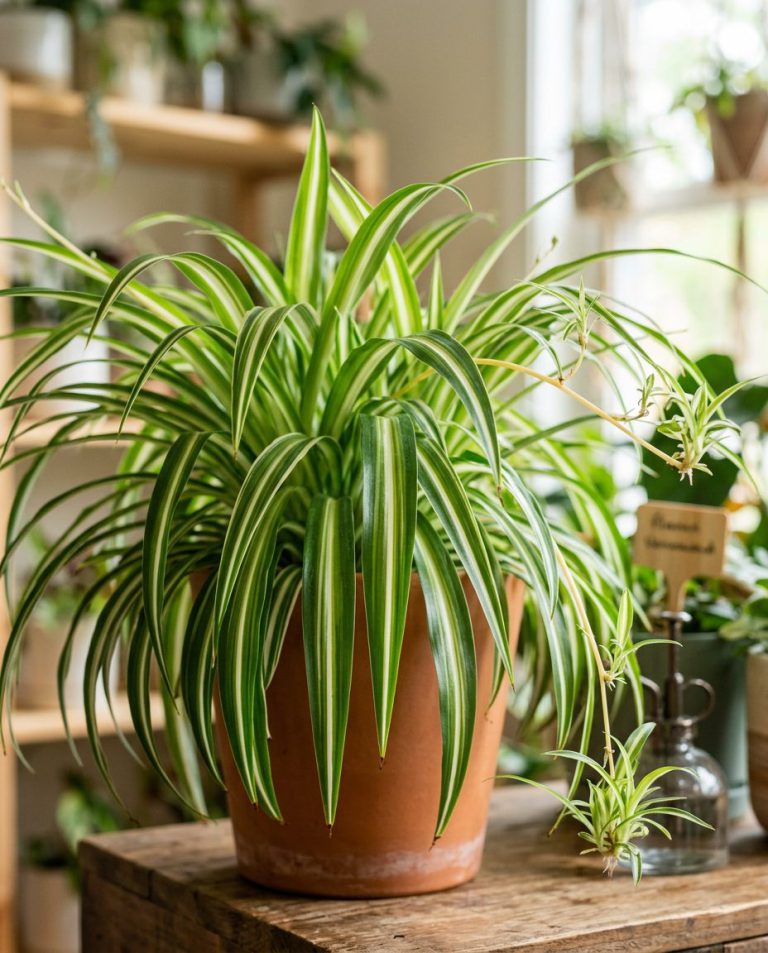
If you notice brown leaf tips on your spider plant, this typically indicates low humidity or fluoride in tap water, common issues in Canadian homes during winter. Switch to distilled water or let tap water sit overnight before watering, and increase humidity with a pebble tray. If leaves become pale and stretched, move your spider plant closer to a light source, particularly important during Canadian winters when daylight hours are limited. When plantlets fail to develop, ensure your spider plant is receiving adequate light and is mature enough (typically 1-2 years old) to produce offsets. If you see small brown or yellow spots on leaves, check for spider mites, which thrive in the dry indoor conditions common in heated Canadian homes. Treat with insecticidal soap and increase humidity around the plant. If the plant appears wilted despite moist soil, examine roots for rot, often caused by overwatering in poorly draining soil during Canada’s humid summer months.
Seasonal Care Tips in Canada
- Spring Begin regular fertilizing as daylight hours increase, and repot if roots are crowded from winter growth.
- Summer Water more frequently during hot spells, especially in prairie provinces, and move plants slightly away from intense south-facing windows.
- Fall Reduce fertilizing frequency and begin preparing plants for lower light conditions by moving them to brighter locations.
- Winter Decrease watering schedule, increase humidity with pebble trays, and avoid placing plants near heat sources or cold drafts.
Recommended Spider Plant Varieties in Canada
Several spider plant cultivars perform exceptionally well in Canadian growing conditions, available at most garden centers from British Columbia to Newfoundland. These varieties have proven their adaptability to Canada’s diverse climate zones and indoor growing conditions. Choose varieties based on your space requirements and aesthetic preferences, as all spider plant varieties share similar care requirements suited to Canadian homes.
‘Variegatum’ (Classic Spider Plant)
The traditional spider plant variety features distinctive green leaves with creamy white stripes running lengthwise. This cultivar produces the most abundant plantlets and adapts well to varying light conditions common in Canadian homes. ‘Variegatum’ tolerates the dry winter air found in heated homes across Canada and remains the most widely available variety in Canadian nurseries from Toronto to Calgary.
‘Vittatum’ (Reverse Variegated Spider Plant)
This striking variety displays white centers with green margins, creating a bold visual impact perfect for Canadian interiors. ‘Vittatum’ requires slightly brighter light than the classic variety, making it ideal for homes with excellent natural light exposure. This cultivar maintains its variegation well in the consistent indoor temperatures typical of Canadian homes and produces fewer but larger plantlets than traditional spider plants.