


Spiraea: Resilient Rosaceae Shrubs for Canadian Landscapes
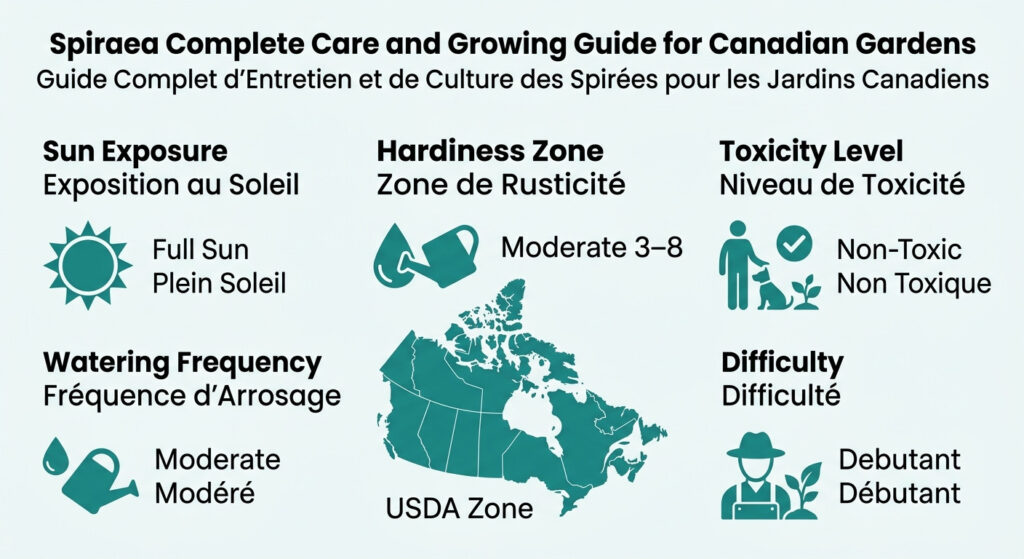
Spiraea shrubs have earned their place as backbone plants in Canadian gardens from zone 2 Alberta to zone 8 British Columbia, offering reliable spring or summer blooms with arching silhouettes that soften borders and hedges. Members of the Rosaceae family, these deciduous shrubs share lineage with meadowsweet and steeplebush, native North American relatives that thrive in wetland edges and open meadows. Unlike many ornamental imports, spiraea species demonstrate exceptional cold hardiness and drought tolerance once established, requiring no winter protection even in Prairie provinces where January temperatures plunge below -30°C. Their profuse panicle flowers attract Bombus pollinators throughout the growing season, while their low-maintenance nature appeals to both novice gardeners in suburban Ontario and experienced landscapers managing commercial properties in Quebec. Understanding the botanical distinctions between spring-blooming and summer-blooming varieties, quantified light thresholds for flowering, and species-specific invasiveness risks allows Canadian growers to select the right spiraea for each landscape role, from compact border edging to large-specimen focal points.
| Characteristic | Value |
|---|---|
| Botanical name | Spiraea spp. (genus) |
| Plant type | Deciduous flowering shrub |
| Mature size | 60-240 cm height, 90-180 cm spread (variety-dependent) |
| Light | Full sun (minimum 6 hours direct sunlight daily) |
| Watering | Weekly during establishment (first season), drought-tolerant thereafter |
| Ideal temperature | -40°C to +30°C (dormant to active growth) |
| Humidity | 30-60% (tolerates dry continental air) |
| Hardiness zones (outdoors) | Zone 2 to zone 8 (species-dependent) |
| Toxicity | Non-toxic to dogs, cats, and humans |
| Difficulty level | Beginner |
Spiraea Genus: Botanical Identity and the Meadowsweet Family Connection
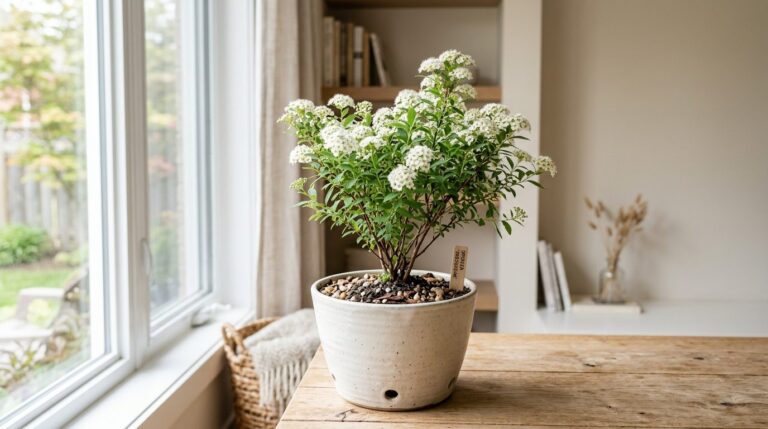
The Spiraea genus comprises approximately 80 species within the Rosaceae family, the same taxonomic group that includes roses, apples, and cherries. This family connection explains spiraea’s five-petaled flower structure and aggregate fruit development, though most cultivated varieties are selected for floral abundance rather than fruit production. The common name meadowsweet originally referred to European Filipendula ulmaria, but North American colonists applied the term to native Spiraea alba and Spiraea tomentosa (steeplebush) due to their similar habitat preferences and frothy white or pink flower clusters. These native species colonize wet meadows and streambanks from Nova Scotia to Manitoba, demonstrating the genus’s adaptation to cold winters and fluctuating soil moisture. Cultivated spiraea varieties, however, are predominantly derived from Asian species: Spiraea japonica from Japan and Korea, Spiraea x vanhouttei (a hybrid of S. cantoniensis and S. trilobata), Spiraea nipponica from Japan, and Spiraea thunbergii from China. Each species exhibits distinct leaf morphology, from the fine-textured linear leaves of S. thunbergii to the coarse serrated foliage of S. japonica, allowing precise identification even when plants are not in bloom.
Taxonomic Distinctions Between Spring and Summer Bloomers
Spring-blooming spiraea species, including Spiraea x vanhouttei and Spiraea prunifolia, produce flowers on old wood, meaning buds form on the previous season’s growth during late summer and overwinter in dormancy. These varieties typically bloom in May in southern Ontario and early June in zone 3 Quebec, with cascading white flower clusters that cover arching stems before new foliage fully expands. In contrast, summer-blooming varieties such as Spiraea japonica cultivars and Spiraea x bumalda hybrids flower on new wood, initiating buds on current-season growth after spring leaf-out. These varieties bloom from late June through August in most Canadian regions, producing flat-topped or pyramidal pink to rose-red flower clusters at branch terminals. This phenological difference dictates entirely different pruning protocols: spring bloomers must be pruned immediately after flowering to preserve next year’s buds, while summer bloomers are cut back in late winter or early spring before growth resumes, allowing maximum time for new flowering shoots to develop.
Light Requirements and Sun Exposure Thresholds for Optimal Flowering
Spiraea shrubs exhibit strong phototropic response to light availability, with flowering density directly correlated to daily photosynthetic photon flux. Field trials in Ontario nurseries demonstrate that spiraea planted in full sun (minimum 6 hours direct sunlight, approximately 3,000-5,000 foot-candles at midday) produce 70-90% more flower clusters than specimens receiving only 4 hours of morning sun. Plants grown in partial shade (2,000-3,000 foot-candles) exhibit elongated internodes as stems stretch toward available light, resulting in sparse foliage and reduced bud set. In zone 4 Alberta gardens where summer days extend to 16 hours, spiraea planted on south-facing slopes or against reflective light-coloured fencing achieve maximum bloom density, while specimens on north-facing exposures may produce only scattered flowers on sun-exposed branch tips. The genus’s sun requirement reflects its native habitat: Asian species evolved in open mountain meadows and forest edges where canopy gaps provide unobstructed overhead light, while North American Spiraea alba colonizes wetland margins where competing vegetation is suppressed by seasonal flooding.
Shade Tolerance and Flowering Decline Quantified
When spiraea receives less than 5 hours of direct sun, chlorophyll concentration increases in leaves (producing darker green foliage) as the plant attempts to maximize light capture, but carbohydrate reserves available for flower bud initiation decline proportionally. Research at the University of Guelph measured flower cluster counts on Spiraea japonica ‘Goldflame’ across a light gradient: plants in full sun averaged 42 flower clusters per shrub, those with 5 hours averaged 28 clusters, and specimens with only 3 hours produced fewer than 10 clusters. In British Columbia coastal gardens where summer cloud cover reduces light intensity, spiraea planted in open lawn areas or along south-facing property lines consistently outperform those tucked beneath mature Douglas fir or western red cedar. Gardeners in zone 5 Quebec should avoid planting spiraea within the drip line of large maples or oaks, where root competition and canopy shade combine to suppress both growth and flowering.
Soil Composition and pH Tolerance Across Diverse Growing Regions
Spiraea demonstrates exceptional pH tolerance, thriving in soils ranging from 6.0 to 7.5, which encompasses the slightly acidic loams common in Ontario and the near-neutral clay soils prevalent in Saskatchewan and Manitoba. This adaptability stems from the genus’s diverse native range, where species occupy substrates from acidic peat bogs (Spiraea tomentosa) to calcareous riverbanks (Spiraea cantoniensis). In zone 3 Alberta, where alkaline soils (pH 7.2-8.0) predominate due to low precipitation and high evaporation rates, spiraea performs without the chlorosis that afflicts acid-loving shrubs like rhododendrons. However, spiraea does require adequate drainage: roots cannot tolerate prolonged saturation, and plants grown in poorly drained clay develop root rot within two seasons. The ideal substrate combines 60% mineral soil (loam or sandy loam), 30% compost or aged manure for organic matter and nutrient retention, and 10% coarse sand or perlite to ensure air-filled pore space. In heavy clay regions such as the Red River Valley of Manitoba, amending planting holes with this ratio or constructing raised berms improves long-term survival and vigor.
Organic Matter Incorporation by Soil Type
In sandy soils common to Prince Edward Island and parts of Nova Scotia, organic matter incorporation rates should reach 40% by volume to improve water retention and cation exchange capacity, preventing rapid leaching of nutrients during summer rains. Conversely, in the heavy clay loams of southern Ontario, organic matter should constitute only 20-25% by volume to avoid creating a water-retentive pocket that remains saturated longer than surrounding native soil, leading to root asphyxiation. Spiraea planted in zone 6 British Columbia coastal gardens, where winter rainfall exceeds 1,200 mm annually, benefit from planting on gentle slopes or in raised beds that shed excess water, combined with a coarse organic amendment such as composted bark fines rather than moisture-retentive peat moss. Soil testing through provincial agricultural extension services provides precise pH and nutrient baselines, allowing targeted amendments rather than generic applications.
Watering Frequency and Drought Tolerance Once Establishment Occurs
Newly planted spiraea require consistent moisture during their first growing season to establish extensive root systems, with watering frequency of twice weekly in the absence of rainfall, delivering 15-20 litres per shrub to saturate the root zone to 30 cm depth. This establishment phase typically extends from planting in May through the end of August in zone 4 regions, or through September in zone 6 British Columbia where active growth continues later into fall. Once roots have colonized surrounding soil, spiraea exhibit remarkable drought tolerance, surviving on natural precipitation alone in regions receiving 400 mm or more annual rainfall. In Prairie provinces where summer drought is common, established spiraea may show temporary leaf wilt during prolonged dry spells but recover fully with a single deep watering that restores soil to field capacity (the moisture content after excess water has drained). This drought resilience results from spiraea’s fibrous root system, which spreads laterally 1.5 times the canopy width, accessing moisture from a large soil volume.
Irrigation Strategies for Container and Hedge Plantings
Spiraea grown in containers for patio display in Quebec or Ontario require more frequent watering than in-ground specimens, as root volume is restricted and substrate dries rapidly. Container-grown spiraea need watering when the top 5 cm of potting mix feels dry to the touch, typically every 2-3 days during July and August heat. Drip irrigation or soaker hoses provide efficient watering for spiraea hedges, delivering moisture directly to the root zone while minimizing foliar wetting that can promote powdery mildew. In zone 5 New Brunswick, where summer humidity is high, overhead irrigation should be completed by mid-morning to allow foliage to dry before nightfall, reducing fungal disease pressure. Mulching with 5-7 cm of shredded bark conserves soil moisture, moderates root-zone temperature, and suppresses weed competition, extending the interval between waterings by 30-40% compared to bare soil.
Pruning Techniques: Timing and Methods for Spring and Summer Bloomers
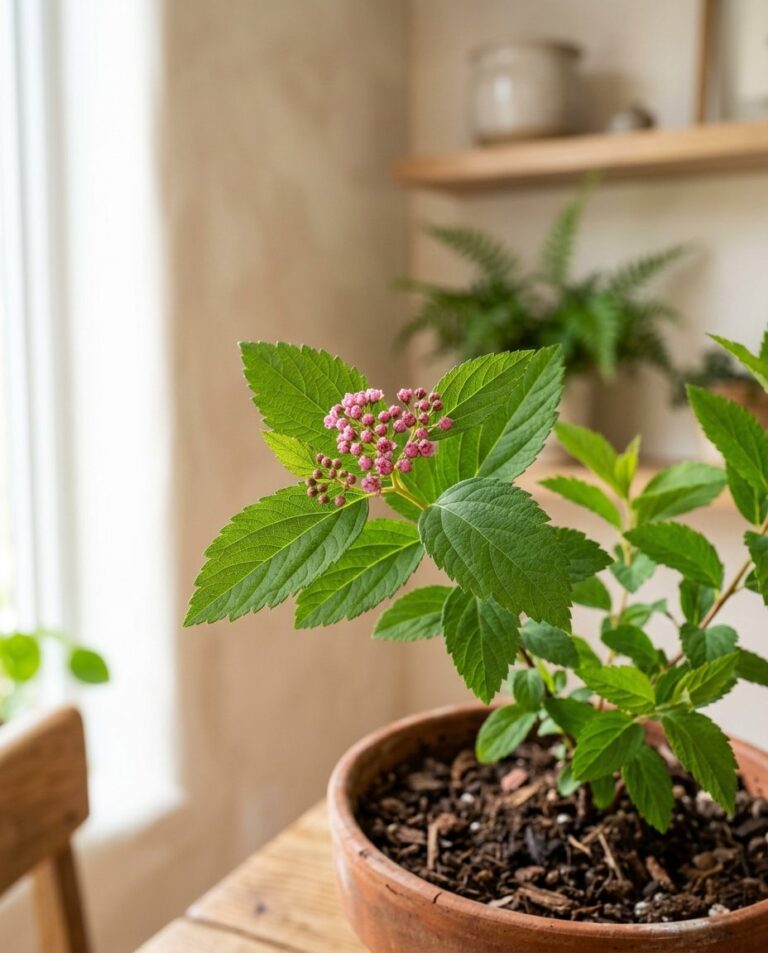
Pruning spiraea correctly requires understanding whether a variety blooms on old wood (previous season’s growth) or new wood (current season’s growth), as mistimed pruning eliminates the following season’s flowers. Spring-blooming spiraea such as Spiraea x vanhouttei, Spiraea prunifolia, and Spiraea thunbergii must be pruned immediately after flowering, typically late June in zone 4 Ontario or early July in zone 3 Quebec. This timing allows the shrub a full growing season to produce new shoots that will bear next spring’s flowers. Remove up to one-third of the oldest stems at ground level annually, selecting the thickest, least vigorous canes to encourage basal renewal. Shorten remaining stems by 20-30% to shape the shrub and promote lateral branching. In contrast, summer-blooming spiraea including all Spiraea japonica cultivars and Spiraea x bumalda hybrids are pruned in late winter or early spring before bud break, typically late March in zone 6 British Columbia or mid-April in zone 4 Alberta. Cut the entire shrub back to 15-30 cm above ground level, removing all previous year’s growth. This severe pruning stimulates vigorous new shoots that will flower prolifically from July through September.
Rejuvenation Pruning for Neglected Specimens
Overgrown spiraea that have not been pruned for several years develop congested centers with dead wood and reduced flowering. Rejuvenation pruning restores vigor by cutting the entire shrub to 10-15 cm above ground in early spring, sacrificing one season’s bloom to regenerate the plant. This technique works for both spring and summer bloomers, though spring bloomers will not flower the year following rejuvenation. In zone 5 Nova Scotia, rejuvenation pruning is best performed in late April after the last hard frost, allowing maximum time for new growth before fall dormancy. Fertilize rejuvenated shrubs with 10-10-10 granular fertilizer at 100 grams per square metre of root zone in early May to support rapid shoot development. By the second season, rejuvenated spiraea produce dense, well-branched growth with abundant flowers, restoring landscape value.
Deadheading Summer Bloomers to Extend Flowering
Removing spent flower clusters from summer-blooming spiraea as they fade encourages the plant to produce additional flushes of bloom rather than diverting energy to seed production. In zone 6 Ontario gardens, deadheading Spiraea japonica ‘Anthony Waterer’ in late July after the first bloom cycle can stimulate a second wave of flowers in late August. Use bypass pruners to cut just below each faded flower cluster, removing 5-10 cm of stem tip to promote branching. This practice is most effective on compact cultivars where deadheading is manageable; large specimens of Spiraea x vanhouttei produce too many flower clusters to deadhead practically.
Propagation Methods: Division, Cuttings, and Seed Viability
Softwood cuttings taken in early summer represent the most reliable propagation method for spiraea, with success rates of 70-85% when proper technique and environmental control are maintained. In zone 5 Quebec, cuttings are collected in mid-June when new growth is 10-15 cm long, still green and flexible but beginning to firm at the base. Select non-flowering shoots, as vegetative stems root more readily than those bearing flower buds. Cut 10-12 cm lengths just below a node, remove the lower half of leaves, and dip the cut end in rooting hormone powder containing 0.3% IBA (indole-3-butyric acid). Insert cuttings into a sterile medium of 50% perlite and 50% peat moss, maintaining high humidity (85-95%) under a clear plastic dome or in a mist propagation system. Roots develop within 3-4 weeks at 20-24°C substrate temperature. Once rooted, cuttings are potted individually and overwintered in a cold frame or unheated greenhouse, then planted out the following spring. In Ontario commercial nurseries, softwood cutting propagation allows rapid multiplication of desirable cultivars while maintaining exact genetic traits, unlike seed propagation which produces variable offspring.
Division of Mature Clumps and Rhizomatous Spread
Mature spiraea that have developed multiple stems from the base can be divided in early spring before growth resumes, typically late April in zone 4 regions. Dig the entire root ball, then use a sharp spade or saw to separate the clump into sections, ensuring each division retains 3-5 stems and adequate root mass. Replant divisions immediately at the same depth they grew previously, water thoroughly, and mulch to conserve moisture. Spiraea japonica cultivars exhibit rhizomatous spread, producing underground stems that generate new shoots at a distance from the parent plant. This growth habit allows natural vegetative expansion, with colonies spreading 30-50 cm per year in favourable conditions. In Manitoba gardens, this rhizomatous behaviour can be exploited for low-cost hedge establishment: plant spiraea at 1.5-metre intervals and allow natural spread to fill gaps within 2-3 seasons, rather than purchasing additional plants for closer spacing.
Seed Propagation Limitations and Hybrid Variability
Spiraea seed requires cold stratification (60-90 days at 1-5°C) to break dormancy, simulating natural winter chilling. However, seed-grown plants exhibit high variability in flower colour, habit, and vigour, as most cultivated spiraea are hybrids or selected clones that do not breed true. In zone 3 Saskatchewan, seed collected from Spiraea x vanhouttei will produce offspring with unpredictable traits, some resembling the hybrid parent but others reverting to characteristics of the parent species S. cantoniensis or S. trilobata. For this reason, seed propagation is used primarily in breeding programs rather than for landscape production, with vegetative methods (cuttings, division) preferred to preserve cultivar identity.
Invasiveness Risk and Native Habitat Displacement in Spiraea japonica
Spiraea japonica and its cultivars are classified as invasive species in several northeastern U.S. states and have demonstrated similar behaviour in southern Ontario and Quebec naturalized areas. The species’ rhizomatous spread mechanism allows rapid colonization of disturbed sites, forest edges, and wetland margins, where dense thickets exclude native herbaceous species and tree seedlings. Each spiraea plant produces thousands of tiny seeds that remain viable in soil for multiple years, creating a persistent seed bank. In zone 6 regions of British Columbia, escaped S. japonica has been documented along riparian corridors and in secondary-growth forests, forming monocultures that displace native Spiraea douglasii (hardhack) and associated wetland flora. The Ontario Invasive Plant Council lists Spiraea japonica as a species of concern, recommending that gardeners choose non-invasive alternatives or sterile cultivars that do not produce viable seed. In contrast, Spiraea x vanhouttei, a sterile hybrid, poses minimal invasiveness risk as it rarely sets seed and spreads only slowly through basal suckering. Spiraea betulifolia, a North American native, represents an ecologically sound alternative for naturalistic plantings in Alberta and Saskatchewan, providing similar ornamental value without displacement risk.
Management Strategies to Contain Rhizomatous Spread
Gardeners in zone 5 New Brunswick who choose to grow Spiraea japonica cultivars can limit spread by installing root barriers (HDPE plastic, 60 cm deep) around planting areas, preventing rhizomes from colonizing adjacent beds or lawn. Deadheading spent flowers before seed set eliminates the seed-bank pathway, though this requires diligent attention through the 6-8 week bloom period. Alternatively, selecting compact, heavily hybridized cultivars such as ‘Magic Carpet’ or ‘Double Play Gold’ reduces invasiveness, as these intensely bred selections exhibit reduced seed viability and less aggressive rhizome production compared to species-type plants. In naturalized areas of Ontario where spiraea has escaped cultivation, manual removal of entire root systems in early spring, before flowering, prevents further spread and allows native species to recolonize.
Spiraea Variety Showcase: Compact, Medium, and Large-Specimen Selections
Spiraea cultivars span a wide range of mature sizes and flower colours, allowing precise matching to landscape roles from low border edging to large-specimen focal points. Compact varieties (45-60 cm height) include Spiraea japonica ‘Little Princess’, which forms a dense mound with rose-pink flowers in July and August, ideal for zone 3 Alberta rock gardens or front-of-border plantings. ‘Goldflame’ reaches 60-75 cm, offering chartreuse spring foliage that matures to green, then bronze-red in fall, with deep pink summer flowers. Medium-sized selections (90-120 cm) such as ‘Anthony Waterer’ produce crimson-red flower clusters on compact, rounded shrubs suitable for mixed borders in zone 4 Manitoba. ‘Goldmound’ combines golden-yellow foliage with pink flowers, maintaining 90 cm height and width, effective as a colour-contrast element in foundation plantings. Large-specimen spiraea (180-240 cm) include the classic Spiraea x vanhouttei, which develops a fountain-like arching habit with cascading white flowers in late May, appropriate as a standalone specimen in zone 5 Quebec lawns or as an informal hedge. Spiraea nipponica ‘Snowmound’ reaches 150 cm with a dense, rounded form and profuse white flowers, serving as a visual anchor in perennial borders or mixed shrub plantings.
Spring-Blooming Varieties for Early-Season Impact
- Spiraea prunifolia ‘Plena’ (bridalwreath): 150-180 cm, double white flowers in May, zone 4-8, arching stems with orange-red fall colour
- Spiraea thunbergii: 120-150 cm, fine-textured foliage, white flowers in early May before leaves fully expand, zone 4-8, earliest bloomer
- Spiraea x cinerea ‘Grefsheim’: 120-150 cm, gray-green foliage, pure white flowers in dense clusters, zone 4-7, compact habit
Summer-Blooming Cultivars for Extended Colour
- Spiraea japonica ‘Magic Carpet’: 45-60 cm, chartreuse to golden foliage, rose-pink flowers, zone 3-8, low maintenance
- Spiraea x bumalda ‘Dart’s Red’: 75-90 cm, deep rose-red flowers, dark green foliage, zone 3-8, long bloom period
- Spiraea japonica ‘Double Play Big Bang’: 60-75 cm, orange-red new growth, pink flowers, compact rounded habit, zone 3-8
Pest and Disease Management: Aphids, Powdery Mildew, and Winter Dieback
Aphids, particularly the Aphis spiraecola species complex, colonize spiraea shoot tips and flower buds in late spring, causing leaf curling, stunted growth, and honeydew accumulation that promotes sooty mold. In zone 5 Ontario, aphid populations peak in June when new growth is most succulent. Insecticidal soap (potassium salts of fatty acids, 2% solution) applied at 7-day intervals provides effective control without harming Bombus pollinators that visit spiraea flowers. Spray in early morning or late evening when bees are inactive, ensuring thorough coverage of leaf undersides where aphids congregate. Alternatively, a strong water spray from a garden hose dislodges aphids, reducing populations below damaging thresholds on small plantings. Powdery mildew (Podosphaera species) appears as white fungal growth on leaves during humid periods, particularly in zone 6 British Columbia where summer fog and dew persist. While rarely fatal, heavy infections reduce photosynthetic capacity and aesthetic value. Cultural controls include adequate plant spacing (1.5-2 metres between shrubs) to promote air circulation, overhead irrigation avoidance, and removal of infected leaves. Sulphur-based fungicides (wettable sulphur, 0.5% solution) applied at first symptom appearance prevent disease spread, with applications repeated every 10-14 days during susceptible periods.
Winter Dieback and Cold-Damage Recovery
Winter dieback occurs when spiraea stems are killed by extreme cold or desiccation, appearing as brown, brittle branches in spring. In zone 3 Saskatchewan, even hardy spiraea may experience tip dieback during winters with inadequate snow cover and temperatures below -35°C. Affected stems should be pruned back to live wood (identified by green cambium when bark is scraped) in early spring. Summer-blooming spiraea recover rapidly from winter dieback, as they flower on new growth; spring bloomers lose the current year’s bloom but recover structurally. Preventive measures include deep watering in late fall before ground freeze to ensure adequate root-zone moisture, and applying anti-desiccant sprays (polymer-based products that reduce transpiration) to evergreen spiraea foliage in late November in windy, exposed sites.
Deer and Rabbit Browse Pressure
Spiraea exhibit moderate palatability to deer and rabbits, with browse damage most severe in zone 4 Quebec rural gardens during winter when alternative food is scarce. Physical barriers such as 1.2-metre wire fencing around individual shrubs or repellent sprays containing putrescent egg solids or capsaicin reduce damage. In Alberta acreages where deer pressure is chronic, planting spiraea within mixed borders surrounded by less palatable species (juniper, barberry) provides some protection through associational resistance.
Hardiness Zones and Cold Tolerance: Winter Survival Without Protection
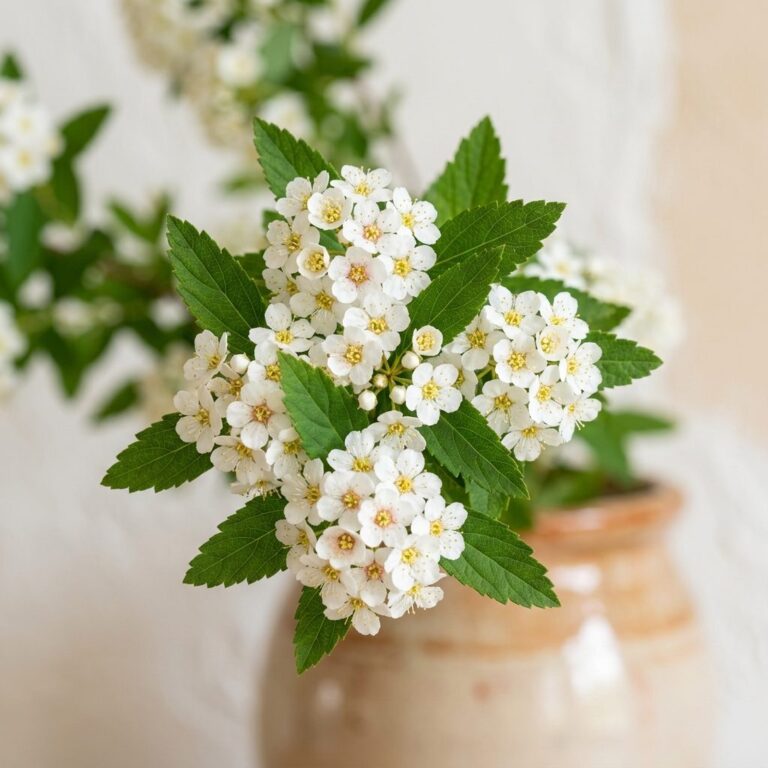
Spiraea species and cultivars demonstrate exceptional cold hardiness, with many varieties surviving in zone 2 (-45°C minimum winter temperature) without protection. Spiraea japonica cultivars are reliably hardy to zone 3 (-40°C), while Spiraea x vanhouttei and Spiraea nipponica tolerate zone 2 conditions in northern Alberta and Saskatchewan. This cold tolerance results from spiraea’s dormancy mechanism: as daylength shortens in September, plants cease active growth, harden cell walls, and accumulate cryoprotective compounds (sugars, proteins) that prevent intracellular ice crystal formation. In zone 3 Manitoba, spiraea enter full dormancy by mid-October, dropping leaves and ceasing all metabolic activity until spring temperatures consistently exceed 10°C. Even in extreme winters where air temperature reaches -40°C, spiraea roots remain viable beneath insulating snow cover, and above-ground stems survive due to their hardened bark and low moisture content. In zone 8 British Columbia coastal regions, spiraea experience mild winters with minimal dormancy, maintaining semi-evergreen foliage through December and resuming growth in February, resulting in earlier bloom and extended growing seasons compared to continental climates.
Zone-Specific Variety Selection for Maximum Reliability
- Zone 2 (-45°C): Spiraea x vanhouttei, Spiraea betulifolia, Spiraea nipponica ‘Snowmound’
- Zone 3 (-40°C): all Spiraea japonica cultivars, Spiraea x bumalda, Spiraea thunbergii
- Zone 4-5 (-35°C to -29°C): all spiraea varieties perform optimally, including less common species
- Zone 6-8 (-23°C to -12°C): all varieties, with extended bloom periods and potential for multiple flushes on summer bloomers
Fall Preparation and Dormancy Timing by Region
In zone 3 Quebec, cease fertilizing spiraea by August 1 to allow tissues to harden before frost; late-season nitrogen promotes soft growth vulnerable to cold damage. Water deeply in late October before ground freeze to ensure adequate root-zone moisture through winter. In zone 4 Ontario, spiraea typically enter dormancy by mid-October when nighttime temperatures consistently drop below 5°C. Leaves drop naturally without intervention, and pruning is delayed until late winter to avoid stimulating new growth. In zone 6 British Columbia, spiraea may retain foliage into December; avoid pruning until February to prevent breaking dormancy prematurely during mild spells.