

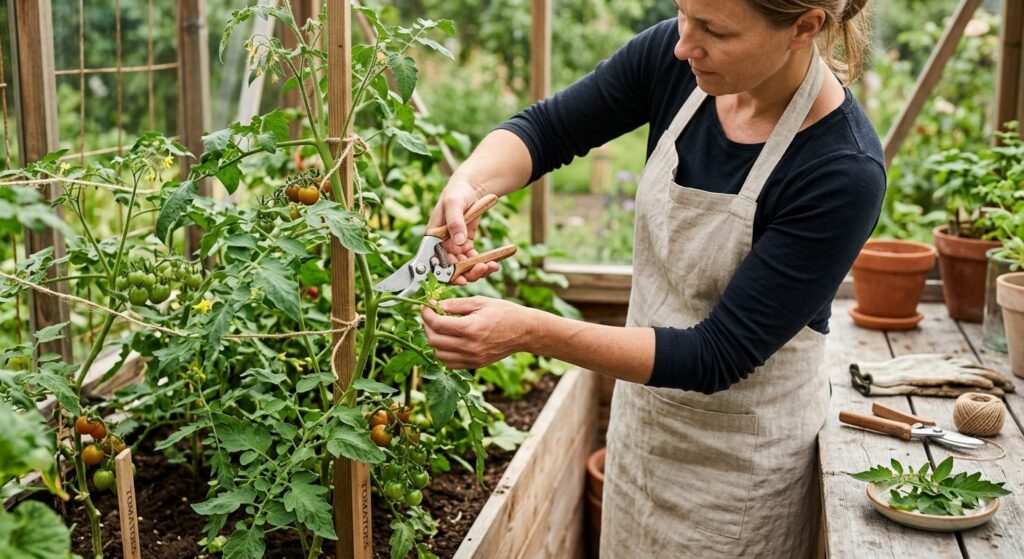
Knowing how to prune tomato plants is essential for Canadian gardeners who want to maximize their harvest and keep plants healthy from June through September. Proper pruning improves airflow, reduces disease pressure, and directs the plant’s energy toward fruit production rather than excessive foliage. Whether you’re growing indeterminate tomatoes in Ontario’s zone 5b or cherry tomatoes in containers on a British Columbia balcony, mastering these techniques will transform your tomato-growing success.
| Growth Stage | Pruning Action | Timing (USDA Zones 3-6) | Purpose |
|---|---|---|---|
| Seedling (4-6 weeks) | Pinch early blossoms | Late May to early June | Strengthen root system |
| Vegetative growth | Remove suckers weekly | Mid-June through July | Direct energy to main stems |
| Mid-season | Prune lower leaves | Late June to early August | Prevent soil-borne disease |
| Late season | Top plants | 30-40 days before first frost | Ripen existing fruit |
Why Pruning Tomato Plants Matters for Your Harvest
Disease Prevention Through Improved Airflow
Pruning creates better airflow around your tomato plants, which is critical in humid Canadian summers. Quebec gardeners in zone 4b and Ontario growers in zone 5a face frequent humidity that encourages blight and fungal diseases. Removing excess foliage allows air to circulate freely, keeping leaves dry and reducing the conditions that pathogens need to thrive. A well-pruned plant dries faster after rain or morning dew, cutting disease risk by up to 40 percent.
Directing Energy Toward Fruit Production
Every sucker and unnecessary branch diverts energy away from developing tomatoes. By strategically pruning, you ensure the plant focuses on fruit production rather than creating excessive vegetative growth. This is especially important for indeterminate tomatoes, which continue growing throughout the season. Gardeners in Alberta’s zone 3a with shorter growing seasons benefit enormously from this focused energy, as it helps tomatoes ripen before the first frost in late August or early September.
Easier Harvest and Plant Management
Pruned plants are simpler to stake, tie, and harvest. When you remove lateral shoots and excess foliage, you create clear pathways to the ripening fruit and reduce the tangled jungle effect that makes harvesting difficult. This organization also helps you spot pests early and apply organic treatments more effectively. Container gardeners in British Columbia’s zone 8a particularly appreciate the tidy growth habit that pruning creates on balconies and patios.
Understanding Determinate vs. Indeterminate Tomato Varieties
Determinate Tomatoes Require Minimal Pruning
Determinate tomatoes, also called bush varieties, grow to a fixed height of 60 to 90 centimetres and produce fruit all at once over a two to three week period. Popular varieties like ‘Bush Early Girl’ and ‘Roma’ fall into this category. These plants need very little pruning because their compact growth habit is already controlled. Remove only the lower leaves that touch the soil to prevent disease. Manitoba gardeners in zone 3b often choose determinate varieties for their short season and predictable harvest timing.
Indeterminate Tomatoes Need Regular Attention
Indeterminate tomatoes grow continuously throughout the season, often reaching 180 to 240 centimetres or more. Varieties like ‘Beefsteak’, ‘Brandywine’, and most heirloom tomatoes are indeterminate. These plants produce fruit continuously from July through September in most Canadian zones. They require consistent pruning to manage their vigorous growth, remove suckers, and maintain the one or two main stem structure that produces the best yields. Saskatchewan gardeners in zone 2b can still grow these varieties with proper pruning and season extension techniques.
Identifying Your Tomato Type
Check your seed packet or plant tag for growth habit information. If it mentions staking, caging, or lists a mature height above 120 centimetres, you likely have an indeterminate variety that benefits from regular pruning. Determinate varieties often include terms like ‘bush’, ‘patio’, or ‘compact’ in their names. When shopping at Canadian garden centres like Veseys or William Dam Seeds, ask staff to clarify the variety type if the label is unclear.
Required Materials
- ✂️ Clean, sharp pruning shears or scissors from Canadian Tire or local garden centres
- 🧴 Rubbing alcohol or 10 percent bleach solution for sanitizing tools between plants
- 🧤 Garden gloves to protect hands from tomato plant sap and rough stems
- 🪣 Bucket or compost bin for collecting pruned material
- 🌿 Organic mulch like straw or wood chips to protect soil after removing lower leaves

How to Prune Tomato Plants: Step-by-Step Instructions
Step 1: Sanitize Your Pruning Tools
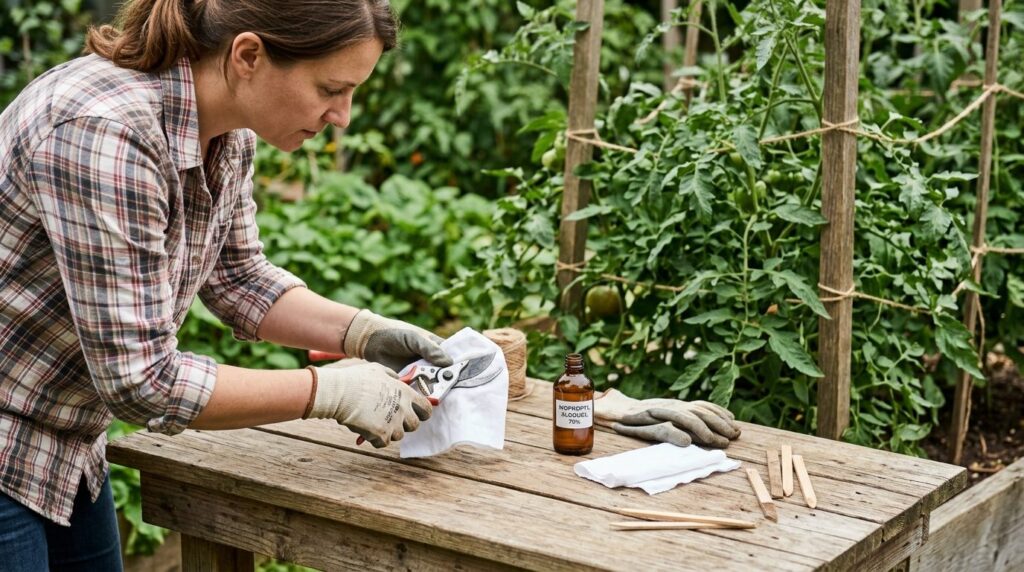
Before you begin pruning, clean your pruning shears with rubbing alcohol or a 10 percent bleach solution. This critical step prevents spreading diseases like bacterial spot or early blight between plants. Dip or wipe the blades thoroughly, then allow them to air dry for 30 seconds. Repeat this sanitization between each plant, especially if you notice any signs of disease. Ontario gardeners in zone 5b dealing with humid July conditions should be particularly vigilant about this practice, as pathogens spread rapidly in warm, moist environments. Keep a small container of alcohol in your garden toolkit for quick sterilization throughout your pruning session.
Step 2: Identify and Remove Suckers
Suckers are the small shoots that emerge in the leaf axil, the V-shaped junction where a branch meets the main stem. When suckers are less than 5 centimetres long, simply pinch them off with your fingers by bending them sideways until they snap cleanly. For larger suckers, use your sanitized shears to make a clean cut as close to the main stem as possible without damaging it. Start this practice when plants are 30 to 45 centimetres tall in mid-June for Quebec gardeners in zone 4a. Check plants weekly, as suckers grow rapidly during the peak growing season in July and early August. Removing suckers directs energy to the main stems and developing fruit.
Step 3: Prune Lower Leaves Near the Soil
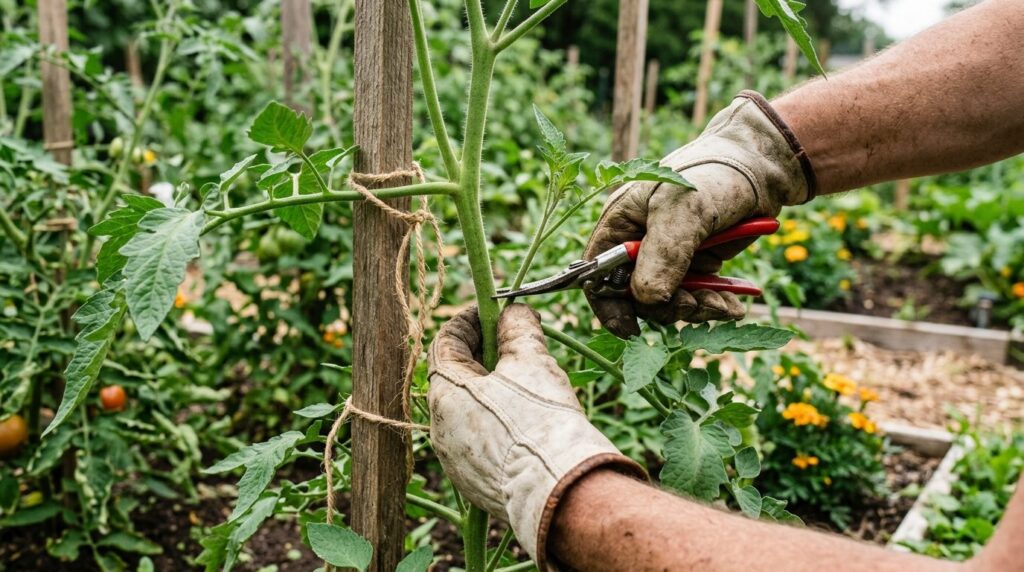
Remove all foliage within the bottom 15 to 20 centimetres of the plant, especially any lower leaves touching the ground. These leaves are most vulnerable to soil-borne diseases and provide a pathway for pathogens to climb into the plant. Use your shears to cut leaves cleanly at the stem, leaving no stubs that could rot. Complete this task gradually over several weeks rather than all at once to avoid shocking the plant. British Columbia gardeners in zone 8a should start this process in late June when plants are well established. After removing lower foliage, apply a 5 centimetre layer of organic mulch around the base to create a barrier between soil and remaining leaves, further reducing disease risk.
Step 4: Top Plants Before First Frost
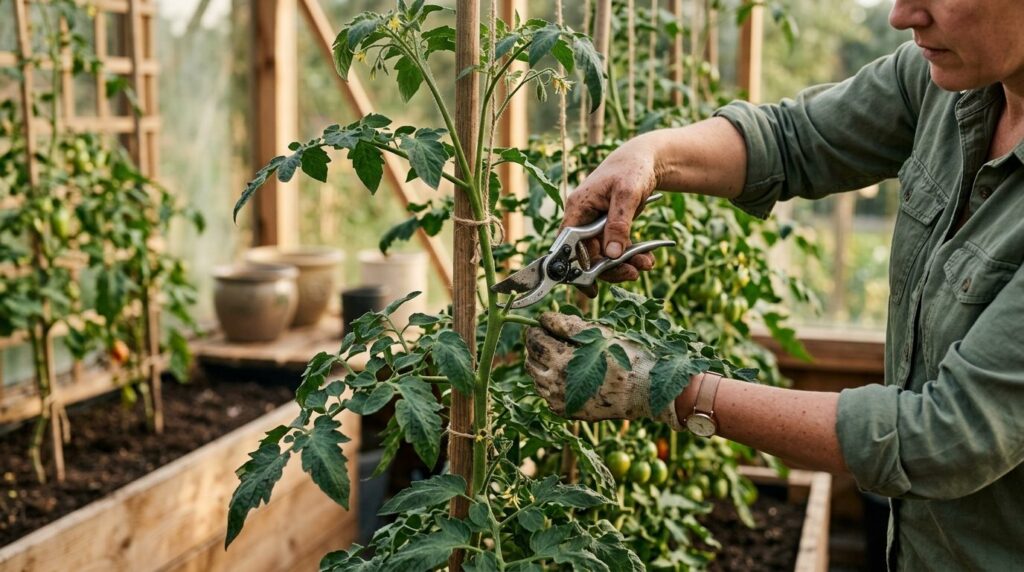
Approximately 30 to 40 days before your expected first frost date, top your indeterminate tomatoes by cutting off the growing tip of each main stem. This forces the plant to stop producing new flowers and directs all remaining energy toward ripening existing fruit. For Alberta gardeners in zone 3a, this typically means topping plants in early to mid-August when frost arrives in mid-September. Make your cut just above a leaf cluster, removing the top 10 to 15 centimetres of stem. Also remove any new flowers that appear after this date, as they won’t have time to develop into mature fruit. This technique significantly increases the percentage of tomatoes that ripen on the vine before cold weather arrives.
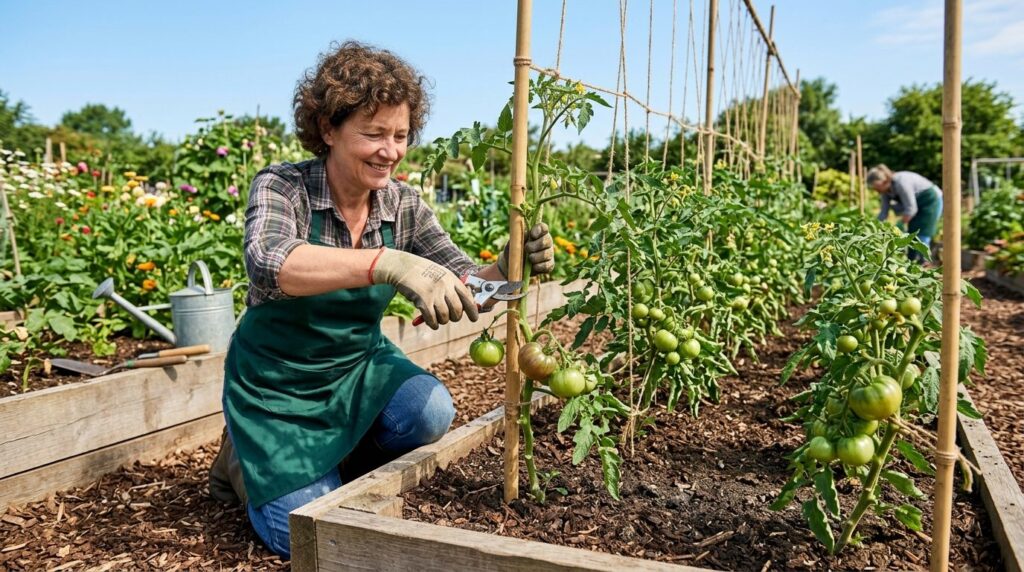
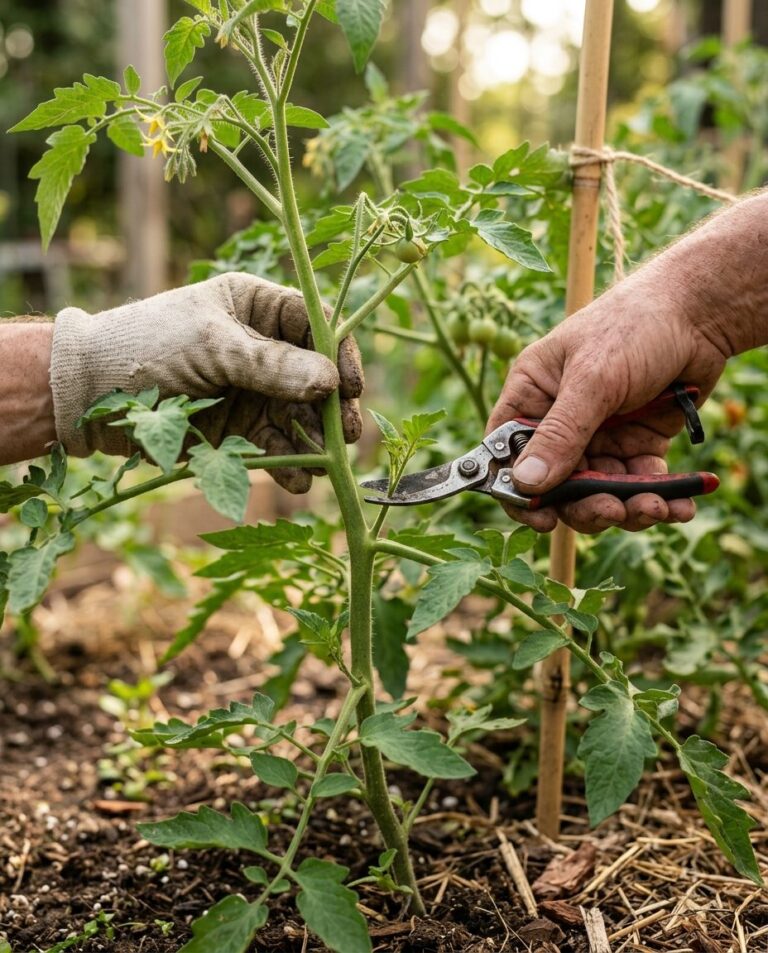
When to Start Pruning Your Tomato Plants
Early Season: Pinching First Blossoms
When tomato seedlings are young and still establishing their root systems, pinch off any flowers that appear in the first three to four weeks after transplanting. This practice, though counterintuitive, strengthens the plant by forcing it to develop a robust root system before setting fruit. Saskatchewan gardeners in zone 3b who transplant in early June should remove blossoms until late June or early July. The temporary sacrifice results in stronger plants that produce more abundant harvests throughout the season. Once plants reach 30 centimetres tall with thick stems, allow flowers to develop normally.
Active Growing Season: Weekly Sucker Removal
From mid-June through August, inspect your tomato plants weekly for new suckers and remove them promptly. The ideal time for this task is morning after dew has dried but before the heat of the day, typically between 9 AM and 11 AM. Young suckers under 5 centimetres are easiest to remove and cause the least stress to the plant. Manitoba gardeners in zone 2b should be especially consistent with this schedule during their short but intense growing season from late June through late August. Regular attention prevents suckers from becoming large branches that require more aggressive pruning.
Late Season: Final Cleanup and Topping
As your region approaches its first frost date, shift your pruning focus to ripening existing fruit. In addition to topping plants, remove any yellowing or diseased leaves, and thin out dense foliage to improve air circulation around developing tomatoes. Ontario gardeners in zone 5a typically perform this final pruning in late August or early September when frost threatens in late September or early October. Continue removing new suckers and flowers even at this stage, as they compete with ripening fruit for the plant’s limited remaining energy and resources.
Identifying Tomato Suckers Correctly
Understanding Leaf Axils
The leaf axil is the angle formed where a leaf stem meets the main trunk or a primary branch. This is where suckers emerge, appearing as small shoots with their own tiny leaves. New gardeners often confuse suckers with legitimate branches or flower clusters. A true sucker grows from this specific junction point and, if left unpruned, will develop into a full branch with its own leaves, flowers, and eventually fruit. Quebec gardeners in zone 4b should examine plants closely in good light to distinguish between suckers and the main leaf stems, which should not be removed.
The Two-Stem Training Method
Some experienced Canadian gardeners deliberately allow the first sucker below the first flower cluster to develop into a second main stem, creating a two-stem training system. This technique works well for vigorous indeterminate tomatoes in longer growing seasons like British Columbia’s zone 8a or southern Ontario’s zone 6b. The two-stem method increases total yield while maintaining manageable plant size. Remove all other suckers as usual, but stake and support both main stems independently. This approach requires more space and stronger support structures but can increase harvest by 30 to 50 percent in ideal conditions.
What Not to Remove
Never remove the main growing tip until late season topping, and never prune the primary leaf stems that emerge directly from the main stem. These leaves are essential for photosynthesis and fruit development. Also avoid removing flower clusters, as these become your tomatoes. The goal is to eliminate competing lateral shoots (suckers) while preserving the productive main structure. Alberta gardeners in zone 3a should be especially conservative with pruning, as every leaf contributes to fruit ripening in their short season. When in doubt, leave more foliage rather than less, especially on determinate tomatoes.
Pruning for Disease Prevention and Airflow
Creating Space Between Plants
Proper pruning works in conjunction with correct plant spacing to prevent disease. Even well-pruned tomatoes need adequate space between plants for air to circulate freely. Maintain at least 60 centimetres between plants for determinate varieties and 90 centimetres for indeterminate types. Manitoba gardeners in zone 3b dealing with humid summer nights should prioritize this spacing to allow plants to dry quickly after dew. Remove any branches that cross into neighbouring plants or create dense tangles where moisture can accumulate. Good airflow is your primary defense against fungal diseases like early blight and septoria leaf spot.
Removing Diseased Foliage Immediately
If you spot leaves with brown spots, yellowing, or other disease symptoms, remove them immediately regardless of pruning schedules. Cut diseased foliage at least 2 to 3 centimetres below the affected area and dispose of it in household garbage, never in compost where pathogens can survive. Sanitize your pruning shears thoroughly before moving to the next plant. Ontario gardeners in zone 5a experiencing wet Julys should inspect plants every few days for early signs of blight or fungal issues. Early intervention through targeted pruning can often save a plant that would otherwise succumb to disease.
Thinning Dense Canopies
Even after removing suckers, some vigorous plants develop overly dense foliage that traps moisture and blocks light from reaching developing fruit. Selectively remove a few interior leaves to open up the canopy, focusing on older leaves that are shaded and contribute little to photosynthesis. Never remove more than 20 to 25 percent of total foliage at once, as leaves are essential for plant health and fruit development. Saskatchewan gardeners in zone 2b with intense summer sun should maintain slightly more foliage to protect fruit from sunscald, but still ensure adequate air movement through the plant.
Special Considerations for Cherry Tomatoes and Container Plants
Cherry Tomatoes Need Less Aggressive Pruning
Cherry tomatoes are typically indeterminate but produce abundant fruit on a bushier growth habit than large-fruited varieties. While you should still remove suckers, you can be less aggressive about it. Many gardeners allow one or two suckers per plant to develop, creating a fuller plant that produces more fruit clusters. British Columbia gardeners in zone 8a growing cherry tomatoes like ‘Sweet 100’ or ‘Sun Gold’ on balconies can maintain this slightly bushier habit while still ensuring good airflow. Focus pruning efforts on removing lower leaves and maintaining plant health rather than strict sucker removal.
Container Plants Require Balanced Pruning
Tomatoes grown in containers have limited root space, which naturally restricts their size. Prune container tomatoes to maintain balance between foliage and root mass. Remove suckers consistently, but leave adequate foliage to support the fruit load without overwhelming the root system. Quebec gardeners in zone 4b growing tomatoes in 20 to 25 litre containers on patios should aim for one or two main stems with moderate foliage density. Container plants also benefit from more frequent lower leaf removal, as pots retain moisture and create humid conditions near the soil surface that encourage disease.
Supporting Pruned Container Plants
Even compact container varieties need support after pruning directs their energy into fruit production. Install a sturdy cage or stake at planting time to avoid disturbing roots later. As you prune and the plant develops fruit, tie stems to supports using soft cloth strips or plant ties, never wire that can cut into stems. Ontario gardeners in zone 5a using containers on balconies should choose cages at least 120 centimetres tall for indeterminate varieties, even when pruned to one or two stems. Proper support prevents branches from breaking under the weight of ripening tomatoes and makes pruning easier by keeping the plant structure visible and accessible.
Common Mistakes to Avoid
- Pruning determinate varieties too aggressively: Bush tomatoes need their foliage to support their concentrated fruit set. Remove only lower leaves touching soil and diseased foliage.
- Removing too much foliage at once: Never prune more than 20 to 25 percent of leaves in a single session. Gradual pruning over several weeks prevents shock and maintains photosynthesis capacity.
- Failing to sanitize tools between plants: Disease spreads rapidly on contaminated shears. Wipe blades with alcohol between every plant, especially if you see any disease symptoms.
- Pruning during wet conditions: Wait until foliage is completely dry before pruning. Wet conditions promote disease entry through fresh cuts. Prune in morning after dew dries.
- Leaving stubs when removing suckers: Cut or pinch suckers cleanly at their base. Stubs can rot and create entry points for pathogens. Make cuts flush with the main stem.
Regional Tips for Canada
Quebec and Ontario: Managing Humid Summers
Gardeners in Quebec zones 3b to 5b and Ontario zones 4a to 6b face humid summers that increase disease pressure. Prioritize aggressive sucker removal and lower leaf pruning to maximize airflow. Start pruning lower leaves in late June when humidity rises, removing all foliage within 20 centimetres of the soil. Apply organic mulch immediately after to prevent soil splash during rain. In particularly humid years, consider removing additional interior leaves to open the canopy. Top plants by mid-August in zone 4 regions and late August in zone 5-6 areas to ensure fruit ripens before September frosts.
Prairie Provinces: Short Season Strategies
Manitoba zones 2b to 3b, Saskatchewan zones 2a to 3b, and Alberta zones 2a to 4a have intense but brief growing seasons. Focus pruning efforts on directing maximum energy to fruit ripening rather than vegetative growth. Remove suckers religiously from late June onward, and pinch off any flowers that appear after early August, as they won’t mature before frost. Top plants by early August in zone 2 areas and mid-August in zone 3-4 regions. The combination of long summer daylight and focused pruning can produce excellent yields despite the short season. Choose early-maturing varieties like ‘Early Girl’ or ‘Sub-Arctic Plenty’ to maximize success.
British Columbia: Extended Season Opportunities
Coastal British Columbia zones 7a to 9a enjoy longer, milder growing seasons that allow more flexible pruning approaches. Gardeners can maintain slightly bushier plants with less aggressive sucker removal while still achieving full fruit maturity. However, the region’s frequent rain makes disease prevention through pruning even more critical. Remove lower leaves consistently and ensure excellent airflow through the canopy. Interior BC zones 5a to 6b have shorter seasons similar to the Prairies and should follow more aggressive pruning timelines. Coastal gardeners can delay topping until late September or even early October, allowing plants to continue producing into fall.
Caring for Your Tomato Plants After Pruning
Immediate Post-Pruning Care
After a pruning session, water plants thoroughly at the base to reduce stress and support recovery. Avoid wetting foliage, especially fresh cuts, which increases disease risk. Apply a balanced organic fertilizer like 5-5-5 or fish emulsion diluted to half strength to support new growth and fruit development. Ontario gardeners in zone 5b should water in early morning so any moisture on leaves dries quickly during the day. Monitor plants for signs of stress like wilting over the next 24 to 48 hours. Slight wilting is normal immediately after heavy pruning, but plants should recover quickly with adequate water.
Ongoing Maintenance Schedule
Establish a weekly pruning routine throughout the growing season from mid-June through August. Check plants every 5 to 7 days for new suckers, diseased leaves, and dense foliage that needs thinning. This regular attention prevents pruning from becoming an overwhelming task and keeps plants at optimal health. Quebec gardeners in zone 4a should combine pruning with weekly pest inspections and fertilizer applications for efficient garden maintenance. Keep your pruning shears sharp and sanitized, storing them in a dry location between uses. Dull blades crush stems rather than cutting cleanly, creating larger wounds that heal slowly.
Supporting Fruit Development
As pruning directs energy toward fruit, ensure plants receive adequate nutrition and consistent moisture. Tomatoes need 2.5 to 5 centimetres of water weekly, either from rain or irrigation. Mulch around plants to maintain even soil moisture and prevent the blossom end rot that results from irregular watering. Feed plants every two to three weeks with a fertilizer higher in phosphorus and potassium than nitrogen once flowering begins. Manitoba gardeners in zone 3b should use organic options like compost tea or kelp-based fertilizers available at local garden centres. The combination of strategic pruning, consistent watering, and appropriate fertilization produces the heaviest yields of high-quality tomatoes throughout the Canadian summer.