

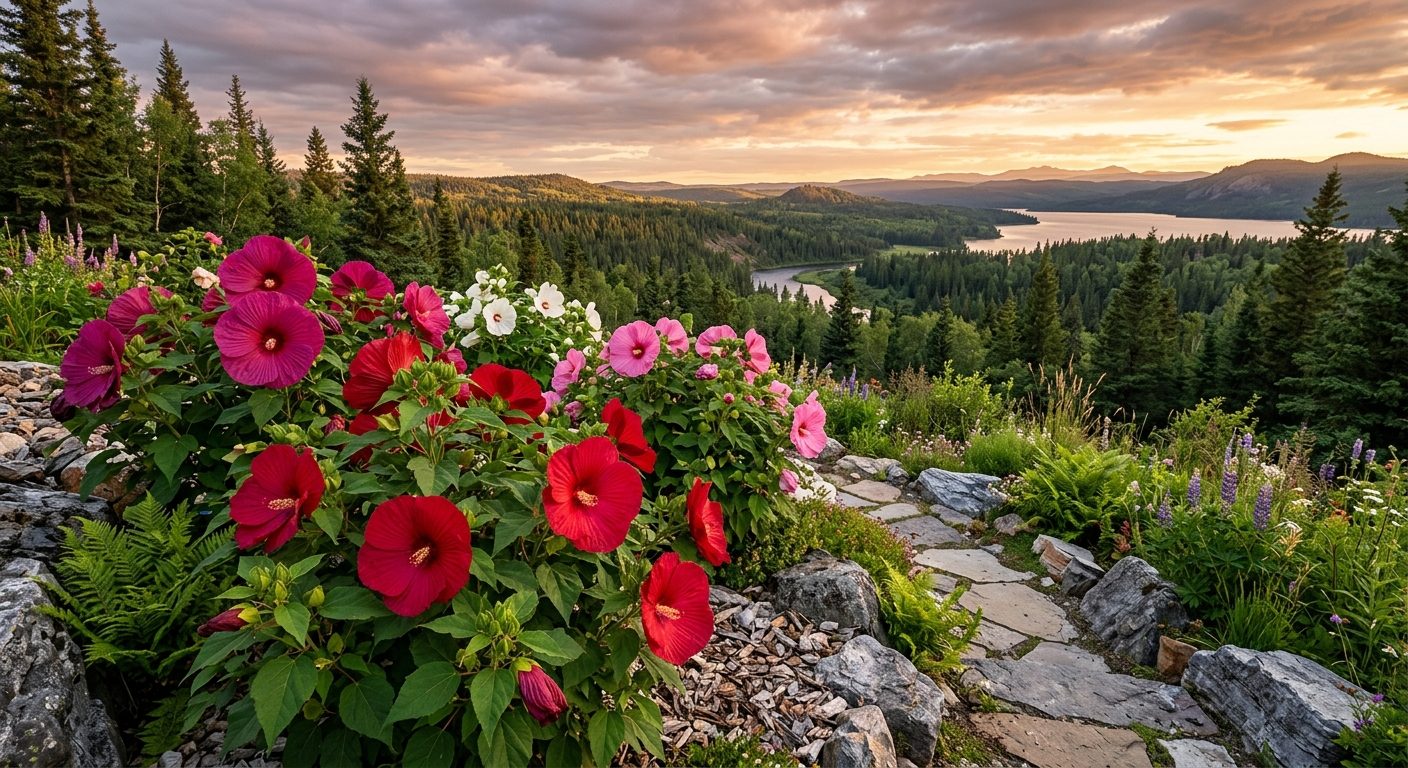
Why Hardy Hibiscus Thrives Where Tropical Varieties Fail
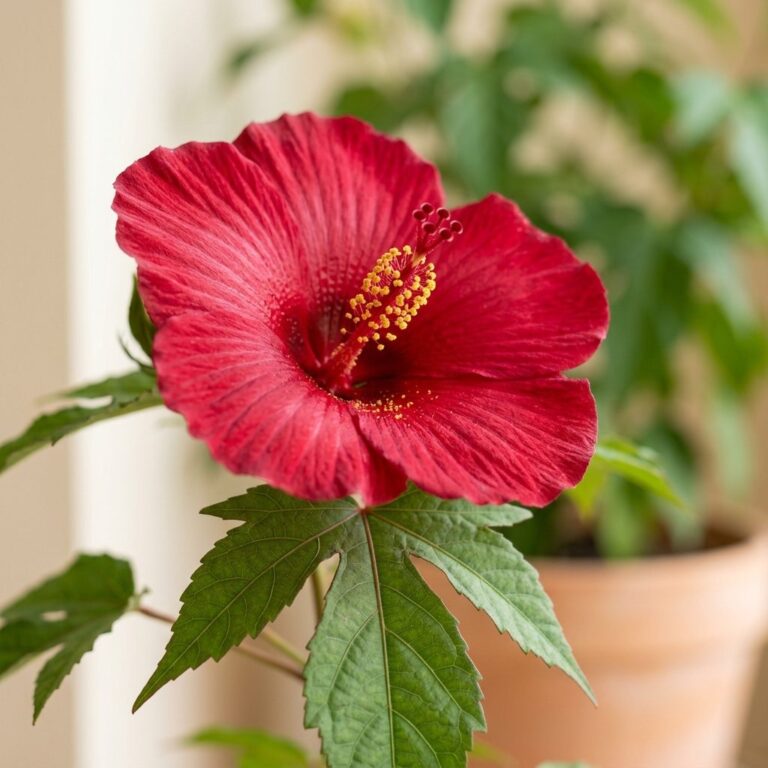
Across Ontario’s zone 5 gardens and Quebec’s zone 4 landscapes, Hardy Hibiscus (Hibiscus moscheutos) emerges each May as a herbaceous perennial, sending up woody stems that carry blooms as wide as dinner plates through August and September. Unlike its tropical cousin Hibiscus rosa-sinensis-which must winter indoors or perish at the first frost-Hardy Hibiscus survives soil temperatures that plunge to -35°C, re-sprouting from its crown each spring. This physiological distinction makes it the only hibiscus suitable for permanent outdoor planting in Canadian hardiness zones 3 through 9, where freeze-thaw cycles and late spring frosts would kill tropical species outright. Gardeners in Edmonton (zone 3b) and Halifax (zone 6a) alike can cultivate Rose Mallow as a low-maintenance perennial shrub, provided they understand its wetland origins and apply techniques that protect the crown during winter’s soil heave.
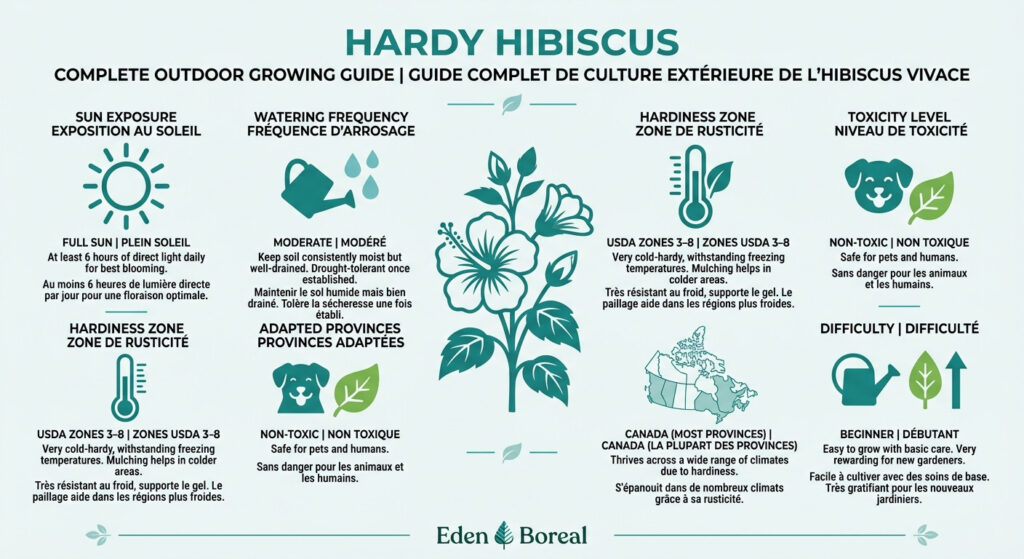
| Characteristic | Value |
|---|---|
| Botanical name | Hibiscus moscheutos |
| Plant type | Herbaceous perennial shrub |
| Mature size | 90-180 cm height, 60-120 cm spread |
| Light | Full sun (minimum 6 hours direct light daily) |
| Watering | Deep watering twice weekly during active growth; daily in extreme heat |
| Ideal temperature | 18-30°C during growing season; dormant below 5°C |
| Humidity | 40-60% (tolerates wide range) |
| Hardiness zones (outdoors) | Zone 3 to Zone 9 |
| Toxicity | Non-toxic to cats, dogs, and humans |
| Difficulty level | Beginner |
Hardy Hibiscus vs. Tropical Hibiscus: Why Cold-Climate Gardeners Choose the Perennial Type
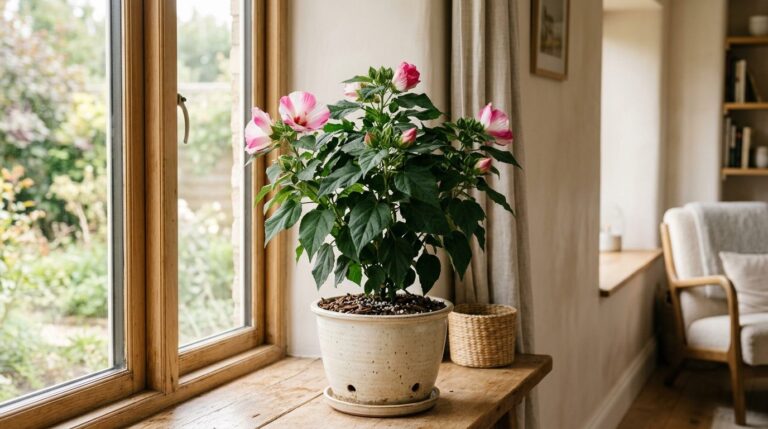
The confusion between Hardy Hibiscus and tropical hibiscus causes more Canadian gardening failures than any other plant mix-up. Hibiscus rosa-sinensis, the tropical species sold as a patio shrub or houseplant, originates in equatorial Asia where frost never occurs; its cells rupture at temperatures below 4°C, and a single night at -2°C kills the plant to the root. Hardy Hibiscus, native to North American wetlands from Ontario to Louisiana, evolved mechanisms to survive soil freezing: its crown sits below the frost line, protected by insulating mulch and snow cover, while above-ground stems die back completely each autumn. In spring, adventitious buds on the crown generate entirely new stems-a process that can delay visible growth until late May in zone 4 regions like Ottawa, long after tropical hibiscus would have leafed out indoors.
Bloom Size and Flowering Window
Tropical hibiscus produces 10-15 cm flowers continuously from April through October when grown indoors, but each bloom lasts only one day. Hardy Hibiscus flowers measure 20-30 cm across-earning the nickname “dinner-plate hibiscus”-and appear from mid-July through September, with individual blooms persisting 24-36 hours. The larger calyx and thicker petal structure of H. moscheutos reflect its adaptation to attract pollinators across open wetland habitats, whereas tropical species evolved in forest understories with closer pollinator proximity.
Root Architecture and Transplant Shock
Tropical hibiscus develops a fibrous root system within 30 cm of the soil surface, allowing container culture and frequent repotting. Hardy Hibiscus sends a taproot 60-90 cm deep by its second year, anchoring the plant against wetland flooding and accessing groundwater during drought. This deep root makes transplanting mature specimens nearly impossible-gardeners in southern Ontario’s zone 6b report 70% mortality when moving three-year-old clumps. Always site Hardy Hibiscus in its permanent location at planting time, choosing spots with consistent moisture and no risk of future excavation.
Hardiness Zones and Winter Survival: Which Regions Support Year-Round Growth
Hardy Hibiscus survives in USDA zones 3 through 9, encompassing nearly all populated regions of Canada except extreme northern territories. In zone 3 areas like Winnipeg and Edmonton, winter soil temperatures reach -40°C, yet the crown survives beneath 15-20 cm of mulch and 30-60 cm of snow cover. The critical factor is not absolute minimum temperature but the freeze-thaw cycle frequency: repeated freezing and thawing of soil heaves the crown upward, exposing it to lethal cold and desiccating winter wind. Southern Ontario’s zone 6a experiences more freeze-thaw events per winter than Winnipeg’s zone 3a, making mulch depth and timing more critical in milder zones than in consistently frozen regions.
Geographic Success Rates Across Canadian Provinces
- Quebec (zones 3b-5b): Excellent survival with 15 cm mulch applied after soil freezes in November; late spring emergence (mid-May) normal
- Ontario (zones 4a-7a): Reliable perennial performance; southern regions may see February thaws that trigger premature bud break-apply mulch after first hard freeze
- British Columbia (zones 6b-9a): Coastal mild winters allow year-round green growth in zone 9; interior zones 5-6 require standard mulching
- Alberta (zones 3a-4a): Consistent snow cover protects crowns; choose early-blooming cultivars to ensure flowering before September frost
- Maritime provinces (zones 5a-6b): High humidity and moderate winters ideal; watch for crown rot in poorly drained coastal soils
Microclimate Adjustments for Marginal Zones
In zone 3 gardens, site Hardy Hibiscus on the south side of buildings or fences where reflected heat raises soil temperature 2-3°C and reduces freeze-thaw cycling. Avoid low-lying frost pockets where cold air pools-elevation differences of just 1-2 metres can shift effective hardiness by half a zone. Gardeners in Saskatoon (zone 3b) report consistent success when planting against south-facing brick walls that radiate stored heat through autumn, delaying dormancy by 10-14 days and allowing buds to harden off fully before winter.
Sunlight Requirements and Bloom Size Correlation in Hardy Hibiscus
Bloom diameter in Hardy Hibiscus correlates directly with daily light dose, measured in photosynthetic photon flux density (PPFD). Field studies in temperate wetlands show that plants receiving 6+ hours of direct sun (approximately 2,000+ μmol/m²/s peak PPFD) produce flowers averaging 25-30 cm diameter, while those in 4-hour sun yield 15-20 cm blooms. Below 4 hours daily direct light, flowering becomes sparse and stems elongate excessively, a condition called etiolation. In practical terms for Canadian gardeners, “full sun” means an unobstructed southern or western exposure from 10:00 to 16:00-the six-hour window when solar elevation exceeds 45° and light intensity surpasses the photosynthetic compensation point for maximum carbohydrate production.
Partial Shade Compromises and Cultivar Selection
If your site offers only 4-5 hours of direct sun-common in urban Toronto gardens shadowed by neighbouring structures-select compact cultivars like ‘Kopper King’ (120 cm height, 20 cm blooms) rather than tall varieties such as ‘Lord Baltimore’ (180 cm, 25 cm blooms). Shorter plants allocate less energy to stem elongation and more to flower production, partially offsetting reduced light. Alternatively, prune nearby shrubs to increase light penetration: removing lower branches from a mature lilac can add 30-60 minutes of morning sun, measurably increasing bloom count.
Afternoon Sun vs. Morning Sun in Canadian Climates
Western and southern exposures deliver higher-intensity light than eastern exposures due to cumulative atmospheric heating through the day. In Montreal’s zone 5b, afternoon sun (13:00-18:00) provides 15-20% more photosynthetically active radiation than equivalent-duration morning sun (7:00-12:00), translating to visibly larger blooms. However, afternoon sun also increases transpiration stress during July-August heat waves-pair western exposures with deep watering protocols (see next section) to prevent wilting. Eastern exposures suit gardeners who cannot commit to frequent watering but accept slightly smaller flowers.
Deep Watering Strategy for Wetland-Native Plants in Temperate Soils
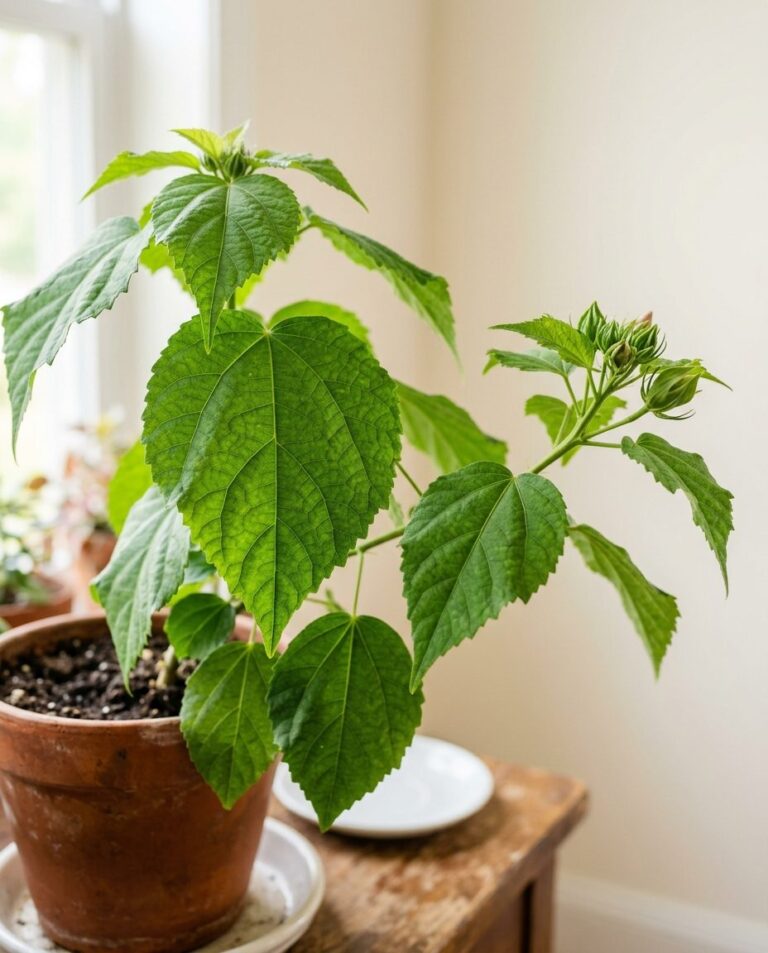
Hardy Hibiscus evolved in floodplain soils with water tables 30-60 cm below the surface, where roots access consistent moisture without waterlogging. Replicating this in Canadian gardens requires deep, infrequent watering rather than shallow daily sprinkling. Apply 4-5 cm of water per session (measured by placing a tuna can under the irrigation zone) twice weekly during active growth, allowing soil to dry 5-7 cm deep between waterings. This schedule encourages the taproot to grow downward, reaching subsoil moisture reserves and reducing dependence on surface irrigation. Shallow watering-common in automatic sprinkler systems that deliver 1 cm daily-keeps roots in the top 15 cm, where they’re vulnerable to drought stress and winter heaving.
Adjusting for Soil Texture and Drainage Rate
Clay-loam soils prevalent in southern Manitoba and the Ottawa Valley hold moisture 3-5 days after a deep watering, allowing a twice-weekly schedule. Sandy soils in coastal New Brunswick drain within 24-36 hours, requiring watering every 3-4 days during peak summer. Test drainage by digging a 30 cm hole, filling it with water, and timing how long it takes to empty: 1-3 hours indicates sandy soil (frequent watering needed), 6-12 hours suggests loam (standard schedule), over 24 hours signals clay (reduce frequency, improve drainage with compost).
Heat-Wave Protocols for July and August
When daytime temperatures exceed 30°C for three consecutive days-increasingly common in southern Ontario and the BC interior–Hardy Hibiscus transpires up to 4 litres daily through its large leaves. Wilting at midday becomes visible even in moist soil, as water uptake cannot match transpiration rate. Apply a second watering session in late afternoon (17:00-18:00) to rehydrate stems overnight. Alternatively, install shade cloth providing 30% shade from 12:00 to 16:00, reducing leaf temperature 3-5°C and cutting transpiration by 40% without significantly impacting photosynthesis.
Soil Composition and Drainage: Preventing Crown Rot in Freeze-Thaw Cycles
Crown rot-caused by Phytophthora and Pythium fungi-kills more Hardy Hibiscus in Canadian gardens than winter cold. These pathogens thrive in waterlogged soil where oxygen depletion stresses roots, particularly during freeze-thaw cycles when ice lenses fracture soil structure and create anaerobic pockets. The solution is a substrate that drains freely in the top 30 cm (where the crown resides) yet retains moisture at 40-60 cm depth (where the taproot feeds). Achieve this by amending native soil with a mix of 50% existing soil, 30% aged compost, 20% coarse sand or perlite in a planting zone 60 cm wide and 40 cm deep. Avoid peat-based amendments, which compress over time and impede drainage-composted pine bark or coconut coir maintain structure for 5+ years.
pH Adjustment for Nutrient Availability
Hardy Hibiscus performs best in slightly acidic soil, pH 6.0-7.0, where iron, manganese, and phosphorus remain soluble. Alkaline soils (pH 7.5+) common in Alberta’s prairie regions lock up iron, causing interveinal chlorosis-yellowing between leaf veins while veins remain green. Test soil pH with a kit from Canadian Tire or a local garden centre; if above 7.2, incorporate elemental sulfur at 200 g/m² in spring, watering thoroughly to activate. Retest after 6 weeks and adjust as needed. Acidic soils below pH 5.5 (rare in Canada except coastal BC) require lime at 150 g/m² to raise pH.
Raised Bed Strategy for Heavy Clay Sites
If your site has dense clay that remains saturated through spring-typical of Red River Valley soils in Manitoba-build a raised bed 20-30 cm above grade rather than attempting to amend clay in place. Fill the bed with the 50/30/20 mix above, ensuring the crown sits above the water table even during snowmelt. This elevation also reduces frost heaving by improving drainage during freeze-thaw events, a critical advantage in zone 4 regions where March temperatures oscillate above and below freezing daily.
Late Spring Emergence: Why Your Hardy Hibiscus Appears Dead Until May
The most common panic among Canadian Hardy Hibiscus growers occurs in April, when perennials like daylilies and hostas show 10-15 cm of growth yet the hibiscus site remains bare soil. This late emergence is physiologically normal: the crown requires sustained soil temperatures above 12-15°C at 10 cm depth before breaking dormancy, a threshold not reached in zone 4 regions until late April or early May. In contrast, daylilies break dormancy at 5-7°C, giving them a 3-4 week head start. The delay protects Hardy Hibiscus from late frosts-new shoots are extremely frost-sensitive, and a -2°C night in mid-April would kill emerging growth. By waiting until mid-May, the plant ensures shoots develop after the last frost date (typically May 15-25 across southern Canada).
How to Confirm the Crown Is Alive in Early Spring
If no growth appears by June 1 in zone 5 or warmer, gently scrape soil away from the crown (the woody base where stems emerge) and examine for green tissue. Use a fingernail or knife to scratch the bark: green cambium beneath indicates a living crown, while brown or black tissue suggests winter kill or crown rot. Check multiple points around the crown’s circumference-partial survival is common, with new shoots emerging from undamaged sections. If you find any green tissue, re-cover the crown with soil and wait another 2 weeks; late shoots often appear through mid-June in cool springs.
Regional Emergence Timeline Across Canada
- Zone 3 (Edmonton, Winnipeg): First shoots mid to late May; full leaf-out by mid-June
- Zone 4 (Ottawa, Quebec City): Emergence late April to early May; rapid growth through May
- Zone 5 (Toronto, Montreal): Shoots visible late April; flowering begins mid-July
- Zone 6+ (Vancouver, southern Ontario): Emergence mid-April; earlier flowering (early July) allows longer bloom season
Overwintering Techniques: Mulch Depth and Crown Protection Without Burying
Successful overwintering of Hardy Hibiscus in Canadian zones 3-5 depends on applying mulch at the correct depth and timing. The goal is to insulate the crown against freeze-thaw cycling while avoiding moisture accumulation that promotes crown rot. After the first hard freeze (when soil temperature at 5 cm depth drops below -5°C for 48 hours), cut stems to 10-15 cm above the crown and apply 10-15 cm of shredded leaves, straw, or evergreen boughs in a 60 cm diameter circle centered on the crown. Avoid dense materials like whole leaves or grass clippings, which mat down and trap moisture. In zone 3, increase mulch depth to 15-20 cm; in zone 6, 8-10 cm suffices.
Timing Mulch Application to Soil Freeze
Applying mulch too early-while soil remains above 5°C-creates a warm, moist environment where rodents nest and fungal spores germinate. Wait until soil freezes 2-3 cm deep, typically mid-November in southern Ontario, late October in zone 3 Alberta. Insert a soil thermometer 5 cm deep and check morning temperature for three consecutive days; when readings stay below 0°C, apply mulch. In mild zones like coastal BC (zone 8-9), soil may never freeze-in these regions, skip mulch entirely or apply a thin 5 cm layer in December to suppress weeds.
Evergreen Bough Method for Zone 3 Gardens
In Winnipeg and Edmonton (zone 3a-3b), where winter winds desiccate exposed tissue, layer evergreen boughs (spruce, pine, or fir) over the crown after applying 10 cm of shredded leaves. The boughs trap snow-nature’s best insulator, with an R-value of 1 per inch-creating a stable microclimate around the crown. Remove boughs in early April when daytime temperatures consistently exceed 5°C, but leave the leaf mulch until shoots emerge, then pull it back to expose the crown to warming soil.
Flower Size and Color Variations Across Popular Cultivars
Cultivar selection determines mature plant size, bloom diameter, and colour intensity-critical factors for integrating Hardy Hibiscus into Canadian landscape designs. The Luna series (Luna Red, Luna White, Luna Pink Swirl) remains the most compact, reaching 60-90 cm height with 15-20 cm blooms, ideal for small urban gardens in Toronto or Vancouver. Mid-sized cultivars like ‘Kopper King’ (120 cm, 20-25 cm blooms, burgundy foliage) and ‘Fireball’ (120 cm, 18 cm scarlet blooms) suit mixed perennial borders. Tall selections such as ‘Lord Baltimore’ (180 cm, 25 cm crimson blooms) and ‘Blue River II’ (150 cm, 25 cm white blooms) function as specimen plants or hedge backdrops in large rural properties across the Prairies.
Foliage Colour as a Design Element
Most Hardy Hibiscus cultivars produce green foliage, but ‘Kopper King’ and ‘Midnight Marvel’ offer deep burgundy to near-black leaves that contrast dramatically with pink or red blooms. This dark foliage absorbs more solar radiation, raising leaf temperature 2-3°C above green-leaved varieties-an advantage in cool-summer regions like coastal BC, where extra warmth accelerates growth, but a liability in hot-summer zones like southern Ontario, where it increases water demand. Pair dark-leaved cultivars with light-coloured mulch (shredded bark, not black plastic) to reflect heat and moderate soil temperature.
Bloom Colour Stability Across Canadian Climates
Anthocyanin pigments-responsible for red and pink hues-intensify in cool nights (12-15°C) and fade in sustained heat above 30°C. Hardy Hibiscus grown in zone 3-4 regions with cool August nights display deeper, more saturated colours than the same cultivars in zone 6-7 with warm nights. White-flowered varieties like ‘Blue River II’ avoid this variability, maintaining consistent colour regardless of temperature. If colour intensity matters for your design, choose red or pink cultivars for northern gardens, white for southern zones.
Addressing Nutrient Deficiency, Japanese Beetles, and Leggy Growth Patterns
Three problems dominate Hardy Hibiscus troubleshooting in Canadian gardens: interveinal chlorosis from iron deficiency, Japanese beetle defoliation, and excessive stem elongation. Iron deficiency appears as yellowing between leaf veins while veins remain green, caused by alkaline soil (pH above 7.2) or waterlogged conditions that prevent root uptake. Correct by lowering soil pH with elemental sulfur (200 g/m²) or applying chelated iron foliar spray (follow label rates) every 2 weeks until new growth shows normal green colour. Avoid high-phosphorus fertilizers, which bind iron and worsen deficiency.
Japanese Beetle Management Without Broad-Spectrum Insecticides
Japanese beetles (Popillia japonica) skeletonize Hardy Hibiscus leaves from mid-July through August across southern Ontario and Quebec, where the species is established. Hand-picking at dawn (when beetles are sluggish) into soapy water removes 60-80% of the population on small plantings. For larger gardens, apply beneficial nematodes (Heterorhabditis bacteriophora) to soil in late May to kill beetle grubs before they emerge as adults-this long-term strategy reduces populations 70-90% over 2-3 years. Avoid pheromone traps, which attract more beetles than they catch, worsening damage. Neem oil sprays (2% concentration) deter feeding but require weekly reapplication and harm pollinators if applied to open blooms.
Correcting Leggy Growth in Insufficient Light
Stems that elongate excessively-growing 180-240 cm tall with sparse foliage and small blooms-indicate insufficient light (below 4 hours daily direct sun). This etiolation cannot be reversed on current-year stems; instead, relocate the plant in early spring (before growth begins) to a sunnier site or prune nearby shade sources. If relocation is impossible, cut stems back by half in early June (when 30-40 cm tall) to force branching and denser growth, accepting reduced bloom size and delayed flowering by 2-3 weeks. Hardy Hibiscus in shaded Ottawa courtyards often benefit from June pruning, producing bushier 120 cm plants rather than sparse 200 cm specimens.
Fertilization Protocol for Balanced Growth
Apply a balanced slow-release fertilizer (10-10-10 or 14-14-14) at 100 g per plant in early May when shoots reach 15-20 cm, then again in late June. Avoid high-nitrogen formulas (e.g., 20-10-10), which promote excessive foliage at the expense of blooms. In rich prairie soils or heavily amended beds, skip fertilization entirely-excess nitrogen causes soft growth vulnerable to wind damage and delays flowering. Yellowing lower leaves in late summer are normal senescence, not nutrient deficiency; do not fertilize after July 15, as late-season nitrogen prevents proper dormancy hardening before winter.