
Proper watering remains the single most critical factor determining plant health, yet it’s where most gardeners struggle. Whether you’re nurturing houseplants through harsh Ontario winters or maintaining perennials in British Columbia’s wet climate, mastering watering techniques will transform your gardening success from zone 3 to zone 7 across our diverse landscape.
Understanding Plant Water Needs Across Growing Seasons
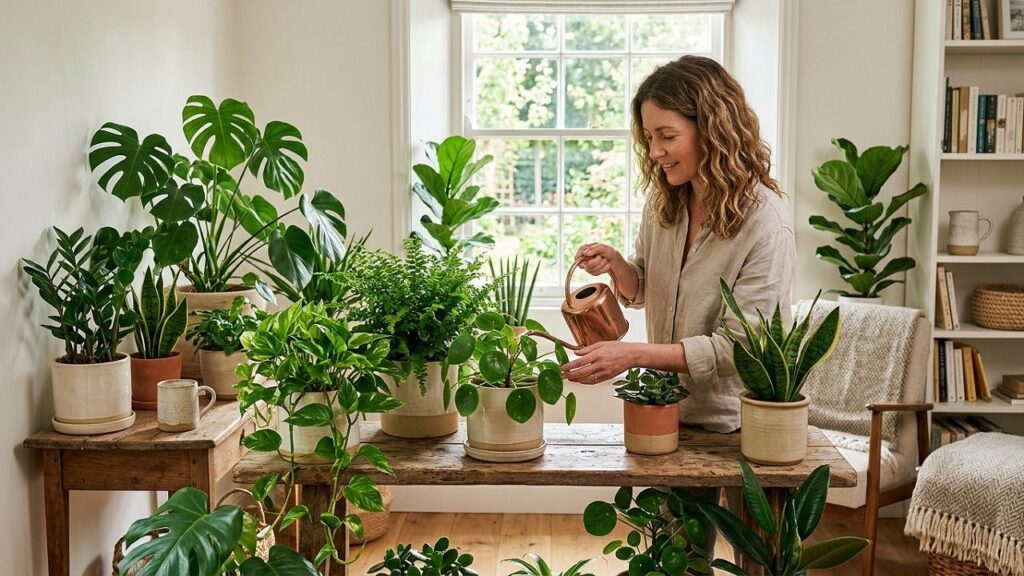
Different plants require vastly different watering approaches, and understanding these needs prevents the two most common watering mistakes: overwatering and underwatering. Watering techniques must adapt to your specific plants, local climate conditions, and seasonal changes throughout the year.
Seasonal Water Requirements in Different Zones
Plants in zone 4 Manitoba face different challenges than those in zone 6b Vancouver. During winter months, most houseplants enter dormancy and require significantly less water. Outdoor perennials in Prairie provinces need deep, infrequent watering to develop drought-resistant root systems, while coastal plants may need more frequent moisture management due to higher humidity.
Reading Plant Signals for Optimal Timing
Learning to read your plants’ water needs involves observing multiple indicators beyond soil moisture. Leaf colour, plant posture, and growth patterns all provide valuable information about watering frequency and volume requirements.
- Slight leaf drooping in afternoon heat indicates normal water stress
- Yellowing lower leaves often signal overwatering issues
- Crispy leaf edges suggest underwatering or low humidity
- Slow growth during active season may indicate water stress
- Musty soil odours indicate poor drainage and potential root problems
Soil Testing and Moisture Management Fundamentals
The Finger Test and Beyond
While the traditional finger test provides basic moisture information, accurate watering techniques require more sophisticated approaches. Insert your finger 2-3 inches deep into potting soil, or 4-6 inches for outdoor plants. However, this method doesn’t account for soil composition, drainage capacity, or root zone depth.
Moisture Meters and Professional Tools
Digital moisture meters provide consistent readings across different soil types and eliminate guesswork. These tools prove especially valuable for large containers and established garden beds where visual assessment becomes challenging.
Advanced Watering Methods for Different Plant Types
Deep Watering vs. Surface Watering
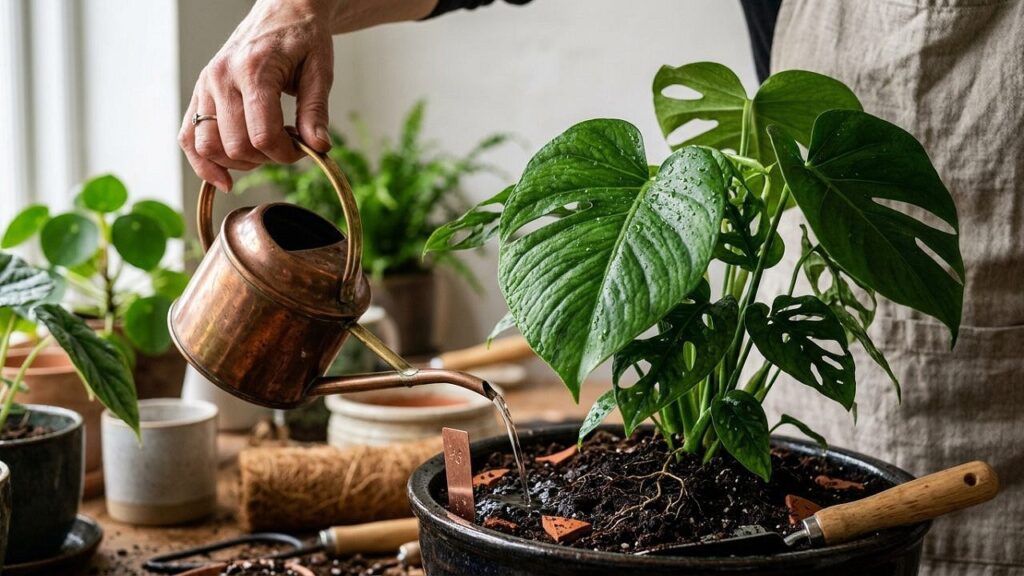
Deep watering encourages robust root development and improves drought tolerance, particularly important for perennials surviving Alberta’s unpredictable weather patterns. Apply water slowly at soil level, allowing complete penetration to 6-8 inches depth rather than frequent shallow applications.
Specialized Techniques for Container Plants
Container plants dry out faster than ground plantings and require different watering strategies. Large containers in Quebec’s humid summers may need daily attention, while smaller pots require twice-daily monitoring during heat waves.
- Check drainage holes before watering to ensure proper soil moisture levels
- Water until excess drains freely from bottom holes
- Remove standing water from saucers within 30 minutes
- Group containers by water requirements for efficient management
- Use self-watering systems for consistent moisture during vacation periods
Troubleshooting Common Watering Problems
Preventing Root Rot in High-Moisture Climates
Root rot affects plants across all zones but poses particular challenges in coastal British Columbia and Atlantic provinces where humidity levels remain consistently high. Proper drainage becomes absolutely critical for plant survival in these conditions.
Managing Water Stress During Heat Waves
Extreme heat events increasingly affect gardeners from Saskatchewan to Nova Scotia. During these periods, normal watering techniques may prove insufficient, requiring temporary schedule adjustments and protective measures.
| Plant Type | Watering Frequency | Soil Moisture Level | Best Timing |
|---|---|---|---|
| Succulents | Weekly | Dry between waterings | Morning |
| Tropicals | 2-3 times weekly | Consistently moist | Morning |
| Herbs | Daily check | Slightly dry surface | Morning/Evening |
| Vegetables | Daily during growth | Evenly moist | Morning |
| Perennials | 2-3 times weekly | Deep moisture | Morning |
Seasonal Watering Strategies and Automation
Spring Establishment and Growth Support
Spring watering focuses on supporting new growth while established plants emerge from winter dormancy. Gradually increase watering frequency as soil temperatures rise above 10°C and day length extends past 12 hours.
Summer Heat Management
Summer watering becomes critical for plant survival, particularly during July and August heat waves common across Prairie provinces. Deep, less frequent watering builds drought tolerance while mulching retains soil moisture and reduces watering needs by up to 50%.
Fall Preparation and Winter Watering
Fall watering prepares plants for winter survival while avoiding late-season growth that reduces cold hardiness. Reduce watering frequency gradually as temperatures drop below 15°C, allowing plants to naturally enter dormancy.
Winter watering becomes necessary only for houseplants and certain evergreens during warm spells. Monitor soil moisture monthly and water sparingly when top inch feels completely dry.
Mastering these proven watering techniques transforms your gardening results regardless of your location from Yukon to Newfoundland. Start implementing these strategies gradually, focusing first on proper soil assessment and timing. Your plants will reward consistent, thoughtful watering with vigorous growth, abundant blooms, and improved resistance to pests and diseases throughout every growing season.
Frequently asked questions
During winter months, most houseplants require watering every 7-14 days as they enter dormancy and growth slows significantly. Check soil moisture at 2-inch depth and water only when dry, as overwatering during dormancy causes root rot more easily than in growing season.
Water outdoor plants between 6-8 AM during Prairie summers to minimize evaporation losses and prevent fungal diseases. Evening watering keeps foliage wet overnight, promoting disease development, while midday watering wastes water through rapid evaporation.
Proper drainage allows water to flow freely from bottom holes within 5-10 minutes of watering. If water pools on soil surface or drains very slowly, improve drainage by adding perlite to potting mix or ensuring drainage holes aren't blocked by roots or debris.
Yes, clay soils retain moisture longer and need less frequent watering, while sandy soils drain quickly and require more frequent applications. Test soil moisture at root depth rather than surface, and water clay soils deeply but less often, sandy soils more frequently with smaller amounts.