

Every gardener faces the inevitable challenge of protecting their precious plants from unwanted visitors. Whether you’re dealing with aphids decimating your roses in Ontario or slugs munching through your lettuce in British Columbia, natural pest control methods offer effective solutions without compromising your family’s health or the environment. These time-tested strategies work particularly well in zones 3 through 8, where most gardening takes place across the country.
Understanding Common Garden Pests and Their Behaviour

Before diving into control methods, it’s essential to identify what you’re dealing with. The most frequent garden invaders include aphids, spider mites, caterpillars, slugs, and various beetles. Each pest has specific feeding patterns and vulnerabilities that determine the most effective natural control approach.
Identifying Pest Damage Patterns
Learning to read the signs helps you respond quickly. Aphids leave behind sticky honeydew and cause leaf curling, while spider mites create fine webbing and stippled leaves. Caterpillar damage appears as irregular holes in leaves, often with visible droppings nearby.
Timing Your Interventions
Most pests are most vulnerable during specific life stages. Early morning inspections often reveal slug activity, while aphid populations explode during warm, humid conditions typical of late spring in Quebec and the Maritimes.
Beneficial Insects as Your Garden Allies
Encouraging beneficial insects represents one of the most sustainable approaches to pest management. Ladybugs, lacewings, and parasitic wasps naturally control harmful pest populations when given the right environment to thrive.
Creating Habitat for Beneficial Species
Plant diverse flowering species that bloom throughout the season to provide nectar sources. Yarrow, dill, and sweet alyssum attract beneficial insects while serving as companion plants. In zone 4 gardens, consider hardy perennials like purple coneflower and black-eyed Susan.
Purchasing and Releasing Beneficial Insects
Many garden centers now stock live beneficial insects during peak growing season. Release them during cool morning or evening hours for best establishment rates. Focus on areas where pest problems are most concentrated.
Physical Barriers and Mechanical Controls
Simple physical methods often provide immediate relief from pest pressure without any environmental concerns. These approaches work particularly well for protecting seedlings and young transplants during their most vulnerable growth stages.
Row Covers and Protective Fabrics
Lightweight floating row covers allow light and water through while excluding flying pests. They’re especially effective against cabbage moths, flea beetles, and carrot rust flies. Remove covers when plants begin flowering to allow pollination.
Traps and Barriers
Yellow sticky cards attract aphids and whiteflies, while copper strips deter slugs through a mild electrical reaction. Beer traps work well for slugs but require regular maintenance to remain effective.
Homemade Sprays and Natural Deterrents
Creating your own pest control sprays allows complete control over ingredients while remaining budget-friendly. These solutions target specific pest types while breaking down quickly in the environment.
Soap-Based Insecticide Solutions
Mix 1-2 tablespoons of mild liquid soap per liter of water to create an effective spray against soft-bodied insects. The soap disrupts pest cell membranes while washing off easily with subsequent watering or rainfall.
Essential Oil and Garlic Deterrents
Strong-scented compounds repel many pests without harming plants. Peppermint oil deters ants and aphids, while garlic spray discourages larger pests like rabbits and deer that commonly browse Saskatchewan and Alberta gardens.
Companion Planting for Natural Protection
Strategic plant placement creates natural pest deterrent systems that work continuously throughout the growing season. This method integrates seamlessly with ornamental and edible garden designs.
Classic Companion Plant Combinations
Marigolds release compounds that repel nematodes and many flying insects. Plant them throughout vegetable beds or around the perimeter of susceptible crops. Basil planted near tomatoes helps deter hornworms and improves flavor.
Trap Crops and Sacrificial Plants
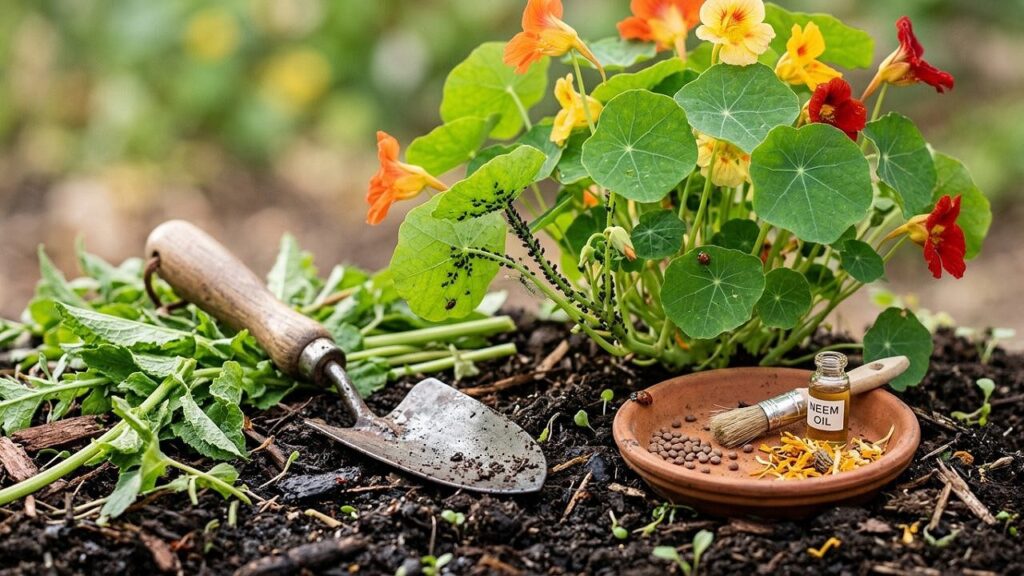
Nasturtiums attract aphids away from more valuable crops, while radishes can lure flea beetles. Plant these trap crops early in the season and monitor them closely for pest buildups that require intervention.
| Pest Problem | Natural Solution | Application Timing | Effectiveness |
|---|---|---|---|
| Aphids | Ladybugs + soap spray | Early morning | High |
| Slugs | Beer traps + copper strips | Evening setup | Very high |
| Caterpillars | Bacillus thuringiensis | When larvae present | Excellent |
| Spider mites | Predatory mites + water spray | Hot, dry periods | Good |
| Whiteflies | Yellow sticky traps | Continuous monitoring | Moderate |
Soil Health and Plant Resistance
Healthy plants naturally resist pest attacks more effectively than stressed specimens. Building robust soil biology and maintaining optimal growing conditions forms the foundation of any successful natural pest management program.
Improving Soil Biology
Regular compost additions feed beneficial microorganisms that support plant immune systems. In clay-heavy soils common across Manitoba and Saskatchewan, incorporate aged manure and leaf mold to improve drainage and structure.
Proper Nutrition for Pest Resistance
Avoid over-fertilizing with nitrogen, which creates succulent growth that attracts aphids and other pests. Balanced nutrition produces sturdy plants better equipped to withstand and recover from pest damage.
Seasonal Timing and Prevention Strategies
Understanding pest life cycles allows gardeners to intervene at the most effective moments. Many control methods work best when applied preventively rather than reactively.
Spring Prevention Measures
Clean up overwintering debris where pests often shelter. Apply dormant oil to fruit trees before bud break to control scale insects and mites. Start beneficial insect habitats early to establish populations before pest pressure builds.
Summer Monitoring and Response
Weekly garden inspections help catch problems while populations remain manageable. Focus on the undersides of leaves where many pests hide and reproduce. Keep a garden journal noting which methods work best for future reference.
Here are essential tools every natural pest control gardener should have:
- Magnifying glass for accurate pest identification
- Spray bottle for applying homemade solutions
- Yellow sticky cards for monitoring flying pests
- Fine-mesh row covers in various sizes
- Beneficial insect identification guide
The most effective natural pest management combines multiple approaches:
- Encourage beneficial insects through diverse plantings
- Monitor regularly for early pest detection
- Use physical barriers during vulnerable plant stages
- Apply targeted natural sprays when populations build
- Maintain healthy soil for strong plant resistance
Natural pest control requires patience and observation, but the results create a healthier garden ecosystem that becomes more balanced over time. Start with one or two methods that appeal to you, then expand your toolkit as you gain experience. Your plants, family, and local wildlife will benefit from these environmentally conscious choices that work in harmony with nature’s own systems.
Frequently asked questions
Most natural methods show initial results within 1-2 weeks, though establishing a balanced ecosystem with beneficial insects can take a full growing season. Immediate solutions like soap sprays work within days, while companion planting and soil improvements provide long-term prevention over months.
Natural methods often prove more effective long-term because they don't disrupt beneficial insect populations or create pesticide resistance. While chemical pesticides may work faster initially, natural approaches create sustainable pest management that improves over time as the garden ecosystem balances.
A combination approach works best: release ladybugs for biological control, spray with mild soapy water solution for immediate population reduction, and plant companion flowers like dill and yarrow to attract other beneficial insects. Regular monitoring allows early intervention when populations are still manageable.
Yes, many natural methods work excellently in cold climates. Physical barriers like row covers are particularly effective for extending seasons, while cold-hardy beneficial insects adapt well to northern conditions. Focus on soil health and resistant plant varieties suited to your specific zone for best results.