


Rudbeckia in the Canadian Garden: A Botanically Precise Introduction
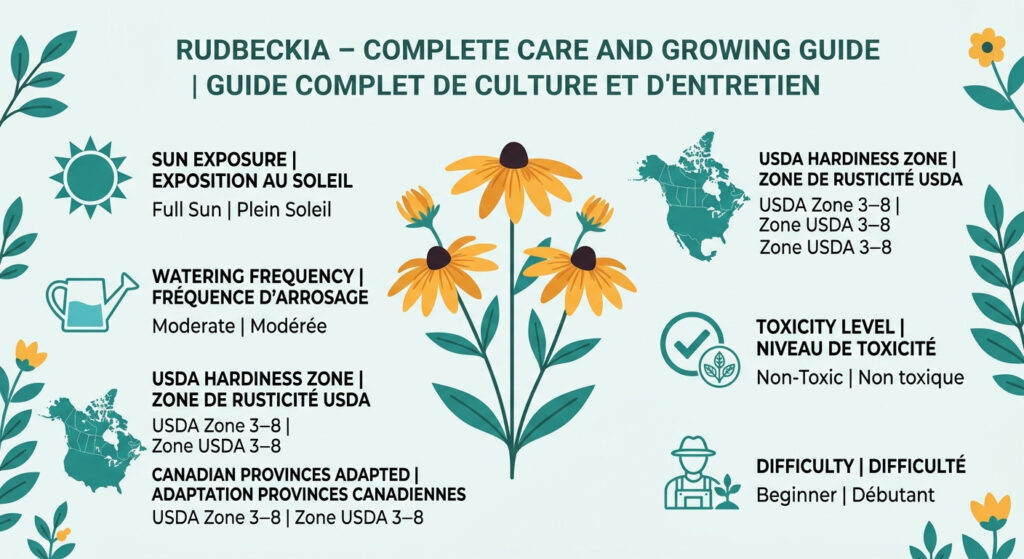
Rudbeckia, commonly called Black-eyed Susan, represents a genus of approximately 25 species within the Asteraceae family, native to North American prairies and open woodlands. In Canadian gardens from Ontario zone 5b to British Columbia zone 8a, three species dominate: Rudbeckia fulgida (spreading perennial with stolons), Rudbeckia hirta (biennial or short-lived perennial reproducing primarily by seed), and Rudbeckia laciniata (tall moisture-tolerant species). Understanding the botanical distinctions between these species, their chromosome counts (tetraploid versus diploid), and their divergent propagation strategies is essential for matching the correct Rudbeckia to your site conditions, predicting longevity, and troubleshooting performance issues such as sparse bloom or unexpected disappearance after the first season.
| Characteristic | Value |
|---|---|
| Botanical name | Rudbeckia fulgida, R. hirta, R. laciniata |
| Plant type | Herbaceous perennial or biennial |
| Mature size | 30 to 240 cm depending on species |
| Light | Full sun, minimum 6 hours direct |
| Watering | Weekly establishment year, biweekly thereafter in average soil |
| Ideal temperature | 15 to 28 degrees Celsius |
| Humidity | 40 to 60 percent, tolerates lower |
| Hardiness zones (outdoors) | Zone 3 to zone 9 |
| Toxicity | Non-toxic to cats and dogs |
| Difficulty level | Beginner |
Rudbeckia Taxonomy: Distinguishing Between Fulgida, Hirta, and Laciniata Species
Rudbeckia fulgida is a tetraploid perennial (2n=76 chromosomes) that spreads via short rhizomes and stolons, forming gradually expanding clumps over multiple seasons. Cultivars such as ‘Goldsturm’ (introduced 1937, widely available at Canadian nurseries including Sheridan Nurseries Ontario and Hole’s Greenhouses Alberta) reach 60 to 75 cm in height, produce golden-yellow ray flowers with dark brown central cones from July through September, and persist reliably in zone 4 gardens without reseeding. The stoloniferous habit means fulgida does not require annual seed production to maintain its presence, a critical distinction when planning long-term perennial borders.
Rudbeckia hirta, by contrast, is a diploid biennial or short-lived perennial (2n=38 chromosomes) that relies almost exclusively on seed reproduction. Plants germinate in year one, overwinter as basal rosettes, flower prolifically in year two (often June to August in Quebec zone 5a), set abundant seed, then typically die. The species exhibits wide morphological variation: heights range from 30 cm in dwarf selections (‘Toto’, ‘Prairie Sun’) to 90 cm in wild ecotypes, and ray flower colour spans pale yellow to deep orange-red (‘Cherry Brandy’, ‘Indian Summer’). Because hirta populations turnover every two to three years, gardeners who desire permanent stands must either allow self-seeding or commit to biennial replanting from nursery stock or home-saved seed.
Rudbeckia laciniata is a tall moisture-loving species reaching 180 to 240 cm, native to wetland edges and stream banks across eastern Canada. The species produces deeply lobed leaves (hence the epithet laciniata, meaning “cut into narrow divisions”) and drooping yellow ray flowers with greenish central cones. Cultivar ‘Hortensia’ (syn. ‘Golden Glow’), a fully double form introduced in the 1890s, remains popular in rural Manitoba zone 3b gardens for its vigour and tolerance of heavy clay soils. Laciniata spreads aggressively via rhizomes in moist sites, a behaviour that can overwhelm smaller companions but proves valuable for erosion control on slopes or pond margins.
Chromosome Count and Fertility Implications
The tetraploid chromosome number in R. fulgida results in larger, more robust flowers and slightly later bloom onset compared to the diploid R. hirta. Tetraploidy also confers enhanced cold tolerance: ‘Goldsturm’ survives consistent zone 3 winters in Saskatchewan without mulch, whereas some hirta seed strains from southern US sources show crown rot after freeze-thaw cycles in zone 4. When selecting Rudbeckia for northern gardens, confirm the species designation; nursery labels often use “Black-eyed Susan” generically, obscuring the critical fulgida versus hirta distinction.

Light Requirements and Bloom Density: The 6-Hour Threshold for Peak Flowering
Rudbeckia evolved in open tallgrass prairie and savanna ecosystems where light intensity exceeds 8,000 foot-candles (approximately 86,000 lux) during the growing season. Controlled trials at the University of Guelph demonstrated that Rudbeckia fulgida ‘Goldsturm’ produces maximum flower stem density (15 to 20 stems per 30 cm diameter clump) when exposed to six or more hours of direct sun daily. Plants receiving only four hours direct sun exhibit 30 percent fewer flowering stems and elongated internodes (stem segments between leaves stretch from the typical 4 cm to 7 cm), a shade-avoidance response that weakens structural integrity and increases lodging risk during summer storms common in Ontario and Quebec.
In partial shade (three to four hours direct sun), ray flower count per head declines from the typical 13 to 15 rays to as few as 8 to 10, and central cone diameter shrinks, reducing the visual impact that makes Rudbeckia a standout in late-summer borders. Shade also delays anthesis (flower opening): full-sun plants in zone 5b begin blooming by mid-July, whereas plants in dappled shade under mature maples may not open until early August, shortening the effective display window before fall frost.
Quantifying Light in Canadian Garden Contexts
Gardeners without a light meter can use the shadow test: at solar noon (approximately 1:00 PM daylight time in southern Ontario, 1:30 PM in Alberta), a sharp-edged, well-defined shadow indicates sufficient intensity for Rudbeckia. Fuzzy or faint shadows signal inadequate light. South-facing beds unobstructed by buildings or evergreens reliably meet the six-hour threshold from May through September across Canadian latitudes. East-facing sites lose afternoon sun and typically provide only four to five hours, marginal for peak performance. West-facing exposures work well if morning shade from structures clears by 10:00 AM. North-facing beds, even if technically “sunny,” receive low-angle light with reduced photosynthetically active radiation and should be avoided for Rudbeckia.
Soil Composition and pH: Why Rudbeckia Fails in Compacted Clay Without Amendment
Rudbeckia originates from loamy prairie soils with high organic matter content (4 to 8 percent by weight), near-neutral pH (6.5 to 7.2), and excellent drainage despite moisture retention capacity. The species develops a branching taproot system in R. hirta and R. fulgida that penetrates 30 to 45 cm by the end of the first growing season, requiring friable soil structure for root elongation. In unimproved heavy clay soils common to the Red River Valley in Manitoba and parts of the Fraser Valley in British Columbia, compaction restricts root growth to the top 15 cm, predisposing plants to drought stress, reduced nutrient uptake, and crown rot during wet springs when surface water cannot percolate.
Field observations in zone 5a Quebec gardens show that Rudbeckia planted directly into clay with bulk density exceeding 1.6 g/cm³ (measured with a soil penetrometer) exhibit chlorotic foliage (yellowing between veins due to iron deficiency induced by poor aeration) and stunted height (40 to 50 cm instead of the expected 60 to 75 cm for ‘Goldsturm’). Amending clay with coarse sand alone proves insufficient; sand particles fill pore spaces between clay platelets, worsening compaction. The effective amendment strategy combines compost and perlite or crushed granite.
Precise Amendment Ratios for Canadian Clay Soils
For a 30 cm deep planting bed, excavate existing clay and mix 40 percent native soil, 40 percent mature compost, and 20 percent coarse perlite or 6 mm crushed granite by volume. This ratio reduces bulk density to approximately 1.2 g/cm³, increases macroporosity (air-filled pores critical for root respiration), and raises organic matter to 5 to 6 percent. In zone 4 Saskatchewan, where soils are naturally higher in pH (7.5 to 8.0 due to calcareous parent material), incorporate elemental sulfur at 200 grams per square metre to lower pH toward the optimal 6.8 to 7.0 range, improving phosphorus and micronutrient availability. Avoid peat moss as the primary amendment; its acidity (pH 3.5 to 4.5) requires excessive liming in already-neutral soils, and its rapid decomposition in warm, well-aerated conditions provides only short-term structure improvement.
Watering Schedules Based on Root Depth and Establishment Timeline
Newly planted Rudbeckia requires frequent irrigation during the first 16 weeks to support root system development and prevent transplant shock. Containerized nursery stock (typically grown in soilless peat-perlite media) transplanted into garden loam experiences an abrupt transition in water-holding capacity and hydraulic conductivity, necessitating a graduated watering schedule that matches root exploration of the surrounding soil volume.
- Weeks 1 to 4: Water every 2 to 3 days with 2 litres per plant, applied slowly to avoid runoff. Root exploration radius expands from the original root ball (approximately 12 cm diameter) to 20 cm. Soil moisture at 10 cm depth should remain between field capacity (water content after free drainage ceases, roughly 25 percent by volume in loam) and the permanent wilting point (approximately 12 percent). Use a soil moisture probe or the tactile test: squeeze a handful of soil from 10 cm depth; it should form a ball that crumbles under light pressure.
- Weeks 5 to 10: Reduce frequency to every 4 to 5 days, increasing volume to 3 litres per plant as roots extend to 30 cm radius. Monitor foliage for early wilt signs (slight downward curvature of lower leaves in late afternoon); if observed, return temporarily to the week 1-4 schedule.
- Weeks 11 to 16: Transition to weekly watering with 5 litres per plant. By week 16, taproots in R. hirta and R. fulgida reach 35 to 40 cm depth in well-drained loam, accessing moisture reserves unavailable to shallow-rooted annuals.
- Subsequent seasons: Established Rudbeckia in zone 5 Ontario loam with average rainfall (750 to 900 mm annually) requires supplemental irrigation only during drought periods defined as 14 consecutive days without measurable precipitation. Apply 8 to 10 litres per plant every 10 to 14 days during drought. Sandy soils (common in parts of the Annapolis Valley, Nova Scotia) necessitate more frequent watering: every 7 days with 6 litres per plant even in non-drought conditions.
Adjusting Irrigation for Rudbeckia Laciniata in Moist Sites
Rudbeckia laciniata evolved in riparian zones and tolerates periodic inundation; its root system includes aerenchyma tissue (air-filled channels that facilitate oxygen transport to submerged roots). In zone 4 Manitoba rain gardens or pond margins, laciniata performs well with continuous soil saturation at 20 to 30 cm depth, conditions that would induce crown rot in R. fulgida or R. hirta. Conversely, laciniata shows drought stress (wilting, premature leaf senescence) when soil moisture drops below 18 percent by volume, even for short periods. If siting laciniata in a conventional border rather than a wetland edge, install drip irrigation on a timer set for daily 20-minute cycles during July and August to maintain consistent moisture.
Propagation Methods: Division Versus Seed Starting and Timing Windows
Rudbeckia fulgida clumps benefit from division every 4 to 5 years to maintain vigour and prevent the die-out of central crowns, a common issue in clumps exceeding 50 cm diameter. Optimal division timing in Canadian zone 5 is early May, as soon as soil temperature at 10 cm depth reaches 10 degrees Celsius and new shoots emerge 5 to 8 cm above the crown. Dig the entire clump with a spade, preserving a soil ball 30 cm diameter and 25 cm deep. Use a sharp soil knife or old bread knife to cut the clump into sections, each containing 3 to 5 shoots and a proportional root mass. Divisions smaller than this (single-shoot divisions) experience high transplant mortality (approximately 40 percent in trials at the University of Saskatchewan) due to insufficient carbohydrate reserves. Replant divisions immediately at the same depth as the original crown (typically 2 to 3 cm below soil surface), water with 4 litres per division, and apply a 5 cm mulch layer of shredded bark to conserve moisture.
Rudbeckia hirta seed requires cold stratification to break physiological dormancy, mimicking the natural overwintering period. Collect seed in September or October after ray flowers drop and central cones dry to dark brown; each cone contains 200 to 300 seeds. Store seed in paper envelopes at room temperature until January, then stratify: mix seed with moistened vermiculite (1 part seed to 3 parts vermiculite by volume, moisture content adjusted so a squeezed handful releases 1 to 2 drops of water), seal in a plastic bag, and refrigerate at 2 to 4 degrees Celsius for 30 days. After stratification, sow seed on the surface of a soilless germination mix (50 percent peat, 50 percent perlite) in flats, press lightly to ensure contact, and place under grow lights providing 200 to 300 µmol/m²/s for 14 hours daily. Germination occurs in 7 to 14 days at 20 to 22 degrees Celsius. Transplant seedlings to individual 8 cm pots when the first true leaves (serrated, unlike the smooth cotyledons) fully expand, typically 3 weeks post-germination. Harden off seedlings by gradually exposing them to outdoor conditions over 10 days, then plant into the garden in late May after last frost in zone 5 Quebec (typically May 20 to 25).
Seed Viability and Storage Longevity
Fresh Rudbeckia hirta seed exhibits 85 to 95 percent germination under optimal conditions. Viability declines approximately 15 percent per year when stored at room temperature in permeable envelopes; after three years, germination drops below 50 percent. Extend seed longevity by storing in airtight glass jars with silica gel desiccant packets at 4 degrees Celsius; under these conditions, seed remains viable for 5 to 7 years. Before stratifying older seed lots, conduct a germination test: place 20 seeds on moist paper towel in a sealed container at 20 degrees Celsius and count germinated seeds after 14 days. If germination is below 70 percent, increase seeding density to compensate.
Pest and Disease Identification: Powdery Mildew Triggers and Aphid Susceptibility Patterns
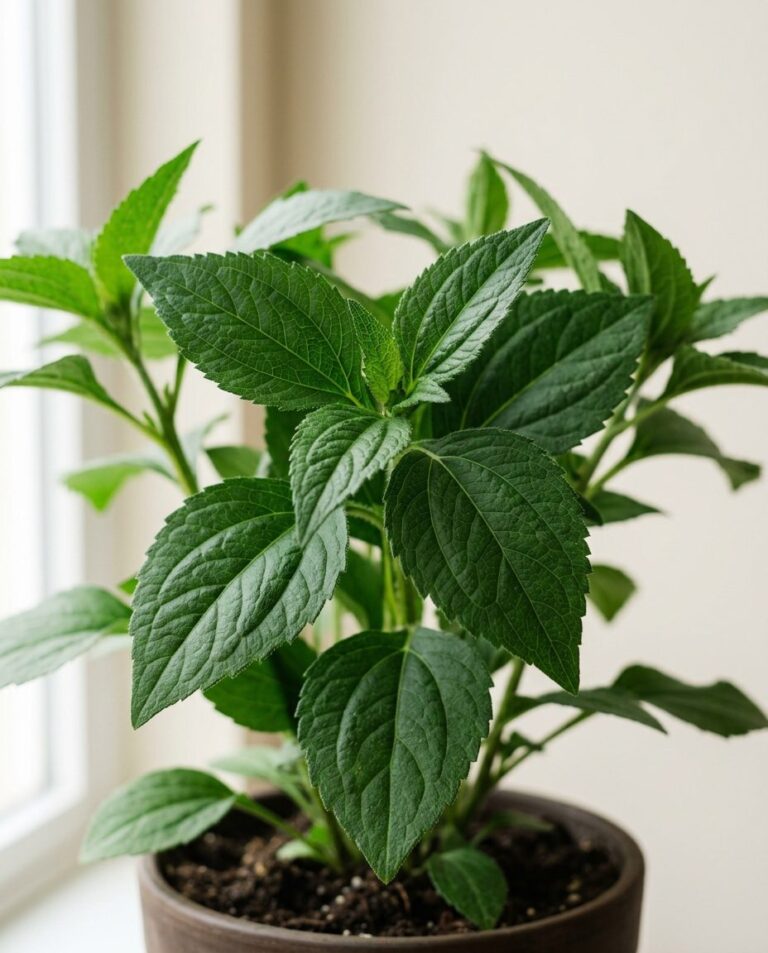
Powdery mildew, caused by the fungal pathogen Erysiphe cichoracearum, appears as white to gray powdery coating on leaf surfaces, petioles, and occasionally flower buds. The disease is most severe during periods of high relative humidity (above 85 percent) combined with moderate temperatures (18 to 24 degrees Celsius), conditions frequent in late August and September across southern Ontario and the St. Lawrence Valley. Unlike many fungal pathogens, powdery mildew spores germinate and infect in the absence of free water; in fact, rain washes spores from leaf surfaces, temporarily reducing infection pressure. The disease thrives when nights are humid (dew forms) but days are dry, and when air circulation around plants is poor.
Susceptibility varies by species: Rudbeckia fulgida ‘Goldsturm’ shows moderate resistance, with infection typically limited to lower leaves and minimal impact on bloom. Rudbeckia hirta cultivars, particularly those with dense foliage such as ‘Indian Summer,’ are highly susceptible; severe infections cause premature leaf senescence, reducing photosynthetic capacity and weakening plants for the following season. Rudbeckia laciniata in moist sites with poor air movement exhibits the highest infection rates, sometimes losing 70 percent of leaf area by late September.
Intervention Thresholds and Non-Fungicidal Management
Monitor plants weekly beginning in mid-August. Intervention is warranted when more than 10 percent of leaf surface area on mid-stem leaves shows mildew coating, or when infection appears on upper leaves or flower buds. Remove and destroy (do not compost) infected lower leaves to reduce inoculum. Improve air circulation by spacing plants 45 to 60 cm apart (closer spacing common in nursery recommendations of 30 to 40 cm increases mildew risk) and by removing weeds and dense groundcovers within 30 cm of Rudbeckia crowns. Avoid overhead irrigation; if using sprinklers, run them in early morning so foliage dries rapidly. For severe recurring infections, apply potassium bicarbonate spray (5 grams per litre water plus 2 ml horticultural oil as a spreader-sticker) at 7-day intervals beginning when first symptoms appear; this raises leaf surface pH above the optimum for fungal growth. Sulfur-based fungicides are effective but can cause phytotoxicity (leaf burn) when applied above 28 degrees Celsius; restrict use to cool, overcast days.
Aphid Species and Economic Threshold
Aphis gossypii (cotton aphid) and Aphis helianthi (sunflower aphid) colonize Rudbeckia shoot tips and flower buds from June through August, feeding on phloem sap and excreting honeydew that supports sooty mold growth. Aphid populations build rapidly under warm conditions (peak reproduction at 24 to 27 degrees Celsius); a single founding female can produce a colony of 500 individuals within 3 weeks. Inspect shoot tips weekly; the economic threshold for ornamental plantings is 30 to 50 aphids per shoot tip or visible distortion of emerging leaves. Below this threshold, natural enemies (lady beetles, lacewing larvae, parasitoid wasps) typically suppress populations without intervention. If threshold is exceeded, dislodge aphids with a forceful water spray (repeat every 3 days for 2 weeks) or apply insecticidal soap (potassium salts of fatty acids at 20 grams per litre water), ensuring thorough coverage of shoot tips and leaf undersides. Avoid broad-spectrum insecticides (pyrethroids, neonicotinoids), which kill natural enemies and often trigger secondary pest outbreaks.
Hardiness Zones 3 to 9: Cold Tolerance Mechanisms and Winter Stem Management
Rudbeckia fulgida and R. hirta survive Canadian winters through a combination of crown cold-hardening and rhizome dormancy. As photoperiod shortens below 12 hours in September (approximately September 20 at 45°N latitude, typical of southern Ontario and Montreal), plants cease shoot elongation and begin accumulating soluble sugars and proline in crown tissues. These cryoprotectants lower the freezing point of cellular fluids and stabilize membranes during ice crystal formation. By late October, hardened crowns tolerate temperatures to -30 degrees Celsius (zone 4 minimum), and R. fulgida crowns survive brief exposure to -40 degrees Celsius (zone 3 minimum) if insulated by snow cover or mulch.
The primary winter injury mechanism in zone 3 and zone 4 is frost heave, the upward displacement of crowns caused by repeated freeze-thaw cycles in late winter. When soil freezes, ice lenses form beneath the crown, lifting it; subsequent thaws allow the soil to settle, but the crown remains elevated, exposing roots to desiccation and lethal cold. Frost heave risk is highest in clay soils with high moisture content and in sites without snow cover. In zone 3b Manitoba trials, unprotected R. fulgida experienced 25 percent winter mortality due to heave, versus 3 percent mortality in mulched plots.
Mulching Protocol for Zones 3 and 4
Apply winter mulch after the soil surface freezes to 5 cm depth, typically mid-November in zone 4 Quebec and early November in zone 3 Saskatchewan. Premature mulching (while soil remains warm) encourages rodent nesting and crown rot. Use coarse materials that resist compaction: shredded bark, evergreen boughs, or straw. Apply to a depth of 8 to 10 cm, covering the crown and extending 15 cm beyond the drip line. Avoid fine materials such as leaves or grass clippings, which mat and smother crowns. Remove mulch in early April (zone 4) or late April (zone 3) as new shoots emerge; leaving mulch in place delays shoot emergence and increases slug damage.
Winter Stem Management and Wildlife Value
Rudbeckia seed heads provide winter food for goldfinches and chickadees, which extract seeds from the dried cones throughout December and January. Leaving stems standing until early spring also offers overwintering habitat for native bees; species such as Megachile (leafcutter bees) nest in hollow or pithy stems. However, standing stems in zone 5 and warmer can harbour overwintering aphid eggs and fungal spores. Balance wildlife value and disease management by cutting stems to 30 cm height in late March, after the coldest period but before new shoot emergence. Bundle cut stems and place in an undisturbed corner of the garden to preserve bee habitat, or compost them if disease was severe the previous season.
Rudbeckia Versus Echinacea: Morphological and Ecological Differences
Gardeners frequently confuse Rudbeckia and Echinacea (purple coneflower), both members of the Asteraceae family with superficially similar composite flower heads. However, the genera differ fundamentally in floral morphology, pollinator syndromes, and ecological niches. Understanding these distinctions enables informed design choices: Rudbeckia and Echinacea occupy different peak bloom windows, attract distinct pollinator guilds, and tolerate different soil moisture regimes, making them complementary rather than interchangeable in mixed perennial borders.
- Central cone structure: Rudbeckia cones are hemispherical to columnar, composed of tightly packed disc flowers that open sequentially from the cone base upward, creating a ring of pollen-laden anthers that progresses over 2 to 3 weeks. The cone remains soft and pliable. Echinacea purpurea cones are globose and spiny, with disc flowers that open nearly synchronously; the cone surface bristles with stiff, pointed paleae (chaff scales) that give Echinacea its genus name (from Greek echinos, hedgehog). The cone hardens as it matures.
- Ray flower orientation: Rudbeckia ray flowers are horizontal to slightly reflexed (bent downward), presenting a flat or gently cupped landing platform for pollinators. Echinacea ray flowers are strongly reflexed (bent sharply downward), giving the flower head a shuttlecock silhouette; this morphology reduces the landing surface, favouring long-tongued bees and butterflies over short-tongued generalists.
- Pollinator attraction: Rudbeckia attracts generalist pollinators including honeybees, bumblebees, small native bees (sweat bees, Lasioglossum spp.), and syrphid flies. Peak visitation occurs mid-morning (9:00 to 11:00 AM) when disc flowers release pollen. Echinacea attracts specialist long-tongued bees (Bombus spp., Megachile spp.) and butterflies (swallowtails, fritillaries), with peak visitation in afternoon (1:00 to 4:00 PM). In a zone 5 Ontario pollinator garden, planting both genera extends the daily pollinator activity window.
- Bloom phenology: Rudbeckia fulgida blooms July through September in zone 5, with peak display in August. Echinacea purpurea blooms June through August, with peak in July. Sequential bloom reduces competition for pollinators and extends seasonal interest.
- Soil moisture tolerance: Rudbeckia tolerates episodic drought once established but performs best with consistent moisture (soil moisture 18 to 25 percent by volume). Echinacea is highly drought-tolerant, thriving in sandy or gravelly soils with moisture content as low as 12 percent, conditions that would stress Rudbeckia. In zone 4 Alberta xeric gardens, Echinacea is the superior choice; in zone 6 British Columbia gardens with summer irrigation, Rudbeckia provides longer bloom.
Companion Planting Strategies
Pair Rudbeckia fulgida ‘Goldsturm’ (60 to 75 cm, yellow, August peak) with Echinacea purpurea ‘Magnus’ (75 to 90 cm, magenta-pink, July peak) in a zone 5 Quebec border for complementary colour and staggered bloom. Add Calamagrostis × acutiflora ‘Karl Foerster’ (feather reed grass, 120 to 150 cm, blooms June, architectural foliage through winter) as a vertical accent and Sedum ‘Autumn Joy’ (45 cm, pink to rust, September to October) for late-season interest. Space plants 50 cm apart in amended loam; this combination provides continuous bloom from late June through October and supports 15 to 20 pollinator species in university trials.
Cultivar Selection by Growth Habit: Dwarf, Standard, and Double-Flower Forms
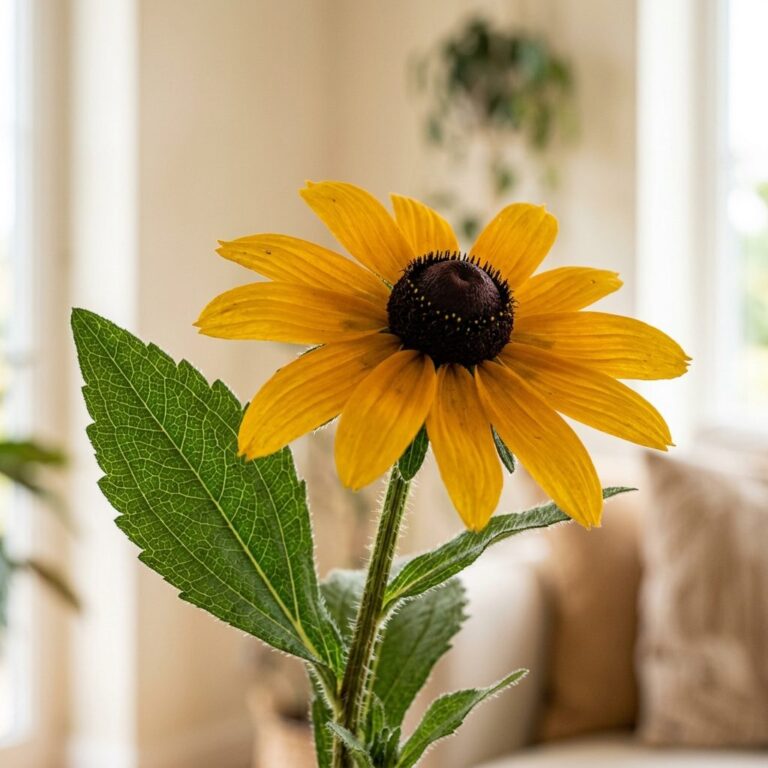
The Rudbeckia cultivar palette spans dwarf selections suitable for container culture, standard border forms, and double-flowered novelties, each with distinct landscape applications and maintenance requirements. Selecting cultivars by mature height, flower form, and rebloom capacity ensures appropriate scale and minimizes staking or deadheading labour.
Dwarf Cultivars for Containers and Front-of-Border
- ‘Toto’ (R. hirta): 20 to 25 cm height, 20 cm spread, single golden-yellow flowers 6 to 8 cm diameter. Bred for container production, ‘Toto’ performs well in 25 cm pots with soilless mix amended with 20 percent compost. Blooms 14 to 16 weeks from seed, making it suitable for starting indoors in March for June bloom in zone 5. Treat as an annual or short-lived perennial; rarely survives more than two winters even in zone 6.
- ‘Little Goldstar’ (R. fulgida): 30 to 35 cm height, clump-forming perennial hardy to zone 4. Flowers 5 to 6 cm diameter, blooms July to September. Suitable for edging paths or in rock gardens. Divide every 3 years to maintain vigour.
Standard Border Cultivars
- ‘Goldsturm’ (R. fulgida var. sullivantii): 60 to 75 cm height, 45 cm spread, single flowers 8 to 10 cm diameter. The benchmark cultivar, introduced in Germany in 1937, awarded the Royal Horticultural Society Award of Garden Merit. Exceptionally uniform in height and bloom time, making it ideal for mass plantings (space 50 cm apart for coverage in 2 years). Hardy to zone 3 with mulch, zone 4 without. Widely available at Canadian nurseries including Veseys (PEI), Aubin Nurseries (Quebec), and Art’s Nursery (BC).
- ‘Indian Summer’ (R. hirta): 75 to 90 cm height, single flowers 12 to 15 cm diameter, among the largest in the genus. Blooms first year from seed if started indoors 10 weeks before last frost. Stems sturdy enough to resist lodging without staking in sites with 6+ hours sun. Reseeds moderately; allow some seed heads to mature for naturalized effect, or deadhead to prolong bloom into October. Zone 5 to 9.
Double-Flowered and Bicolour Novelties
- ‘Goldquelle’ (R. laciniata): 90 to 120 cm height, fully double lemon-yellow flowers 8 cm diameter. Blooms August to September. Prefers consistent moisture; suitable for rain gardens or pond margins in zone 4 Manitoba or zone 5 Ontario. Spreads vigorously via rhizomes; contain with root barriers or plant in isolated beds.
- ‘Cherry Brandy’ (R. hirta): 50 to 60 cm height, single flowers with mahogany-red ray flowers and dark brown cones. Colour intensity varies with temperature: deeper red in cool conditions (18 to 22 degrees Celsius), fading to orange-red above 26 degrees. Blooms July to September from spring-sown seed. Treat as annual or biennial. Striking in combination with silver-foliage plants (Artemisia ‘Powis Castle’, Stachys byzantina).
- ‘Prairie Sun’ (R. hirta): 75 cm height, semi-double flowers with yellow ray flowers tipped in pale cream, surrounding a green central cone (unusual in Rudbeckia; most have brown or black cones). Blooms July to frost. All-America Selections winner 2003. Deadhead spent flowers to encourage continuous bloom; plants produce 30 to 40 flowers per season with regular deadheading versus 15 to 20 without.
Cultivar Availability in Canada
Most Rudbeckia fulgida cultivars are propagated vegetatively (division or tissue culture) and sold as potted perennials at nurseries from May through September. Rudbeckia hirta cultivars are available both as started plants and as seed packets; major Canadian seed suppliers (Vesey’s, William Dam Seeds, West Coast Seeds) carry 6 to 10 R. hirta cultivars. When purchasing plants, inspect crowns for firm, white roots and absence of aphids or powdery mildew; avoid plants with yellowed lower leaves (indicates root-bound condition or nutrient deficiency) or elongated, floppy stems (indicates insufficient light during production). For seed, check the packet date; R. hirta seed older than 2 years shows reduced germination even if stored properly.