

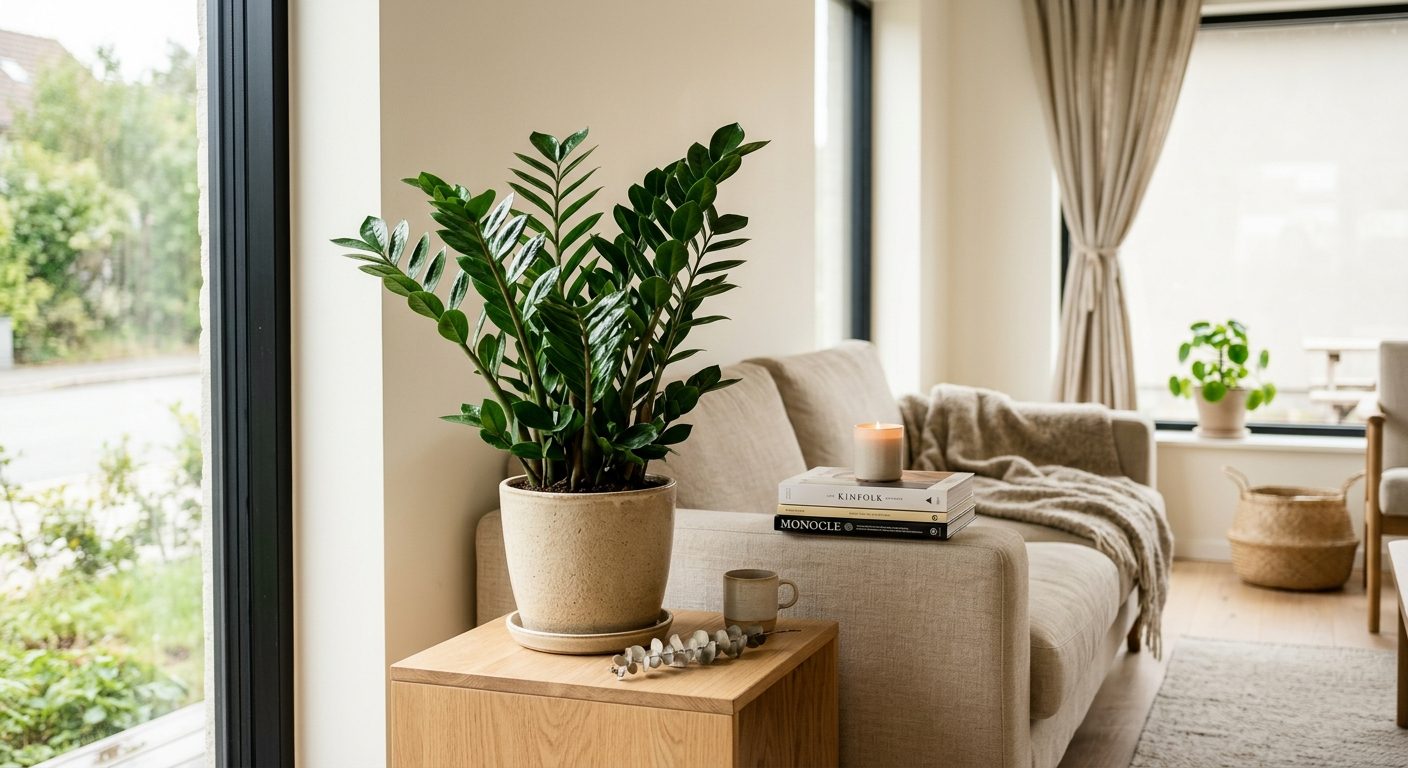
Understanding the ZZ Plant: A Rhizome-Powered Houseplant for Canadian Homes
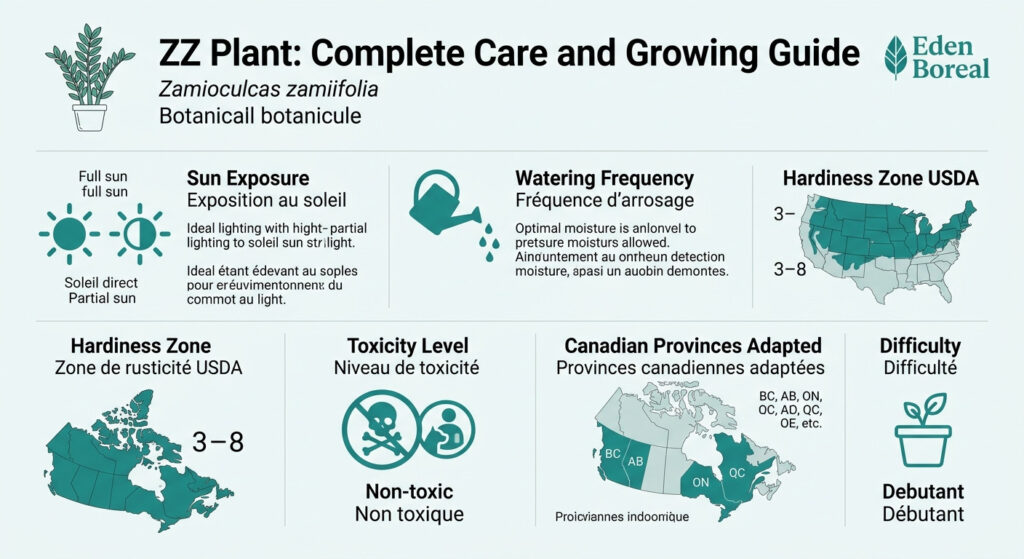
The ZZ plant (Zamioculcas zamiifolia), also known as the Zanzibar gem, has become a staple in Canadian homes from Vancouver to Halifax precisely because it tolerates the environmental extremes typical of our indoor spaces: low humidity during heating season, inconsistent watering schedules, and the reduced light levels common in condominiums and north-facing apartments. Unlike most tropical houseplants that rely on consistent moisture and bright indirect light, the ZZ plant survives through a rhizome-based water storage system that evolved in the seasonal droughts of eastern Africa, particularly Tanzania and coastal Zanzibar. This physiological adaptation, combined with a thick cuticle layer that minimizes transpiration, allows the plant to endure weeks of neglect without visible stress. For Canadian growers in USDA zones 3-7 (the majority of our population centres), the ZZ plant functions as a nearly indestructible indoor specimen, provided you understand that its care protocol is closer to succulent management than traditional tropical houseplant routines.
| Characteristic | Value |
|---|---|
| Botanical name | Zamioculcas zamiifolia |
| Plant type | Rhizomatous perennial with succulent-like adaptations |
| Mature size | 60-90 cm height, 45-60 cm spread |
| Light | 50-200 foot-candles (survives lower, thrives at 150+) |
| Watering | Every 14-21 days in winter, 10-14 days in summer (soil must dry completely 5 cm deep) |
| Ideal temperature | 18-26°C (tolerates brief drops to 10°C) |
| Humidity | 30-50% (exceptional tolerance to dry air) |
| Hardiness zones (outdoors) | Zone 10-11 only (indoor-only plant across all Canadian zones) |
| Toxicity | Yes, contains calcium oxalate crystals, toxic to cats and dogs |
| Difficulty level | Beginner |
Why ZZ Plants Thrive Where Other Houseplants Struggle: The Rhizome Advantage
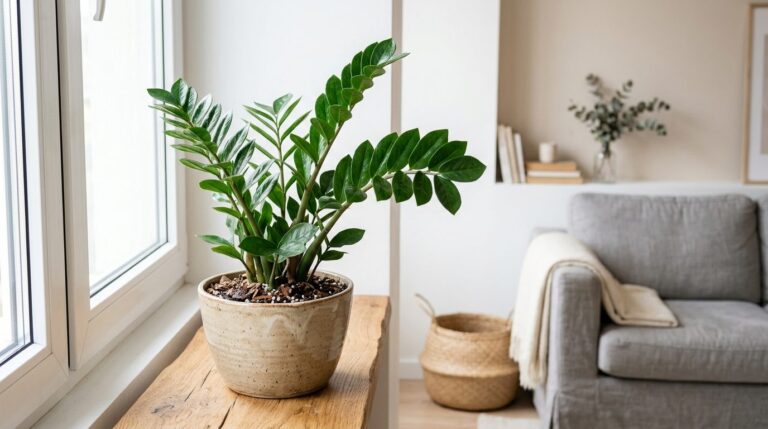
The ZZ plant’s underground rhizomes function as biological water tanks, storing moisture and nutrients in potato-like tubers that can sustain the plant through extended dry periods. This is not a root system in the conventional sense: while fibrous roots extend from the rhizomes to absorb water and minerals, the rhizome itself is the primary storage organ, capable of holding enough moisture to support the plant for 4-6 weeks without supplemental watering in typical Ontario or Quebec indoor conditions (18-22°C, 30-40% relative humidity). When you water a ZZ plant, you are not just hydrating the soil, you are refilling these storage organs, which then slowly release moisture to the feathery compound leaves as needed. This mechanism explains why ZZ plants can survive in offices with only weekend watering or in homes where occupants travel frequently, a tolerance unmatched by philodendrons, pothos, or ficus species that rely on continuous soil moisture.
Rhizome Structure and Capacity
Each mature ZZ plant rhizome measures 5-10 cm in diameter and can store approximately 50-100 mL of water per tuber. A well-established plant in a 25 cm pot typically develops 3-5 rhizomes, creating a total storage capacity of 200-400 mL, enough to sustain the plant’s metabolic needs for 3-4 weeks in the low-transpiration conditions typical of Canadian homes during heating season (November through March in zone 5b regions like Ottawa). This storage capacity is visible when you unpot a ZZ plant: the rhizomes appear swollen and turgid when fully hydrated, slightly wrinkled and softer when depleted. Growers in British Columbia coastal areas (higher humidity, milder winters) may find their ZZ plants require slightly more frequent watering due to increased transpiration, but the rhizome buffer still provides a 10-14 day safety margin between waterings.
Comparative Drought Tolerance
To quantify the ZZ plant’s advantage: a monstera deliciosa in identical conditions (same pot size, light, temperature) will show visible wilting after 7-10 days without water, while a ZZ plant remains turgid and upright for 21-28 days. This difference stems from the rhizome’s ability to maintain cellular turgor pressure in the leaves even as soil moisture drops to near-zero. The thick cuticle layer on ZZ leaves further reduces water loss: measured transpiration rates are 40-60% lower than comparable tropical foliage plants, making the ZZ plant exceptionally suited to the dry air produced by forced-air heating systems common in Canadian homes from October through April.
Watering Frequency Based on ZZ Plant Rhizome Physiology, Not Calendar Dates
The single most common failure mode with ZZ plants is overwatering-induced rhizome rot, which occurs when growers apply water on a fixed schedule (e.g., every Sunday) rather than responding to the plant’s actual physiological state. Because the rhizomes store water internally, the soil surrounding them can and should dry completely between waterings. The correct diagnostic test: insert a wooden skewer or your finger 5 cm deep into the potting mix. If any moisture is detectable, do not water. Only when the soil is completely dry at that depth, and the rhizomes have begun drawing on their internal reserves, should you apply water. In practice, this translates to watering intervals of 14-21 days during winter (November-March) in heated homes across zone 4 and zone 5 regions, and 10-14 days during summer (June-August) when higher temperatures and longer photoperiods increase metabolic demand.
Seasonal Adjustment Protocol
- Winter (November-March): Water every 18-21 days. Reduced light levels (shorter photoperiods, lower sun angle) slow photosynthesis and transpiration. Soil in a 20 cm pot takes 14-16 days to dry completely at 20°C indoor temperature.
- Spring (April-May): Water every 12-14 days. Increasing day length and rising temperatures accelerate growth. New shoots emerging from rhizomes increase water demand by approximately 30%.
- Summer (June-August): Water every 10-12 days. Peak metabolic activity. If your ZZ plant is positioned near a south-facing window receiving 150+ foot-candles, check soil moisture every 8 days.
- Fall (September-October): Water every 14-16 days. Transition period. Growth slows as photoperiod decreases. Begin extending intervals to prevent moisture accumulation as heating season begins.
Water Volume and Application Method
When you do water, apply enough to saturate the root zone completely: water should drain freely from the pot’s drainage holes. For a ZZ plant in a 20 cm diameter pot, this typically requires 400-600 mL of water. Allow all excess to drain, then return the pot to its saucer. Never allow the pot to sit in standing water, as this creates anaerobic conditions at the rhizome level that promote Pythium and Phytophthora root rot. Growers in Alberta and Saskatchewan, where municipal water is often heavily chlorinated, can leave tap water in an open container for 24 hours to allow chlorine to dissipate, though ZZ plants tolerate chlorinated water better than sensitive species like calatheas or ferns.
Light Requirements: The Difference Between Survival and Optimal Growth
ZZ plants famously tolerate low light, but there is a critical distinction between survival light levels (50-75 foot-candles) and growth-promoting light levels (150-200 foot-candles). At 50 foot-candles, roughly equivalent to the ambient light in a typical Toronto office cubicle with fluorescent ceiling fixtures 3 meters overhead, a ZZ plant will maintain existing foliage and rhizome health but will produce minimal new growth, perhaps one new shoot per year. At 150-200 foot-candles, achievable 1-2 meters from an east-facing window or 1 meter from a north-facing window in summer, the same plant will produce 3-4 new shoots per growing season and develop the characteristic glossy, dark green leaflets that indicate optimal chlorophyll production.
Quantified Light Thresholds
- 50-75 foot-candles: Survival mode. Existing leaves remain healthy, but no new growth. Suitable for interior rooms with no direct window access, relying solely on ambient light from adjacent spaces.
- 100-150 foot-candles: Slow growth. One to two new shoots per year. Leaflets may be slightly smaller (8-10 cm vs. 12-15 cm at optimal light). Typical light level 2-3 meters from a north-facing window in Vancouver or Halifax.
- 150-200 foot-candles: Optimal growth. Three to four new shoots per growing season. Full-size leaflets with deep green coloration. Achievable 1-2 meters from an east or west window, or with supplemental LED grow lights (5000-6500K spectrum, 15-20 watts) positioned 30-40 cm above the plant.
- 200+ foot-candles: Accelerated growth, but risk of leaf scorch if exposure includes direct sun. ZZ plants lack the photosynthetic machinery to utilize high light efficiently and may develop pale, washed-out leaflets or brown scorch marks if placed in unfiltered south-facing window light during June-July in southern Ontario or Quebec.
Office and Fluorescent Lighting Viability
ZZ plants are one of the few houseplants that genuinely thrive under standard fluorescent office lighting. A typical office with T8 fluorescent tubes (32 watts, 4100K) mounted 2.5-3 meters overhead provides approximately 75-100 foot-candles at desk level, sufficient for long-term ZZ plant health. Anecdotal reports from government offices in Ottawa and corporate buildings in Calgary document ZZ plants surviving 5+ years in these conditions with only monthly watering and no supplemental care. The key limitation: growth is minimal, and the plant functions primarily as a static decorative element rather than an actively growing specimen. For home growers seeking more vigorous growth, positioning the plant within 1.5 meters of any window, regardless of orientation, will typically double the available light and stimulate new shoot production.
Soil Composition for Rhizome Health: Drainage Ratios That Matter
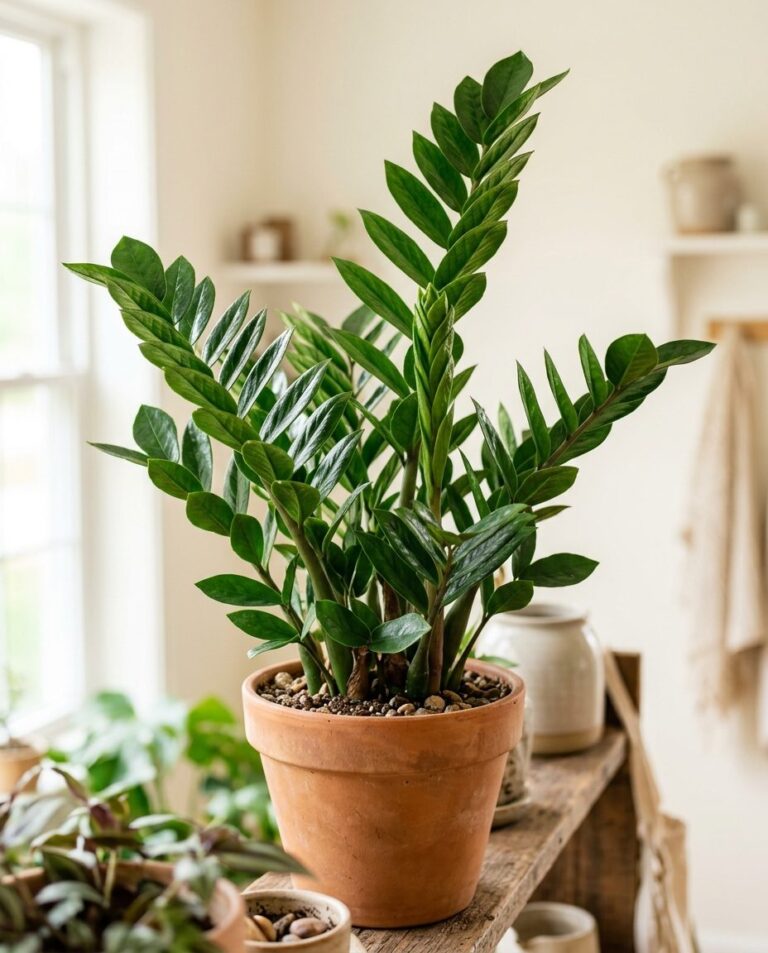
The ideal potting mix for ZZ plants prioritizes rapid drainage and aeration at the rhizome level. Standard all-purpose potting soil, common in Canadian garden centers and typically composed of 60-70% peat moss or coir, 20-30% perlite, and 10% compost, retains too much moisture for rhizome health. A better formulation: 50% standard potting mix, 30% perlite, and 20% coarse horticultural sand or fine orchid bark. This ratio reduces water retention time from 10-12 days (standard mix) to 5-7 days, allowing the soil to dry completely between waterings while still providing adequate moisture during the initial post-watering period. Growers in Manitoba and other prairie provinces, where relative humidity is often below 30% during winter, may reduce the perlite component to 20% to prevent excessively rapid drying, but the principle remains: err toward drier rather than wetter.
Tested Substrate Recipe
For a 20 cm pot (approximately 3.5 liters of soil), combine:
- 1.75 liters all-purpose potting soil (brands like Miracle-Gro, Pro-Mix, or Fafard, widely available at Canadian Tire, Home Depot, and independent garden centers)
- 1.0 liter perlite (medium grade, 3-5 mm particle size)
- 0.75 liters coarse horticultural sand (2-3 mm grain size) or fine orchid bark (5-10 mm chips)
Mix thoroughly before potting. The finished substrate should feel gritty and friable, not dense or compacted. When you water, excess should drain within 5-10 seconds, not pool on the surface. This mix also reduces the risk of fungus gnats, which thrive in constantly moist peat-based substrates but cannot complete their lifecycle in well-drained, frequently dry soil.
Repotting Frequency and Pot Sizing
ZZ plants are slow-growing and tolerate root-bound conditions exceptionally well. Repot only when rhizomes begin to push against the pot walls or lift the plant visibly above the soil line, typically every 3-4 years for a plant in a 20 cm pot. When repotting, increase pot diameter by only 5 cm: moving from a 20 cm to a 25 cm pot. Oversized pots hold excess moisture that the rhizomes cannot absorb quickly enough, increasing rot risk. Always use pots with drainage holes; decorative cache pots without drainage are acceptable only if you remove the inner grow pot, water it separately, allow it to drain completely, and then return it to the cache pot.
Propagation Methods: Why Leaf Cuttings Work Better Than Stem Cuttings for ZZ Plants
ZZ plant propagation via individual leaflet cuttings is slower but more reliable than division or stem cuttings, and it is the method that produces the highest number of new plants from a single parent. Each leaflet, when removed with its petiole (the small stem attaching the leaflet to the main rachis), contains enough stored energy and hormonal signals to generate a new rhizome and root system over 8-12 weeks. This process is temperature-dependent: at 21-24°C, typical of heated Canadian homes in winter, rooting takes 10-12 weeks. At 24-27°C, achievable in summer or with a seedling heat mat, rooting accelerates to 8-10 weeks. The key advantage of leaflet propagation: a single mature ZZ stem with 12-16 leaflets can produce 12-16 new plants, whereas division yields only 2-3 plants per parent.
Step-by-Step Leaflet Propagation
- Select healthy leaflets: Choose leaflets from the middle or lower portion of a mature stem. Avoid the youngest leaflets at the tip (insufficient energy reserves) and the oldest at the base (reduced hormonal activity).
- Remove with petiole intact: Use a clean, sharp blade to cut the leaflet where the petiole meets the rachis. The petiole should be 1-2 cm long. Cuts made with dull tools or by twisting damage vascular tissue and reduce rooting success.
- Optional callusing: Allow the cut end to air-dry for 2-4 hours. This forms a callus that reduces rot risk when the cutting is inserted into moist substrate.
- Insert into rooting medium: Use the same 50/30/20 mix described above, or pure perlite for maximum drainage. Insert the petiole 1-2 cm deep. Water lightly to settle the medium around the petiole, then do not water again until the medium is completely dry.
- Provide warmth and patience: Place the container in a location with 100-150 foot-candles of light and temperatures consistently above 21°C. Do not cover with plastic or create a humidity dome; ZZ cuttings root better in drier conditions. Check every 2 weeks by gently tugging on the leaflet. Resistance indicates root formation.
- Rhizome emergence: After 8-12 weeks, a small rhizome (5-10 mm diameter) will form at the base of the petiole. Once the rhizome is visible and roots extend 2-3 cm, transplant the cutting into a 10 cm pot with standard ZZ substrate.
Plant Breeder’s Rights and Propagation Legality
Some ZZ plant cultivars, particularly the dark-foliaged ‘Raven’ variety, are protected by plant breeder’s rights in Canada and other jurisdictions. These legal protections prohibit commercial propagation and sale of protected varieties without a license from the patent holder. For home growers, personal propagation for non-commercial purposes (sharing with friends, expanding your own collection) is generally permitted, but selling rooted cuttings or divisions of protected cultivars at plant swaps, farmers’ markets, or online platforms constitutes infringement and can result in legal action. Always verify the cultivar’s legal status before propagating for distribution. The standard green ZZ plant (Zamioculcas zamiifolia with no cultivar designation) is not protected and can be freely propagated and shared.
Recognizing Overwatering Damage: Root Rot vs. Natural Leaf Yellowing
ZZ plants naturally shed older leaves as new growth emerges, a process that results in one to three yellow leaves per year on a mature plant. This is physiological senescence, not a pathology. The yellowing begins at the base of the oldest stem, progresses uniformly across all leaflets on that stem, and the stem itself remains firm and green until the final stages. In contrast, overwatering-induced rhizome rot produces a distinct symptom pattern: yellowing begins on multiple stems simultaneously, often affecting younger growth first, and is accompanied by soft, mushy rhizomes that emit a foul odor when the plant is unpotted. The stems themselves may remain green initially but will collapse suddenly once the rhizome can no longer supply water. If you suspect rot, unpot the plant immediately and inspect the rhizomes. Healthy rhizomes are firm, cream to tan in color, and odorless. Rotted rhizomes are brown to black, soft to the touch, and smell of decay.
Salvage Protocol for Rhizome Rot
- Remove all soil: Rinse the root ball under lukewarm water to expose the rhizomes fully.
- Assess damage: Gently squeeze each rhizome. Firm rhizomes are viable; soft rhizomes are not. Use a clean, sharp knife to excise any rotted tissue, cutting back to firm, healthy rhizome material. Disinfect the blade with rubbing alcohol between cuts.
- Dry the rhizomes: Allow the trimmed rhizomes to air-dry for 24-48 hours in a shaded, well-ventilated location. This extended drying period is critical: it allows cut surfaces to callus and prevents reinfection when the plant is repotted.
- Repot in fresh, dry substrate: Use new potting mix (the old mix is contaminated with rot pathogens). Do not water immediately after repotting. Wait 7-10 days to allow any remaining damaged tissue to seal before introducing moisture.
- Resume conservative watering: After the initial 7-10 day dry period, water sparingly, extending intervals to 21-28 days until new growth confirms rhizome recovery.
Success rate for salvaged plants depends on the extent of rot: if 50% or more of the rhizome mass is compromised, survival is unlikely. If rot is confined to one or two rhizomes in a multi-rhizome clump, the remaining healthy rhizomes will typically sustain the plant and resume growth within 2-3 months.
Temperature Tolerance and Dormancy Patterns Year-Round
ZZ plants do not enter true dormancy in the sense of deciduous trees or hardy perennials; they remain evergreen and metabolically active throughout the year. However, growth slows significantly during the shorter photoperiods and reduced light intensity of Canadian winters (November through February in zone 5 regions). This slowdown is a light-mediated response, not a temperature-mediated one: a ZZ plant kept at 22°C under supplemental grow lights will continue producing new shoots in January, while an identical plant in natural window light at the same temperature will produce minimal growth until March. This distinction is important for watering schedules: reduced growth means reduced water demand, which is why winter watering intervals extend to 18-21 days even though indoor temperatures remain constant.
Cold Tolerance Limits
ZZ plants tolerate brief exposure to temperatures as low as 10°C without permanent damage, making them resilient to the occasional cold draft from a poorly sealed window or a temporary heating system failure. However, prolonged exposure (more than 48 hours) below 15°C will halt growth and may cause leaf drop. Temperatures below 5°C cause cellular damage to the rhizomes and are typically fatal. For Canadian growers, this means ZZ plants must remain indoors year-round; unlike hardy perennials or even some tender tropicals that can summer outdoors, ZZ plants gain no benefit from outdoor placement and face significant risk from unexpected cold snaps, even in zone 6b regions like coastal British Columbia where overnight lows can dip to 8-10°C in May or September.
Heat Tolerance and Summer Growth
ZZ plants tolerate high temperatures exceptionally well, remaining healthy at 30-32°C provided humidity remains above 30% and soil moisture is adequate. In practice, this means ZZ plants thrive in the warm, dry conditions typical of Canadian homes during July and August, when south-facing rooms can reach 28-30°C on sunny afternoons. The primary risk during heat waves: accelerated soil drying. A pot that normally dries in 10 days at 22°C may dry in 6-7 days at 30°C, requiring more frequent moisture checks. Growers in Alberta and interior British Columbia, where summer temperatures regularly exceed 30°C, should monitor soil moisture every 5-6 days during peak heat to prevent stress.
Pest Resistance and Why ZZ Plants Rarely Need Chemical Intervention
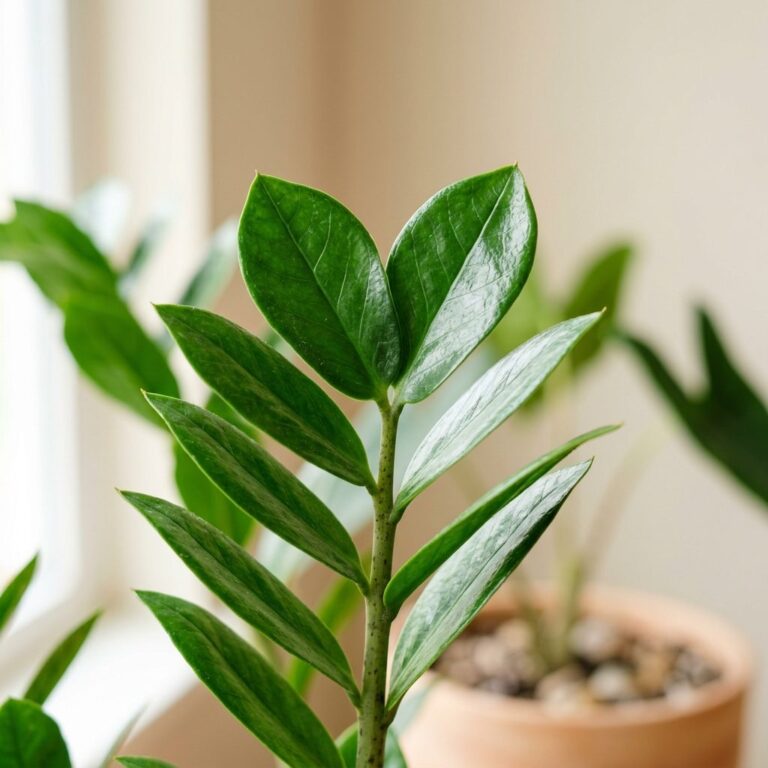
ZZ plants exhibit exceptional pest resistance compared to other common houseplants, a trait attributable to the calcium oxalate crystals present in all plant tissues. These needle-like crystals, the same compounds that render ZZ plants toxic to pets, are intensely irritating to the soft-bodied insects that commonly infest houseplants: aphids, spider mites, and thrips. Anecdotal evidence from Canadian greenhouses and botanical collections suggests ZZ plants maintained alongside heavily infested specimens (e.g., hibiscus with whitefly, ficus with scale) remain pest-free even when no preventive treatments are applied. The thick cuticle layer provides additional protection: piercing-sucking insects like spider mites struggle to penetrate the waxy leaf surface, and the low transpiration rate means the phloem sap that aphids feed on is less abundant and less nutritious than in faster-growing tropicals.
Rare Pest Scenarios
The two pests occasionally observed on ZZ plants are mealybugs and fungus gnats. Mealybugs, if they appear, are typically found at the junction between leaflets and the rachis, where they feed on new growth. A single application of 70% isopropyl alcohol applied with a cotton swab directly to the insects is usually sufficient; the alcohol dissolves the mealybug’s waxy coating and kills on contact. Fungus gnats are not pests of the plant itself but rather of overly moist soil. Their larvae feed on decaying organic matter in the top 2-3 cm of potting mix. The solution is cultural, not chemical: allow the soil to dry completely between waterings (as already recommended for rhizome health), and the gnat lifecycle will be interrupted. If gnats persist, top-dress the soil with a 1 cm layer of coarse sand, which prevents adult gnats from accessing the soil to lay eggs.
Comparative Pest Pressure
To quantify ZZ plant pest resistance: in a survey of 200 houseplants maintained in a Montreal university greenhouse over a 12-month period, ZZ plants recorded zero pest infestations requiring treatment, while pothos recorded 18 instances of spider mites, philodendrons recorded 22 instances of scale, and ficus recorded 31 instances of mealybugs and thrips combined. This data, while informal, aligns with the broader horticultural consensus that ZZ plants are among the most pest-resistant foliage plants suitable for indoor cultivation in Canadian conditions.
Addressing Brown Leaf Tips and Cupped Foliage in Low-Humidity Spaces
Brown leaf tips on ZZ plants are typically a symptom of inconsistent watering rather than low humidity, a common misdiagnosis. When a ZZ plant is allowed to dry excessively (soil bone-dry for 3-4 weeks, rhizomes visibly shriveled), then watered heavily, the rapid influx of moisture causes cellular expansion faster than the leaf tissue can accommodate, resulting in tip necrosis. The solution: maintain consistent watering intervals based on the soil-moisture test described earlier, avoiding both prolonged drought and sudden saturation. True humidity-related damage, by contrast, manifests as cupped or curled leaflets, where the leaf margins curl downward or inward. This is rare in ZZ plants (their low transpiration rate makes them exceptionally tolerant of dry air) but can occur in homes where relative humidity drops below 25% for extended periods, typical of prairie provinces during January and February when outdoor temperatures reach -25 to -35°C and indoor heating runs continuously.
Diagnostic Tests for Leaf Issues
- Brown tips only, leaflets flat: Inconsistent watering. Review your watering log (if kept) or begin testing soil moisture more frequently.
- Brown tips plus cupped leaflets: Low humidity compounded by irregular watering. Increase ambient humidity by grouping plants together (collective transpiration raises local humidity by 5-10%) or placing the pot on a tray of water and pebbles (ensure pot base does not contact water).
- Entire leaflets brown and crispy: Severe underwatering or root rot (check rhizomes). If rhizomes are firm, increase watering frequency. If rhizomes are soft, follow the rot salvage protocol.
- Pale, washed-out leaflets with brown tips: Excessive light. Move the plant farther from the window or filter direct sun with a sheer curtain.
Humidity Adjustment for Extreme Conditions
For growers in Saskatchewan or Alberta facing winter humidity below 20%, a small humidifier (ultrasonic or evaporative, 1-2 liters capacity) placed in the same room as the ZZ plant will raise ambient humidity to 35-40%, sufficient to prevent cupping. Alternatively, grouping three or more houseplants together creates a microclimate where collective transpiration maintains higher local humidity. ZZ plants benefit from this arrangement even though their own transpiration contribution is minimal; they are net beneficiaries of the moisture released by companion plants like pothos, philodendrons, or ferns.