

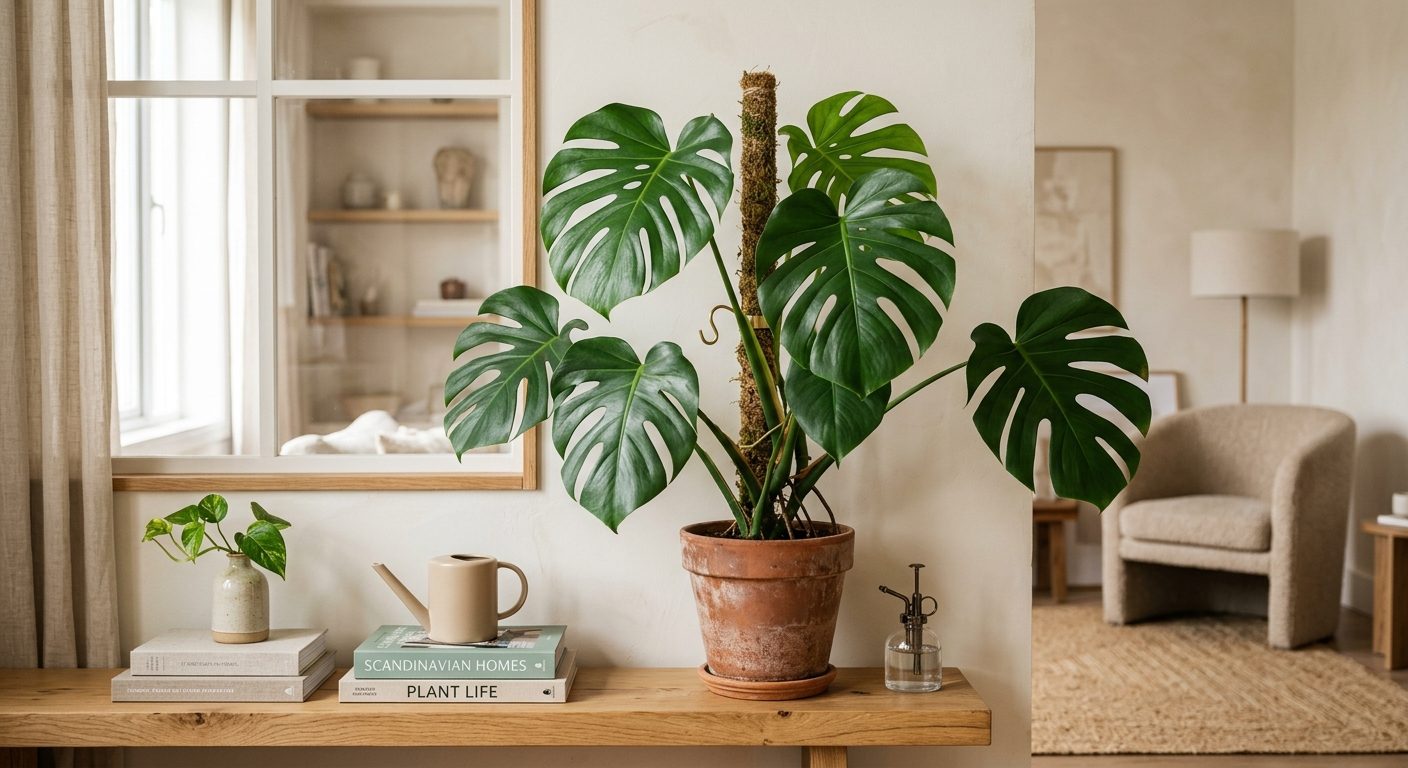
Understanding the Swiss Cheese Plant’s Adaptive Anatomy
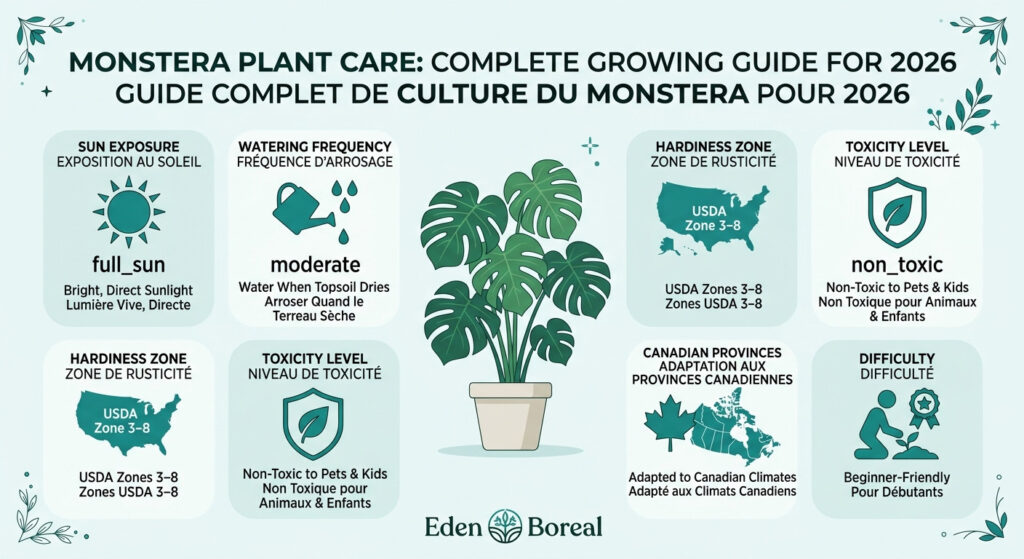
Monstera deliciosa has become a cornerstone of Canadian indoor plant collections, prized for its dramatic fenestrated leaves and vigorous climbing perennial habit. Native to the tropical rainforest canopy of Central America, this species evolved perforation and lobing as adaptive traits to maximize light capture while minimizing wind resistance and self-shading in its native understory-to-canopy transition zone. In Ontario apartments and British Columbia condos, replicating the conditions that trigger fenestration, support aerial root development, and sustain climbing growth requires understanding the plant’s functional anatomy rather than following generic watering schedules. This guide translates Monstera deliciosa physiology into quantified care thresholds, substrate ratios, and training techniques tailored to Canadian indoor environments from zone 3 Quebec winters to zone 8 coastal British Columbia humidity.
| Characteristic | Value |
|---|---|
| Botanical name | Monstera deliciosa |
| Plant type | Tropical climbing perennial |
| Mature size | 200-300 cm height indoors, 90-120 cm spread |
| Light | Bright indirect, 200-400 foot-candles minimum for fenestration |
| Watering | When top 5-7 cm dry, every 7-14 days depending on humidity and pot size |
| Ideal temperature | 18-27°C year-round |
| Humidity | 50-70%, minimum 40% to prevent leaf-tip browning |
| Hardiness zones (outdoors) | Zone 11-12 only (not hardy in Canada, strictly indoor) |
| Toxicity | Yes, toxic to cats and dogs due to calcium oxalate crystals |
| Difficulty level | Beginner to intermediate |
Why Monstera deliciosa Develops Fenestrated Leaves and What Triggers the Holes
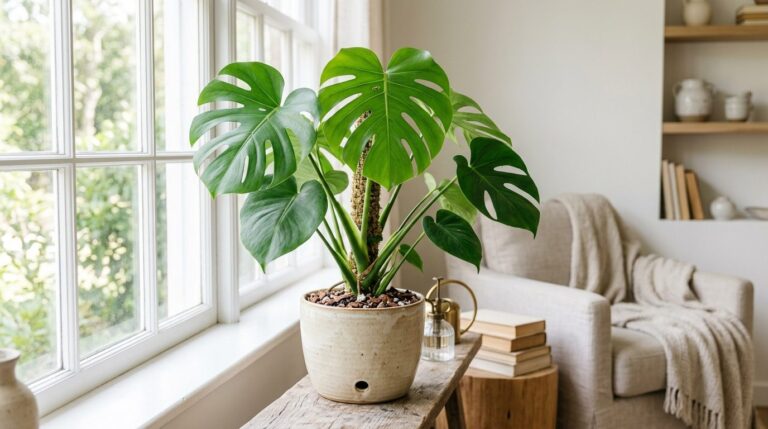
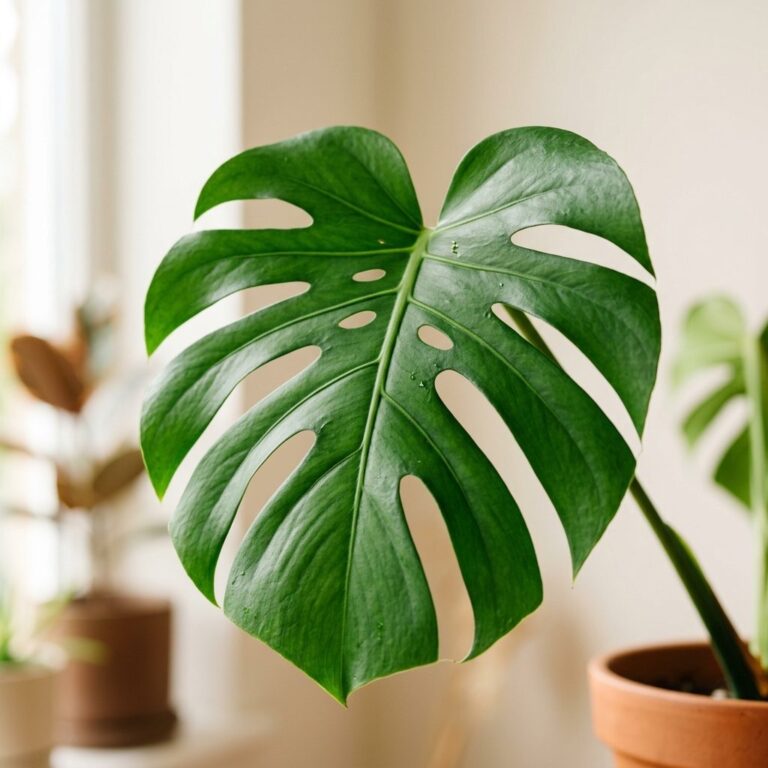
Fenestration in Monstera deliciosa is not a genetic lottery but a predictable developmental response tied to maturity and environmental conditions. Juvenile plants produce entire, heart-shaped leaves because their low-light understory niche favours maximum surface area for photon capture. As the climbing stem accumulates nodes, typically 8-12 mature nodes in cultivation, the plant transitions to producing leaves with progressively deeper lobing and perforation. This shift reflects the species’ natural progression from forest floor to mid-canopy, where higher light intensity and wind exposure make fenestration adaptive: holes reduce drag, prevent tearing, and allow dappled light to reach lower leaves on the same stem, optimizing whole-plant carbon gain.
In Canadian homes, the primary trigger for fenestration failure is insufficient light intensity. A Monstera deliciosa receiving below 150-200 foot-candles will revert to juvenile leaf morphology regardless of age, producing small, entire leaves with minimal or no perforation. Conversely, plants placed within 1-2 metres of south or west-facing windows in Toronto or Vancouver, where ambient light reaches 300-500 foot-candles on bright winter days, consistently produce deeply fenestrated leaves once the node threshold is met. Supplementing with full-spectrum LED grow lights rated at 2000-3000 lux (approximately 200-300 foot-candles) for 10-12 hours daily during Alberta or Quebec winters accelerates maturity and sustains fenestration year-round.
Node Accumulation and Leaf Size Progression
Each node on a Monstera deliciosa stem represents a potential leaf and aerial root site. Juvenile plants produce nodes spaced 5-8 cm apart with leaves 10-20 cm wide. As the plant matures and light intensity increases, internode length extends to 10-15 cm and leaf size jumps to 30-60 cm width, with fenestration appearing first as marginal lobing around node 6-8, then as true perforations (holes away from the margin) by node 10-12. This progression is accelerated by providing a moss pole or trellis that allows the stem to climb vertically, mimicking the tree-trunk substrate the species uses in nature. Horizontal or trailing growth suppresses maturity signals, delaying fenestration by 6-12 months compared to vertically trained specimens in identical light conditions.
Light Intensity Thresholds for Fenestration: When Leaves Stop Splitting
Quantifying light is essential for troubleshooting fenestration issues. Foot-candles (fc) measure illuminance: one foot-candle equals the light from one candle at one foot distance, roughly 10.76 lux. Monstera deliciosa requires a minimum of 200 fc sustained for 8-10 hours daily to trigger and maintain fenestration. At 100-150 fc, the plant survives and grows slowly, but new leaves remain entire or develop only shallow lobing. At 300-500 fc, fenestration is robust and leaf size maximizes. Above 600 fc, the plant tolerates direct morning or late-afternoon sun without scorching, though midday summer sun in Calgary or Montreal can cause marginal leaf burn if the plant is not acclimated gradually.
Canadian indoor growers can measure light using a handheld lux meter (convert lux to fc by dividing by 10.76) or smartphone apps calibrated for plant care. In a typical Ontario living room, light levels drop exponentially with distance from windows: a south-facing sill may read 800-1200 fc on a clear January day, while a spot 3 metres into the room registers only 50-100 fc. Positioning Monstera deliciosa within the 200-400 fc zone, typically 1-2 metres from unobstructed east or west windows or directly in front of sheer-curtained south windows, ensures consistent fenestration. Rotating the plant 90 degrees every two weeks prevents asymmetric growth and ensures all nodes receive comparable light exposure, promoting uniform leaf development.
Seasonal Light Variation and Supplemental Lighting
Canadian photoperiods range from 8 hours in December to 16 hours in June at 45°N latitude (southern Ontario, Quebec). Winter light intensity also drops due to lower solar angle and frequent cloud cover. A Monstera deliciosa that produced large fenestrated leaves in summer may revert to smaller, less-split leaves in winter if light falls below the 200 fc threshold. Installing a full-spectrum LED grow light (5000-6500K colour temperature, 20-30 watts per square metre of canopy) on a timer for 10-12 hours daily from October through March maintains growth momentum and fenestration in Edmonton or Winnipeg interiors. Positioning the light 30-60 cm above the canopy prevents etiolation while avoiding heat stress, which can cause guttation (water droplet exudation) to cease and leaf tips to brown.
Aerial Root Function and Training on Moss Poles Versus Trellises
Aerial roots are a defining feature of Monstera deliciosa climbing physiology. Unlike terrestrial roots confined to the pot, aerial roots emerge from nodes along the stem and serve dual functions: anchorage to vertical substrates (tree bark in nature, moss poles or trellises indoors) and supplemental water and nutrient uptake when they contact moist surfaces. These roots are hygroscopic, meaning they absorb atmospheric moisture directly, and they develop a velamen layer (a spongy outer tissue) that enhances water retention. In Canadian homes where winter humidity often drops to 20-30%, aerial roots may brown and desiccate if not provided with a moist climbing surface or regular misting.
Training Monstera deliciosa on a moss pole, typically a PVC or wooden stake wrapped in sphagnum moss, allows aerial roots to penetrate the moist moss and anchor the stem. This vertical orientation triggers the maturity signals that promote fenestration and larger leaves. To train, gently guide new aerial roots toward the moss pole as they emerge, securing the stem to the pole with soft plant ties or jute twine at 20-30 cm intervals. Keep the moss consistently moist by misting daily or watering the pole directly with a spray bottle, aiming for a damp-sponge texture. In contrast, rigid trellises (wood, metal, or plastic grids) provide anchorage but no moisture, so aerial roots must rely entirely on pot-based watering and ambient humidity, which can slow growth and reduce leaf size in dry Alberta or Saskatchewan interiors.
Moss Pole Construction and Maintenance for Canadian Climates
A DIY moss pole suitable for Monstera deliciosa consists of a 120-150 cm stake (bamboo, PVC, or cedar) wrapped in long-fiber sphagnum moss secured with fishing line or jute. Insert the stake into the pot before planting to avoid root disturbance. In dry Canadian winters, maintaining moss moisture requires daily misting or weekly soaking: remove the pole, submerge the moss in room-temperature water for 5-10 minutes, squeeze out excess, and reinsert. Alternatively, commercial coir or foam poles retain moisture longer but lack the nutrient-holding capacity of sphagnum. For multi-stem specimens or plants exceeding 2 metres, install a second pole or transition to a wall-mounted trellis, training aerial roots to grip the support by lightly pressing them against the surface and securing with soft ties until they adhere naturally over 2-4 weeks.
Watering Strategy Based on Monstera’s Climbing Root Architecture
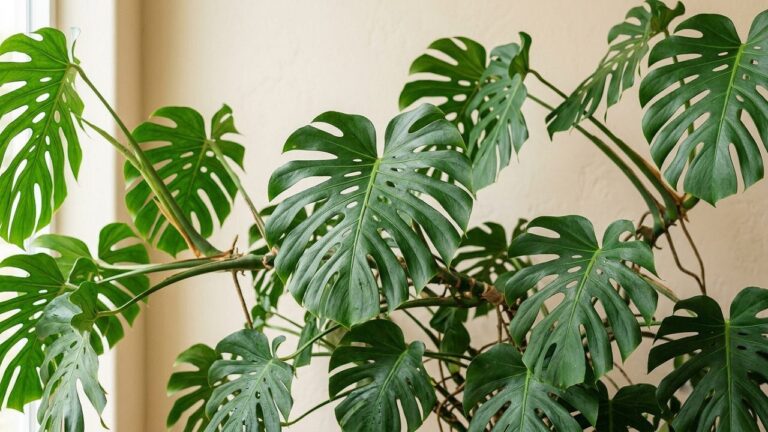
Monstera deliciosa root systems are dimorphic: terrestrial roots in the pot provide the bulk of water and nutrient uptake, while aerial roots supplement moisture when they contact humid substrates. This dual architecture means watering strategy must account for both root types. Terrestrial roots are relatively shallow, concentrating in the top 15-20 cm of substrate, with a few anchor roots extending deeper. This shallow distribution makes the species vulnerable to both overwatering (if the substrate remains saturated) and underwatering (if the top layer dries completely between waterings, as deeper roots cannot compensate).
The optimal watering frequency for Monstera deliciosa in Canadian homes is when the top 5-7 cm of substrate feels dry to the touch, typically every 7-10 days in summer (higher evapotranspiration, longer photoperiods) and every 10-14 days in winter (lower light, reduced growth). Pot size and substrate composition dramatically affect this schedule: a 25 cm pot with a well-draining mix (see next section) dries faster than a 35 cm pot with dense, peat-heavy soil. Insert a finger or wooden skewer 5-7 cm into the substrate; if it emerges clean and dry, water thoroughly until excess drains from the pot bottom. If it emerges damp or with clinging soil particles, wait 2-3 days and retest. This tactile method is more reliable than calendar-based schedules, which ignore seasonal and microclimate variation.
Adjusting Watering for Moss Pole Moisture
When aerial roots actively penetrate a moist moss pole, they contribute 10-20% of the plant’s total water uptake, slightly reducing the frequency of pot watering. Monitor the substrate independently: if the moss pole is kept consistently moist but the pot substrate dries out rapidly, the plant may exhibit signs of underwatering (leaf curling, drooping petioles) despite the aerial roots’ supplemental intake. Conversely, if both the moss pole and pot substrate remain saturated, the risk of root rot increases (see section on distinguishing root rot from underwatering). Balance is key: aim for a moist moss pole and a pot substrate that cycles between moist and slightly dry in the top 5-7 cm, never bone-dry throughout or waterlogged at depth.
Soil Composition Recipe with Drainage Ratios for Aerial Root Health
Substrate for Monstera deliciosa must balance moisture retention (to sustain shallow terrestrial roots and support aerial root hydration) with rapid drainage (to prevent anaerobic conditions that cause root rot). A proven recipe for Canadian indoor conditions combines 40% high-quality peat-based potting mix (or coco coir as a sustainable alternative), 30% orchid bark (medium grade, 1-2 cm chunks), 20% perlite, and 10% worm castings or compost. This ratio delivers a substrate that drains within 5-10 seconds when saturated, retains moisture in the organic fraction for 7-10 days, and provides ample air pockets for root respiration.
Orchid bark is critical: it creates large pore spaces that prevent compaction and allow aerial roots that descend into the pot to penetrate and anchor without suffocating. Perlite (heat-expanded volcanic glass) is inert, lightweight, and prevents the peat or coir from collapsing over time, maintaining drainage for 18-24 months before substrate refresh is needed. Worm castings or compost supply slow-release nutrients (nitrogen, phosphorus, trace elements) that reduce the need for frequent liquid fertilization. Canadian sources for these components include Lee Valley Tools (orchid bark, perlite), local garden centres (Pro-Mix or Fafard peat-based mixes), and vermicomposting suppliers in Ontario and British Columbia (worm castings).
Substrate pH and Nutrient Availability
Monstera deliciosa thrives in slightly acidic to neutral substrate, pH 5.5-7.0. Peat-based mixes typically start at pH 5.5-6.0, ideal for maximizing nutrient availability, particularly iron and manganese, which become insoluble above pH 7.5 and cause interveinal chlorosis (yellowing between leaf veins). Coco coir is naturally pH 6.0-6.5 and requires no amendment. If using municipal compost, test pH with a simple soil test kit (available at Canadian Tire or Home Hardware); if pH exceeds 7.0, incorporate 10-15% additional peat or sulfur-coated fertilizer to lower it. Conversely, if pH drops below 5.0 (rare unless using pure peat), add a tablespoon of dolomitic lime per 5 litres of mix to buffer toward neutral.
Propagation by Node Cuttings: Timing and Rooting Media Selection
Node-based propagation is the fastest, most reliable method to multiply Monstera deliciosa. Each node on the stem contains dormant meristematic tissue capable of generating new roots and shoots. A single-node cutting, consisting of one node with an attached leaf (or leaf stub) and ideally one aerial root, will root in 2-4 weeks under optimal conditions. Multi-node cuttings (2-3 nodes) root equally well but produce larger plants faster, making them preferable for propagation in late spring or early summer when growth is most vigorous in Canadian homes.
To take a cutting, use sterilized pruning shears to sever the stem 1-2 cm below a node, ensuring the cut is clean and angled. If an aerial root is present at the node, leave it attached; it will accelerate rooting. Remove any leaf below the cutting point to prevent rot. Dip the cut end in rooting hormone powder (0.1-0.3% IBA, available at Canadian garden centres) to stimulate root initiation, though this is optional for Monstera deliciosa, which roots readily even without hormone. Place the cutting in sphagnum moss, perlite, or water. Sphagnum moss retains moisture and provides slight acidity that discourages bacterial growth; perlite drains rapidly and prevents rot; water allows visual monitoring of root development but increases risk of rot if not changed every 3-4 days.
Rooting Timeline and Transplanting to Substrate
In sphagnum moss or perlite, roots emerge from the node in 10-14 days at 21-24°C, reaching 5-10 cm length by week 3-4. In water, root initiation is visible within 7-10 days, but water roots are structurally different from substrate roots (thinner, more fragile) and experience transplant shock when moved to soil. To minimize shock, transplant water-rooted cuttings when roots are 3-5 cm long, before they exceed 10 cm and become brittle. For moss or perlite-rooted cuttings, transplant when roots are 5-10 cm and the cutting shows new leaf growth (a sign that the root system is functional). Use the same substrate recipe as for mature plants (40% peat, 30% bark, 20% perlite, 10% castings), potting in a 10-12 cm container. Water thoroughly after transplanting, then withhold water for 5-7 days to encourage roots to explore the new substrate rather than relying on residual rooting-medium moisture.
Humidity Levels Required for Guttation and Leaf Health
Monstera deliciosa is adapted to 50-70% relative humidity in its native rainforest understory. At these levels, the plant exhibits guttation, a normal physiological process in which excess water is exuded as droplets from hydathodes (specialized pores) along leaf margins, typically visible in early morning. Guttation indicates robust root pressure and active transpiration; it is not a sign of overwatering unless accompanied by yellowing leaves or mushy stems. In Canadian homes, winter humidity often drops to 20-30% due to forced-air heating, causing Monstera deliciosa leaf tips and margins to brown, aerial roots to desiccate, and guttation to cease.
Raising humidity to the 50-60% range is achievable with a cool-mist humidifier placed within 1-2 metres of the plant, running 8-12 hours daily during heating season (October-April in most of Canada). A hygrometer (digital models cost $15-25 at Canadian Tire or Amazon.ca) allows precise monitoring. Alternatively, grouping multiple plants creates a localized humidity microclimate through collective transpiration, raising ambient humidity by 5-10 percentage points within a 1-metre radius. Pebble trays (a shallow tray filled with water and pebbles, with the pot resting on the pebbles above the waterline) provide minimal humidity increase (2-3%) and are insufficient as a sole strategy for Monstera deliciosa in dry Prairie or northern climates.
Misting Frequency and Mineral Deposit Management
Misting Monstera deliciosa leaves and aerial roots with room-temperature water raises humidity transiently (10-15 minutes) but does not substitute for ambient humidity control. Mist once daily in winter to prevent aerial root desiccation and remove dust from leaf surfaces, which can block stomata and reduce photosynthesis. Use distilled or rainwater to avoid mineral deposits (white crusty residue from calcium and magnesium in hard tap water) that accumulate on leaves and moss poles. If using municipal water in Calgary, Winnipeg, or other hard-water regions, wipe leaves monthly with a damp microfiber cloth to remove deposits, or install a simple carbon filter on your watering can to reduce mineral content. Persistent mineral buildup can clog hydathodes, preventing guttation and causing marginal necrosis.
Identifying Root Rot Versus Underwatering in Climbing Species
Distinguishing root rot from underwatering is critical for Monstera deliciosa because both conditions cause wilting, but their treatments are opposite. Root rot, caused by anaerobic soil conditions that allow Pythium or Phytophthora fungi to colonize roots, presents as yellowing lower leaves, mushy brown-black roots (visible when the plant is unpotted), and a sour or foul odor from the substrate. The plant wilts despite the substrate feeling moist or wet at depth. In contrast, underwatering causes crisp, dry leaf margins, curling leaves, and firm, white or tan roots; the substrate is dry throughout when checked with a finger or skewer, and there is no odor.
To diagnose, unpot the plant and inspect the root ball. Healthy roots are firm, white to light tan, and resist tearing when gently tugged. Rotted roots are soft, dark brown to black, and slough off easily, leaving a threadlike central core. If rot is present, trim all affected roots with sterilized shears, cutting back to firm white tissue. Rinse the remaining root ball under lukewarm water to remove fungal spores, then repot in fresh substrate (never reuse old mix) in a clean pot. Reduce watering frequency by 30-50% for 4-6 weeks to allow the reduced root system to regenerate without further stress. If underwatering is confirmed, water thoroughly and increase frequency, checking substrate moisture every 3-4 days until the plant recovers turgidity (typically 7-10 days).
Preventive Measures for Root Health in Canadian Indoor Conditions
Preventing root rot in Monstera deliciosa hinges on substrate drainage and pot selection. Always use pots with drainage holes; cachepots (decorative outer pots without holes) must be emptied of standing water within 15-30 minutes after watering. Terracotta pots, common in Canadian garden centres, wick moisture laterally through their porous walls, accelerating substrate drying and reducing rot risk in humid environments (coastal BC) but requiring more frequent watering in dry climates (Alberta). Plastic or glazed ceramic pots retain moisture longer, suitable for dry interiors but risky if substrate is too dense. Elevate pots on feet or risers to ensure air circulation beneath, preventing water from pooling under the base and creating a humidity trap that encourages fungal growth.
Monstera deliciosa Fruit Production Indoors: Conditions and Edibility
Monstera deliciosa flowers and fruits are rare in cultivation, requiring the plant to reach full maturity (typically 10-15 years from seed or 5-7 years from a mature cutting) and specific environmental triggers. The inflorescence consists of a cream-coloured spadix (a spike bearing hundreds of tiny flowers) enclosed by a white spathe (a modified leaf). Flowering occurs in response to sustained high light (400-600 foot-candles for several months), warm temperatures (24-28°C), and high humidity (60-70%). In Canadian homes, these conditions are difficult to maintain year-round, making flowering exceptional. However, mature specimens in bright conservatories or sunrooms in southern Ontario or coastal BC occasionally produce inflorescences in late spring or summer.
The fruit, which develops over 10-12 months after pollination, is a green cylindrical structure 15-25 cm long, covered in hexagonal scales. It is edible only when fully ripe, indicated by scales lifting and separating from the core, revealing a creamy white, pineapple-banana-flavored flesh. Unripe fruit contains high concentrations of oxalate crystals (needle-like calcium oxalate raphides) that cause intense oral irritation, throat swelling, and gastrointestinal distress if consumed. Ripe fruit has degraded most oxalates and is safe, prized in its native range for its tropical flavor. Indoor fruit production requires hand pollination: use a small brush to transfer pollen from the male flowers (upper portion of the spadix) to the female flowers (lower portion) over 2-3 consecutive days when the spathe is fully open. Success rates are low (10-20%) without optimal conditions, and fruit maturation indoors is slow due to lower light and temperature compared to outdoor tropical climates.
Toxicity Considerations for Canadian Households
All parts of Monstera deliciosa, except fully ripe fruit, contain calcium oxalate crystals that are toxic to cats, dogs, and humans if chewed or ingested. Symptoms in pets include drooling, oral pain, vomiting, and difficulty swallowing; in severe cases, airway swelling can occur. In humans, chewing leaves or stems causes immediate burning sensation, tongue swelling, and temporary loss of speech. The crystals are mechanically irritating rather than chemically toxic, so effects are localized and resolve within hours to days without treatment, though medical attention is warranted for severe swelling. Position Monstera deliciosa out of reach of pets and children, ideally on elevated plant stands or shelves. If ingestion occurs, rinse the mouth with water, offer milk or yogurt to coat mucous membranes, and contact a veterinarian (for pets) or poison control centre (for humans) immediately.