

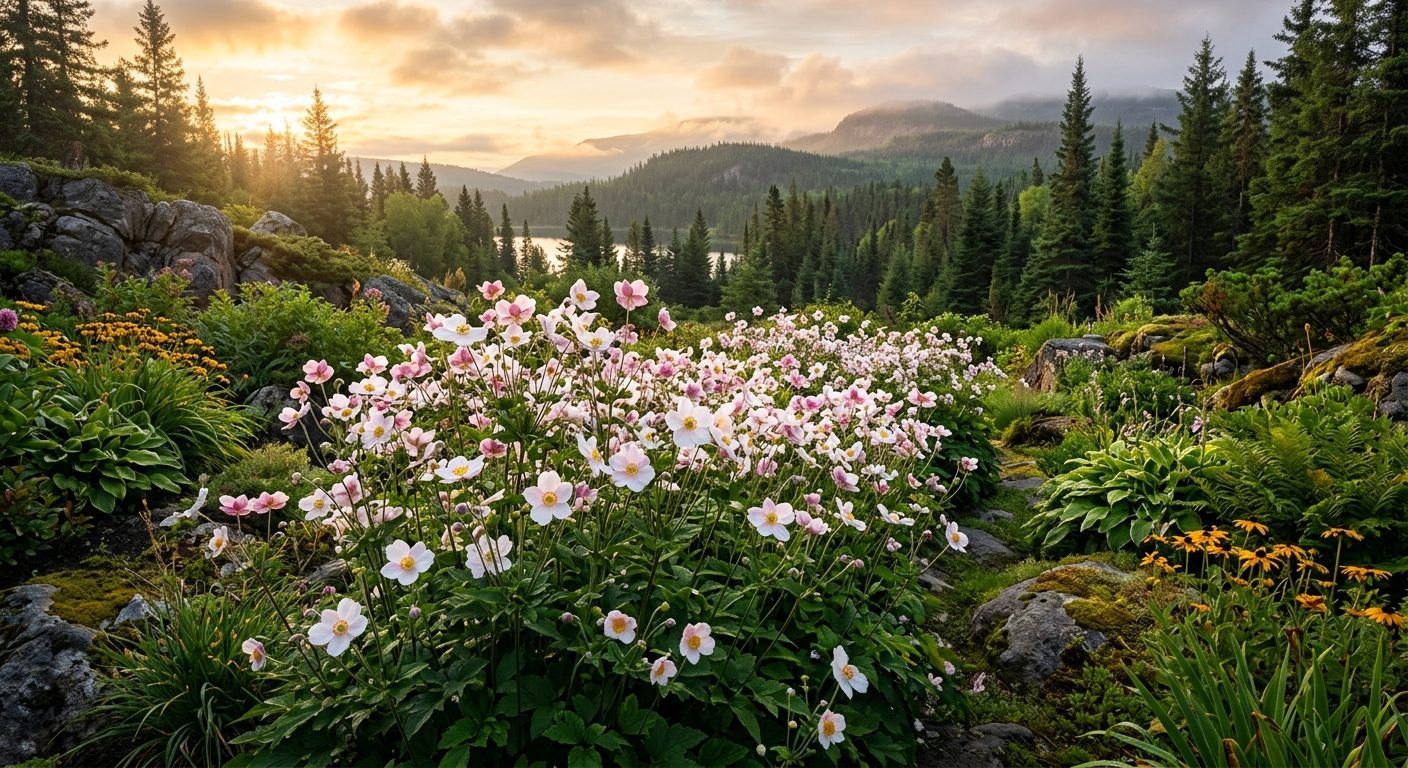
Japanese Anemone: A Late-Season Workhorse with a Spreading Habit
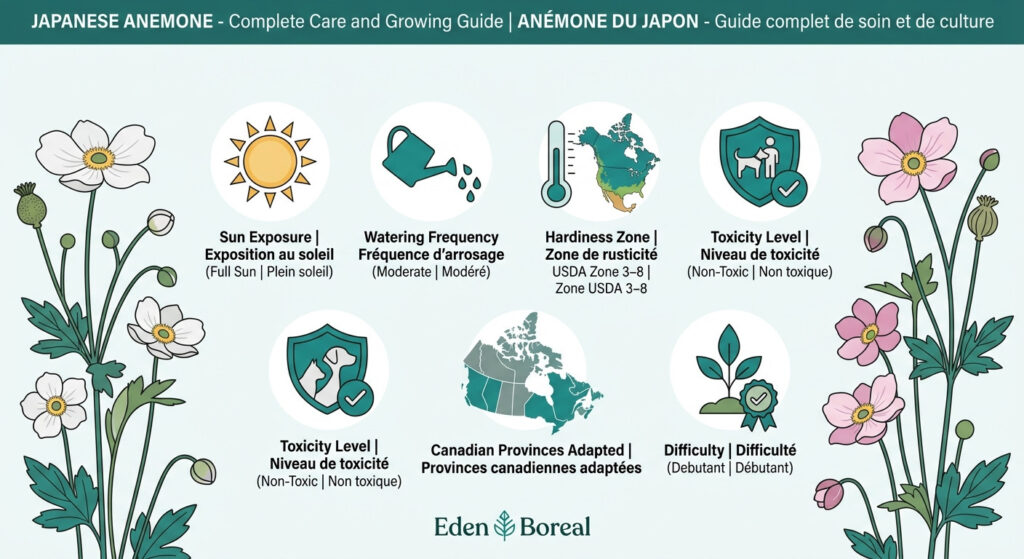
Japanese anemone (Eriocapitella hupehensis, formerly Anemone hupehensis) delivers clouds of pink or white blooms from late August through October, filling the gap when most perennials have finished flowering. Hardy from USDA zone 3 to zone 8, this herbaceous perennial thrives in the cooler summers of Ontario, Quebec, and British Columbia, where part shade and consistent moisture mirror its native mountain habitats in Yunnan and Sichuan provinces of China. The plant’s vigorous rhizome system, however, makes it a double-edged sword: in ideal conditions it can colonize a square metre per season, prompting many Canadian gardeners to treat it as a managed groundcover rather than a tidy border specimen. Understanding the botanical identity, light requirements, and soil preferences of this species is essential to harnessing its late-season beauty without letting it overrun companion plantings.
| Characteristic | Value |
|---|---|
| Botanical name | Eriocapitella hupehensis (syn. Anemone hupehensis, Anemone × hybrida) |
| Plant type | Herbaceous perennial |
| Mature size | 60-120 cm tall, 60-90 cm spread (clump), rhizomes extend indefinitely |
| Light | Part shade (4-6 hours dappled sun) to full shade |
| Watering | Moderate; weekly during establishment, biweekly once established in loam |
| Ideal temperature | 15-24 °C growing season, tolerates -35 °C winter with snow cover |
| Humidity | 50-70% ambient; tolerates lower humidity in shade |
| Hardiness zones (outdoors) | Zone 3 to zone 8 |
| Toxicity | Yes; mildly toxic to dogs and cats (protoanemonin in sap) |
| Difficulty level | Intermediate (easy care, challenging containment) |
What Japanese Anemone Really Is: Botanical Identity and Native Habitat
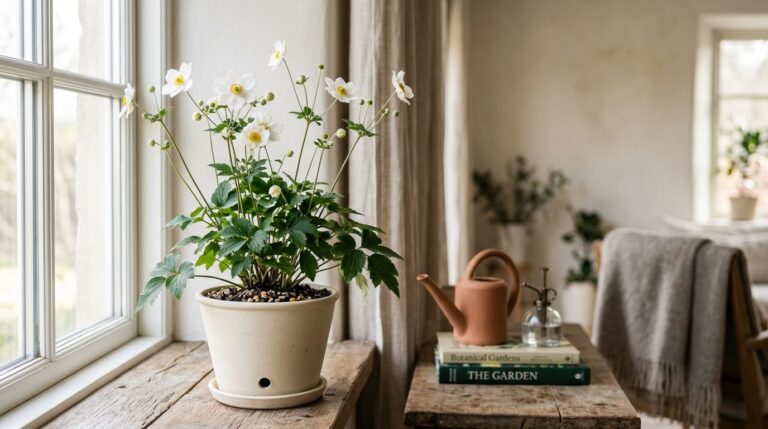
The genus shuffle in recent decades has left many gardeners confused. What nurseries still label Anemone japonica or Anemone × hybrida is now correctly classified as Eriocapitella, a genus split from Anemone based on molecular phylogenetics. Eriocapitella hupehensis (the species from Hubei province) and its cultivars dominate the trade, while true Anemone japonica refers to a separate Japanese endemic rarely seen outside botanical collections. Most garden plants are hybrids or selections of E. hupehensis, sometimes crossed with E. vitifolia, yielding the catch-all label Anemone × hybrida. For practical purposes, Canadian growers can treat all “Japanese anemones” as Eriocapitella with similar care needs, but taxonomic precision matters when sourcing true species for breeding or conservation projects.
In the wild, Eriocapitella hupehensis colonizes forest edges and streambanks at elevations between 1,200 and 2,800 metres in the mountains of western China. Summer monsoon rains deliver consistent moisture, while winters are cold but snow-insulated-conditions closely paralleled by southern Quebec’s zone 4b and Ontario’s zone 5a climates. The plant’s rhizomes spread laterally through leaf litter and humus-rich topsoil, sending up new crowns every 15-30 cm. This clonal growth strategy allows rapid colonization of disturbed ground, a trait that makes it both a valuable erosion-control plant on slopes and a potential nuisance in formal borders. Understanding this native behaviour explains why containment is easier in heavy clay (which slows rhizome travel) than in the loose, amended loams most gardeners provide.
Taxonomic confusion in the nursery trade
Labels at Canadian garden centres often mix outdated and current nomenclature. Honorine Jobert, the iconic white cultivar discovered in France in 1858, may appear as Anemone japonica ‘Honorine Jobert’, Anemone × hybrida ‘Honorine Jobert’, or correctly as Eriocapitella ‘Honorine Jobert’. Similarly, September Charm and Fall in Love Sweetly carry the same synonym baggage. For ordering purposes, use the cultivar name and specify “Japanese anemone” as the common descriptor; most wholesalers recognize the intent regardless of genus label. The key takeaway: all share the rhizomatous habit and late-season bloom, so care advice applies across the nomenclatural variants.
Light Tolerance: Why Part Shade Matters More Than Full Sun for This Species
Japanese anemone performs best with four to six hours of dappled sunlight or morning sun followed by afternoon shade. In trials at the Montreal Botanical Garden, plants receiving fewer than 1,000 foot-candles (roughly the light under a moderately dense tree canopy) produced abundant foliage but sparse flower stalks, while those in full southwestern exposure (above 8,000 foot-candles midday) showed leaf scorch and reduced bloom counts by late summer. The sweet spot lies in 2,000-4,000 foot-candles-equivalent to the east side of a house or under high-pruned deciduous trees. This preference stems from the plant’s montane forest-edge origins, where canopy gaps admit bright but indirect light during the growing season.
Stem elongation and flowering are tightly coupled to cumulative light hours. In southern Ontario’s zone 6a, growers report that plants in locations receiving less than four hours of direct sun delay bloom onset by two to three weeks and produce 30-40% fewer flower stems. Conversely, full-day sun in the clay-loam soils of the Ottawa Valley causes midday wilting even with adequate root moisture, as the broad, lobed leaves lose water faster than the rhizome network can replace it. The practical solution: site Japanese anemone on the north or east side of shrubs, fences, or buildings, ensuring morning light for photosynthesis and afternoon shade to prevent transpiration stress.
Quantifying shade tolerance by foliage response
Rather than relying on vague “part shade” labels, observe leaf morphology. Plants in optimal light produce leaves with internode spacing of 8-12 cm and deep green colouration. In too much shade, internodes stretch to 15-20 cm and leaves pale to yellow-green, a sign the plant is investing energy in height rather than bud initiation. In excessive sun, leaf margins brown and curl by mid-August, especially on cultivars with thinner leaf texture like September Charm. Adjust siting in subsequent seasons based on these visual cues, or use a light meter (widely available for indoor gardening) to confirm foot-candle readings at plant height during midday in July.
The Rhizome Spreading Problem: Containment Strategies and Invasiveness Risk
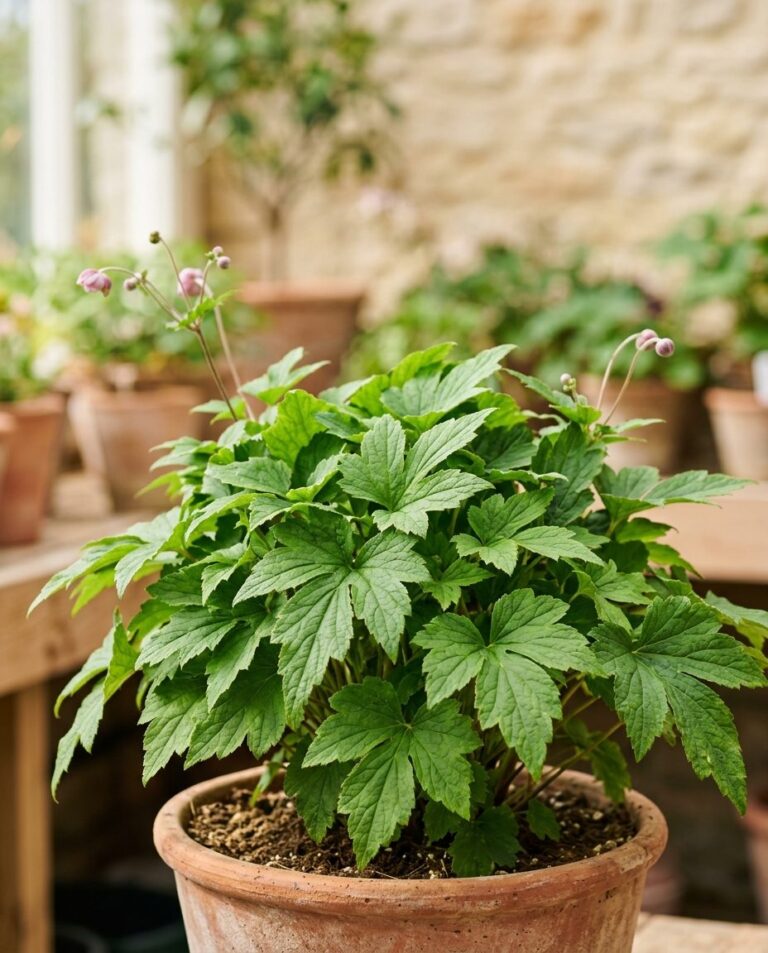
Japanese anemone’s reputation as invasive is earned but context-dependent. In rich, moist loam-the ideal soil amendment many gardeners provide-rhizomes can extend 60-90 cm per year, with new shoots appearing in a widening ring around the original clump. In unamended clay, spread slows to 20-30 cm annually, as dense soil resists lateral rhizome travel. Sandy soils fall between these extremes, with spread rates of 40-50 cm but less vigorous shoot emergence due to lower nutrient and moisture retention. British Columbia gardeners in the Fraser Valley, working heavy clay, often find Japanese anemone stays put for years, while those in the amended raised beds of Toronto’s zone 6b suburbs report aggressive colonization within three seasons.
Containment methods range from passive to aggressive. Root barriers-rigid HDPE panels sunk 40-50 cm deep-are the gold standard, forcing rhizomes to turn inward or surface where they can be pruned. Install barriers at planting time, leaving a 60 cm diameter circle for the initial clump; larger containment zones simply delay the inevitable crowding. Edging trenches dug annually in early spring (before shoot emergence) sever wandering rhizomes; a sharp spade cuts cleanly 30 cm from the clump perimeter, and severed sections can be composted or potted for division. In small urban gardens, some Ontario growers plant Japanese anemone in buried containers-20-litre nursery pots with drainage holes, sunk to the rim-accepting reduced vigour in exchange for absolute containment. This method works well in zone 5a Toronto, where winter cold limits root escape through drainage holes.
Invasiveness risk by region and soil type
- High risk (60+ cm/year spread): Amended loam or compost-rich beds in zones 5-7 with regular irrigation; Fraser Valley raised beds; southern Ontario vegetable-garden soil.
- Moderate risk (30-50 cm/year): Unamended loam, sandy loam, or clay-loam in zones 4-6 with natural rainfall; Edmonton zone 4a gardens with organic mulch.
- Low risk (20-30 cm/year): Heavy clay in zones 3-5, dry shade under conifers, or rocky soils with thin topsoil; Winnipeg zone 3b clay, Vancouver Island dry-summer sites.
No cultivar is truly non-invasive, but Honorine Jobert and Pamina show slightly slower spread than September Charm or Whirlwind in side-by-side trials. The difference is marginal-perhaps 10-15 cm less per season-but may matter in tight quarters.
Soil Requirements Specific to Japanese Anemone’s Mountain Origins
The ideal substrate mimics the humus-rich, well-aerated forest soils of the plant’s native range. A practical recipe for Canadian gardens: 50% existing topsoil, 30% aged compost, 15% perlite or coarse sand, 5% pine bark fines. This blend retains moisture without waterlogging, provides steady nutrient release, and allows rhizomes to penetrate easily. In Quebec’s naturally acidic soils (pH 5.5-6.0), no amendment is needed; in the alkaline clays of southern Alberta (pH 7.5-8.0), incorporate elemental sulfur at 200 grams per square metre to lower pH toward the optimal 6.0-6.5 range. Japanese anemone tolerates slight alkalinity but shows chlorotic foliage (interveinal yellowing) above pH 7.2, indicating iron and manganese lockout.
Organic matter content is critical. Soils with less than 3% organic matter by volume dry too quickly in summer, stressing plants and reducing flower production. Incorporate a 5 cm layer of compost annually in early spring, working it into the top 10 cm without disturbing shallow rhizomes. In heavy clay, add perlite or turface (calcined clay) at 20% by volume to improve drainage; waterlogged clay in spring causes crown rot (see troubleshooting section). Sandy soils benefit from peat moss or coir at 25% by volume to boost water retention, though frequent irrigation remains necessary in dry summers typical of interior British Columbia’s zone 6a.
Nutrient cycling and fertilization timing
Japanese anemone is a moderate feeder, drawing nitrogen and phosphorus from decomposing organic matter rather than requiring synthetic inputs. A single spring application of 5-10-5 granular fertilizer at 50 grams per square metre suffices for established clumps in average soil. In nutrient-poor sand or after division, apply a second dose in mid-June to support vegetative growth before bud set in late July. Avoid high-nitrogen formulas after July 1, as excess nitrogen delays flowering and promotes soft growth vulnerable to early frost. In Ontario’s zone 5b, growers top-dress with composted manure in November, allowing winter freeze-thaw cycles to incorporate nutrients for spring uptake-a low-input strategy that mimics natural forest-floor dynamics.
Watering Frequency Based on Establishment Phase and Seasonal Dormancy
Newly planted Japanese anemone requires weekly deep watering (25-30 mm per session) for the first 8-10 weeks, ensuring the rhizome network establishes before winter. In the Montreal region’s zone 5a, this translates to mid-May through mid-July planting-season irrigation, tapering to biweekly by August as roots extend into surrounding soil. Established clumps (second season onward) are remarkably drought-tolerant once dormant in late fall but demand consistent moisture during active growth from April through September. In loam soils, natural rainfall typically meets needs in eastern Canada; supplemental watering becomes necessary during dry spells exceeding 10 days without rain, particularly in July and August when flower stalks elongate.
The rhizome’s fleshy texture stores water and carbohydrates, allowing the plant to endure brief droughts, but prolonged dryness (three weeks or more) triggers premature dormancy-foliage yellows and collapses, and flower buds abort. This is common in the rain-shadow areas of Vancouver Island’s zone 8a, where summer precipitation drops below 25 mm per month. Drip irrigation or soaker hoses deliver water directly to the root zone, minimizing foliar wetness that encourages fungal disease (see troubleshooting). Apply 5 cm of shredded-bark mulch around clumps to conserve soil moisture and moderate temperature, replenishing annually as the mulch decomposes into the humus layer the plant craves.
Winter dormancy and spring emergence
Above-ground growth dies back completely after the first hard frost (typically late October in zone 4, early November in zone 6). Cut spent stems to ground level in late fall or leave them standing until spring as wildlife habitat and snow traps. Rhizomes remain dormant until soil temperatures reach 8-10 °C in spring, usually late April in southern Ontario, mid-May in Edmonton’s zone 4a. New shoots emerge slowly, reaching 15-20 cm by early June; avoid cultivating around clumps during this period, as emerging crowns are brittle and easily damaged. Spring watering is rarely needed in eastern Canada, where snowmelt and April rains saturate soils, but western growers in dry-spring zones should irrigate if the top 5 cm of soil is dusty-dry by late May.
Hardiness Zones and Winter Protection for Cold-Climate Regions
Japanese anemone is reliably hardy to zone 3 with consistent snow cover, surviving soil temperatures as low as -35 °C when insulated by 20-30 cm of snow. In Winnipeg’s zone 3b and Edmonton’s zone 4a, winter survival hinges on mulching before freeze-up. Apply a 10-15 cm layer of shredded leaves, straw, or evergreen boughs after the ground freezes in late November, trapping soil heat and preventing freeze-thaw cycling that can heave rhizomes to the surface. Remove mulch gradually in early April as daytime temperatures rise above freezing, avoiding smothering new shoots. In zone 5 and warmer, mulch is optional except in exposed, wind-swept sites or during winters with below-average snowfall.
Crown rot risk peaks in zone 6-7 during wet, mild winters, where fluctuating temperatures and saturated soil create ideal conditions for Phytophthora and Pythium fungi. Improve drainage by planting on slight mounds (10-15 cm raised beds) or incorporating coarse sand and perlite as described earlier. In the Lower Mainland’s zone 8a, where winters are wet and frost-free periods common, avoid heavy mulch that holds moisture against crowns; a thin layer of compost suffices. Gardeners in marginal zone 3a (northern Quebec, interior Labrador) report mixed success: plants survive most winters but occasionally fail after extreme cold snaps below -40 °C without snow. For these regions, consider Japanese anemone a zone-4 plant and accept occasional losses, or grow it in a cold frame for added protection.
Microclimate strategies for borderline zones
- Zone 3a-3b: Plant on south-facing slopes or near building foundations to capture radiant heat; use 15 cm of leaf mulch plus evergreen boughs.
- Zone 4: Standard 10 cm mulch; site away from low-lying frost pockets where cold air pools.
- Zone 5-6: Mulch optional; focus on drainage to prevent crown rot in mild, wet winters.
- Zone 7-8: No mulch needed; improve drainage and avoid overwatering in fall to reduce fungal pressure.
Cultivar Selection: Height, Bloom Timing, and Flower Color Variations
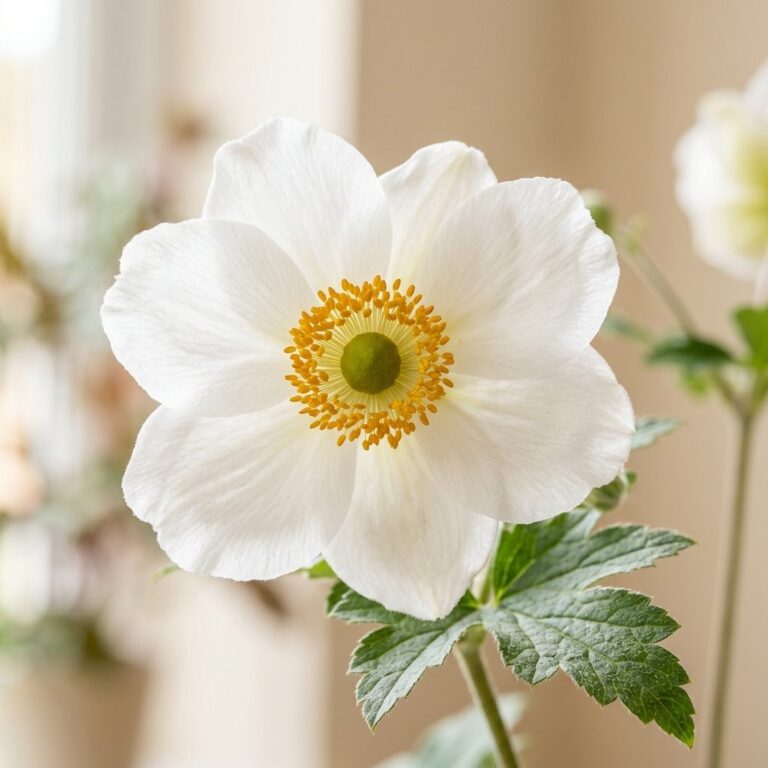
Cultivar choice affects not only aesthetics but also spread rate and bloom reliability. Honorine Jobert, the benchmark white-flowered selection, grows 90-120 cm tall and blooms from late August through late September in zone 5, often extending into early October in warmer zones. Its single white flowers (5-6 petals, yellow stamens) are borne on wiry, branching stems that require no staking in part shade. September Charm, a pink-flowered cultivar, reaches 75-100 cm and blooms slightly earlier (mid-August onward), with semi-double flowers (8-10 petals) in soft rose-pink. In side-by-side trials in Ottawa, September Charm spread 15-20% faster than Honorine Jobert over five years, likely due to more vigorous rhizome production.
Fall in Love Sweetly, a recent compact introduction, stays under 60 cm and suits smaller gardens or container culture (though rhizome containment remains necessary). Its double pink flowers appear from late August through September, and anecdotal reports from Ontario growers suggest slower spread-perhaps 30-40 cm per year in amended loam, versus 50-60 cm for taller cultivars. Whirlwind, a semi-double white, grows 100-120 cm and is noted for prolific flowering but also aggressive rhizome expansion, making it better suited to naturalized settings or large borders where containment is impractical. Pamina, a deep rose-pink semi-double, reaches 80-100 cm and shows intermediate spread, balancing colour intensity with manageable growth in zone 4-6 gardens.
Comparative table of common cultivars
| Cultivar | Height (cm) | Flower type | Bloom start | Spread rate | Notes |
|---|---|---|---|---|---|
| Honorine Jobert | 90-120 | Single white | Late August | Moderate | Classic selection, reliable |
| September Charm | 75-100 | Semi-double pink | Mid-August | Fast | Vigorous rhizomes |
| Fall in Love Sweetly | 50-60 | Double pink | Late August | Slow-moderate | Compact habit |
| Whirlwind | 100-120 | Semi-double white | Late August | Very fast | Prolific flowering |
| Pamina | 80-100 | Semi-double rose | Late August | Moderate | Deep colour |
Availability varies by region. Honorine Jobert and September Charm are stocked by most Canadian nurseries, while Fall in Love Sweetly and Pamina may require mail-order from specialty perennial suppliers. Whirlwind is less common but worth seeking for large-scale plantings or naturalized areas where its vigour is an asset rather than a liability.
Dividing and Propagating Established Clumps: Timing and Root Handling
Division is best performed in early spring (late April to early May in zone 5, mid-May in zone 4) as new shoots emerge but before stems elongate. Dig a trench 30 cm from the clump perimeter, severing lateral rhizomes, then lift the entire root mass with a spading fork. Rhizomes are fleshy, white to tan, and 1-2 cm in diameter; viable segments must include at least one dormant bud (visible as a small bump or emerging shoot) and measure 8-10 cm long. Shorter segments often fail to establish, while longer pieces (15-20 cm) transplant more reliably but yield fewer divisions per clump.
Shake or wash soil from roots to inspect for rot or damage. Healthy rhizomes are firm and white inside when cut; discard any with soft, brown, or mushy tissue, signs of Pythium or Fusarium infection. Dust cut surfaces with sulfur powder or a fungicide labeled for root rot (e.g., fosetyl-Al) to prevent infection during the healing period. Replant divisions immediately at the same depth as the original clump-crowns should sit 2-3 cm below the soil surface. Space divisions 60-90 cm apart to allow for spread, or closer (45 cm) if rapid groundcover establishment is the goal. Water thoroughly after planting and maintain weekly irrigation for the first month.
Fall division: pros and cons
Some Ontario growers divide Japanese anemone in early September, after bloom, arguing that fall-planted divisions establish roots before winter and flower the following season. This works in zone 6 and warmer, where soil remains workable into November, but risks winter heaving in zone 4-5 if divisions don’t root adequately before freeze-up. Spring division is safer in cold climates, though plants may skip flowering the first season while rebuilding root mass. In zone 7-8, fall division is equally reliable and avoids the spring rush of garden tasks.
Diagnosing Fungal Issues, Sparse Flowering, and Rhizome Rot Indoors
Crown rot (Phytophthora or Pythium spp.) manifests as sudden wilting of entire shoots in mid-summer, with blackened, mushy tissue at the soil line. It is most common in poorly drained clay or after prolonged wet weather in zone 6-7. Dig affected crowns, discard rotted tissue, and improve drainage before replanting. Preventative drenches of fosetyl-Al in early spring reduce risk in heavy soils. Powdery mildew (Erysiphe spp.) appears as white, dusty patches on leaves in late summer, especially in humid, crowded plantings. It rarely kills plants but reduces vigour; improve air circulation by thinning clumps and avoid overhead watering. Downy mildew (Peronospora spp.) causes yellow blotches on upper leaf surfaces with grayish fuzz below, more severe in cool, wet springs. Copper-based fungicides (e.g., Bordeaux mixture) applied at first symptom limit spread.
Sparse flowering despite healthy foliage typically indicates insufficient light (see light section) or excess nitrogen. Plants in deep shade or those receiving high-N lawn runoff produce lush leaves but few buds. Relocate to brighter part-shade or withhold fertilizer after June. Occasionally, newly divided clumps skip flowering for one season while reestablishing; this is normal and resolves by year two. Rhizome rot indoors is rare, as Japanese anemone is not grown as a houseplant, but potted divisions overwintered in unheated garages or cold frames may rot if soil stays waterlogged. Ensure containers drain freely and water sparingly during dormancy-once every 3-4 weeks suffices to prevent desiccation without promoting rot.
Pest issues: slugs and leaf miners
Slugs chew irregular holes in emerging foliage in spring, particularly in mulched, moist gardens. Hand-pick at dusk or use iron phosphate bait (Sluggo) around clumps in late April. Leaf miners (fly larvae tunneling in leaves) occasionally disfigure foliage but cause no lasting harm; remove and destroy affected leaves. Japanese anemone is otherwise pest-free, with no significant issues from aphids, beetles, or borers in Canadian gardens.
Pairing Japanese Anemone with Complementary Shade Plants
Japanese anemone’s late bloom and medium-fine texture make it an ideal partner for Heuchera (coral bells), whose evergreen or semi-evergreen foliage provides year-round structure. Plant Heuchera 45 cm in front of anemone clumps; the coral bells’ mounded habit (20-30 cm tall) contrasts with the anemone’s upright stems, and both tolerate part shade. Brunnera macrophylla (Siberian bugloss) offers spring interest with blue forget-me-not flowers and bold heart-shaped leaves, filling the visual gap before Japanese anemone emerges. Space Brunnera 60 cm from anemone crowns to avoid root competition. Carex oshimensis (Japanese sedge), a low-growing evergreen grass, edges anemone plantings with fine-textured foliage that remains attractive through winter in zone 6-7.
For vertical layering, underplant Japanese anemone with Epimedium (barrenwort), a rhizomatous groundcover (15-25 cm tall) that tolerates dry shade and suppresses weeds. Epimedium’s spring flowers and fall foliage colour complement anemone’s late-season display. Astilbe provides mid-summer bloom (July-August) in similar light conditions, with plume-like flowers bridging the gap to anemone’s August-September show. In naturalized settings, combine Japanese anemone with Actaea simplex (bugbane) for a succession of tall, airy blooms from August through October, both thriving in moist, humus-rich shade typical of Ontario’s zone 5 woodlands.
Spacing and planting density
- Japanese anemone as focal plant: 1 clump per square metre, underplanted with Epimedium or Carex at 5-7 plants per square metre.
- Massed groundcover: 3-4 anemone divisions per square metre, allowing rhizomes to fill in over 2-3 seasons; no underplanting needed.
- Mixed border: 1 anemone clump per 1.5 square metres, interplanted with Heuchera (3 per square metre) and Brunnera (2 per square metre) for layered texture.
Avoid pairing Japanese anemone with aggressive spreaders like Aegopodium (goutweed) or Vinca minor (periwinkle), as the resulting competition becomes a management headache. Instead, choose well-behaved companions that respect boundaries or share the anemone’s clumping habit, creating a cohesive, low-maintenance planting that peaks in late summer when most Canadian perennial borders are winding down.