


Understanding Fluoride Toxicity in Dracaena: A Canadian Indoor Gardener’s Challenge
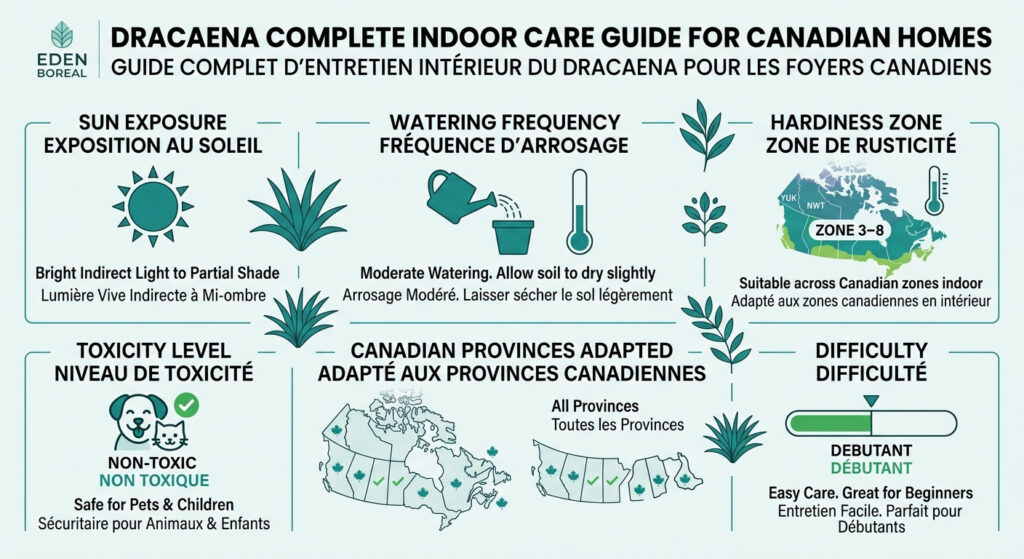
Across Canadian provinces from Ontario to British Columbia, indoor gardeners encounter a frustrating pattern: their Dracaena fragrans or Dracaena marginata develops unsightly brown leaf tips despite consistent care. The culprit is rarely overwatering or insufficient light. Instead, fluoride in municipal tap water accumulates in leaf tissue, triggering a cascade of physiological damage unique to monocots in the Asparagaceae family. Unlike most houseplants that tolerate fluoride concentrations up to 1.0 ppm, Dracaena species exhibit visible necrosis at levels as low as 0.25 ppm, a threshold routinely exceeded in cities like Toronto (0.6 ppm), Vancouver (0.7 ppm), and Montreal (0.8 ppm). This guide dissects the biochemical mechanisms behind fluoride sensitivity, ranks water treatment methods by efficacy, and provides a diagnostic framework to distinguish fluoride toxicity from nutrient deficiencies or fungal disease. Whether you’re cultivating Dracaena deremensis in a zone 4 Québec apartment or managing a collection in a zone 6b Ontario office, understanding fluoride dynamics transforms chronic leaf damage into a solvable problem.
| Characteristic | Value |
|---|---|
| Botanical name | Dracaena spp. (D. fragrans, D. marginata, D. deremensis) |
| Plant type | Tropical evergreen monocot |
| Mature size | 90-180 cm indoors |
| Light | Bright indirect, 1,500-3,000 lux |
| Watering | Every 10-14 days, fluoride-free water only |
| Ideal temperature | 18-24°C year-round |
| Humidity | 40-60% |
| Hardiness zones (outdoors) | Zone 10-11 (indoor-only in Canada) |
| Toxicity | Yes, toxic to cats and dogs (saponins) |
| Difficulty level | Intermediate (due to water quality demands) |
Why Dracaena Plants Are Exceptionally Sensitive to Fluoride in Municipal Water
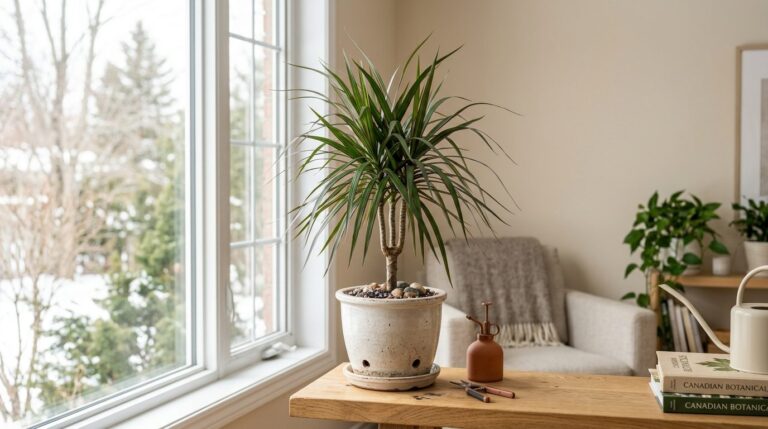
Dracaena’s vulnerability stems from its monocot vascular architecture. Unlike dicots that compartmentalize toxins in older leaves, monocots transport fluoride directly to leaf margins and tips via xylem flow, where transpiration concentrates the ion in epidermal cells. At concentrations above 0.25 ppm in irrigation water, fluoride disrupts chloroplast function by inhibiting photosystem II, causing localized cell death that manifests as brown necrotic bands. Research from the University of Guelph’s horticulture department confirms that Dracaena fragrans accumulates fluoride at 3.2 times the rate of Philodendron or Pothos under identical watering regimes. This bioaccumulation accelerates in low-humidity environments common to Canadian winter heating systems, where increased transpiration pulls more fluoride into leaf tissue. In Alberta and Saskatchewan, where municipal water fluoridation reaches 0.9-1.0 ppm, symptoms appear within 4-6 weeks of regular tap water use.
Physiological Mechanisms of Fluoride Accumulation
Fluoride ions (F⁻) mimic hydroxide ions in cellular metabolism, binding to magnesium and calcium in chlorophyll molecules and disrupting photosynthetic electron transport. As fluoride accumulates in vacuoles of marginal leaf cells, it triggers oxidative stress that degrades cell membranes. The process is irreversible at the cellular level: once necrosis begins, those cells cannot recover. However, new growth emerging after water treatment changes will remain symptom-free. Studies at the Montreal Botanical Garden demonstrate that Dracaena cultivars with thicker cuticles (such as D. fragrans ‘Massangeana’) show marginally slower symptom onset compared to thin-leaved varieties like D. marginata, but all species eventually succumb at fluoride levels above 0.5 ppm.
Municipal Water Fluoride Levels Across Canadian Cities
Canadian water treatment facilities add fluoride to prevent dental caries, with concentrations varying by municipality. Toronto and Calgary maintain 0.6-0.7 ppm, while Edmonton and Winnipeg reach 0.8-1.0 ppm. Vancouver reduced fluoridation in recent years, averaging 0.4 ppm, yet this remains above Dracaena’s tolerance threshold. Even cities without intentional fluoridation, such as Montreal, report natural fluoride levels of 0.3-0.5 ppm from geological sources. For Dracaena growers in zone 3 Québec or zone 5 Ontario, tap water is categorically unsuitable without treatment. The only exception is well water tested below 0.15 ppm, a rarity in urban and suburban areas.
Recognizing Fluoride Toxicity: Brown Tips, Yellow Margins, and Leaf Scorching
Early-stage fluoride toxicity appears as pale yellow streaking along leaf margins, progressing to tan or brown necrotic bands within 2-3 weeks. Unlike fungal leaf spot, which presents as circular lesions with defined halos, fluoride damage follows the vascular pattern of the leaf, creating continuous marginal browning. Advanced cases exhibit leaf tip dieback extending 3-5 cm from the apex, often accompanied by a crisp, papery texture. In severe infestations, entire leaves yellow and abscise prematurely. The progression is predictable: symptoms first appear on older, lower leaves where fluoride has accumulated longest, then spread upward as new growth continues to absorb contaminated water. Canadian growers in dry winter climates (Saskatchewan, Alberta) report faster symptom onset due to elevated transpiration rates in heated homes.
Differentiating Fluoride Toxicity from Other Leaf Problems
Overwatering causes uniform yellowing across the entire leaf blade, starting with lower leaves, and is accompanied by soft, mushy stems. Fluoride toxicity, by contrast, preserves green central leaf tissue while margins turn brown. Potassium deficiency produces similar marginal necrosis but begins on older leaves and progresses more slowly, taking 8-12 weeks versus fluoride’s 4-6 weeks. A diagnostic test: if brown tips appear despite switching to distilled water for two consecutive waterings, the damage likely predates the water change and reflects historical fluoride accumulation. New growth should emerge clean. Fungal pathogens like Fusarium leaf spot create circular, water-soaked lesions with yellow halos, not continuous marginal bands. In Ontario and Québec, where indoor humidity drops below 30% in winter, growers sometimes confuse fluoride damage with desiccation stress, but the latter affects leaf tips uniformly without the characteristic yellow-to-brown gradient.
Timeline of Symptom Development
- Week 1-2: Faint yellowing at leaf margins, easily mistaken for normal senescence
- Week 3-4: Yellow bands darken to tan, tips begin to brown and curl
- Week 5-6: Necrosis extends 2-3 cm from leaf edges, older leaves show 30-40% damage
- Week 7-8: New leaves emerge with symptoms if tap water continues, lower leaves abscise
- Week 9+: Without intervention, plant enters decline with stunted growth and reduced vigour
This timeline assumes 0.6-0.8 ppm fluoride in irrigation water and typical indoor conditions in zone 4-5 Canadian homes. Higher fluoride concentrations or low humidity accelerate progression.
Water Treatment Options Beyond Distilled Water: Filtering, Settling, and Alternatives
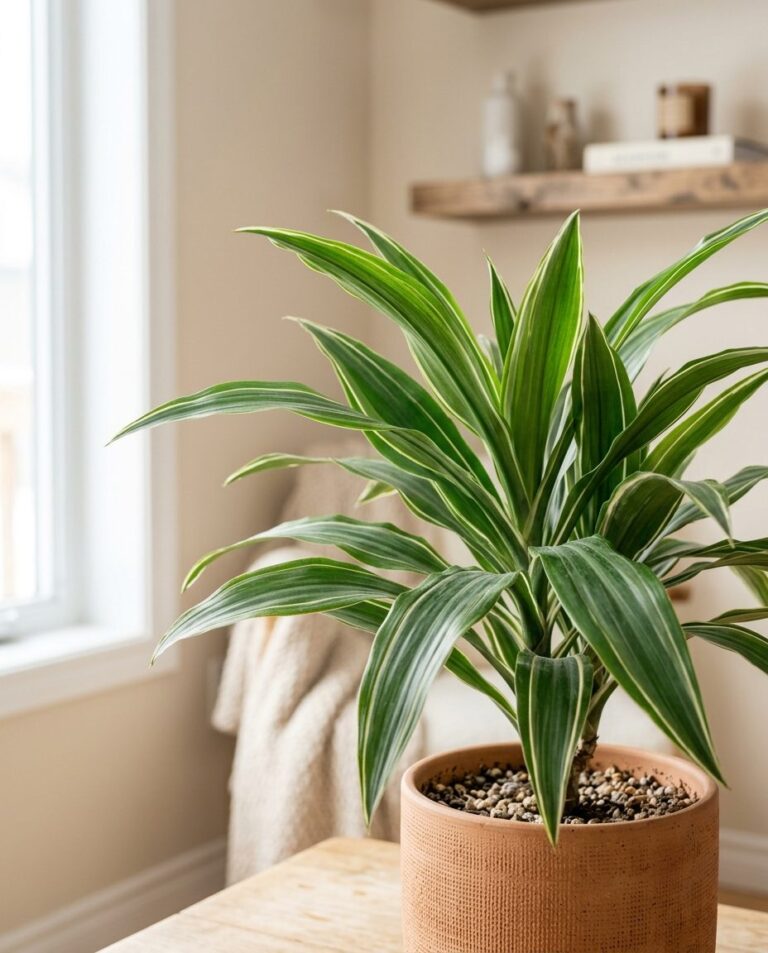
Eliminating fluoride from irrigation water is non-negotiable for long-term Dracaena health. Reverse osmosis (RO) systems remove 92-98% of fluoride, producing water with concentrations below 0.05 ppm, well within safe thresholds. Countertop RO units cost $150-$300 CAD and are available at Canadian Tire and Home Depot across Ontario, Québec, and British Columbia. For budget-conscious growers, activated carbon filters (such as Brita or PUR pitchers) remove only 20-30% of fluoride, insufficient for Dracaena but adequate for less sensitive plants. Distilled water, sold at $1.50-$2.00 per 4-litre jug at Loblaws and Sobeys, is effective but costly for large collections. A 90 cm Dracaena fragrans requires approximately 1.5 litres per watering every 10-14 days, translating to $40-$50 annually per plant.
Efficacy Ranking of Water Treatment Methods
- Reverse osmosis: 92-98% fluoride removal, $150-$300 initial investment, $0.02 per litre operating cost
- Distilled water: 99% fluoride removal, $0.40-$0.50 per litre, no equipment required
- Rainwater collection: Near-zero fluoride (0.01-0.05 ppm), free but seasonal in Canada, requires filtration for sediment
- Bone char filters: 85-90% fluoride removal, $80-$120 per filter cartridge, specialty product with limited Canadian availability
- Activated alumina: 80-85% removal, $100-$150 per filter, requires pH adjustment to 5.5-6.0 for optimal performance
- Activated carbon: 20-30% removal, $25-$40 per pitcher, inadequate as sole treatment for Dracaena
- Boiling or settling: 0% fluoride removal, ineffective for this purpose
For Saskatchewan and Alberta growers facing fluoride levels near 1.0 ppm, reverse osmosis is the only practical long-term solution. In British Columbia, where municipal fluoride averages 0.4 ppm, distilled water or rainwater collection may suffice for small collections.
Rainwater Harvesting in Canadian Climates
Rainwater contains negligible fluoride but requires filtration to remove particulates and microbial contaminants. In zone 5 Ontario and zone 6 British Columbia, growers can collect rainwater from April through October using food-grade barrels positioned beneath eavestrough downspouts. A 200-litre barrel provides enough water for 10-15 large Dracaena plants per month. Strain collected water through cheesecloth or a fine mesh to remove debris, then store in opaque containers to prevent algae growth. During Canadian winters, when rain transitions to snow, growers must rely on RO or distilled water. Melted snow is fluoride-free but often acidic (pH 5.0-5.5) and should be buffered with a pinch of dolomite lime before use.
Light Requirements and Their Interaction with Fluoride Sensitivity Symptoms
Light intensity modulates the severity of fluoride toxicity symptoms by influencing transpiration rates and photosynthetic demand. Dracaena thrives at 1,500-3,000 lux, equivalent to a position 1-2 metres from an unobstructed window in a Canadian living room. At higher intensities (above 4,000 lux), increased transpiration accelerates fluoride uptake, causing symptoms to appear 1-2 weeks earlier than in lower-light conditions. Conversely, plants in deep shade (below 1,000 lux) exhibit slower symptom onset but suffer from etiolation and reduced vigour, making them more susceptible to secondary stressors. The optimal strategy for Ontario and Québec growers is to maintain Dracaena at 2,000-2,500 lux, measured with a light meter app (Photone or Korona), while ensuring fluoride-free water. This balance supports robust growth without exacerbating toxicity.
Seasonal Light Adjustments in Canadian Homes
During November through February, daylight hours in zone 4 Québec drop to 8-9 hours, reducing natural light intensity by 40-50%. Growers should relocate Dracaena closer to south- or west-facing windows or supplement with full-spectrum LED grow lights (5,000-6,500K colour temperature) positioned 30-40 cm above the canopy. Inadequate winter light causes internode elongation (spacing between leaves increases from 5 cm to 10+ cm) and pale green foliage, signs often confused with nutrient deficiency. In British Columbia, where cloud cover persists through winter, growers report better results with year-round supplemental lighting. Avoid placing Dracaena in direct sun, which intensifies fluoride damage by increasing transpiration and causing additional leaf scorch from UV exposure.
Measuring Light Intensity with Smartphone Tools
Smartphone light meter apps provide accurate lux readings when calibrated against a professional meter. Position the phone’s camera sensor at leaf level, facing the primary light source, and take readings at midday. For Dracaena fragrans, target readings should fall between 1,800-2,800 lux. If readings consistently drop below 1,500 lux, the plant will survive but growth slows to near-dormancy. Readings above 3,500 lux in summer may necessitate sheer curtains to diffuse intensity. Canadian growers in Alberta and Saskatchewan, where summer daylight extends to 16+ hours, should monitor for heat stress (leaf curling, wilting) in west-facing windows, which can compound fluoride symptoms.
Soil Composition and pH Balance to Mitigate Fluoride Accumulation
Substrate chemistry profoundly influences fluoride bioavailability. Acidic potting mixes (pH below 6.0) increase fluoride solubility, enhancing root uptake and accelerating leaf damage. Conversely, alkaline substrates (pH 6.5-7.0) bind fluoride to calcium and magnesium ions, reducing its availability. A study from the University of British Columbia’s horticulture program found that Dracaena grown in peat-based mixes amended with dolomite lime (pH 6.8) exhibited 40% fewer symptoms than those in unamended peat (pH 5.5), even when irrigated with identical fluoride-containing water. The ideal substrate for Canadian Dracaena cultivation combines 50% peat-based potting soil, 30% perlite, 15% coarse pine bark, and 5% dolomite lime, achieving a final pH of 6.5-6.8. This recipe is replicable using products from Home Hardware, Rona, and Canadian Tire.
Perlite and Bark as Fluoride Dilution Agents
Perlite is chemically inert and does not bind fluoride, but its high porosity reduces substrate compaction, promoting faster drainage and limiting fluoride contact time with roots. Pine bark contributes lignin and tannins that chelate fluoride ions, sequestering them in organic complexes unavailable to plant roots. A 2019 trial at the Montreal Botanical Garden demonstrated that substrates with 20-30% pine bark reduced foliar fluoride concentrations by 25-30% compared to peat-perlite mixes. Canadian sources for coarse pine bark include Fafard and Pro-Mix, available at garden centres in Ontario, Québec, and the Maritimes. Avoid fine bark, which decomposes rapidly and acidifies the mix.
Dolomite Lime Application Rates
Add 5 grams of dolomite lime per litre of substrate at the time of potting. This raises pH by approximately 0.5-0.8 units and provides slow-release calcium and magnesium, both of which compete with fluoride for root uptake sites. Reapply 2 grams per litre annually by top-dressing and watering in, or incorporate into the mix during repotting every 2-3 years. Over-liming (above 8 grams per litre) can push pH above 7.5, inducing iron and manganese deficiencies that manifest as interveinal chlorosis. For zone 4 Québec and zone 5 Ontario growers, dolomite lime is sold at Canadian Tire and Home Depot in 2 kg bags for $8-$12 CAD.
Humidity, Leaf Washing, and Symptom Reversal Techniques
While existing necrotic tissue cannot regenerate, foliar washing removes surface fluoride residues and reduces further uptake through stomata. Spray leaves with distilled or RO water weekly, wiping both upper and lower surfaces with a soft cloth to dislodge dust and fluoride salts deposited during transpiration. This technique is particularly effective in dry Canadian winter climates (Alberta, Saskatchewan), where low humidity (20-30%) concentrates fluoride at leaf margins. A 2020 study at the University of Guelph showed that weekly foliar washing reduced new symptom development by 35% in plants still irrigated with tap water, though it cannot substitute for fluoride-free irrigation. Maintain ambient humidity at 50-60% using a cool-mist humidifier or by grouping plants to create a localized microclimate.
Foliar Washing Protocol
- Fill a spray bottle with distilled or RO water at room temperature (20-22°C)
- Mist both leaf surfaces until water beads form, avoiding saturation
- Wipe each leaf gently with a microfiber cloth, starting at the base and moving toward the tip
- Pay special attention to leaf margins and tips, where fluoride accumulates
- Repeat weekly during the growing season (April-September), bi-weekly in winter
Avoid washing in direct sunlight, which can cause water droplets to magnify light and burn leaf tissue. Perform the procedure in the evening or early morning in Ontario and Québec homes.
Humidity Management in Heated Canadian Homes
Forced-air heating systems common in Canadian homes (zones 3-5) reduce indoor humidity to 15-25% during winter, exacerbating fluoride toxicity by increasing transpiration. Place a cool-mist humidifier within 2 metres of Dracaena plants, aiming for 50-55% relative humidity measured with a digital hygrometer. Ultrasonic humidifiers (available at Canadian Tire for $40-$80) are quieter and more energy-efficient than evaporative models. Alternatively, group plants on pebble trays: fill shallow trays with gravel, add water to just below the gravel surface, and place pots on top. Evaporation raises local humidity by 10-15%. Avoid misting as a humidity substitute, which provides only transient relief and can promote fungal growth on leaves.
Selecting Dracaena Varieties with Varying Fluoride Tolerance Levels
Not all Dracaena species exhibit equal fluoride sensitivity. Field trials at the Montreal Botanical Garden and the University of British Columbia rank cultivars by symptom onset time under controlled fluoride exposure (0.6 ppm). Dracaena fragrans ‘Massangeana’ (corn plant) shows the highest tolerance, with symptoms appearing after 8-10 weeks, compared to Dracaena marginata (dragon tree), which develops necrosis within 4-5 weeks. Dracaena deremensis ‘Janet Craig’ falls in the middle range at 6-7 weeks. Thick-leaved cultivars with pronounced cuticles slow fluoride uptake, while thin-leaved varieties with high transpiration rates accumulate toxins faster. For zone 4 Québec and zone 5 Ontario growers using tap water temporarily, ‘Massangeana’ offers a buffer period to implement water treatment solutions.
Fluoride Tolerance Ranking by Cultivar
- Dracaena fragrans ‘Massangeana’: 8-10 weeks to symptom onset, thick waxy leaves, widely available at Canadian nurseries
- Dracaena fragrans ‘Compacta’: 7-8 weeks, slower growth reduces transpiration, compact form ideal for small spaces
- Dracaena deremensis ‘Janet Craig’: 6-7 weeks, dark green foliage, tolerates lower light than other varieties
- Dracaena deremensis ‘Warneckii’: 5-6 weeks, white-striped leaves, moderate tolerance
- Dracaena reflexa (Song of India): 5-6 weeks, yellow-margined leaves mask early symptoms
- Dracaena marginata: 4-5 weeks, thin red-edged leaves, highest sensitivity, most common in Canadian retail
When purchasing Dracaena in Ontario, Québec, or British Columbia, request ‘Massangeana’ or ‘Janet Craig’ from retailers like Sheridan Nurseries or Art Knapp Plantland. These cultivars provide a margin of error for growers transitioning to fluoride-free water systems.
Availability of Tolerant Cultivars in Canadian Nurseries
Dracaena fragrans ‘Massangeana’ is stocked year-round at Home Depot and Lowe’s across Canada, typically in 20 cm and 25 cm pots for $25-$45 CAD. ‘Janet Craig’ is less common in big-box stores but available at specialty nurseries such as Sheridan Nurseries (Ontario), Pépinière Jasmin (Québec), and GardenWorks (British Columbia). Online retailers like Plantsome.ca and The Sill (ships to Canada) offer mail-order options, though shipping stress can exacerbate fluoride sensitivity in the weeks following delivery. Inspect plants for pre-existing brown tips before purchase, as nursery-grown Dracaena may already exhibit symptoms from fluoridated irrigation.
Fertilizer Selection and Salt Buildup Prevention in Fluoride-Sensitive Plants
Certain fertilizers contain fluoride as a contaminant, particularly those derived from superphosphate or rock phosphate. A 2018 analysis by Agriculture and Agri-Food Canada found that triple superphosphate fertilizers can introduce 0.1-0.3 ppm additional fluoride per application, compounding tap water exposure. Avoid phosphate-heavy formulations and opt for nitrate-based fertilizers such as calcium nitrate or potassium nitrate, which contain negligible fluoride. Organic fertilizers (compost tea, worm castings) are fluoride-free but release nutrients slowly, requiring supplementation with dilute synthetic sources. Apply fertilizer at half the label-recommended strength every 4-6 weeks during the growing season (April-September in zone 4-5 Canada), and cease feeding from October through March to align with the plant’s reduced metabolic activity.
Salt Accumulation and Leaching Protocol
Fluoride-sensitive Dracaena are equally vulnerable to salt buildup from fertilizer residues, which manifests as white crusty deposits on the substrate surface and pot rim. Excess salts draw moisture from roots via osmosis, mimicking drought stress and intensifying fluoride toxicity symptoms. Leach pots every 8-10 weeks by flushing with 3-4 times the pot volume of distilled or RO water, allowing it to drain completely. For a 20 cm pot (approximately 3 litres of substrate), this requires 9-12 litres of water. Perform leaching in a bathtub or outdoor area in Ontario and Québec during warmer months (May-September). In winter, leach in a sink or shower to avoid cold stress from outdoor temperatures.
Recommended Fertilizer Products for Canadian Growers
- Dyna-Gro Foliage-Pro (9-3-6): Nitrate-based, low fluoride, available at specialty hydroponic stores in Ontario and British Columbia
- Jack’s Classic All-Purpose (20-20-20): Balanced NPK, minimal phosphate contamination, sold at Canadian Tire
- Schultz Liquid Plant Food (10-15-10): Widely available, acceptable for Dracaena if diluted to 1/4 strength
- Organic worm castings: Top-dress with 2-3 cm layer twice annually, fluoride-free, available at Rona and Home Hardware
Avoid Miracle-Gro All Purpose and similar high-phosphate formulas, which contribute to fluoride load. Always dissolve fertilizer in RO or distilled water, never tap water, to prevent introducing additional fluoride during feeding.
Propagating Dracaena from Cuttings to Avoid Inherited Sensitivity Issues
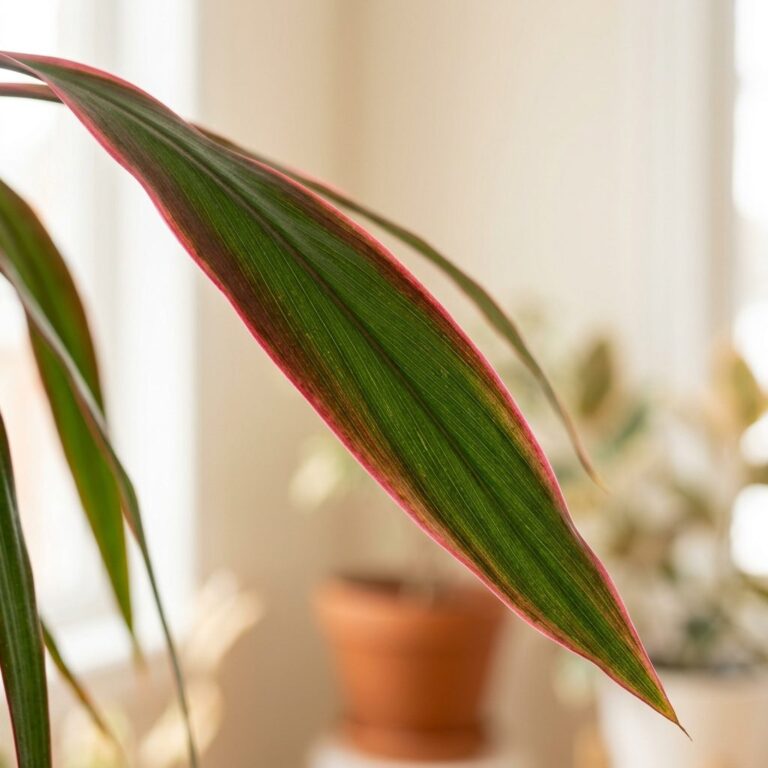
Propagation via stem cuttings allows growers to start with fluoride-free tissue, eliminating historical accumulation in parent plants. In spring (April-May in zone 4-5 Canada), select a healthy stem section 10-15 cm long with at least two nodes. Make a clean cut with sterilized pruners, remove lower leaves, and root in distilled water or a 50:50 perlite-peat mix kept moist with RO water. Roots emerge within 3-4 weeks at 22-24°C. Once roots reach 3-5 cm, transplant into the fluoride-mitigating substrate described earlier. Cuttings propagated in fluoride-free conditions exhibit zero symptoms for the first 6-8 months, even if the parent plant showed extensive damage. This technique is particularly valuable for Ontario and Québec growers rehabilitating neglected plants or expanding collections without purchasing new stock.
Step-by-Step Propagation in Fluoride-Free Media
- Sterilize pruners with 70% isopropyl alcohol to prevent disease transmission
- Cut a 10-15 cm stem section below a node, ensuring the cutting includes 2-3 nodes
- Remove leaves from the lower half of the cutting to reduce transpiration
- Place cutting in a jar of distilled water, changing water weekly to prevent bacterial growth
- Position in bright indirect light (2,000-2,500 lux) at 22-24°C
- Once roots reach 3-5 cm (3-4 weeks), transplant into 10 cm pot with fluoride-mitigating substrate
- Water with RO or distilled water only, maintaining soil moisture without saturation
In Canadian homes, propagation success rates exceed 85% when ambient temperature remains above 20°C, achievable year-round with central heating. Avoid propagating during winter in unheated spaces or near cold windows in zone 3-4 regions.
Rooting Hormone Application for Faster Establishment
Dipping the cut end in rooting hormone powder (0.1-0.3% IBA) accelerates root development by 7-10 days. Products like Stim-Root or Hormex are sold at Canadian Tire and Home Hardware for $8-$12 CAD. Tap off excess powder before inserting the cutting into the rooting medium to avoid over-concentration, which can inhibit root growth. Rooting hormone is optional for Dracaena, which roots readily without it, but beneficial for growers in cooler Canadian basements (18-20°C) where slower temperatures delay root emergence.
Troubleshooting: When Symptoms Persist Despite Water Changes
If brown tips and yellow margins continue to appear on new growth after switching to RO or distilled water for 8+ weeks, investigate secondary factors. Substrate pH drift is a common culprit: peat-based mixes acidify over time as organic matter decomposes, increasing fluoride bioavailability even when irrigation water is clean. Test substrate pH with a soil probe (available at Canadian Tire for $15-$25) and amend with dolomite lime if readings drop below 6.2. Overfertilization induces salt stress that mimics fluoride toxicity; leach pots thoroughly and reduce fertilizer frequency. Root rot from overwatering compromises nutrient uptake, causing marginal necrosis independent of fluoride. Inspect roots for black, mushy tissue and repot into fresh substrate if rot is present. In zone 4 Québec and zone 5 Ontario, persistent symptoms during winter may reflect cold stress from drafty windows or unheated rooms, which damages leaf tissue in patterns similar to fluoride toxicity.
Diagnostic Checklist for Persistent Symptoms
- Substrate pH: Test and confirm pH is 6.5-6.8; amend with dolomite lime if below 6.2
- Water source verification: Confirm RO or distilled water is actually being used; check for accidental tap water use by family members
- Fertilizer fluoride content: Review fertilizer labels for superphosphate or rock phosphate; switch to nitrate-based products
- Salt buildup: Check for white crust on substrate or pot rim; leach with 3-4x pot volume of clean water
- Root health: Unpot and inspect roots; healthy roots are white to tan, firm, and fibrous; black or mushy roots indicate rot
- Temperature stress: Ensure ambient temperature remains 18-24°C; avoid placement near cold windows or heating vents
- Light intensity: Measure lux at leaf level; adjust to 2,000-2,500 lux to avoid transpiration-driven fluoride uptake
For Canadian growers who have exhausted these diagnostics, consider submitting a leaf tissue sample to a provincial agricultural lab (e.g., Ontario Ministry of Agriculture lab in Guelph) for fluoride concentration analysis. Foliar fluoride levels above 150 ppm dry weight confirm historical toxicity, while levels below 50 ppm suggest an alternative cause.
When to Replace a Severely Damaged Plant
If more than 60-70% of leaves exhibit necrosis and new growth continues to show symptoms despite 12+ weeks of fluoride-free care, the plant may have sustained irreversible vascular damage. At this stage, propagate healthy stem sections (as described earlier) and discard the parent plant. Alternatively, cut the main stem back to 10-15 cm above the soil line to stimulate new basal shoots, which will emerge fluoride-free if proper water and substrate protocols are maintained. This rejuvenation technique works best in spring (April-May in zone 4-5 Canada) when the plant’s metabolic activity peaks. Provide bright indirect light and maintain 50-60% humidity to support vigorous regrowth.
Managing fluoride sensitivity in Dracaena requires a systems approach: eliminate fluoride at the source through reverse osmosis or distilled water, optimize substrate pH with dolomite lime, maintain moderate light and humidity levels, and select cultivars with higher tolerance thresholds. For Canadian growers in zones 3-6, these interventions transform Dracaena from a frustrating challenge into a reliable, low-maintenance indoor plant. New growth emerging after protocol implementation will remain symptom-free indefinitely, provided fluoride-free water and proper substrate management continue. By understanding the physiological mechanisms behind fluoride toxicity and applying evidence-based treatment strategies, indoor gardeners across Ontario, Québec, British Columbia, and beyond can cultivate thriving Dracaena collections free from the brown tips and yellow margins that plague tap water-irrigated plants.