

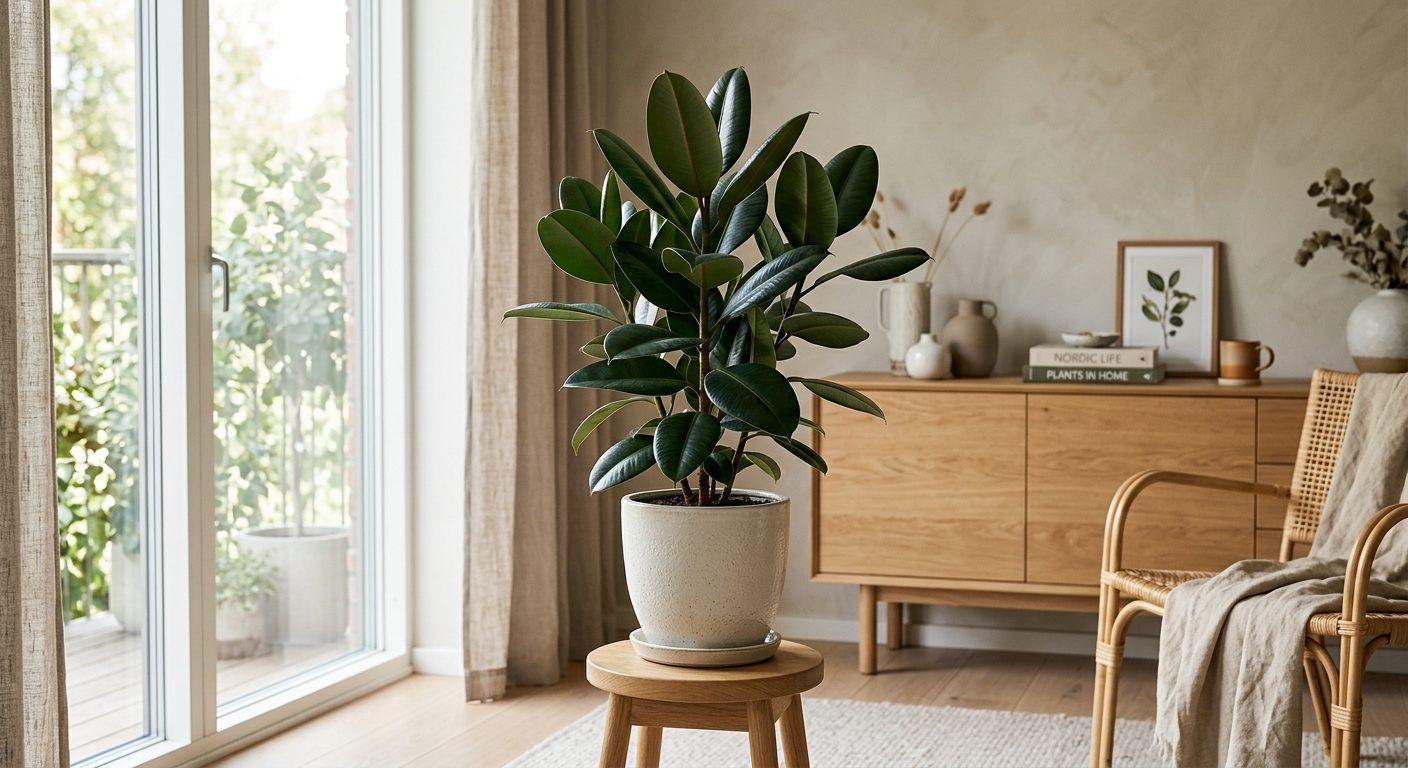
Ficus Elastica: A Resilient Indoor Tree for Canadian Homes
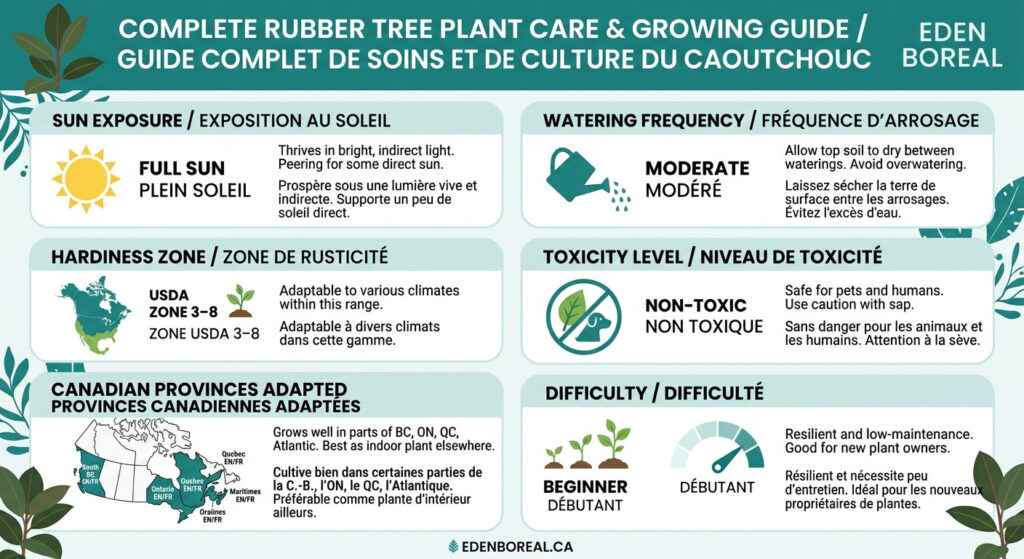
The rubber tree (Ficus elastica) has earned its reputation as one of the most forgiving large-leaf houseplants for Canadian growers, particularly in provinces like Ontario and Quebec where winter heating systems drop indoor humidity below 30%. Unlike moisture-dependent tropicals such as Calathea or Anthurium, this tropical evergreen evolved in the lowland rainforests of Southeast Asia with anatomical traits that buffer it against erratic watering and dry air: a waxy cuticle that reduces transpiration, succulent leaves that store water in parenchyma tissue, and a shallow root zone that adapts quickly to container culture. These physiological advantages make Ficus elastica a practical choice for beginners in USDA zone 3 to zone 7 indoor environments, where outdoor cultivation is impossible but bright windowsills and stable room temperatures provide an ideal substitute for its native canopy habitat.
| Characteristic | Value |
|---|---|
| Botanical name | Ficus elastica |
| Plant type | Tropical evergreen tree |
| Mature size | 180-300 cm indoors |
| Light | 200-400 foot-candles, bright indirect |
| Watering | Every 10-14 days, top 5 cm dry |
| Ideal temperature | 18-24°C |
| Humidity | 30-50% |
| Hardiness zones (outdoors) | Zone 10-12 (indoor only in Canada) |
| Toxicity | Yes, toxic to cats and dogs (latex sap) |
| Difficulty level | Beginner |
Why Ficus Elastica Thrives Where Other Tropical Plants Struggle
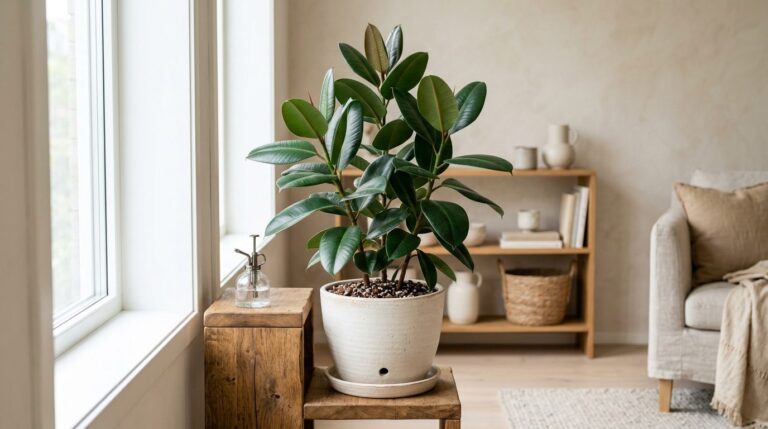
The rubber tree’s competitive edge in Canadian indoor conditions stems from three anatomical features absent in many popular houseplants. First, its waxy cuticle reduces water loss through leaf surfaces by up to 40% compared to thin-leaved species like Pothos or Monstera, allowing the plant to maintain turgor pressure even when ambient humidity drops to 25% during Prairie winters in Alberta or Saskatchewan. Second, the succulent leaf structure stores water in specialized parenchyma cells within the midrib and petiole, creating a reservoir that buffers the plant through irregular watering schedules-a common challenge for busy growers in urban centres like Toronto or Vancouver. Third, the shallow, fibrous root system of Ficus elastica occupies the top 15-20 cm of substrate, concentrating nutrient uptake in a zone that dries predictably and signals watering needs through visible wilting of lower leaves rather than cryptic root rot.
Comparative trials in controlled indoor environments show that Ficus elastica maintains photosynthetic efficiency at 200 foot-candles-half the threshold required by Fiddle Leaf Fig (Ficus lyrata)-and tolerates temperature swings of 8-10°C between day and night without leaf abscission, a tolerance range that accommodates the thermal cycling common in Canadian homes with programmable thermostats. In British Columbia coastal regions (zone 8), where winter cloud cover reduces natural light by 60%, rubber trees placed 1-2 metres from north-facing windows retain their lower leaves for 18-24 months, while light-hungry species like Calathea exhibit leaf drop within 8-12 weeks under identical conditions.
Latex Sap as a Wound-Sealing Mechanism
The milky latex sap that oozes from cut stems or damaged leaves serves as both a defense against herbivores and a rapid wound-sealing agent. When a petiole is severed, the latex coagulates within 30-60 seconds, forming a protective barrier that prevents pathogen entry and moisture loss-a trait that improves propagation success rates and reduces post-pruning stress. However, this same sap contains ficin enzymes and allergenic proteins that cause skin irritation in sensitive individuals and gastrointestinal distress in pets, making the rubber tree unsuitable for households with curious cats or dogs that chew foliage.
Light Requirements: Measuring Brightness Thresholds for Leaf Retention
Quantifying light intensity removes the guesswork from rubber tree placement. A smartphone light meter app or dedicated lux meter reveals that 200-400 foot-candles (2,150-4,300 lux) sustains healthy growth without triggering phototropism or internode elongation, the two visual indicators of insufficient light. In practical terms, this range corresponds to a position 1-1.5 metres from an unobstructed east-facing window in Montreal during October through March, or 2-3 metres from a south-facing window with sheer curtains year-round. Growers in Winnipeg or Edmonton, where winter daylight shrinks to 8 hours, should measure light at midday in January to confirm minimum thresholds; readings below 150 foot-candles correlate with progressive lower-leaf yellowing and eventual abscission within 6-8 weeks.
Seasonal adjustment is critical: the same windowsill that delivers 350 foot-candles in December may spike to 800-1,000 foot-candles in June as the sun’s angle shifts and deciduous trees outside lose their foliage. Excessive light manifests as bleached patches on mature leaves or reddening of new growth in variegated cultivars like Ficus elastica Tineke or Ficus elastica Ruby, where anthocyanin pigments accumulate as a photoprotective response. To stabilize light exposure year-round, position the plant where a lux meter reads 250-350 foot-candles at the foliage plane during the shortest day of the year; summer peaks will naturally increase to 500-600 foot-candles without causing photodamage.
Supplemental LED Lighting for Northern Zones
Growers in Yukon, Northwest Territories, or northern Manitoba (zone 1-3) where winter daylight drops below 6 hours can supplement natural light with full-spectrum LED panels. A 20-watt LED grow light positioned 30-40 cm above the apical bud for 10-12 hours daily adds 150-200 foot-candles, bridging the gap to the 200 foot-candle minimum. Avoid incandescent bulbs, which emit excessive infrared radiation that desiccates leaves and raises leaf-surface temperature above the optimal 22-24°C range.
Watering Frequency Based on Ficus Root Physiology and Soil Drainage
The rubber tree’s shallow root zone occupies the top 15-20 cm of the pot, a compact architecture that evolved to exploit nutrient-rich leaf litter in its native rainforest understory. This root distribution means that moisture in the lower third of a standard 25-30 cm nursery pot remains largely inaccessible, and overwatering fills this anaerobic zone with stagnant water that suffocates feeder roots within 48-72 hours. To align watering frequency with root physiology, insert a wooden skewer or moisture probe to 5 cm depth-the active root zone-and irrigate only when this layer feels dry to the touch. In a well-draining substrate (detailed below), this interval averages 10-14 days during the growing season (April through September in southern Ontario) and extends to 18-21 days during winter dormancy when reduced light and cooler temperatures slow transpiration by 30-40%.
Substrate composition directly governs watering frequency. A dense, peat-heavy mix retains moisture for 16-18 days in a 20 cm pot, while a porous blend of 50% potting soil, 30% perlite, and 20% orchid bark dries in 8-10 days under identical conditions. The latter formula mimics the aerated, fast-draining profile of the rubber tree’s native soil and prevents the compacted, waterlogged substrate that triggers root rot-the primary cause of sudden leaf drop in otherwise healthy specimens. When watering, apply room-temperature water until it drains freely from the pot’s base, then discard any standing water in the saucer after 15 minutes; repeated exposure to a saturated saucer raises substrate moisture above field capacity and creates hypoxic conditions that kill fine roots.
Winter Watering Adjustments for Heated Homes
Forced-air heating systems in Calgary or Regina can drop indoor humidity to 15-20% in January, accelerating leaf transpiration even as root activity slows in response to shorter photoperiods. This mismatch between water loss and uptake causes leaf edges to brown and curl-a symptom often mistaken for underwatering. The solution is to maintain the 18-21 day watering interval but increase ambient humidity to 35-40% with a cool-mist humidifier placed 1-2 metres from the plant, or group multiple tropicals together to create a localized humidity microclimate through collective transpiration.
Soil Composition: Building a Substrate Recipe for Long-Term Health
A purpose-built substrate for Ficus elastica balances three competing requirements: moisture retention to sustain the shallow root zone between waterings, aeration to prevent anaerobic pockets, and structural stability to support a top-heavy plant that may reach 200-250 cm indoors. The following recipe satisfies all three criteria and remains stable for 18-24 months before compaction necessitates repotting:
- 50% high-quality potting soil: Choose a peat-based or coco-coir blend with added compost; avoid garden soil, which compacts and harbours pathogens.
- 30% perlite: Horticultural-grade perlite (3-6 mm particle size) maintains air pockets and prevents substrate collapse; vermiculite is too water-retentive for this application.
- 15% orchid bark: Medium-grade pine or fir bark (1-2 cm chunks) creates large pore spaces that drain rapidly and resist decomposition for 2-3 years.
- 5% worm castings: Adds slow-release nitrogen and beneficial microbes without the salt load of synthetic fertilizers; source from Canadian suppliers like Worm Wrangler (Ontario) or Vermi-Pro (Quebec).
Mix components thoroughly in a large tub, then moisten the blend to 40-50% water content-damp enough to hold shape when squeezed, but not so wet that water drips freely. When repotting, select a container 5-8 cm larger in diameter than the current pot; oversized pots hold excess moisture that the root system cannot absorb, recreating the anaerobic conditions the custom mix is designed to prevent. Ensure the pot has at least three drainage holes 1-2 cm in diameter, and place a layer of coarse gravel or broken terracotta shards at the base to facilitate water exit.
Sourcing Components from Canadian Retailers
Perlite and orchid bark are widely available at independent garden centres across Canada, including Lee Valley Tools (national), Sheridan Nurseries (Ontario), and Art’s Nursery (British Columbia). Avoid pre-bagged “cactus mix” or “African violet mix” as substitutes; these products contain fine sand or excess peat that alters drainage characteristics. For growers in remote regions like Nunavut or rural Newfoundland, online suppliers such as Canadian Tire and Amazon.ca ship bulk perlite and bark year-round, though shipping costs may double the per-litre price compared to urban retail.
Temperature Tolerance and Dormancy Cycles in Cold-Climate Indoor Spaces
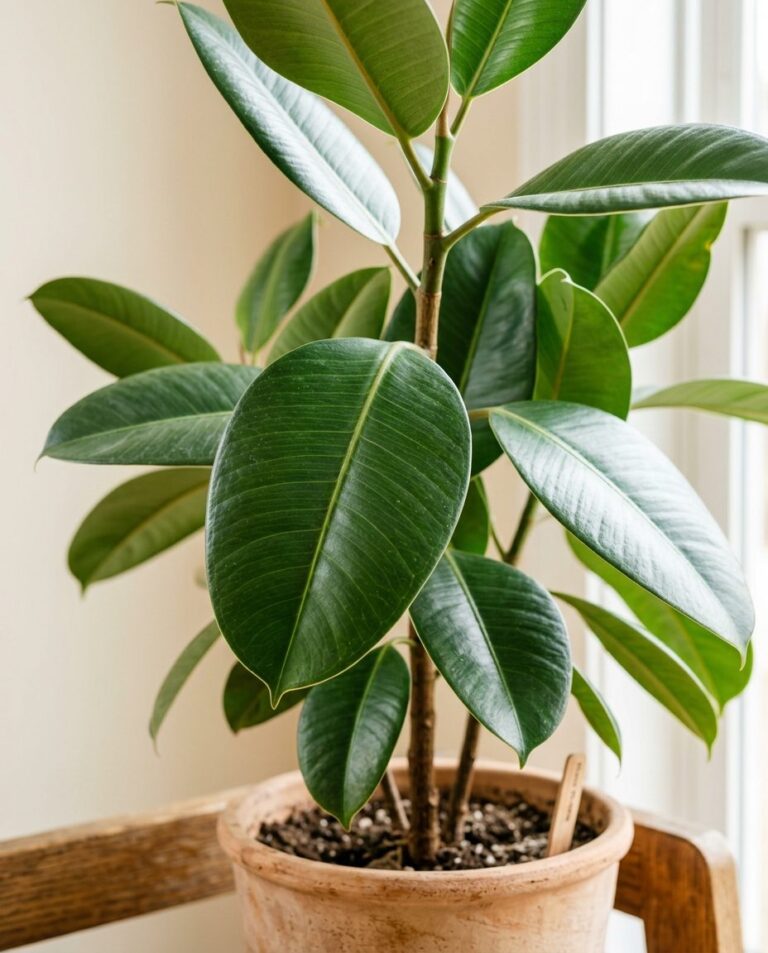
Ficus elastica exhibits a facultative dormancy response when indoor temperatures drop below 15°C for more than 7-10 consecutive days, a threshold occasionally reached in poorly insulated sunrooms or unheated hallways in Nova Scotia or New Brunswick during February cold snaps. Dormancy manifests as arrested growth-the apical bud ceases producing new leaves, and existing foliage may yellow and abscise at a rate of 1-2 leaves per week. This is a protective mechanism, not a disease; the plant redirects energy from shoot growth to root maintenance, preparing to resume active growth when temperatures stabilize above 18°C in spring.
To prevent unwanted dormancy, maintain daytime temperatures of 20-24°C and nighttime lows no colder than 16-18°C. Avoid placing the rubber tree near drafty exterior doors, single-pane windows, or cold basement floors where radiant heat loss can drop leaf-surface temperature 3-5°C below ambient air temperature. Conversely, temperatures above 28°C-common near south-facing windows in July in Toronto or Vancouver-accelerate transpiration faster than roots can absorb water, causing temporary wilting that reverses within 2-3 hours once the plant is moved to a cooler location or shaded with a sheer curtain.
Managing Thermal Stratification in Multi-Story Homes
In two- or three-story homes, warm air rises and creates a 4-6°C temperature gradient between basement and upper floors. A rubber tree placed on the second floor in Calgary may experience 25°C daytime highs, while an identical plant in the basement remains at 19°C. This temperature difference alters watering frequency by 30-40%: the warmer plant requires irrigation every 9-10 days, the cooler plant every 14-15 days. Monitor each plant individually rather than applying a uniform schedule, and consider relocating specimens to the middle floor (main living area) where temperatures are most stable year-round.
Humidity Adaptation: Why Ficus Elastica Tolerates Dry Indoor Air
Unlike humidity-dependent tropicals such as Calathea, Anthurium, or Alocasia, which evolved in cloud forests where relative humidity exceeds 70%, Ficus elastica originates from lowland rainforests with pronounced dry seasons and fluctuating moisture availability. Its waxy cuticle reduces cuticular transpiration-the passive water loss through leaf surfaces-by depositing a hydrophobic lipid layer 2-4 micrometres thick on both upper and lower epidermis. Scanning electron microscopy reveals that this cuticle is 40% thicker in rubber tree leaves than in Monstera or Philodendron, explaining why Ficus elastica maintains turgid leaves at 30-35% relative humidity while thin-cuticle species exhibit leaf-edge necrosis under identical conditions.
Field observations in Canadian homes confirm this tolerance: rubber trees in Saskatchewan living rooms with 22-28% winter humidity (measured with a digital hygrometer) retain their foliage and produce 3-4 new leaves per year, while Calathea specimens in the same room drop lower leaves and exhibit chronic brown leaf margins. However, optimal growth occurs at 40-50% relative humidity, a range that increases leaf expansion rate by 15-20% and reduces the incidence of spider mite infestations, which proliferate in arid conditions below 30%. Growers aiming for maximum vigour should run a cool-mist humidifier during the heating season (November through March in most provinces) or place the pot on a pebble tray filled with water to 1 cm below the pot base, ensuring the roots never sit in standing water.
Comparing Humidity Tolerance Across Popular Houseplants
Controlled trials measuring leaf necrosis at varying humidity levels show that Ficus elastica tolerates 25% RH for 8-10 weeks before exhibiting brown leaf tips, while Calathea orbifolia develops necrotic margins within 3-4 weeks at the same humidity. Monstera deliciosa occupies a middle position, tolerating 30% RH for 6-8 weeks. This hierarchy reflects cuticle thickness and stomatal density: rubber trees have 120-150 stomata per square millimetre on the lower epidermis, compared to 200-250 in Calathea, reducing total transpirational surface area by nearly 40%.
Propagation Methods: Comparing Air Layering Versus Stem Cuttings
Two propagation techniques reliably produce new rubber trees: air layering and stem cuttings. Air layering yields a rooted plant in 6-8 weeks without severing the parent stem, making it the preferred method for propagating large specimens (150 cm or taller) where a single cutting would sacrifice significant height. Stem cuttings, by contrast, root in 4-6 weeks and allow multiple propagations from a single pruning session, ideal for multiplying compact plants or sharing starts with fellow growers.
Air Layering Procedure
- Select a node 30-40 cm below the apical bud on a healthy stem at least 1.5 cm in diameter.
- Make a shallow upward cut 3-4 cm long through the bark and cambium, stopping before the woody core; insert a toothpick to hold the wound open.
- Dust the exposed cambium with rooting hormone powder (0.1% IBA concentration, available at Canadian Tire or Home Hardware).
- Wrap the wound with moist sphagnum moss (pre-soaked for 20 minutes), then encase the moss ball in clear plastic wrap secured with twist ties above and below the node.
- Check weekly for root development; white roots 3-5 cm long will be visible through the plastic after 6-8 weeks.
- Sever the stem below the new root mass, pot in the custom substrate, and maintain 60-70% humidity for 2 weeks using a clear plastic dome or bag.
Stem Cutting Technique
- Cut a 10-15 cm section of stem with 2-3 leaves, making the cut 1 cm below a node using sterilized pruning shears.
- Allow the cut end to air-dry for 30-60 minutes until the latex sap coagulates and forms a thin seal.
- Dip the cut end in rooting hormone powder, then insert 3-4 cm deep into a 10 cm pot filled with 70% perlite and 30% potting soil.
- Water until the substrate is evenly moist, then enclose the pot in a clear plastic bag to maintain 80-90% humidity.
- Place in bright indirect light (150-200 foot-candles) at 22-24°C; roots emerge in 4-6 weeks.
- Transplant to the full substrate recipe once roots reach 5-8 cm and new leaf growth resumes.
Air layering boasts a 90-95% success rate and produces a larger plant immediately, but requires 2-3 weeks more time than cuttings and limits propagation to one or two new plants per parent. Stem cuttings succeed at 70-80% and allow harvesting 4-6 starts from a single pruning session, making them more efficient for growers in Quebec or Ontario who want to share plants with friends or expand their collection rapidly.
Identifying and Reversing Leaf Drop, Leggy Growth, and Browning Edges
Leaf drop in Ficus elastica stems from three primary causes, each with a distinct symptom pattern that guides corrective action. First, waterlogged substrate suffocates roots and triggers abscission of lower leaves within 7-10 days; affected leaves turn yellow uniformly from petiole to tip, then detach cleanly at the petiole junction. Second, insufficient light causes the plant to shed shaded interior leaves to concentrate resources on sun-exposed foliage; these leaves yellow gradually over 3-4 weeks and often remain attached even after turning fully yellow. Third, sudden environmental changes-relocation from a garden centre to a home, or movement from a bright room to a dim hallway-shock the plant and prompt abscission of 20-30% of foliage over 2-3 weeks as it acclimatizes to new light and humidity conditions.
To reverse waterlogging-induced leaf drop, unpot the plant and inspect roots for black, mushy tissue indicative of root rot. Trim affected roots with sterilized shears, repot in fresh substrate, and reduce watering frequency by 30-40% for 6-8 weeks while new feeder roots regenerate. Light-related leaf drop resolves by relocating the plant to a brighter position (measure with a lux meter to confirm 200+ foot-candles) and pruning the bare lower stem to stimulate lateral bud activation. Environmental shock requires no intervention beyond stabilizing conditions; new growth resumes within 4-6 weeks once the plant adjusts.
Leggy Growth and Internode Elongation
Internodes-the stem segments between successive leaves-measure 4-6 cm in well-lit rubber trees but stretch to 10-15 cm when light drops below 150 foot-candles, a phenomenon called phototropism. The plant elongates stem tissue in search of brighter conditions, producing a tall, spindly silhouette with sparse foliage. Correcting leggy growth requires pruning the elongated stem 10-15 cm above a node to force dormant lateral buds into activity, then relocating the plant to a position with 250-350 foot-candles. New shoots emerge from the pruned node within 3-4 weeks, producing a bushier, more compact form.
Brown Leaf Edges and Tip Necrosis
Browning confined to leaf edges and tips signals either low humidity (below 25%) or fluoride toxicity from tap water. In Calgary or Edmonton, where municipal water contains 0.7-1.2 ppm fluoride, sensitive plants accumulate this halogen in leaf margins over 6-12 months, causing necrotic browning that spreads inward 1-2 cm. Switch to distilled water, rainwater, or reverse-osmosis filtered water to halt progression; existing damage is permanent, but new leaves will emerge unblemished. Low-humidity browning appears as crisp, papery edges that curl upward; raising ambient humidity to 35-40% with a humidifier prevents further damage within 2-3 weeks.
Seasonal Pruning and Structural Training for Compact Growth
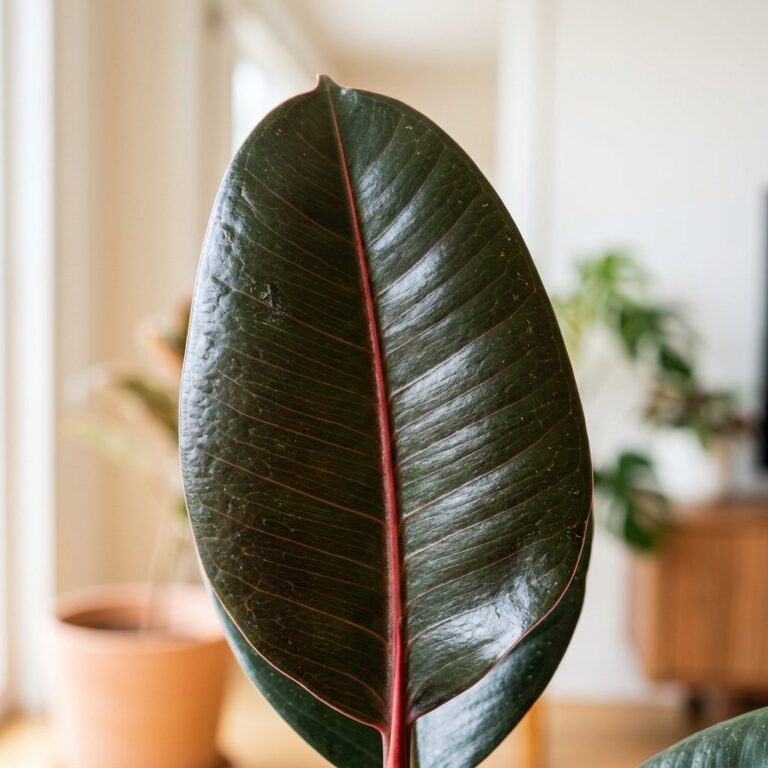
Unpruned rubber trees grow as single-stemmed specimens that reach 250-300 cm indoors, a height that exceeds standard ceiling clearance in many Canadian homes. Strategic pruning redirects growth into lateral branches, producing a bushier, multi-stemmed form that occupies less vertical space while increasing foliage density. The optimal pruning window is late March through early May in southern Ontario and Quebec (zone 5-6), when lengthening photoperiods and rising temperatures trigger active growth and accelerate wound healing. Pruning during dormancy (November through February) delays lateral bud activation by 6-8 weeks and increases the risk of fungal infection at cut sites.
To prune for bushiness, cut the main stem 10-15 cm above a node using sharp, sterilized bypass pruners; make the cut at a 45-degree angle to shed water and prevent rot. Dormant lateral buds located at the node will break dormancy within 2-4 weeks, producing 2-3 new shoots that grow at 45-60 degree angles from the main stem. For maximum branching, prune when the plant has at least 8-10 mature leaves; specimens with fewer leaves lack the carbohydrate reserves to support multiple new shoots and may produce only a single replacement stem.
Training Variegated Cultivars
Variegated forms like Ficus elastica Tineke (cream-and-green leaves) and Ficus elastica Ruby (pink-and-green leaves) occasionally produce reverted all-green shoots that outcompete variegated growth due to higher chlorophyll content and faster photosynthesis. Prune reverted shoots immediately upon detection, cutting 2-3 cm below the point where variegation disappears; leaving reverted growth in place will result in the entire plant reverting to solid green within 12-18 months as the faster-growing shoots dominate apical meristem activity.
Architectural Staking for Large Specimens
Rubber trees exceeding 180 cm develop top-heavy canopies that tilt or topple without structural support. Insert a 2-3 cm diameter bamboo stake or wooden dowel to within 5 cm of the pot bottom, then secure the main stem at 30-40 cm intervals using soft plant ties or strips of stretchy fabric. Avoid wire or rigid ties, which girdle the stem and restrict phloem transport as the trunk expands. Check ties every 3-4 months and loosen as needed to prevent constriction damage.