

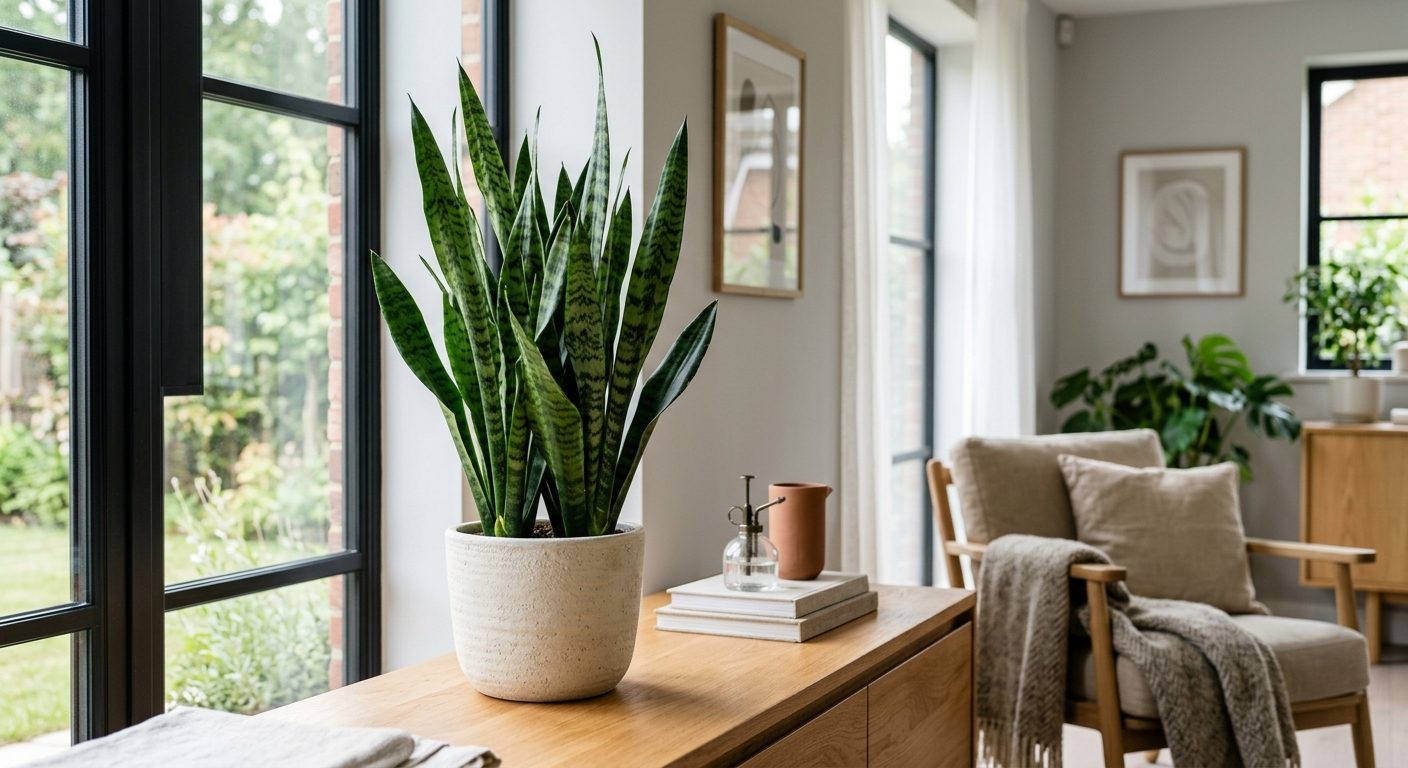
Understanding Sansevieria Trifasciata as a Xerophytic Houseplant
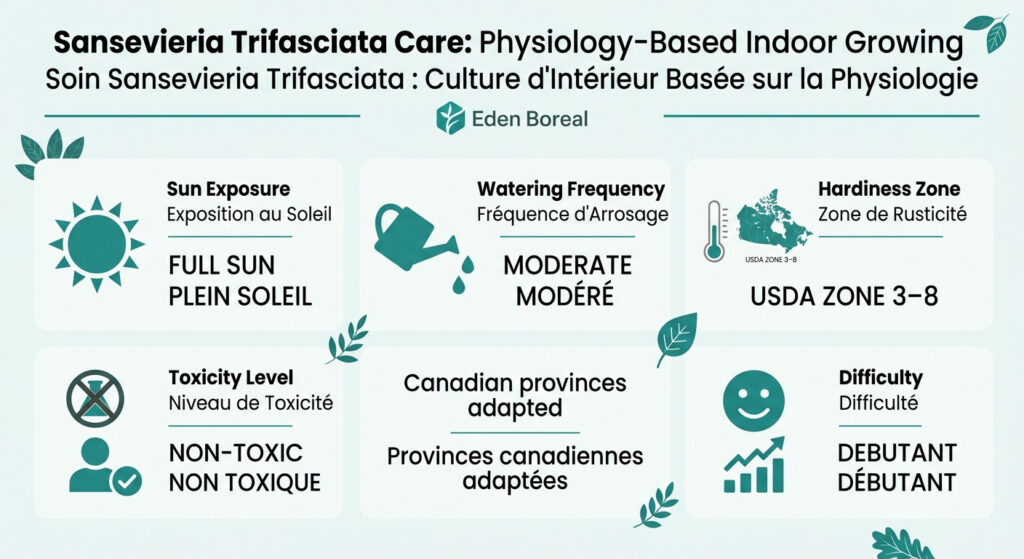
Sansevieria trifasciata, commonly known as the snake plant or mother-in-law’s tongue, represents one of the most physiologically misunderstood houseplants in Canadian homes. While marketed as a low-maintenance option, this species from the arid regions of West Africa possesses specific xerophytic adaptations that demand care protocols based on measurable thresholds rather than generic weekly routines. In provinces like Ontario and Quebec (USDA zones 4-6 outdoors, but grown exclusively indoors), where winter heating systems drop indoor humidity to 20-30%, understanding the plant’s rhizomatous water storage and slow metabolic cycles prevents the most common failure: overwatering-induced root rot. This guide translates botanical physiology into actionable care parameters, focusing on soil moisture testing, lux thresholds for light adequacy, and substrate drainage ratios that align with the plant’s native habitat conditions.
| Characteristic | Value |
|---|---|
| Botanical name | Sansevieria trifasciata (syn. Dracaena trifasciata) |
| Plant type | Succulent perennial with rhizomatous stems |
| Mature size | 60-120 cm tall, 5-8 cm leaf width |
| Light | 500-2500 lux, tolerates low light but grows optimally at 1000+ lux |
| Watering | Every 3-6 weeks based on soil moisture squeeze test, not calendar |
| Ideal temperature | 18-27°C, dormancy below 10°C |
| Humidity | 20-50% (tolerates dry indoor air) |
| Hardiness zones (outdoors) | Zone 9-11 (indoor-only in Canadian climates) |
| Toxicity | Yes, toxic to cats and dogs (saponins) |
| Difficulty level | Beginner |
Why Sansevieria Trifasciata Thrives on Neglect: The Succulent Root System Explained

The key to Sansevieria trifasciata care lies in understanding its rhizomatous root system, which functions as a subterranean water reservoir. Unlike fibrous-rooted houseplants that absorb moisture continuously, snake plants store water in thick, horizontal rhizomes that can sustain the plant for 4-8 weeks without irrigation. These rhizomes, typically 2-4 cm in diameter, contain parenchyma cells with large vacuoles that hold water and dissolved nutrients, a classic xerophytic adaptation to the plant’s native semi-arid regions of Nigeria and the Congo.
In Canadian homes, particularly during winter months in Alberta and Saskatchewan where indoor relative humidity drops to 15-25%, this water storage capacity allows the plant to tolerate extended dry periods that would kill most tropical foliage plants. The thick cuticle on the leaves (approximately 8-12 micrometers) further reduces transpiration, creating a closed system that cycles moisture slowly. This physiology explains why weekly watering schedules, common advice for many houseplants, cause catastrophic root rot in Sansevieria.
Rhizome Inspection and Health Indicators
When repotting or dividing your snake plant, examine the rhizomes for these health markers: firm texture (not spongy), white to pale tan colour (not brown or black), and visible root initials along the nodes. Healthy rhizomes should resist compression when squeezed gently. In British Columbia’s Lower Mainland (zone 8b-9a), where outdoor cultivation is theoretically possible but impractical due to winter rainfall exceeding 150 mm monthly, indoor specimens often develop more robust rhizome systems than those grown in drier Prairie provinces, provided drainage remains excellent.
Metabolic Rate and Growth Cycles
Sansevieria trifasciata exhibits extremely slow nutrient cycling compared to fast-growing tropicals like pothos or philodendron. New leaf production averages 2-4 leaves per rhizome annually under optimal conditions, with each leaf taking 8-12 weeks to fully unfurl. This slow metabolism means the plant requires minimal fertilization (covered in detail later) and responds poorly to the high-nitrogen regimes appropriate for leafy aroids. Understanding this growth rate prevents unrealistic expectations and overfeeding, both common mistakes among Canadian growers accustomed to more responsive houseplants.
Watering Frequency Based on Soil Moisture Sensors, Not Calendar Schedules
The single most critical skill for Sansevieria trifasciata care is learning to assess soil moisture through tactile testing rather than relying on fixed intervals. The squeeze test provides immediate feedback: remove a small amount of substrate from 5-7 cm depth, squeeze it firmly in your palm, and observe the result. If water drips or the soil clumps into a cohesive ball, moisture is excessive and watering should be delayed. If the soil barely holds together when squeezed, forming a loose aggregate that crumbles easily, conditions are ideal for irrigation. If the soil is completely dry and dusty, the plant has entered mild drought stress, which is tolerable but suboptimal for growth.
In practice, this translates to watering intervals of 3-4 weeks in summer (May-August in southern Ontario and Quebec) and 5-8 weeks in winter (November-February) when reduced light and cooler temperatures slow transpiration. These ranges assume standard indoor conditions of 20-22°C and 30-40% relative humidity. Homes with forced-air heating in Manitoba or Saskatchewan may require slightly shorter intervals (every 4-5 weeks in winter), while humid coastal environments in Nova Scotia or Newfoundland may extend to 10 weeks between waterings.
Moisture Meter Calibration for Sansevieria Substrates
If using an electronic moisture meter, calibrate your interpretation for the high-drainage substrate required by snake plants. Standard meters designed for garden soil or peat-based mixes will read artificially low in the gritty, mineral-heavy substrates optimal for Sansevieria. A reading of 2-3 on a 1-10 scale in a 50% mineral substrate (perlite, pumice, coarse sand) indicates adequate moisture, whereas the same reading in pure peat would signal severe drought. Test your specific mix by watering thoroughly, then tracking meter readings as the substrate dries over 2-3 weeks to establish your personal baseline.
Bottom Watering Versus Top Watering Protocols
Bottom watering (placing the pot in a tray of water for 15-20 minutes) offers advantages for Sansevieria trifasciata by allowing the substrate to wick moisture upward without saturating the crown area where rot most commonly initiates. This method works best with pots 15-20 cm in diameter; larger containers may require top watering to ensure even distribution. When top watering, direct the stream toward the pot’s edge rather than the central rosette, and always empty any drainage tray within 30 minutes to prevent the roots from sitting in standing water, a critical error in Canadian basements where cool temperatures (14-16°C) slow evaporation.
Light Requirements and Leaf Orientation: How Snake Plants Signal Insufficient Brightness
While Sansevieria trifasciata tolerates low light better than most succulents, understanding its lux thresholds prevents the slow decline that occurs over months in inadequate conditions. The plant survives at 200-500 lux (typical for north-facing rooms in Toronto or Montreal during winter), but active growth requires 1000-1500 lux, and optimal variegation preservation demands 1500-2500 lux. These values can be measured with smartphone apps (Photone, Korona) or dedicated light meters available from Canadian photography retailers.
The plant communicates light deficiency through specific phototropic responses: leaves that curve or lean dramatically toward the light source (beyond the normal slight orientation), elongated spacing between new leaves (internodes stretching beyond 2-3 cm at the rhizome), and gradual fading of yellow variegation in cultivars like Sansevieria trifasciata ‘Laurentii’. In severe cases, new growth emerges noticeably thinner and paler than mature leaves, a condition that takes 3-6 months to manifest but indicates chronic light starvation.
Window Orientation and Seasonal Light Budgets
In Canadian latitudes (42°N in Windsor, Ontario to 60°N in Whitehorse, Yukon), seasonal light variation dramatically affects indoor snake plant care. A south-facing window in Calgary provides 2000-3000 lux at 2 meters distance in June but drops to 400-600 lux in December, a five-fold reduction that shifts the plant from active growth to maintenance mode. East and west windows offer 1000-1500 lux during morning or afternoon hours in summer, but only 300-500 lux in winter, often below the threshold for sustained health.
Growers in northern regions (Yukon, Northwest Territories, Nunavut) face extreme light deficits from October through March, with midday outdoor readings below 5000 lux and indoor levels often under 200 lux. Supplemental LED grow lights become essential rather than optional, with fixtures providing 100-150 µmol/m²/s PPFD (photosynthetic photon flux density) at plant height compensating for natural light shortfalls.
Variegation Loss in Low Light: Laurentii and Moonshine Cultivars
The popular Sansevieria trifasciata ‘Laurentii’ cultivar, distinguished by yellow leaf margins, gradually reverts to solid green when grown below 1000 lux for extended periods. This occurs because the yellow marginal tissue contains fewer chloroplasts and cannot sustain itself through photosynthesis in dim conditions; the plant prioritizes survival by allocating resources to green, chlorophyll-rich tissue. Once reversion occurs in new growth, those leaves remain green permanently, though subsequent leaves will display variegation if light improves. Sansevieria trifasciata ‘Moonshine’, with silvery-green leaves, shows less dramatic change but develops darker, less reflective foliage in low light, losing its signature pale appearance.
Substrate Recipe with Drainage Ratios to Prevent Root Rot
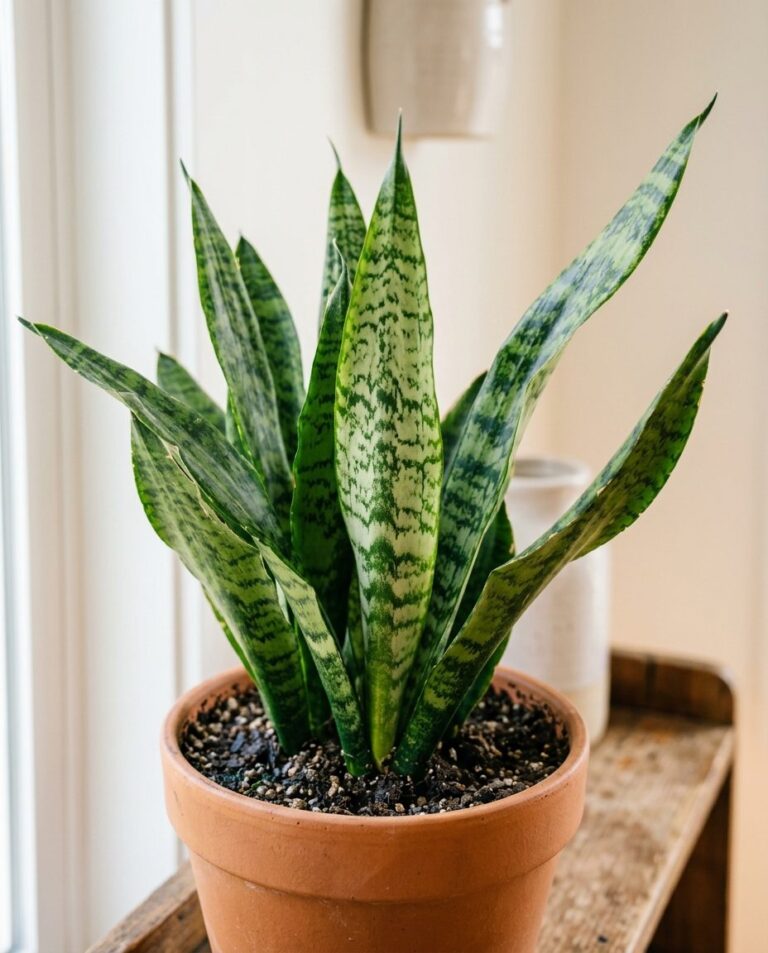
The ideal substrate for Sansevieria trifasciata prioritizes drainage and aeration over water retention, mimicking the sandy, rocky soils of its native habitat. A proven recipe for Canadian growers combines 40% quality potting mix (peat or coir-based), 30% perlite (coarse grade, 3-6 mm), 20% coarse sand (horticultural sand, not construction sand which may contain salts), and 10% pumice or fine bark chips. This 40:30:20:10 ratio creates a substrate that drains freely within 5-10 seconds when water is applied, yet retains enough moisture in the organic fraction to sustain the plant between waterings.
Commercial cactus/succulent mixes sold at Canadian Tire, Home Depot, or independent garden centres across Ontario and Quebec typically contain too much peat (60-70%) for optimal Sansevieria performance. Amend these products by adding 40-50% by volume of perlite and coarse sand to achieve proper drainage. The modified mix should feel gritty when rubbed between fingers and should not compact into a dense mass when squeezed, instead crumbling apart easily.
Particle Size Distribution and Air Porosity
Beyond ingredient ratios, particle size distribution affects substrate performance. Aim for a mix where 60-70% of particles measure 2-6 mm in diameter, with the remaining 30-40% in the 0.5-2 mm range. This creates air-filled pore spaces (macropores) that occupy 25-35% of substrate volume when moist, providing oxygen access to roots and rhizomes. Substrates dominated by fine particles (under 1 mm) collapse into a dense, anaerobic mass that promotes the Pythium and Fusarium fungi responsible for root rot, even with infrequent watering.
Test your mix by filling a clear container, watering thoroughly, then observing drainage. Water should percolate through in under 10 seconds, and the substrate surface should appear dry within 2-3 hours in typical indoor conditions (21°C, 35% humidity). If water pools on the surface or the mix remains visibly saturated after 6 hours, drainage is inadequate.
Repotting Intervals and Root-Bound Tolerance
Sansevieria trifasciata tolerates and even prefers slightly root-bound conditions, thriving when rhizomes fill 70-80% of pot volume. Repot only when rhizomes begin pushing the plant upward out of the pot or when roots emerge from drainage holes, typically every 3-5 years for mature specimens. Choose pots only 2-3 cm larger in diameter than the previous container; oversized pots hold excess moisture that increases rot risk. Terracotta or unglazed ceramic pots offer superior performance compared to plastic by allowing lateral moisture evaporation through pot walls, particularly valuable in humid Canadian coastal regions (British Columbia, Atlantic provinces) where air circulation may be limited.
Propagation Methods: Leaf Cuttings Versus Rhizome Division and Timeline
Two propagation methods suit Sansevieria trifasciata, each with distinct advantages and timelines. Rhizome division produces mature plants quickly (established in 4-6 weeks) and preserves variegation in cultivars like ‘Laurentii’, while leaf cuttings take longer (3-6 months to produce plantlets) but generate more individuals from limited parent material. Understanding the biological basis of each method prevents common frustrations, particularly the variegation loss that surprises growers attempting leaf propagation of yellow-margined varieties.
Rhizome Division Protocol and Success Indicators
Divide Sansevieria trifasciata in late spring or early summer (May-June in southern Canada) when increasing day length and warmth support rapid root establishment. Remove the plant from its pot, shake off loose substrate, and identify natural separation points where rhizomes connect with minimal tissue. Use a clean, sharp knife to sever connections, ensuring each division includes at least 2-3 leaves and a 3-5 cm section of rhizome with visible root initials (small white bumps along the rhizome surface).
Allow cut surfaces to dry for 12-24 hours in ambient air (20-22°C, 30-40% humidity) to form a callus that resists infection, then pot divisions in the standard substrate recipe. Water sparingly (every 3-4 weeks) for the first 2 months while new roots develop. Success indicators include firm leaf texture and slight resistance when the plant is gently tugged (indicating root anchorage), typically achieved within 6-8 weeks in Toronto, Montreal, or Vancouver conditions.
Leaf Cutting Propagation and Variegation Loss
Leaf cuttings offer an efficient way to multiply solid green Sansevieria trifasciata or cultivars like ‘Moonshine’, but variegated forms (Laurentii, Bantel’s Sensation) will produce only solid green offspring through this method. This occurs because variegation in these cultivars results from a periclinal chimera, a genetic condition where yellow tissue exists only in outer cell layers. Leaf cuttings regenerate from inner tissue, which lacks the variegation genes, producing entirely green plantlets regardless of the parent leaf’s appearance.
To propagate via leaf cuttings, select a mature, healthy leaf and cut it into 8-10 cm sections using a clean blade. Crucially, mark the basal end (closest to soil) of each section, as cuttings planted upside-down will not root. Allow sections to callus for 24-48 hours, then insert the basal 2-3 cm into barely-moist substrate (the 40:30:20:10 mix described earlier). Maintain temperatures of 22-26°C and avoid watering until roots form, typically 4-8 weeks. Plantlets emerge from the base of cuttings after 12-16 weeks, reaching transplantable size (6-8 cm tall) by 20-24 weeks in optimal conditions.
Propagation Success Rates in Canadian Indoor Conditions
Rhizome division achieves 85-95% success rates in Canadian homes when performed during the growing season with proper aftercare. Leaf cuttings show more variable results: 60-75% success in summer months (June-August) when warmth accelerates root formation, but only 30-50% in winter (November-February) when cool temperatures (18-20°C) and low light slow metabolic processes. Growers in northern regions or those propagating in winter should use heating mats to maintain substrate temperatures at 24-26°C, significantly improving rooting percentages.
Identifying and Treating Overwatering Damage Before Stems Become Mushy
Overwatering represents the primary cause of Sansevieria trifasciata failure in Canadian homes, yet early-stage damage often goes unrecognized until rot becomes irreversible. The progression follows a predictable sequence: initial symptoms appear as subtle leaf texture changes (slightly softer, less rigid) and colour shifts (darker green, sometimes with a translucent quality at the base), advancing to visible yellowing that begins at leaf bases and spreads upward, and culminating in stem collapse where affected tissue becomes mushy and emits a foul odour characteristic of bacterial soft rot.
Intervention must occur during the first two stages to save the plant. At the earliest sign of texture change or basal discolouration, immediately cease watering and improve air circulation around the pot. Remove the plant from its container and inspect rhizomes: healthy tissue appears firm and pale, while compromised rhizomes feel soft and display brown or black discolouration. Use a clean blade to excise all affected tissue, cutting back to firm, white rhizome material even if this requires removing 40-50% of the root system.
Differentiating Overwatering from Other Leaf Damage
Several conditions mimic overwatering symptoms, leading to misdiagnosis. Cold damage from temperatures below 10°C (common in unheated garages or near drafty windows in Alberta or Saskatchewan winters) causes similar translucent, water-soaked leaf appearance but affects all leaves uniformly rather than starting at the base. Physical damage from crushing or bending creates localized soft spots that remain confined to the injury site rather than spreading. Severe underwatering produces wrinkled, accordion-like leaf texture and brown, crispy edges rather than the soft, mushy consistency of rot.
The squeeze test differentiates these conditions: overwatered tissue feels mushy and releases moisture when compressed, cold-damaged tissue feels firm but discoloured, and underwatered tissue feels papery and dry. Smell also provides diagnostic information; rotting rhizomes emit a distinct sulfurous or fermented odour, while other damage types remain odourless.
Rescue Protocol for Overwatered Specimens
- Remove plant from pot immediately and rinse roots under lukewarm water to remove saturated substrate
- Inspect all rhizomes and roots, marking affected areas with a pen or marker
- Using a sterilized blade (wiped with 70% isopropyl alcohol), cut away all soft, discoloured tissue until only firm, pale rhizome remains
- Dust cut surfaces with ground cinnamon (natural antifungal) or sulfur powder if available from Canadian garden centres
- Allow the plant to air-dry for 48-72 hours in a warm (22-24°C), well-ventilated location
- Repot in completely fresh, dry substrate (the 40:30:20:10 mix), using a pot no larger than necessary to accommodate remaining roots
- Do not water for 2 weeks, then resume with extreme caution (every 4-6 weeks minimum)
Recovery takes 2-3 months, during which the plant may show no new growth. Survival indicators include firm leaf texture maintenance and absence of further discolouration. Plants that lose more than 60% of their rhizome mass rarely recover and should be discarded to prevent fungal spore spread to other houseplants.
Temperature Thresholds and Dormancy Patterns During Winter Months
Sansevieria trifasciata exhibits facultative dormancy triggered by temperature drops below 15°C and reduced light levels, both common in Canadian homes from November through March. Understanding this dormancy allows growers to adjust care appropriately, preventing the overwatering and overfeeding that damage dormant plants. Active growth occurs at 20-27°C with day lengths exceeding 12 hours (late April through September in southern Canada), while temperatures of 15-20°C with 8-10 hour days induce a semi-dormant state where metabolic activity slows by 60-70%.
In Manitoba and Saskatchewan, where winter indoor temperatures may drop to 18-19°C to conserve heating costs, Sansevieria naturally enters dormancy regardless of artificial lighting. Respect this rest period by extending watering intervals to 6-8 weeks and eliminating fertilization completely from October through March. Attempting to force growth during dormancy through increased watering or feeding typically results in weak, etiolated growth or root rot, not the robust development seen during active growing season.
Cold Damage Thresholds and Recovery
While Sansevieria trifasciata tolerates brief exposure to 10°C without permanent damage, temperatures below 5°C cause cellular damage that manifests as translucent, water-soaked patches on leaves within 24-48 hours. This commonly occurs when plants are positioned near single-pane windows during extreme cold snaps in Ontario, Quebec, or Atlantic provinces, where window-adjacent temperatures can drop 8-10°C below room temperature on nights when outdoor temperatures reach -20 to -30°C.
Cold-damaged tissue cannot recover; affected leaves should be removed at the base once damage stabilizes (typically 1 week after exposure). The plant will produce replacement growth during the following growing season if rhizomes remain undamaged. Prevent cold damage by maintaining 1-2 meter distance from windows during winter or using insulating window treatments (cellular shades, thermal curtains) that reduce radiant heat loss.
Optimal Placement During Canadian Heating Season
Forced-air heating systems common in Canadian homes create challenging microclimates for houseplants. Direct heat register airflow (often 35-40°C) desiccates plants rapidly, while areas far from heat sources may drop to 16-18°C. Position Sansevieria trifasciata 2-3 meters from heat registers and away from cold exterior walls, targeting locations that maintain stable 20-23°C temperatures. In homes with radiant floor heating (increasingly common in new construction across British Columbia and Ontario), plants can be placed more freely as temperature gradients are minimal.
Dust Accumulation and Leaf Maintenance for Photosynthetic Efficiency
The broad, vertical leaves of Sansevieria trifasciata accumulate household dust that reduces photosynthetic efficiency by blocking light transmission through the cuticle and stomata. Research demonstrates that a 1-2 mm dust layer can reduce light absorption by 20-30%, effectively lowering the plant’s functional light level from adequate to deficient. In Canadian homes during winter, when forced-air heating circulates fine particulate matter and outdoor ventilation decreases, dust accumulation accelerates compared to summer months.
Clean leaves every 4-6 weeks using a soft, damp cloth (microfiber works well) to wipe each leaf surface from base to tip. Avoid leaf shine products, which clog stomata and can cause phytotoxic reactions; plain water provides adequate cleaning. For heavily soiled plants, a brief lukewarm shower (22-24°C) effectively removes dust, though this method requires ensuring the pot drains completely afterward to prevent substrate oversaturation.
Stomatal Function and Gas Exchange
Sansevieria trifasciata employs Crassulacean Acid Metabolism (CAM photosynthesis), opening stomata primarily at night to minimize water loss, a xerophytic adaptation to arid conditions. Dust accumulation interferes with this gas exchange, reducing the plant’s ability to absorb carbon dioxide and release oxygen. While the plant tolerates this stress better than conventional C3 photosynthesis species, chronic dust buildup over 2-3 months without cleaning measurably slows growth and can trigger premature leaf senescence (yellowing and dropping of older leaves).
Pest Detection During Cleaning
Regular leaf cleaning provides opportunity to detect pest infestations early. Spider mites (Tetranychus urticae) occasionally colonize snake plants in dry Canadian winter conditions (below 30% humidity), appearing as fine webbing and tiny moving specks on leaf undersides. Mealybugs hide in leaf axils (where leaves meet the rhizome), appearing as white, cottony masses. Early detection during routine cleaning allows treatment with insecticidal soap or neem oil before populations explode, preventing the severe infestations that require systemic insecticides.
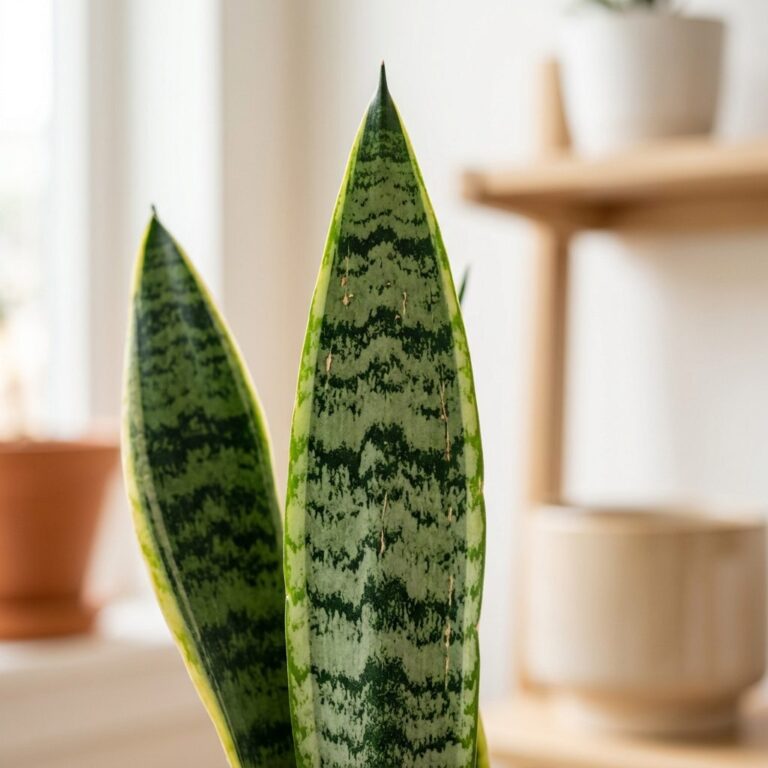
Fertilizer Needs and Nutrient Deficiency Symptoms in Low-Nutrient Soils
The slow growth rate and low metabolic activity of Sansevieria trifasciata translate to minimal fertilizer requirements, a stark contrast to fast-growing houseplants like pothos or monstera. Overfertilization causes more problems than underfertilization, with excess nitrogen producing weak, floppy growth susceptible to rot and salt accumulation that damages roots. The optimal approach feeds the plant once in spring (April-May) and once in midsummer (July) using a balanced, water-soluble fertilizer diluted to 25% of package-recommended strength.
A typical dilution for Sansevieria uses 1/4 teaspoon of 20-20-20 fertilizer per 4 litres of water, applied in place of regular watering. This low concentration (approximately 50-75 ppm nitrogen) provides adequate nutrition without the salt buildup that occurs with standard houseplant feeding regimes. Avoid fertilizing from September through March when the plant enters dormancy; nutrients applied during this period accumulate unused in the substrate, creating toxic concentrations that damage roots when growth resumes in spring.
Recognizing Nutrient Deficiency Versus Normal Senescence
True nutrient deficiency is rare in Sansevieria trifasciata grown in the recommended substrate and feeding schedule. Symptoms appear only after 2-3 years without any fertilization or in severely depleted substrate. Nitrogen deficiency manifests as uniform pale green or yellowish coloration of all leaves, starting with the oldest, along with stunted new growth. Potassium deficiency causes brown, crispy leaf margins and tips, sometimes confused with underwatering damage but distinguished by the presence of adequate soil moisture.
Normal leaf senescence differs from deficiency: older leaves (typically those 3-4 years old) gradually yellow from the base upward and eventually die back, a natural process that occurs even in well-fed plants. This affects 1-2 leaves annually and should not trigger increased fertilization. If more than 2-3 leaves show yellowing simultaneously, investigate watering practices and root health before assuming nutritional causes.
Salt Accumulation and Substrate Flushing
Canadian tap water varies significantly in mineral content, from soft water (under 50 ppm total dissolved solids) in Vancouver and much of British Columbia to moderately hard water (150-250 ppm) in Toronto and Montreal, to very hard water (300-500+ ppm) in parts of Alberta and Saskatchewan. Over time, minerals from both water and fertilizer accumulate in the substrate, visible as white or tan crusty deposits on the soil surface or pot rim. This salt buildup interferes with root function and can cause leaf tip burn.
Flush accumulated salts every 6-12 months by running lukewarm water through the pot for 3-5 minutes, allowing it to drain completely. Perform this leaching during the growing season (May-August) when the plant can tolerate the temporary moisture increase. In regions with very hard water, consider using distilled or rainwater for Sansevieria irrigation, or install a simple sediment filter to reduce mineral content.