

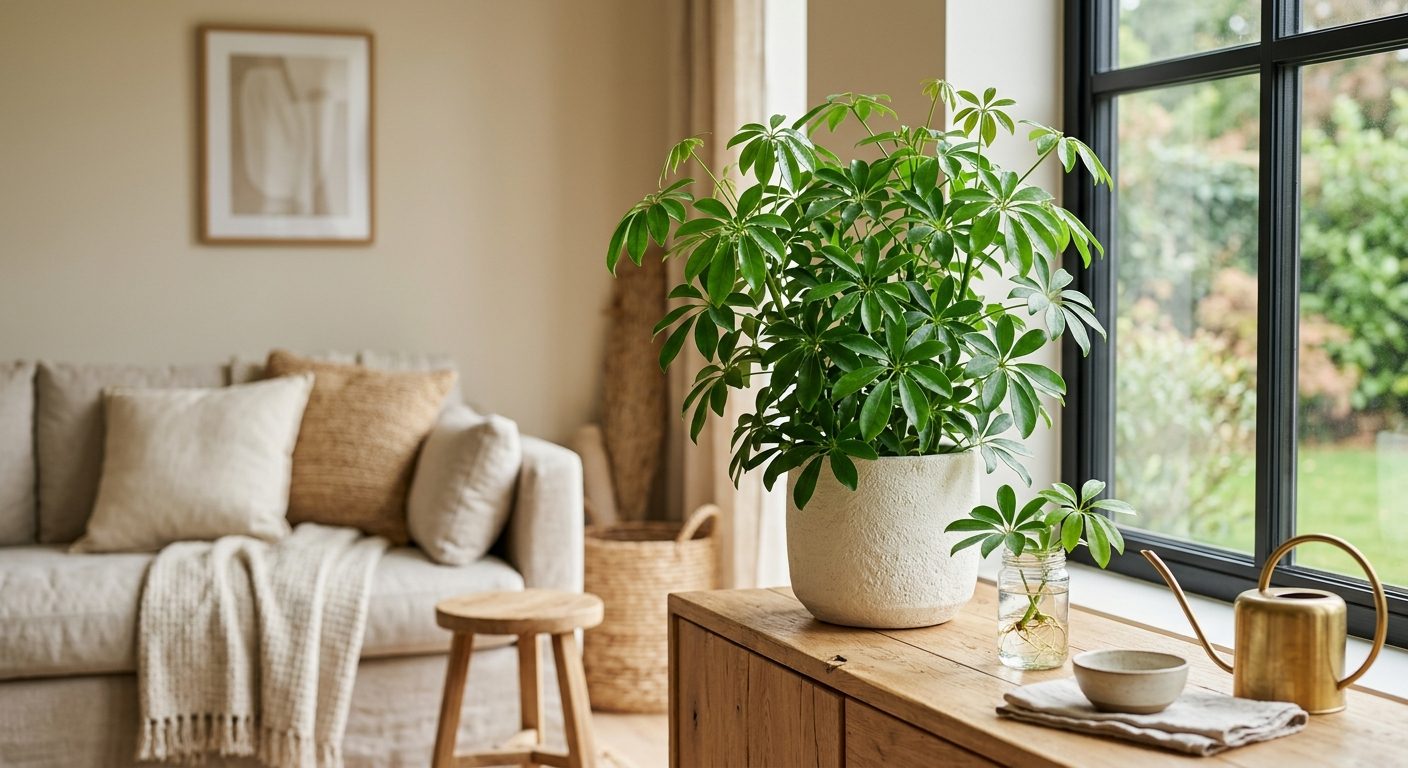
Growing Schefflera in Canadian Homes
The Schefflera arboricola, commonly known as the dwarf umbrella tree, has become a staple in Canadian households for its striking palmate leaves and remarkable adaptability to indoor conditions. This tropical evergreen from Taiwan thrives in the controlled environment of heated homes, making it particularly well-suited for Ontario and Quebec winters where indoor humidity drops significantly. Unlike many tropical plants that struggle with Canada’s dry winter air, Schefflera maintains its glossy green foliage and continues growing steadily when temperatures remain between 18-24°C. The plant’s tolerance for lower light conditions makes it perfect for north-facing windows or offices with limited natural light, while its compact growth habit suits smaller Canadian living spaces. With proper care, your Schefflera can reach 120-150 cm indoors, creating an impressive focal point that purifies air throughout the year.
| Characteristic | Value |
|---|---|
| Botanical name | Schefflera arboricola |
| Plant type | Tropical evergreen shrub |
| Mature size | 120-150 cm height, 60-90 cm spread |
| Light | Bright indirect light |
| Watering | Weekly, allow soil to dry between waterings |
| Ideal temperature | 18-24°C |
| Humidity | 40-50% |
| Hardiness zones (outdoors) | Zone 10-12 (indoor plant in Canada) |
| Toxicity | Yes, toxic to cats and dogs |
| Difficulty level | Beginner |
Light Requirements and Winter Positioning
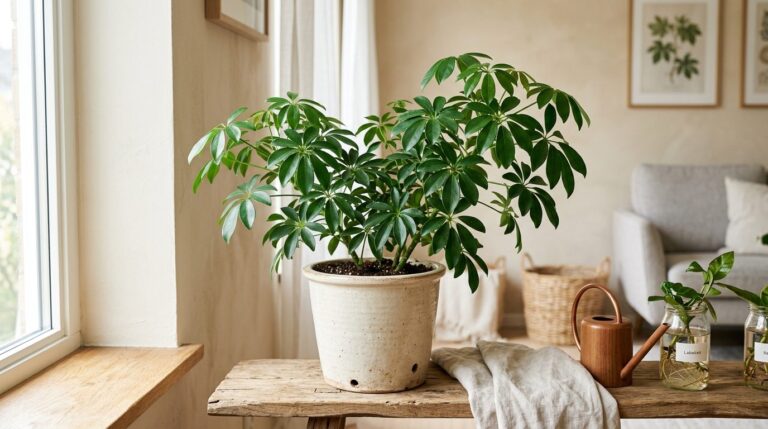
Schefflera performs best in bright indirect light, making east or west-facing windows ideal in Canadian homes. During winter months in zone 4-6 regions like southern Ontario, position your plant within 2-3 meters of a south-facing window to compensate for shorter daylight hours. The plant tolerates lower light conditions but may develop leggy growth and smaller leaves. Avoid placing Schefflera in direct summer sun, which can scorch the delicate leaflets and cause unsightly brown patches.
Seasonal Light Adjustments
From November through February, Canadian gardeners should rotate their Schefflera weekly to ensure even growth, as reduced daylight can cause the plant to lean toward light sources. Consider supplementing with a full-spectrum LED grow light if your home receives less than 4 hours of natural light daily during winter.
Managing Variegated Varieties
Variegated Schefflera cultivars like ‘Gold Capella’ require brighter conditions to maintain their cream and green patterns. In dimmer Canadian winter conditions, variegated leaves may revert to solid green, though this doesn’t harm the plant’s overall health.
Watering Through Canadian Seasons
Proper watering technique varies significantly with Canada’s indoor climate changes. During heating season (typically October to April in most provinces), indoor air becomes exceptionally dry, causing potting mix to dry faster. Water your Schefflera when the top 2-3 cm of soil feels dry to touch, usually every 7-10 days in winter. Summer watering may extend to every 10-14 days as humidity increases and growth slows.
Winter Watering Precision
Canadian homes often maintain humidity levels below 30% during winter, making it crucial to water thoroughly until excess drains from pot holes. This deep watering encourages healthy root development while preventing salt buildup from municipal water treatment chemicals common in Canadian water supplies.
Spring Growth Surge
As daylight increases in March and April, Schefflera enters active growth, requiring more frequent watering. Monitor soil moisture every 5-6 days during this period, as new leaf production demands consistent hydration.
Common Indoor Growing Challenges
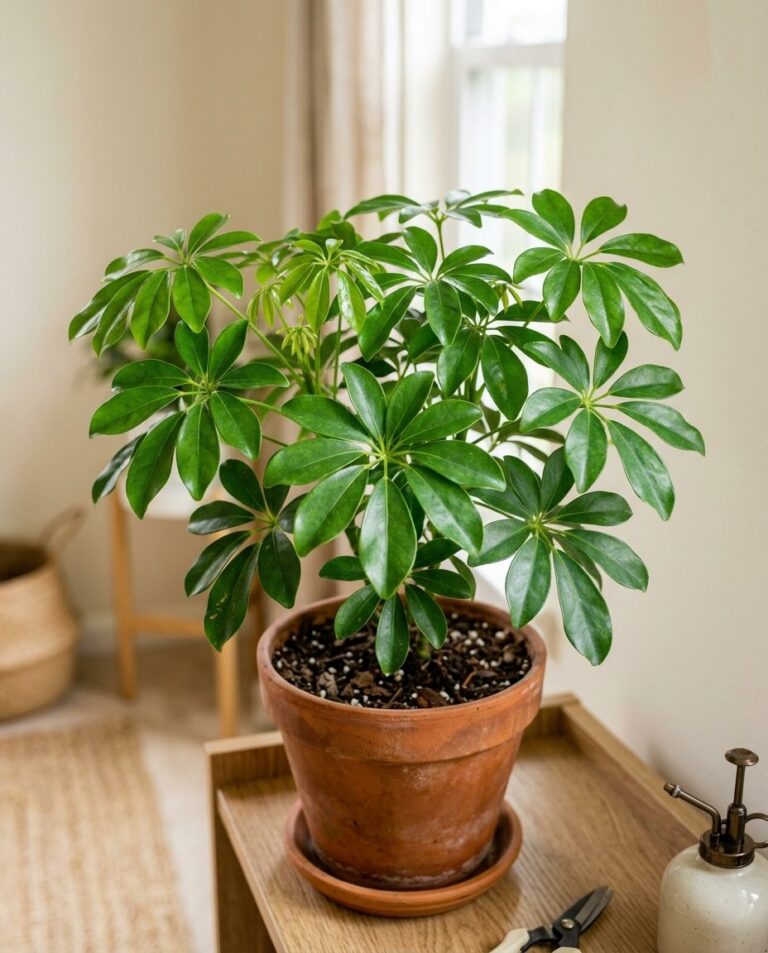
Canadian growers frequently encounter specific issues related to our unique indoor conditions. Leaf drop during transition from outdoor summer conditions to heated indoor spaces is normal – expect 10-15% leaf loss in September as your Schefflera acclimates. Spider mites thrive in dry winter conditions, appearing as fine webbing on leaf undersides. Increase humidity around the plant and wipe leaves weekly with a damp cloth to prevent infestations.
Addressing Leggy Growth
Insufficient light during Canadian winters often causes elongated stems with sparse foliage. Prune leggy branches in early spring, cutting just above a leaf node to encourage bushier growth. Save healthy cuttings for propagation.
Yellowing Lower Leaves
Natural aging causes lower leaves to yellow and drop, particularly on mature plants. However, widespread yellowing often indicates overwatering or poor drainage – common issues when transitioning from outdoor summer growing to indoor winter care.
Propagation Techniques for Canadian Conditions
Spring propagation works best in Canadian homes when natural light increases and indoor humidity begins rising. Take 10-15 cm stem cuttings with at least 2-3 leaf nodes, removing lower leaves to prevent rot. Root cuttings in water or directly in well-draining potting mix, maintaining temperatures around 20-22°C for optimal root development.
Water Propagation Method
Place cuttings in clean water, changing every 3-4 days to prevent bacterial growth. Canadian tap water works well, though letting it sit overnight allows chlorine to dissipate. Expect root development within 2-3 weeks during optimal spring conditions.
Direct Soil Propagation
Plant cuttings in a mixture of peat moss and perlite, covering with a plastic bag to maintain humidity. This method suits Canadian homes with dry air, as the enclosed environment mimics tropical conditions needed for root establishment.
Fertilizing and Seasonal Maintenance
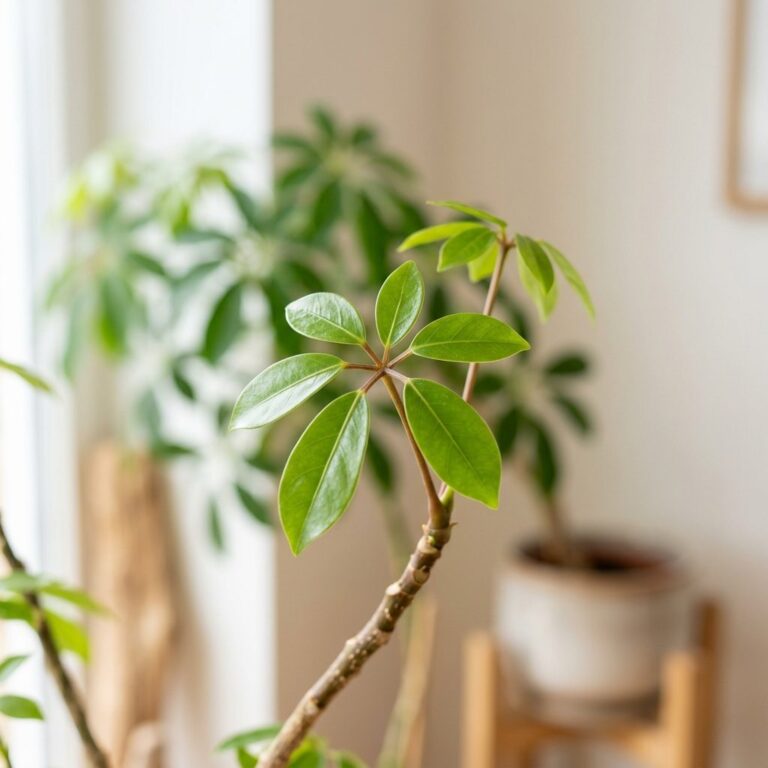
Feed your Schefflera monthly from April through September using a balanced 10-10-10 fertilizer diluted to half strength. Canadian growing seasons are shorter than tropical origins, so avoid fertilizing during winter months when growth slows significantly. Resume feeding when new growth appears in early spring, typically March in zone 5-6 regions.
Pruning for Shape and Size
Annual pruning in late winter maintains manageable size for indoor spaces. Remove up to one-third of the plant’s height if needed, cutting just above outward-facing nodes to encourage spreading growth rather than vertical development.
Repotting Schedule
Young Schefflera plants require repotting every 1-2 years, while mature specimens can remain in the same container for 3-4 years. Use a well-draining potting mix available at Canadian garden centers, adding extra perlite if your home tends to stay very warm during winter heating season.