

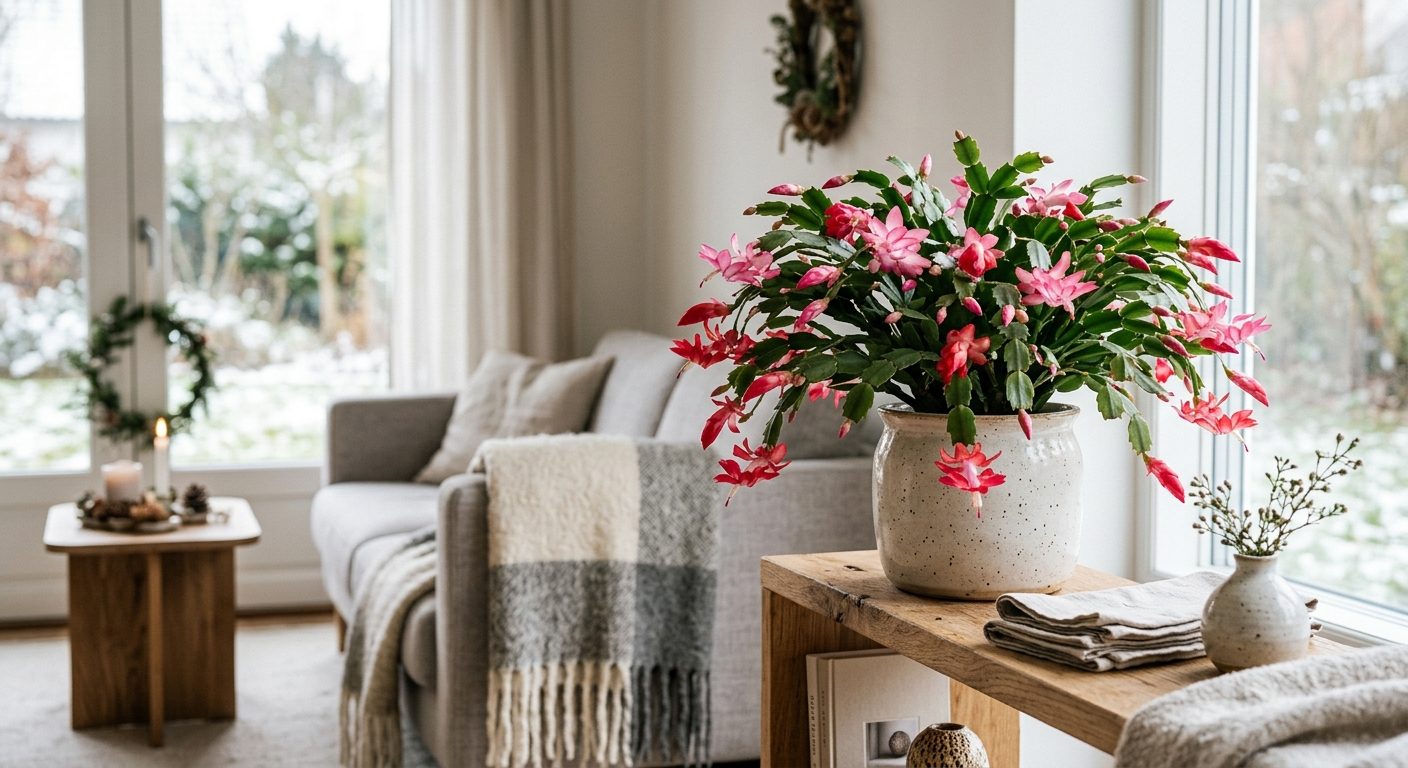
Christmas Cactus: A Tropical Epiphyte That Thrives Indoors Across Canada
The Christmas cactus (Schlumbergera × buckleyi and Schlumbergera truncata) stands apart from the desert cacti most Canadians picture when they hear the word “cactus.” Native to the tropical rainforests of southeastern Brazil, this epiphytic plant grows naturally on tree branches in humid, shaded canopies-not in arid sand. That single fact explains why Christmas cactus care diverges sharply from the “neglect and drought” approach that works for barrel cacti or prickly pears. In provinces from Quebec (zone 4b) to British Columbia (zone 8a), indoor growers succeed when they honor the plant’s physiological needs: moderate moisture, diffused light, cool autumn nights, and a strict photoperiod to trigger the spectacular winter blooms that give the plant its common name. This guide translates those tropical origins into quantified thresholds and diagnostic protocols, so you understand not just what to do, but why each step matters for a Christmas cactus thriving in a centrally heated Canadian home.
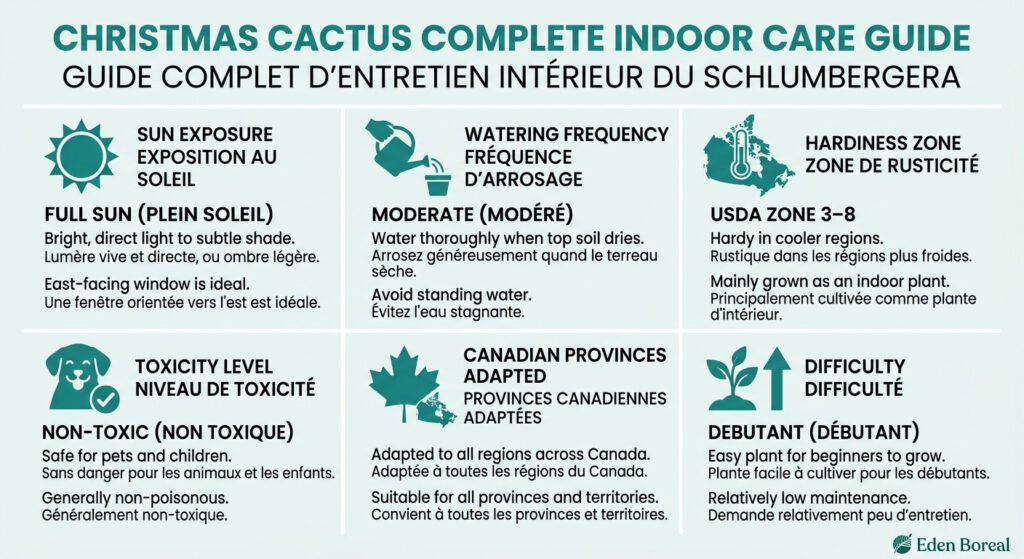
| Characteristic | Value |
|---|---|
| Botanical name | Schlumbergera × buckleyi, Schlumbergera truncata |
| Plant type | Tropical epiphytic cactus |
| Mature size | 30-60 cm height, 60-90 cm spread |
| Light | Bright indirect, 1000-2000 foot-candles |
| Watering | Moderate, when top 2-3 cm of substrate feels dry |
| Ideal temperature | 18-24°C daytime, 10-15°C night (autumn) |
| Humidity | 40-60% |
| Hardiness zones (outdoors) | 10-11 (indoor only in Canada) |
| Toxicity | Non-toxic to cats and dogs |
| Difficulty level | Beginner to Intermediate |
Why Christmas Cactus Differs from Desert Cacti: Understanding Its Tropical Epiphytic Nature
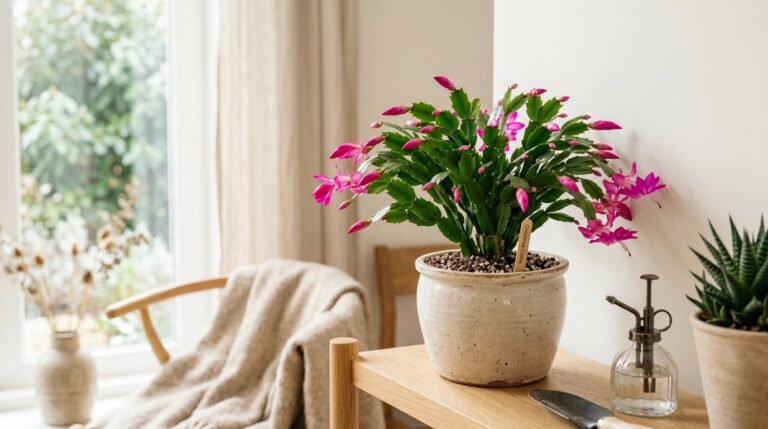
Desert cacti evolved to store water in thick stems, tolerate scorching sun, and survive months without rain. Christmas cactus, by contrast, evolved as an epiphyte-a plant that anchors on tree bark in the Brazilian Atlantic Forest, drawing moisture from humid air and organic debris trapped in branch crotches. Its flattened green segments, called cladodes, are modified stems that photosynthesize but lack the waxy cuticle and spines of true desert species. This anatomy means the plant cannot tolerate prolonged drought or intense direct sun; both will cause the cladodes to shrivel or scorch. In Ontario homes (zones 5a-6b), where winter humidity often drops below 30%, Christmas cactus benefits from proximity to other plants or a shallow pebble tray filled with water beneath the pot-not because it craves swamp conditions, but because 40-60% relative humidity mimics the forest understory where it thrives naturally.
Physiological Adaptations That Shape Care Requirements
The root system of a Christmas cactus is shallow and fibrous, designed to cling to bark rather than penetrate deep soil. Overwatering in a dense, water-retentive mix leads to root rot within days, because the roots lack the oxygen-transport mechanisms of true terrestrial plants. Conversely, the cladodes store some water but far less than a barrel cactus; a neglected plant will drop buds and wilt within two weeks. The plant’s photoperiodic response-its ability to sense day length and trigger flowering-evolved to sync blooms with the Brazilian spring (October-December in the Southern Hemisphere), which corresponds to our Northern Hemisphere autumn and early winter. This makes the Christmas cactus one of the few houseplants that requires shorter days and cooler nights to bloom, a trait absent in desert cacti and most other popular indoor species.
Light Requirements: Finding the Sweet Spot Between Scorching and Stretching
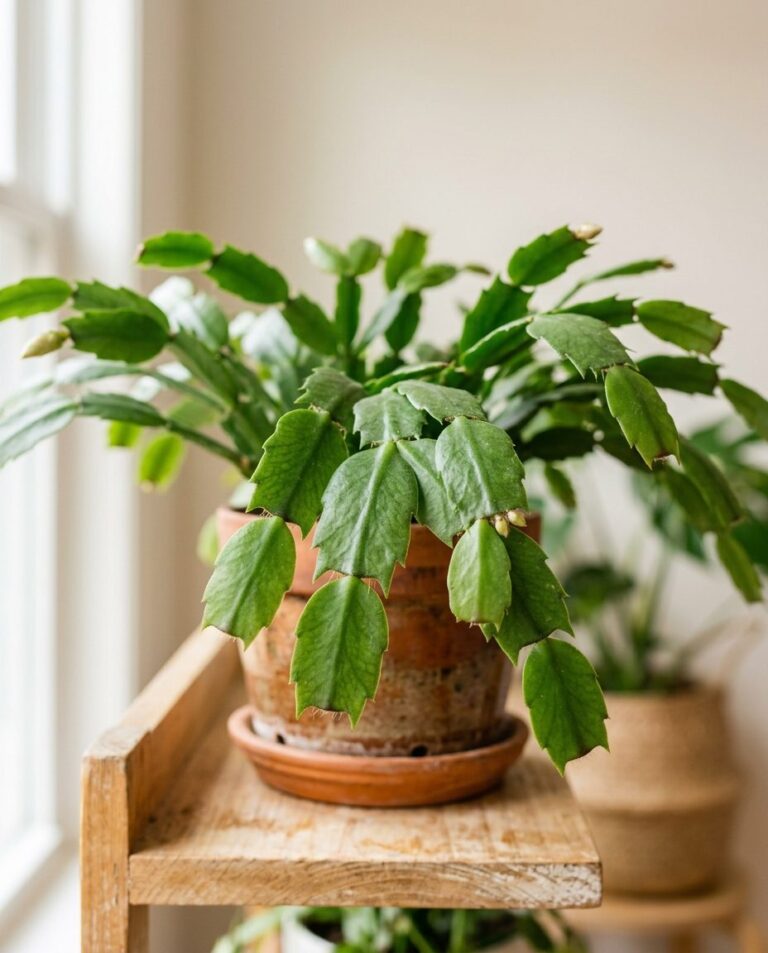
Christmas cactus performs best in 1000-2000 foot-candles of diffused light-roughly equivalent to a bright room where you can read comfortably without artificial light, but not direct sun strong enough to cast sharp shadows. In Quebec apartments with south-facing windows, place the pot 1-2 metres back from the glass or behind a sheer curtain; direct afternoon sun in July will bleach the cladodes and cause reddish stress pigmentation. North and east windows work well year-round, though growth may slow slightly in the low-light months of November through February when natural day length drops below 9 hours at 45°N latitude.
Diagnosing Light Problems by Observing Cladode Morphology
Etiolation-elongated, pale new growth-signals insufficient light. If your Christmas cactus produces cladodes that are thinner and longer than the older segments, boost intensity by moving the plant closer to the window or supplementing with a full-spectrum LED grow light (aim for 12-14 hours of total light during vegetative growth in spring and summer). Conversely, if cladodes develop a purple or red tinge and the edges look sunburned (dry, papery patches), reduce intensity immediately. In Alberta (zone 3b-4a), where winter sun is weak but summer UV is intense at high elevation, seasonal repositioning is essential: closer to the window in December, farther away in June.
Supplemental Lighting for Northern Zones
In Yukon or Northwest Territories (zones 0-2), where December daylight shrinks to 4-6 hours, a grow light is not optional-it’s necessary to prevent dormancy-induced leaf drop. Use a timer to deliver 10-12 hours of light daily from October through March, then reduce to natural daylight in spring. Choose a fixture rated at 2000-4000 lumens positioned 30-45 cm above the plant; closer risks heat stress, farther dilutes intensity below the 1000 foot-candle threshold.
Watering Strategy Tied to Growth Cycles, Not Calendar Dates
Forget the “every seven days” rule-Christmas cactus watering must respond to the plant’s active growth phase and the substrate’s moisture retention. From April through September, when new cladodes emerge and elongate, the plant transpires heavily and roots actively absorb water. During this phase, water when the top 2-3 cm of substrate feels dry to the touch; in a typical 15 cm pot with a well-aerated mix, this translates to every 5-7 days in a warm Ontario home, but potentially every 10-12 days in a cooler Nova Scotia basement. Use a moisture meter if you prefer precision: aim for a reading of 4-5 (on a 1-10 scale) at mid-pot depth before watering again.
Adjusting for Dormancy and Bud Formation
In October, reduce watering frequency by roughly one-third to signal the onset of dormancy and trigger bud initiation. If you’ve been watering every six days, stretch it to every nine. The substrate should dry slightly deeper-top 4-5 cm-before you water again. This controlled stress, combined with shorter days and cooler nights, prompts the plant to redirect energy from vegetative growth to flower bud formation. Once buds are visible (typically late November in zone 5 homes), resume moderate watering to prevent bud drop, but never saturate the substrate; a moisture meter reading above 7 at mid-pot depth is a red flag for impending root rot.
Water Quality and Temperature Considerations
Christmas cactus is sensitive to salts and chlorine. In Saskatchewan or Manitoba, where municipal water is often hard (high calcium and magnesium), let tap water sit overnight in an open container to allow chlorine to dissipate, or use rainwater collected in a clean barrel. Water temperature should be room temperature (18-22°C); cold water shocks the roots and can trigger bud drop in autumn. Pour water evenly around the pot perimeter until it drains from the bottom holes, then discard any standing water in the saucer within 15 minutes to prevent root suffocation.
The Critical 12-14 Hour Darkness Window That Triggers Blooming
Photoperiodism is the plant’s ability to measure night length via the pigment phytochrome, which detects red and far-red light wavelengths. When nights stretch to 12-14 hours continuously for 4-6 weeks, phytochrome signals the production of flowering hormones (primarily gibberellins and a reduction in abscisic acid, which inhibits bud formation). This mechanism evolved so the Christmas cactus would bloom in the Brazilian spring, when pollinators are abundant. In Canada, you replicate this by ensuring the plant experiences true darkness from roughly 6 PM to 8 AM starting in late September. Even a nightlight, streetlamp, or the glow from a TV can disrupt the photoperiod if the plant is in the same room; move it to a closet, spare bedroom, or cover it with a blackout cloth if necessary.
Timing the Dark Period for December Blooms
In Quebec City (zone 4b), natural day length drops below 12 hours by late September, so outdoor light alone may suffice if the plant sits near a window without artificial evening light. In Vancouver (zone 8a), where autumn days remain longer, you’ll need to manually enforce darkness starting October 1st to guarantee buds by early December. Count backward six weeks from your desired bloom date: if you want flowers for Christmas Day, begin the dark treatment by November 10th at the latest. After buds are visible (typically 4-5 weeks into the dark period), you can return the plant to normal indoor lighting without risking bud abortion.
Why Supplemental Light Must Be Controlled in Autumn
If you use a grow light for other plants in the same room, ensure the Christmas cactus is either moved away or the light is on a timer that shuts off by 5 PM. Even 1-2 hours of extra light in the evening can delay or prevent flowering. In multi-plant setups common in Toronto condos (zone 6a), this often means dedicating a separate corner or shelf for the Christmas cactus during the critical October-November window.
Soil Composition and Why Standard Cactus Mix Fails
Commercial “cactus and succulent mix” sold at Canadian garden centers is formulated for desert species: high sand content, minimal organic matter, and rapid drainage. Christmas cactus, being an epiphyte, needs a substrate that drains quickly yet retains some moisture and provides aeration around the roots. A proven recipe for Canadian growers is 50% peat moss or coco coir, 30% perlite, and 20% fine orchid bark. The peat or coir holds moisture without compacting; perlite creates air pockets; bark mimics the chunky organic debris the plant would root into on a tree branch. Target a pH of 5.5-6.5-slightly acidic, matching the decomposing leaf litter of its native habitat.
Sourcing Components in Canada
Peat moss is widely available (brands like Premier Tech or Fafard); if you prefer a more sustainable option, coco coir bricks (rehydrate with warm water) work equally well and are stocked at most Ontario and British Columbia nurseries. Perlite is sold in bags at hardware stores; choose horticultural grade, not the fine dust sometimes used in construction. Orchid bark is trickier-look for small-grade (6-12 mm chunks) at specialty orchid suppliers or order online from Canadian vendors like Plantae or Orchids in Our Tropics. Avoid pine bark mulch from landscaping suppliers; it’s too coarse and often contains oils that inhibit root growth.
Repotting Frequency and Pot Selection
Christmas cactus grows slowly and prefers to be slightly rootbound; repot every 3-4 years or when roots visibly circle the drainage holes. Choose a pot only 2-3 cm larger in diameter than the previous one-oversized pots hold excess moisture and increase root rot risk. Terracotta is ideal for its breathability, but plastic works if you adjust watering frequency downward. Always ensure at least 3-4 drainage holes in the bottom; a single central hole is insufficient for a plant this sensitive to waterlogging.
Temperature Fluctuations: Using Cool Nights to Force Flower Buds
While photoperiod is the primary bloom trigger, temperature differential between day and night acts as a secondary signal that accelerates bud formation. In nature, Brazilian nights cool 5-8°C below daytime highs during the flowering season. You replicate this in Canada by exposing the plant to 10-15°C nights in October and early November, while maintaining 18-24°C days. In Alberta or Saskatchewan, where autumn nights naturally drop to 5-10°C, place the plant on an unheated porch or near an open window (but bring it indoors if frost threatens). In milder coastal British Columbia, a garage or basement with a window provides the necessary cool period without risking freeze damage.
Avoiding Temperature Shock and Bud Drop
Sudden temperature swings-moving a plant from a 24°C living room to a 5°C porch in one step-can cause bud drop or cladode wrinkling. Transition gradually over 3-4 days: first, lower the thermostat by 2-3°C; then move the plant to a cooler room; finally, to the outdoor or unheated space. Once buds are visible, avoid moving the plant at all; even rotating the pot 180° can disorient the buds and trigger abortion. In Montreal apartments (zone 5b) with baseboard heating, the challenge is often maintaining cool nights-consider cracking a window in the plant’s room overnight, or using a small fan to circulate cooler air from a hallway.
Post-Bloom Temperature Management
After flowers fade (typically January-February), the plant enters a brief rest phase. Maintain 15-18°C for 4-6 weeks to allow energy reserves to rebuild, then gradually increase to 20-24°C as new cladode growth resumes in March. This mimics the Brazilian transition from spring (flowering) to summer (vegetative growth). Skipping the rest phase won’t kill the plant, but it may reduce the vigor of the next bloom cycle.
Humidity Management in Dry-Air Indoor Environments
Central heating in Canadian homes during winter routinely drops indoor humidity to 15-25%-far below the 40-60% Christmas cactus evolved to tolerate. Low humidity doesn’t kill the plant outright, but it stresses the cladodes, causing edges to brown and increasing susceptibility to spider mites (which thrive in dry conditions). In Ontario and Quebec, where winter heating runs from October through April, proactive humidity management is essential.
Practical Methods to Raise Humidity Around the Plant
- Pebble tray: Fill a shallow tray with gravel or pebbles, add water to just below the top of the stones, and set the pot on the pebbles (ensure the pot base is above water level to prevent root rot). As water evaporates, it humidifies the immediate microclimate. Refill weekly.
- Grouping plants: Cluster your Christmas cactus with other humidity-loving species (ferns, calatheas, orchids); their combined transpiration raises local humidity by 5-10%.
- Room humidifier: In a bedroom or office, a cool-mist humidifier set to 45-50% benefits both plants and human respiratory health. Avoid placing the plant directly in the mist stream, which can encourage fungal issues.
- Bathroom placement: If your bathroom has a window providing adequate light, the residual moisture from showers can maintain 50-60% humidity year-round-ideal for Christmas cactus.
When Misting Is Counterproductive
Many guides recommend misting the cladodes daily, but this practice offers minimal humidity benefit (the water evaporates within minutes) and can promote fungal leaf spots if done in the evening when temperatures drop. If you must mist, do so in the morning so cladodes dry before nightfall, and use distilled or rainwater to avoid mineral deposits that clog stomata.
Propagation from Leaf Segments: Why Christmas Cactus Multiplies Differently Than Other Succulents
Christmas cactus propagates vegetatively via cladode segments, not true leaves. Each segment contains meristematic tissue at the base capable of forming adventitious roots when placed in contact with moist substrate. Unlike jade plants or echeveria, which can root from a single fallen leaf, Christmas cactus requires at least 2-3 connected segments to store enough energy for successful rooting. The process is straightforward but slow: expect 4-6 weeks for roots to establish, and another 8-12 weeks before the cutting resumes active growth.
Step-by-Step Propagation Protocol
- Select and cut: In spring (April-May in zone 5), twist off a segment chain of 2-3 cladodes from a mature plant. Avoid using scissors, which crush tissue; a clean twist separates at the natural joint.
- Callus formation: Lay the cutting on a dry surface (a plate or tray) in indirect light for 24-48 hours. The cut end will form a callus-a protective layer that prevents rot when inserted into substrate.
- Planting: Fill a small pot (8-10 cm) with the same 50/30/20 mix described earlier. Insert the basal segment 1-2 cm deep, ensuring at least one node (the slight bump where a new segment would emerge) is below the surface. Firm the substrate gently around the cutting.
- Initial watering: Water lightly to settle the substrate, then withhold water for one week to encourage root searching. Resume light watering (every 7-10 days) once the cutting stands upright without support.
- Environment: Maintain 20-24°C and 50-60% humidity. In Ontario, a clear plastic bag tented over the pot (remove for 10 minutes daily to prevent mold) boosts humidity. Roots typically emerge in 4-6 weeks; you’ll know they’ve formed when gentle tugging meets resistance.
- Transition: Once rooted, gradually increase light intensity and watering frequency over 2-3 weeks, then treat as a mature plant. Expect the first blooms in the second or third year.
Why Single-Segment Cuttings Fail
A lone cladode lacks sufficient stored carbohydrates to sustain both root formation and cellular respiration. It may survive for weeks, even months, but rarely roots. Always use 2-3 segments minimum; experienced growers in Quebec often take 4-segment cuttings to increase success rates above 90%.
Bud Drop and Limp Leaves: Diagnosing the Root Cause
Bud drop-the sudden abortion of flower buds before they open-and limp, shriveled cladodes are the two most common distress signals in Christmas cactus. Both symptoms can stem from multiple causes, and misdiagnosis leads to ineffective treatment. Use this decision tree to pinpoint the issue.
Diagnostic Decision Tree for Bud Drop
- Recent move or rotation? → Likely cause: positional stress. Christmas cactus orients its buds toward the light source; moving or rotating the pot disorients the buds, triggering abscission. Solution: Mark the pot with tape to indicate the side facing the window, and never move the plant once buds appear.
- Temperature swing > 5°C in 24 hours? → Likely cause: thermal shock. Rapid cooling (e.g., moving from a 24°C room to a 10°C porch overnight) or heating (placing near a radiator) stresses the plant. Solution: Transition temperatures gradually over 3-4 days; maintain stable conditions once buds form.
- Substrate bone-dry or waterlogged? → Likely cause: moisture stress. Both extremes trigger bud drop. Solution: Check substrate moisture at mid-pot depth; aim for a moisture meter reading of 4-5. Adjust watering frequency accordingly.
- Artificial light exposure after 6 PM? → Likely cause: photoperiod disruption. Even brief light interrupts the dark period needed to maintain bud development. Solution: Ensure 12-14 hours of uninterrupted darkness nightly until buds open.
Diagnostic Decision Tree for Limp, Shriveled Cladodes
- Substrate dry to the bottom of the pot? → Likely cause: severe underwatering. The plant has depleted stored water. Solution: Water thoroughly, allowing excess to drain. Cladodes should plump within 24-48 hours. If not, check for root death (see below).
- Substrate soggy, pot feels heavy? → Likely cause: root rot. Overwatering has suffocated roots, preventing water uptake despite wet substrate. Solution: Unpot the plant immediately. Healthy roots are white or pale tan and firm; rotted roots are brown, mushy, and smell foul. Trim all rotted tissue with sterilized scissors, repot in fresh substrate, and reduce watering frequency by half.
- Cladodes wrinkled but substrate moist? → Likely cause: root damage (rot or pest). The roots cannot absorb water even though it’s available. Solution: Inspect roots as above. If pest damage (rare but possible with fungus gnats or root aphids), treat with BTI (Bacillus thuringiensis israelensis) for gnats or insecticidal soap for aphids, available at Canadian garden centers.
- Cladodes pale green, elongated, and limp? → Likely cause: insufficient light (etiolation). The plant is stretching toward a weak light source and cannot maintain turgor. Solution: Increase light intensity to 1500-2000 foot-candles by moving closer to a window or adding supplemental lighting.
Preventing Root Rot in High-Risk Scenarios
In Manitoba or Saskatchewan, where winter indoor temperatures often exceed 22°C due to aggressive heating, substrate dries slowly and root rot risk climbs. Use a moisture meter weekly during winter; if readings stay above 6 for more than three days, improve drainage by adding 10% more perlite to the mix at the next repotting, or switch to a terracotta pot to increase evaporation.
Post-Bloom Recovery and Long-Term Plant Longevity
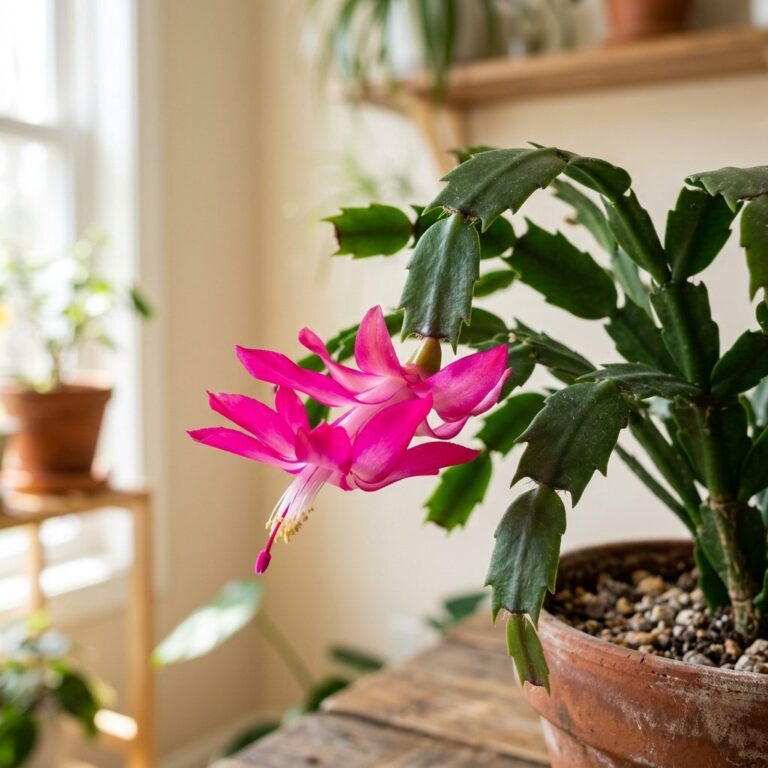
After the last flower fades-typically late January or early February in Canadian zone 5-6 homes-Christmas cactus enters a brief rest phase lasting 4-6 weeks. During this period, reduce watering frequency by one-third (e.g., from every six days to every nine) and withhold fertilizer entirely. The plant is reallocating energy from reproductive structures (flowers) back to vegetative reserves stored in the cladodes. Resume normal watering and begin fertilizing in early March, when new cladode growth signals the start of the active season.
Fertilizing Schedule Aligned with Growth Phases
From March through September, feed every 4 weeks with a balanced, water-soluble fertilizer diluted to half the label strength (e.g., 10-10-10 or 20-20-20 at 0.5 g/L). Christmas cactus is a light feeder; full-strength fertilizer causes salt buildup that burns roots. In Ontario, brands like Nutrite or Plant-Prod are widely available. From October through February, withhold fertilizer entirely-feeding during dormancy or bloom diverts energy away from flower production and can cause bud drop.
Rejuvenation Pruning for Aging Plants
Christmas cactus can live 50-100 years with proper care; specimens passed down through generations are common in Quebec and Maritime families. However, plants older than 15-20 years often develop woody, corky bases and produce fewer blooms. To rejuvenate, prune back up to one-third of the oldest cladodes in early spring (March-April), cutting just above a healthy segment joint. This stimulates dormant meristems to produce fresh growth. Avoid pruning after June, as this removes the tissue that would have formed flower buds in autumn.
Division and Repotting for Multi-Decade Specimens
A 30-year-old Christmas cactus in a 30 cm pot may become rootbound to the point where water runs straight through without wetting the substrate core. Every 5-7 years, unpot the plant in spring, gently tease apart the root ball into 2-3 sections (each with at least 10-15 cladodes), and repot each division in fresh substrate in appropriately sized pots. This resets the root-to-shoot ratio and often triggers a resurgence in bloom density. In British Columbia, where mild winters allow outdoor summer placement, newly divided plants benefit from 2-3 months on a shaded patio (after the last frost in May) to accelerate root establishment before the autumn bloom cycle.
Troubleshooting Bloom Failure in Mature Plants
If a previously reliable Christmas cactus stops blooming, audit these factors: (1) Light intensity-has a nearby tree grown to shade the window? Boost with supplemental lighting. (2) Photoperiod-is the plant exposed to evening light from a new lamp or device? Enforce 12-14 hours of darkness in autumn. (3) Temperature-has your heating system changed, eliminating the cool night period? Move the plant to a cooler room in October-November. (4) Rootbound stress-if roots circle the pot densely, repot in spring. (5) Nutrient depletion-if you haven’t fertilized in over a year, resume a light feeding schedule in the growing season.
Frequently Asked Questions About Christmas Cactus Care
How do you take care of a Christmas cactus plant indoors?
Provide 1000-2000 foot-candles of bright indirect light, water when the top 2-3 cm of substrate feels dry (typically every 5-9 days depending on season and home temperature), and maintain 40-60% humidity using a pebble tray or room humidifier. In autumn, ensure 12-14 hours of uninterrupted darkness nightly for 4-6 weeks and expose the plant to 10-15°C nights to trigger blooming. Use a well-aerated substrate (50% peat or coir, 30% perlite, 20% orchid bark) and fertilize monthly at half-strength from March through September only.
What two things trigger a Christmas cactus to bloom?
The primary trigger is photoperiod-specifically, 12-14 hours of complete darkness per night for 4-6 consecutive weeks in autumn, which activates the phytochrome system that initiates bud formation. The secondary trigger is a temperature differential between day (18-24°C) and night (10-15°C), which accelerates bud development by mimicking the plant’s native Brazilian spring conditions. Both must occur simultaneously; darkness alone without cool nights will produce fewer buds, and cool nights without adequate darkness may delay or prevent flowering entirely.
Where is the best place to put a Christmas cactus?
In Canadian homes, position the plant near an east or north-facing window where it receives bright indirect light (1000-2000 foot-candles) without direct afternoon sun, which can scorch the cladodes. In Quebec or Ontario (zones 4-6), a spot 1-2 metres back from a south-facing window also works if filtered by a sheer curtain. During the critical October-November bloom-induction period, move the plant to a room where you can control evening light exposure-a spare bedroom, closet, or basement with a window-to guarantee 12-14 hours of darkness nightly without interference from lamps, TVs, or streetlights.
Why are the leaves on my Christmas cactus limp?
Limp cladodes (the flattened green segments often mistaken for leaves) signal either severe underwatering-where the substrate has dried completely and the plant has depleted stored water-or root rot, where waterlogged substrate has suffocated the roots, preventing them from absorbing available moisture. To diagnose, check the substrate: if bone-dry, water thoroughly and the cladodes should plump within 24-48 hours. If soggy, unpot the plant immediately and inspect the roots; healthy roots are white and firm, while rotted roots are brown, mushy, and foul-smelling. Trim all rotted tissue, repot in fresh well-draining substrate, and reduce watering frequency. In rare cases, limp cladodes with moist substrate indicate root damage from pests (fungus gnats, root aphids) or insufficient light (etiolation), both of which require targeted intervention.
Can I propagate a Christmas cactus from a single leaf?
No-Christmas cactus does not have true leaves; the green segments are modified stems called cladodes. A single cladode lacks sufficient stored energy to sustain both root formation and cellular respiration, so it rarely roots successfully. Always take a cutting of 2-3 connected cladodes by twisting (not cutting) at the natural joint. Let the cutting callus for 24-48 hours, then insert the basal segment 1-2 cm into a well-aerated substrate. Roots typically form in 4-6 weeks under warm (20-24°C), humid (50-60%) conditions.
Should I water my Christmas cactus in October?
Yes, but reduce frequency by roughly one-third compared to summer. In October, the plant enters its bloom-induction phase and benefits from controlled moisture stress, which signals dormancy and triggers bud formation. If you’ve been watering every six days in summer, stretch it to every nine days in October. Allow the substrate to dry slightly deeper-top 4-5 cm-before watering again. Do not let the substrate dry completely, as this can cause bud drop once buds begin forming in November. Resume moderate watering once buds are visible to support flower development.
What causes bud drop on Christmas cactus?
Bud drop results from environmental stress that triggers the plant to abort developing flowers via the hormone abscisic acid. Common causes include: (1) Positional stress-moving or rotating the pot after buds form, which disorients the buds’ light orientation. (2) Temperature shock-rapid swings greater than 5°C in 24 hours, such as moving from a warm room to a cold porch overnight. (3) Moisture extremes-either severe underwatering (substrate bone-dry) or overwatering (waterlogged substrate causing root suffocation). (4) Photoperiod disruption-exposure to artificial light in the evening, breaking the 12-14 hour darkness requirement. (5) Low humidity-prolonged exposure to air below 30% relative humidity, common in centrally heated Canadian homes. To prevent bud drop, maintain stable conditions once buds appear: do not move the plant, keep temperatures steady, water consistently, and ensure adequate humidity.
How long does a Christmas cactus live?
With proper care, Christmas cactus routinely lives 50-100 years, making it one of the longest-lived houseplants. In Quebec and the Maritimes, multi-generational specimens passed down through families are common, with some documented plants exceeding 150 years. Longevity depends on consistent care-avoiding overwatering (the leading cause of premature death via root rot), providing adequate light year-round, and repotting or dividing every 5-7 years to prevent severe rootbound stress. Mature plants develop woody, corky bases and may bloom less prolifically after 20-30 years, but rejuvenation pruning (removing one-third of the oldest cladodes in spring) and division can restore vigor and extend productive lifespan indefinitely.
By understanding the epiphytic tropical physiology of Schlumbergera species and translating that into quantified care thresholds-foot-candles for light, moisture meter readings for watering, specific temperature differentials for bloom induction-Canadian growers from zone 3 Alberta to zone 8 coastal British Columbia can cultivate Christmas cactus that bloom reliably for decades. The key is rejecting generic “cactus care” advice and instead honoring the plant’s rainforest origins: moderate moisture, diffused light, seasonal temperature fluctuations, and strict photoperiodic control. With these principles in place, your Christmas cactus will reward you with cascades of tubular flowers each winter, brightening the darkest months of the Canadian year.