

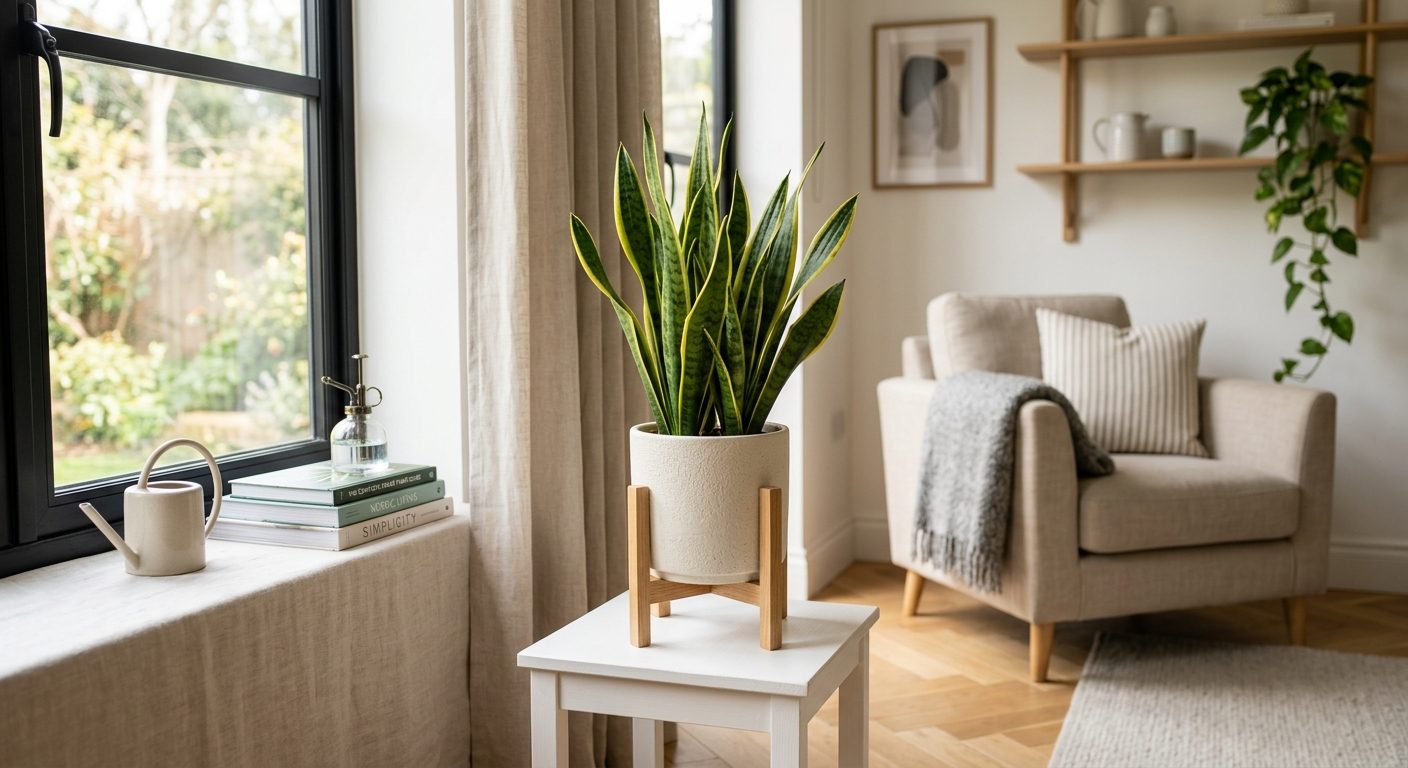
Why Snake Plants Dominate Canadian Indoor Spaces
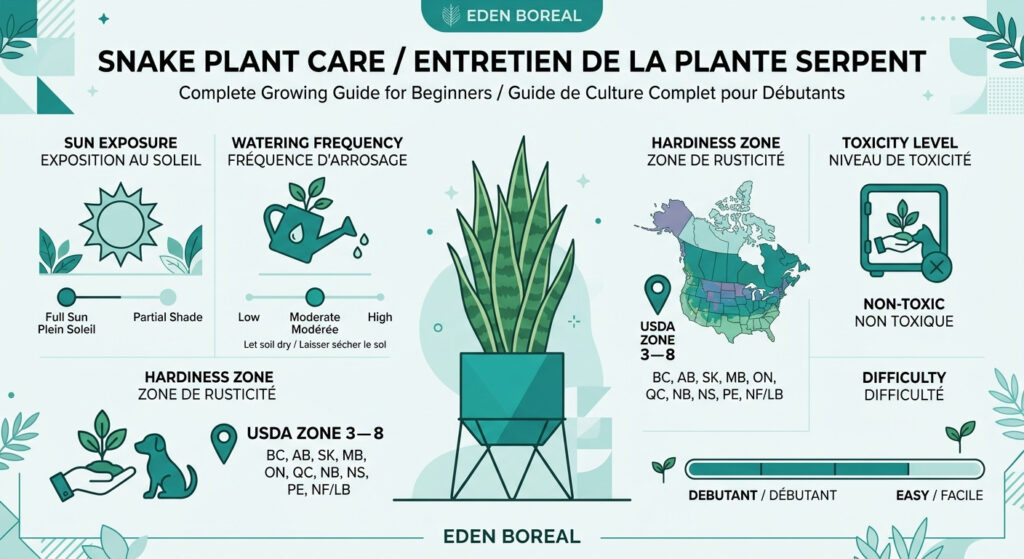
The snake plant (Sansevieria trifasciata, recently reclassified as Dracaena trifasciata) has earned its reputation as the quintessential low-maintenance houseplant for Canadian homes, where dry winter air and variable light conditions challenge most tropical species. Unlike moisture-dependent ferns or light-hungry succulents, this West African native stores water in thick, sword-shaped leaves and a robust rhizome system, allowing it to survive weeks of neglect without wilting. In Ontario apartments heated to 20°C through six-month winters, or Quebec condos where north-facing windows deliver barely 500 lux, snake plants adapt where others fail. This guide deconstructs the physiological mechanisms behind that resilience, quantifies care parameters with measurable thresholds, and addresses the botanical reclassification that has confused growers since 2017. Whether you are selecting your first Sansevieria laurentii with its yellow-edged leaves or troubleshooting variegation loss in a Sansevieria moonshine, the following sections provide evidence-based protocols rooted in the plant’s drought-adapted anatomy rather than generic houseplant folklore.
| Characteristic | Value |
|---|---|
| Botanical name | Dracaena trifasciata (syn. Sansevieria trifasciata) |
| Plant type | Succulent perennial |
| Mature size | 60-120 cm tall, 30-45 cm wide |
| Light | Bright indirect (1,000-2,500 lux); tolerates low light (200-500 lux) |
| Watering | Every 2-4 weeks when rhizome feels firm; substrate fully dry between waterings |
| Ideal temperature | 18-27°C; cease growth below 13°C |
| Humidity | 20-50% (thrives in dry Canadian indoor air) |
| Hardiness zones (outdoors) | Zone 10-11 (indoor-only in Canada) |
| Toxicity | Toxic to cats and dogs (saponins cause gastrointestinal distress) |
| Difficulty level | Beginner |
Sansevieria trifasciata: Botanical Identity and Why It Thrives on Neglect
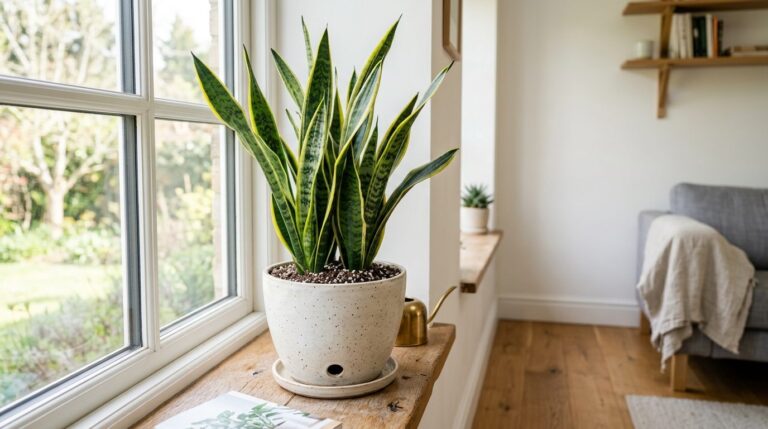
In 2017, molecular phylogenetic analysis prompted the Angiosperm Phylogeny Group to fold the genus Sansevieria into Dracaena, rendering Dracaena trifasciata the accepted scientific name. Nurseries across British Columbia and Alberta still label plants as Sansevieria, and both names remain valid in horticultural commerce, but taxonomic databases now list the Dracaena binomial. This reclassification reflects genetic proximity to other Dracaena species rather than a change in care requirements. The plant’s physiology centres on a rhizome, a horizontal underground stem that stores water and carbohydrates, allowing the plant to endure drought cycles exceeding four weeks. Each rhizome node produces vertical leaves with a thick cuticle and Crassulacean Acid Metabolism (CAM) photosynthesis, a carbon-fixation pathway that opens stomata at night to minimize water loss. This dual adaptation, rhizome storage plus CAM efficiency, explains why snake plants tolerate the 20-30% relative humidity common in heated Canadian homes during winter, a condition that desiccates most tropical foliage. The common name “Mother-in-Law’s Tongue” references the stiff, pointed leaf tips, while “snake plant” evokes the mottled green banding reminiscent of reptile scales.
Cultivar Distinctions and Genetic Stability
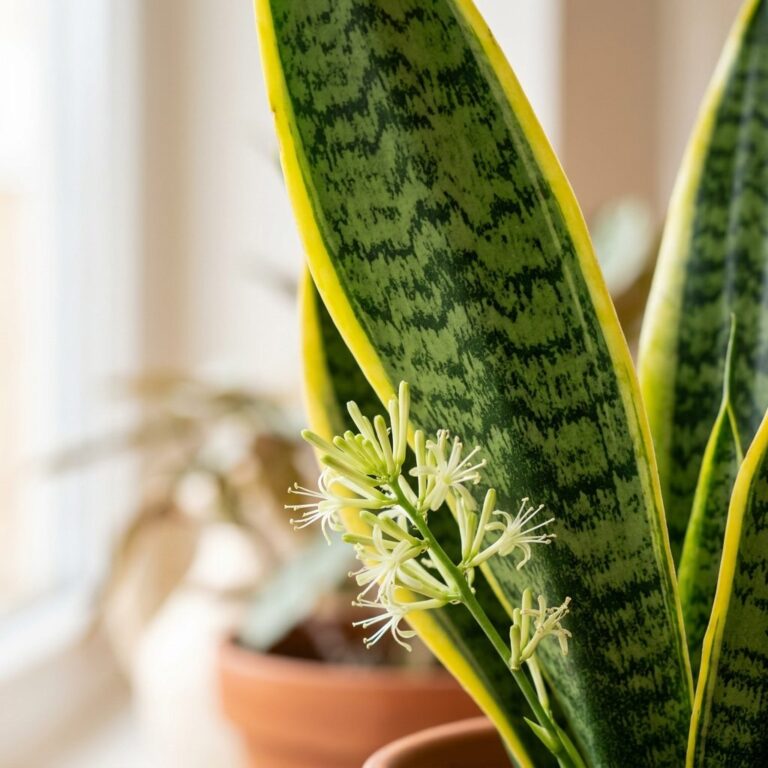
Sansevieria trifasciata ‘Laurentii’ displays yellow marginal stripes on each leaf, a chimeral variegation where mutated tissue layers produce reduced chlorophyll. Sansevieria trifasciata ‘Moonshine’ presents silvery-green leaves with minimal banding, a stable mutation selected for ornamental uniformity. Sansevieria cylindrica, though often grouped with snake plants, belongs to a separate species with cylindrical rather than flat leaves. Variegated cultivars lose their colour patterns when propagated via leaf cuttings because the chimeral tissue does not regenerate from non-variegated leaf cells; only rhizome division preserves the genetic makeup. This distinction matters for Canadian growers purchasing premium cultivars at garden centres in Toronto or Montreal, where variegated specimens command higher prices.
Light Requirements and Leaf Variegation Loss in Low-Light Spaces
Snake plants survive in low-light environments, but “survive” differs from “thrive.” Photosynthetic rate peaks between 1,000 and 2,500 lux (approximately 100-250 foot-candles), a range delivered by east-facing windows in Edmonton during summer mornings or west-facing exposures in Halifax receiving afternoon sun filtered through sheer curtains. Below 500 lux, growth slows to near-dormancy, and variegated cultivars begin reverting to solid green. The mechanism: reduced light intensity triggers compensatory chlorophyll synthesis in non-mutated leaf tissue, overwhelming the yellow or white sectors that lack functional chloroplasts. A Sansevieria laurentii placed three metres from a north window in a Winnipeg apartment, where winter daylight may register 200 lux, will produce new leaves with narrower yellow margins or none at all within six months. Conversely, direct summer sun exceeding 5,000 lux bleaches leaf tips, causing brown, papery necrosis. The optimal strategy for Canadian interiors: position plants within two metres of an unobstructed east or west window, or supplement with a full-spectrum LED grow light delivering 1,500 lux for 10-12 hours daily during the October-to-March low-light season.
Quantifying Light with a Lux Meter
Smartphone apps approximating lux readings (e.g., “Lux Light Meter” for Android, “Lux Meter” for iOS) provide sufficient accuracy for houseplant placement. Measure at leaf height during midday to capture peak intensity. If readings fall below 800 lux, relocate the plant or add artificial lighting. Hardware stores in Vancouver and Calgary stock affordable LED shop lights (4,000-5,000K colour temperature) that can be mounted 30-40 cm above the canopy to boost ambient light without excessive heat.
Phototropism and Leaf Orientation
Snake plant leaves exhibit minimal phototropism, the directional growth response toward light, because their vertical architecture and CAM metabolism prioritize structural stability over light tracking. Leaves remain upright even in uneven lighting, though prolonged one-sided exposure may cause slight lean. Rotate the pot 90 degrees every month to ensure symmetrical growth, particularly important for specimens in Saskatchewan homes where south-facing windows deliver intense but angled winter light.
Watering Frequency Based on Rhizome Water Storage, Not Calendar Days
The most reliable watering indicator is rhizome firmness, not soil moisture alone. Gently press the base of the plant near the soil surface; a turgid rhizome feels solid and slightly springy, while a dehydrated rhizome yields to pressure and may wrinkle. In heated Canadian homes averaging 21°C and 25% humidity, substrate typically dries within 14-21 days during winter, extending to 21-28 days in summer when evapotranspiration slows due to higher ambient humidity. This interval contrasts sharply with the weekly watering schedules recommended for tropical aroids or ferns. Overwatering, defined as saturating the substrate before the rhizome depletes stored reserves, creates anaerobic conditions that favour Pythium and Phytophthora root pathogens. These oomycetes thrive in waterlogged soil, producing enzymes that digest root cortex tissue and rhizome epidermis, leading to soft, mushy collapse. A snake plant in a Quebec City apartment watered every seven days, mimicking a generic “houseplant schedule,” will likely develop root rot within three months.
The Two-Finger Substrate Test
Insert two fingers 5-7 cm into the substrate. If any moisture clings to your skin, defer watering. The substrate should feel completely dry and crumbly, with no cool sensation indicating residual water. This tactile method outperforms moisture meters, which often misread the high mineral content in succulent-specific mixes as “wet.” For deeper pots (≥20 cm), use a wooden skewer inserted to the base; withdraw after 30 seconds and inspect for darkening or substrate adhesion.
Seasonal Adjustments in Canadian Climates
Winter heating systems in Ontario and Manitoba drop indoor humidity to 15-25%, accelerating substrate drying by 20-30% compared to unheated summer conditions. Conversely, summer air conditioning in British Columbia raises humidity to 40-50%, slowing evaporation. Monitor rhizome firmness weekly during seasonal transitions (March-April, September-October) to recalibrate watering frequency. A plant requiring water every 18 days in January may stretch to 25 days by July.
Soil Composition and Why Standard Potting Mix Causes Root Rot
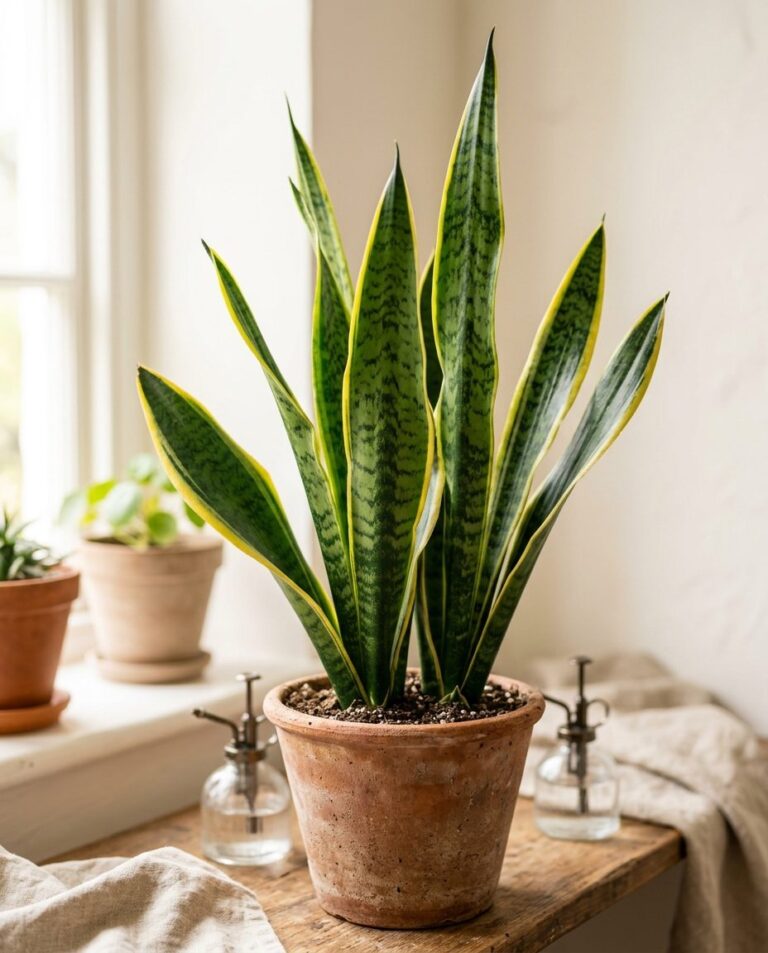
Commercial all-purpose potting mixes, formulated for moisture-retentive annuals and perennials, retain water for 5-7 days in typical indoor conditions, far exceeding the 2-3 day drying window optimal for snake plants. Peat-based substrates compact over time, reducing macropore space and trapping water against roots. The ideal substrate replicates the sandy, rocky soils of the plant’s native West African habitat, prioritizing rapid drainage and aeration. A proven recipe for Canadian growers: 50% coarse sand or poultry grit (2-4 mm particle size), 30% standard potting soil, 20% perlite or pumice. This 5:3:2 ratio achieves a pH of 6.0-7.0, suitable for nutrient uptake, while ensuring water drains through the root zone within 60 seconds of saturation. Coarse sand, available at masonry suppliers in Calgary and Regina, provides weight that stabilizes tall plants, unlike lightweight perlite alone. Avoid fine “play sand,” which compacts and impedes drainage.
Substrate Alternatives for Canadian Availability
If coarse sand proves difficult to source, substitute with crushed granite (2-5 mm) or Turface MVP, a calcined clay product sold at agricultural supply stores in Alberta and Saskatchewan. Coconut coir can replace peat in the potting-soil fraction, offering similar water retention with better re-wetting properties after drought. Orchid bark (medium grade) adds structure but decomposes within 18-24 months, requiring substrate replacement. For growers in Atlantic Canada, where humidity remains higher year-round, increase the sand or perlite fraction to 60% to compensate for slower evaporation.
pH Tolerance and Nutrient Availability
Snake plants tolerate a pH range of 5.5-7.5, broader than most houseplants, but nutrient uptake efficiency peaks between 6.0 and 7.0. Substrates above pH 7.5, common in regions with alkaline tap water (e.g., southern Alberta), may lock out iron and manganese, causing interveinal chlorosis in new growth. Test substrate pH annually with a soil probe (available at garden centres in Toronto and Montreal) and amend with elemental sulfur if pH exceeds 7.5, applying 5 grams per litre of substrate and watering thoroughly.
Container Size, Drainage Holes, and the Rootbound Advantage
Snake plants perform best when slightly rootbound, a condition where rhizomes and roots occupy 70-80% of the pot volume. Constricted root systems limit vegetative growth, channeling resources into leaf production and stress tolerance rather than expansive root proliferation. A 15 cm diameter pot accommodates a mature plant with 8-12 leaves for 2-3 years before requiring repotting. Overpotting, the practice of transplanting into a container more than 5 cm larger in diameter, surrounds roots with excess substrate that remains wet for extended periods, creating anaerobic pockets where Pythium spores germinate. Drainage holes are non-negotiable; decorative cache-pots without drainage must house a removable nursery pot to allow excess water to escape. Terracotta pots, favoured by growers in Ottawa and Saskatoon, wick moisture through their porous walls, accelerating drying by 30-40% compared to glazed ceramic or plastic. This evaporative advantage suits snake plants but requires more frequent watering monitoring in dry winter air.
Repotting Protocol and Timing
Repot only when rhizomes visibly crowd the pot surface or roots emerge from drainage holes. Spring (April-May in southern Ontario, May-June in northern Quebec) aligns with the plant’s active growth phase, minimizing transplant shock. Select a pot 2-3 cm larger in diameter, no more. Remove the plant, shake off old substrate, and inspect rhizomes for soft, brown rot; excise damaged sections with sterilized pruners. Fill the new pot one-third with fresh substrate, position the plant at its original depth, and backfill, tamping gently to eliminate air pockets. Water lightly, then withhold irrigation for 7-10 days to allow root wounds to callus.
Pot Material and Drying Rates
Plastic pots retain moisture 50-60% longer than terracotta, suitable for growers in humid coastal British Columbia or those who travel frequently. Glazed ceramic offers aesthetic appeal with intermediate drying rates. Avoid metal containers, which conduct heat and may scorch roots if placed near south-facing windows in summer. For tall cultivars prone to tipping, choose pots with a base diameter equal to or greater than the plant’s height, or add a layer of gravel at the pot base for ballast.
Temperature Thresholds and Cold Sensitivity Below 10 Degrees Celsius
Snake plants cease growth when temperatures drop below 13°C, entering a dormancy-like state where metabolic activity slows to conserve energy. Prolonged exposure to 10°C or lower damages cell membranes, causing water-soaked lesions on leaves and rhizomes that later turn brown and necrotic. This cold sensitivity restricts outdoor cultivation to USDA zones 10-11, equivalent to coastal regions of California and Florida, rendering snake plants strictly indoor subjects across all Canadian provinces. In Manitoba and Saskatchewan, where winter temperatures routinely fall to -30°C, even brief contact with cold window glass can chill leaves, creating translucent spots that desiccate within days. Position plants at least 15 cm away from windows during winter, or draw curtains at night to insulate against radiant heat loss. Conversely, snake plants tolerate summer heat up to 35°C, provided humidity remains above 20% and substrate does not desiccate completely. The optimal year-round range, 18-27°C, aligns with standard Canadian indoor heating and cooling setpoints.
Comparing Cold Tolerance to Other Houseplants
Snake plants exhibit lower cold tolerance than pothos (Epipremnum aureum), which survives brief 7°C exposure, or spider plants (Chlorophytum comosum), hardy to 5°C. They surpass fiddle-leaf figs (Ficus lyrata) and calatheas, both damaged below 15°C. For Canadian homes with unheated sunrooms or drafty entryways, snake plants occupy a middle tier of cold sensitivity, requiring vigilance during polar vortex events that drop indoor temperatures near exterior walls.
Heat Stress and Leaf Curling
Sustained temperatures above 30°C, common in Toronto and Montreal apartments lacking air conditioning during July-August heat waves, trigger leaf curling as the plant reduces surface area to minimize transpiration. This response reverses when temperatures moderate. If curling persists beyond three days, increase watering frequency by 20-30% and relocate the plant away from heat-generating appliances or south-facing windows receiving afternoon sun.
Propagation Methods: Leaf Cuttings Versus Rhizome Division
Snake plants propagate via two distinct methods with divergent outcomes. Rhizome division preserves the genetic identity of variegated cultivars, producing clones identical to the parent. Leaf cuttings regenerate from non-variegated tissue, reverting variegated cultivars to solid green. For Sansevieria laurentii, rhizome division is the only method that retains yellow marginal stripes. For solid-green cultivars, leaf cuttings offer a faster, simpler route to propagation. Timing matters: divide rhizomes in late spring (May in southern Ontario, early June in Alberta) when new growth emerges, signaling active root development. Leaf cuttings root year-round but establish fastest during the April-to-September growing season.
Rhizome Division Step-by-Step
- Remove the plant from its pot and shake off substrate to expose rhizomes.
- Identify natural divisions where rhizomes branch, each segment bearing at least three leaves and a root cluster.
- Sever rhizomes with a sterilized knife (wipe blade with 70% isopropanol between cuts).
- Allow cut surfaces to air-dry for 24 hours to form a protective callus.
- Plant each division in a 10-12 cm pot filled with the 5:3:2 substrate recipe, positioning the rhizome 2-3 cm below the surface.
- Water lightly, then withhold irrigation for 10-14 days to encourage root exploration rather than rot.
Leaf Cutting Propagation for Solid-Green Cultivars
- Select a mature leaf and cut it into 10 cm segments, marking the basal (bottom) end of each segment with a pencil to maintain polarity.
- Allow segments to callus for 48 hours in open air.
- Insert the basal end 3-4 cm into a pot of pure perlite or coarse sand, moistened but not saturated.
- Place the pot in bright indirect light at 21-24°C.
- Mist the substrate surface weekly; roots emerge in 4-6 weeks, new shoots in 8-12 weeks.
- Transplant to standard substrate once shoots reach 5 cm height.
Leaf cuttings from variegated cultivars produce solid-green offspring because the yellow or white tissue lacks the chloroplasts necessary for independent photosynthesis and does not regenerate in new growth. This genetic reversion frustrates growers in Vancouver and Winnipeg who attempt to multiply premium cultivars via the simpler leaf-cutting method.
Identifying Overwatering Damage, Pest Infestations, and Nutrient Deficiencies
Overwatering manifests as soft, mushy rhizomes and yellow, translucent leaf bases that collapse when touched. The affected tissue emits a foul, anaerobic odor as Pythium or Phytophthora digest root cortex. Early-stage rot, confined to a few roots, can be reversed by removing the plant from its pot, excising damaged roots with sterilized pruners, and replanting in fresh, dry substrate. Advanced rot, where more than 50% of the rhizome feels soft, is usually fatal; salvage healthy sections for propagation. Root rot differs from dormancy: dormant plants retain firm rhizomes and crisp leaves, merely ceasing new growth, while rotting plants exhibit progressive tissue collapse.
Pest Identification and Control
Spider mites (Tetranychus urticae) colonize leaf undersides during dry winter months in heated Canadian homes, producing fine webbing and stippled yellow speckling on leaf surfaces. Inspect weekly with a hand lens; mites appear as mobile red or brown dots 0.5 mm in diameter. Treat infestations by spraying leaves with a solution of 5 mL insecticidal soap per litre of water, repeating every 5 days for three applications. Mealybugs (Pseudococcidae) cluster at leaf bases and rhizome junctions, secreting white, cottony wax. Remove manually with a cotton swab dipped in 70% isopropanol, then spray with neem oil (10 mL per litre) to smother remaining nymphs. Fungus gnats (Bradysia spp.) indicate overly moist substrate; their larvae feed on organic matter and fine roots. Allow substrate to dry completely between waterings, and apply Bacillus thuringiensis var. israelensis (Bti) granules to the soil surface to kill larvae.
Nutrient Deficiency Symptoms
Snake plants require minimal fertilization, but chronic deficiencies manifest over years. Nitrogen deficiency causes uniform yellowing of older leaves, starting at the tips and progressing basally. Iron deficiency produces interveinal chlorosis in new growth, with veins remaining green while inter-vein tissue yellows. This symptom appears in substrates with pH above 7.5, common in Calgary and Lethbridge where tap water is alkaline. Correct by applying chelated iron (Fe-EDTA) at 1 gram per litre of water, watering until solution drains from the pot. Phosphorus deficiency, rare in houseplants, darkens leaves to a bluish-green hue and stunts growth. Fertilize snake plants twice yearly, in April and July, with a 10-10-10 NPK liquid fertilizer diluted to one-quarter strength, applying 100 mL per 15 cm pot.
Air Purification Claims: What the NASA Study Actually Measured
The 1989 NASA Clean Air Study, conducted by B.C. Wolverton, tested snake plants and other species in sealed chambers measuring formaldehyde and benzene removal over 24 hours under controlled laboratory conditions. Snake plants reduced formaldehyde concentrations by approximately 50-70% in these small, airtight spaces. Subsequent research, including a 2019 review in the Journal of Exposure Science & Environmental Epidemiology, calculated that achieving equivalent air purification in a typical 20-square-metre Canadian living room would require 10-100 plants, depending on air exchange rates from HVAC systems and outdoor ventilation. The NASA study’s sealed-chamber methodology does not reflect real-world conditions where air circulation, outdoor pollutant influx, and building materials continuously introduce contaminants. Snake plants do absorb trace volatile organic compounds through stomatal uptake and microbial degradation in the rhizosphere, but the effect remains negligible compared to mechanical HEPA filtration or activated carbon systems. The plant’s true value lies in its drought tolerance and low-light adaptability, not its capacity to replace air purifiers in Toronto or Montreal apartments.
Realistic Expectations for Indoor Air Quality
To achieve measurable air purification, prioritize source reduction: limit formaldehyde-emitting pressed-wood furniture, increase outdoor air exchange via window ventilation (weather permitting in Canadian winters), and use mechanical filtration. Snake plants contribute marginal benefit as part of a multi-plant indoor garden but should not be marketed or purchased primarily for air-cleaning capacity. Their aesthetic appeal and ease of care justify their presence without overstating environmental impact.
Oxygen Production and CAM Photosynthesis
Snake plants perform CAM photosynthesis, opening stomata at night to fix carbon dioxide and releasing oxygen during nocturnal hours. This trait distinguishes them from C3 plants (most houseplants), which release oxygen only during daylight. While the quantity of oxygen produced per plant remains small, approximately 5-10 mL per hour, the nocturnal timing offers a unique advantage for bedrooms, where plants do not compete with human respiration for oxygen during sleep. This physiological quirk, rather than formaldehyde absorption, represents the plant’s most scientifically defensible contribution to indoor air quality.