

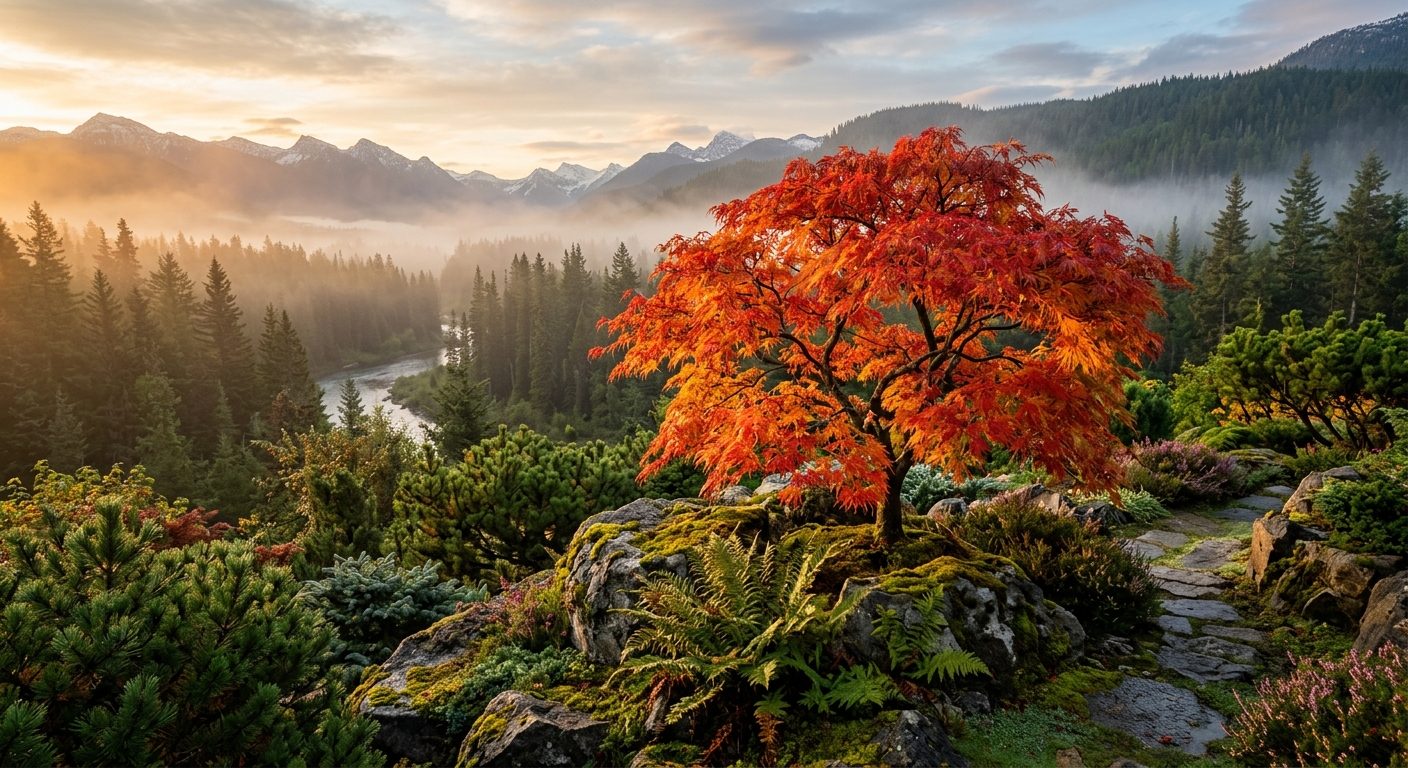
Understanding Japanese Maple Requirements in Canadian Gardens
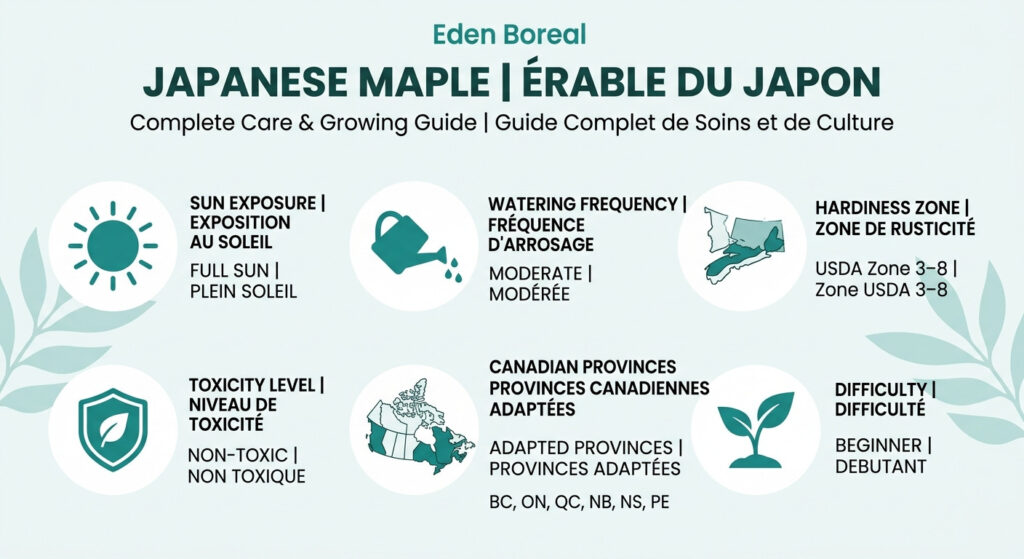
Japanese maple care demands a physiological approach rather than generic seasonal schedules, especially across Canada’s diverse hardiness zones. Acer palmatum cultivars perform best in zones 5 through 8, covering most of southern Ontario, the lower mainland of British Columbia, and sheltered areas of Quebec, but success hinges on understanding why these trees respond differently than deep-rooted species. Their shallow root system extending laterally rather than vertically creates unique vulnerabilities to drought, waterlogging, and freeze-thaw cycles that kill more specimens in Canadian gardens than any pest or disease. This guide explains the mechanisms behind common failures and translates botanical research into diagnostic tools you can apply in your own yard, whether you’re growing a compact dissectum variety in a Markham container or an upright cultivar in a Vancouver Island garden bed.
| Characteristic | Value |
|---|---|
| Botanical name | Acer palmatum |
| Plant type | Deciduous ornamental tree |
| Mature size | 180-600 cm height, 150-450 cm spread (cultivar-dependent) |
| Light | Dappled shade to partial sun, 2000-4000 foot-candles optimal |
| Watering | Frequent shallow irrigation, 2-3 times weekly in active growth |
| Ideal temperature | 15-25°C growing season, -20°C minimum winter |
| Humidity | 50-70% ambient, higher reduces transpiration stress |
| Hardiness zones (outdoors) | Zone 5b to Zone 8b |
| Toxicity | Non-toxic to dogs, cats, and humans |
| Difficulty level | Intermediate |
Japanese Maple Physiology: Why Shallow Roots Demand Different Watering Strategies
The fibrous root architecture of Acer palmatum concentrates 80% of absorptive roots in the top 30 cm of soil, a stark contrast to tap-rooted species that mine deep moisture reserves. This lateral spread, often extending 1.5 times the canopy diameter, evolved in Japan’s volcanic mountain soils where frequent rainfall and high organic matter maintain consistent surface moisture. When you transplant this physiology to a Toronto clay loam or a Kelowna sandy site, the mismatch between root depth and soil moisture distribution creates the single most common failure mode: alternating drought stress and oxygen deprivation as roots sit in saturated lower horizons while surface layers dry out.
Root Zone Moisture Monitoring by Soil Texture
Clay soils in southern Ontario and the Fraser Valley hold water in micropores that roots access slowly, creating a false sense of adequate moisture while the tree shows wilting symptoms because uptake rate cannot match transpiration demand. Sandy soils in Alberta and parts of Nova Scotia drain so rapidly that twice-weekly watering still leaves roots in drought between irrigations. The solution is not a calendar schedule but a depth-specific moisture check: insert a soil probe or your finger to 15 cm depth, and water when that zone feels barely moist rather than waiting for surface dryness. This targets the active root mass rather than the misleading top 2 cm that dries within hours of irrigation.
Capillary Rise and Mulch Interaction
A 5-8 cm layer of shredded hardwood bark or composted leaf mould moderates the boom-bust cycle by slowing evaporation and buffering temperature swings that damage feeder roots. However, mulch piled against the trunk creates a humidity trap that encourages stem canker pathogens, so maintain a 10 cm gap around the base. In zone 5 gardens, winter mulch applied after freeze-up insulates roots from the most damaging freeze-thaw oscillations, but it must be removed in early April before soil temperatures rise above 10°C, or you delay spring root activation and create anaerobic pockets.
Recognizing Irreversible Water Stress Symptoms
Early drought stress manifests as leaf margin browning and premature autumn colour in mid-July, both reversible if you correct watering within a week. Once you see branch dieback starting at twig tips and progressing toward the trunk, cambium desiccation has begun, and those branches will not recover even with resumed irrigation. Overwatering symptoms are more insidious: yellowing leaves with green veins suggest iron chlorosis from root suffocation, while sudden wilting of an entire branch indicates root rot has severed vascular connections. The key distinction is timing: drought damage appears gradually over weeks, while root rot causes collapse within 48-72 hours once a critical mass of roots fails.
Soil Acidity and Drainage: The pH Window Where Japanese Maples Thrive or Decline
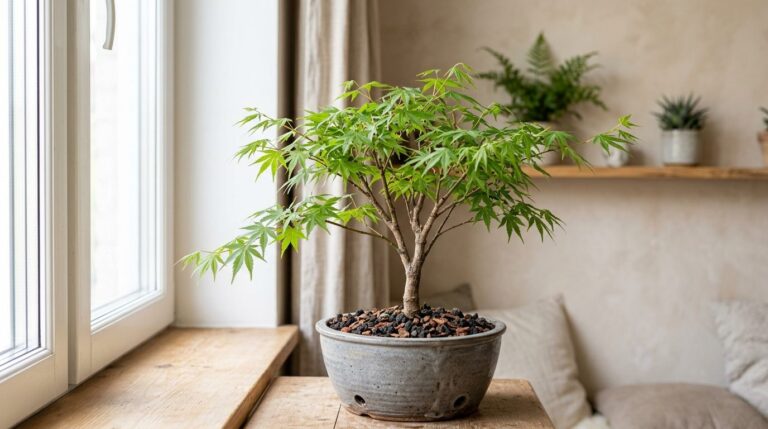
Japanese maples require soil pH between 5.5 and 6.5 because this range maximizes iron and manganese availability while minimizing aluminum toxicity, a chemistry lesson that matters intensely in Canadian gardens where municipal water and native soils often push pH toward alkaline. A pH of 7.2, common in Calgary and Winnipeg tap water, binds iron into insoluble ferric compounds that roots cannot absorb, triggering interveinal chlorosis even when soil iron levels test adequate. This is not a fertilizer deficiency you can correct with chelated iron products; it is a chemistry problem requiring pH adjustment to restore nutrient mobility.
Acidifying Alkaline Soils in Prairie and Mountain Regions
In zone 3 and zone 4 gardens with naturally alkaline soils, incorporate elemental sulfur at 200 grams per square metre to lower pH by approximately 0.5 units, but understand this is a slow microbial process requiring 4-6 months. Faster results come from replacing the top 40 cm of native soil in the planting zone with a blend of 60% peat moss, 30% composted pine bark, and 10% perlite, creating an acidic root zone island. This approach works for in-ground specimens up to 1.5 metres tall; larger trees have root spreads too extensive to amend economically. For established trees showing chlorosis, apply aluminum sulfate as a drench at 30 grams per 10 litres of water monthly during the growing season, but monitor pH every six weeks because over-acidification below 5.0 releases toxic aluminum that burns root tips.
Hard Water Impacts and Irrigation Chemistry
Municipal water in Regina, London, and parts of the Okanagan contains 250-400 ppm dissolved calcium carbonate that accumulates in soil over years, gradually raising pH despite initial amendments. Symptoms appear as progressive chlorosis starting on new growth, because young leaves have the highest iron demand for chlorophyll synthesis. The solution is either rainwater collection for irrigation, which costs nothing but requires storage capacity, or periodic soil replacement in the root zone every 3-4 years. Container-grown maples face accelerated alkalinization because the small soil volume concentrates mineral buildup; flushing pots with 2-3 volumes of distilled water monthly during summer leaches carbonates before they precipitate.
Drainage Architecture and Root Oxygen Requirements
Japanese maple roots require soil oxygen concentrations above 10% by volume for respiration, a threshold impossible to maintain in saturated clay. If your site has standing water 24 hours after heavy rain, you have two options: install subsurface drainage tile at 60 cm depth to lower the water table, or build a raised mound 30-40 cm high using the acidic soil blend described above. The mound approach works in Vancouver and Halifax where winter rainfall exceeds evapotranspiration for six months, creating persistently wet subsoils. Avoid the common error of planting in a depression to “collect water”; this inverts the moisture gradient, drowning shallow roots while deep soil remains dry.
Light Exposure Thresholds: Leaf Scorch Prevention Versus Anthocyanin Production
The light tolerance of Acer palmatum cultivars varies by leaf pigmentation genetics, not just by cultivar name, because anthocyanin concentration determines both colour intensity and UV protection capacity. Red-leaved varieties like ‘Bloodgood’ and ‘Emperor I’ synthesize anthocyanins that absorb excess light energy, allowing them to tolerate 4000-6000 foot-candles without scorch in zone 6 and cooler. Green-leaved cultivars and dissectum forms with finely divided foliage lack this protective pigment, suffering marginal necrosis above 3000 foot-candles because chloroplasts overheat faster than photosynthetic machinery can dissipate energy. This is not a watering issue; it is photoinhibition, the light-induced destruction of chlorophyll that no amount of irrigation can prevent.
Quantifying Light Exposure in Canadian Gardens
Full sun in southern Ontario delivers 8000-10,000 foot-candles at midday in June, double the tolerance threshold of most Japanese maples. Dappled shade under a mature oak or linden reduces intensity to 2000-3000 foot-candles, the ideal range for green cultivars and variegated forms like ‘Butterfly’. Eastern exposure provides 4-5 hours of morning sun at lower intensity than afternoon rays, making it suitable for moderately sun-tolerant reds like ‘Osakazuki’. Western exposure concentrates heat and light in the 2-6 PM window when air temperatures peak, pushing even anthocyanin-rich cultivars toward scorch in zone 7 and zone 8 microclimates. Measure light with a photography light meter or smartphone app calibrated to foot-candles, taking readings at 1 PM and 4 PM on a clear day to capture the stress window.
Cultivar Selection by Sun Tolerance
- ‘Bloodgood’: tolerates up to 6 hours direct sun in zone 5-6, maintains deep red colour with high anthocyanin stability
- ‘Sango-kaku’ (Coral Bark): green summer foliage requires dappled shade, but coral winter bark colour intensifies with cold exposure
- ‘Viridis’ (green dissectum): maximum 3 hours morning sun, afternoon shade mandatory to prevent leaf tip burn
- ‘Shaina’: compact red dwarf, tolerates 5-6 hours sun in zone 6, excellent container candidate for bright patios
- ‘Seiryu’: only upright dissectum, green foliage with moderate sun tolerance, ideal for 4-5 hours filtered light
Why Red Leaves Turn Green in Summer
Anthocyanin synthesis requires cool night temperatures below 15°C and high light intensity during the day, conditions met reliably in spring and autumn but not during July heat waves in Toronto or Montreal. When night temperatures stay above 18°C for a week, red cultivars shift metabolism toward chlorophyll production for photosynthesis, diluting anthocyanin concentration and turning leaves bronze-green. This is a reversible physiological response, not a disease or nutrient deficiency. Colour returns in September when diurnal temperature swings exceed 10°C. Cultivars like ‘Twombly’s Red Sentinel’ and ‘Red Dragon’ maintain colour better through summer heat because they produce higher baseline anthocyanin levels, but even these fade slightly in extreme conditions.
Seasonal Watering Cycles: Frequency Adjustments from Spring Bud Break Through Dormancy
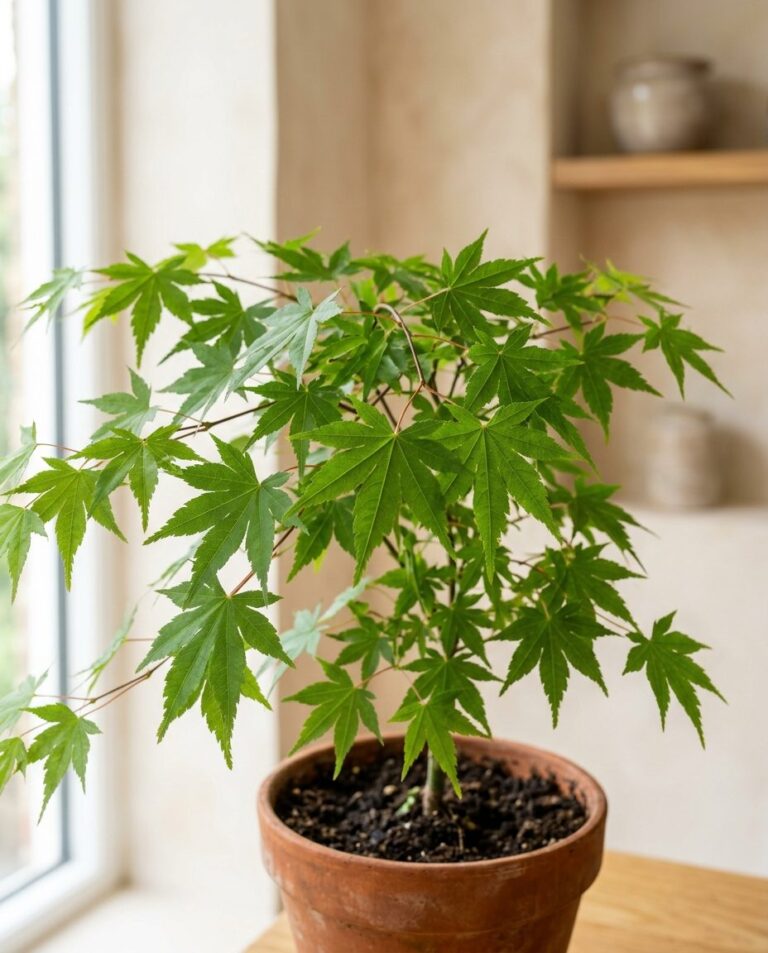
Watering frequency must track transpiration demand, which varies 10-fold between dormancy and peak summer growth, not follow a static schedule. In early April when buds swell in zone 6, roots are active but leaf area is minimal, so weekly deep watering suffices. By mid-June when the canopy is fully expanded and air temperatures reach 28°C, the same tree may require irrigation every 2-3 days because leaf surface area has increased 50-fold and stomatal conductance peaks. The error most gardeners make is continuing spring watering frequency into summer, creating cumulative drought stress that manifests as scorch in late July.
Spring Bud Break Through Leaf Expansion
From bud break in early April through full leaf expansion in late May, water when the top 10 cm of soil dries to barely moist, typically every 5-7 days in clay loam and every 3-4 days in sandy loam. Apply 20-30 litres per mature tree (over 2 metres tall), delivered slowly over 30 minutes to allow infiltration into the shallow root zone. This is the critical window for root regeneration after winter dormancy; inadequate moisture now limits fine root production that supports summer water uptake. Newly planted specimens require twice this frequency because their root balls have not yet extended into surrounding soil, making them dependent on the limited moisture reserve in the original container volume.
Summer Peak Demand and Heat Stress Mitigation
June through August in southern Ontario and the BC interior brings 25-30°C days that drive transpiration rates to 3-5 litres per square metre of canopy per day. A 3-metre-tall upright cultivar with 2.5-metre canopy diameter has roughly 5 square metres of projected leaf area, requiring 15-25 litres every 2-3 days. Dissectum varieties with finely divided foliage have 30% more surface area per unit canopy volume, increasing water demand proportionally. Signs you are under-watering include afternoon wilting that recovers overnight, leaf margins curling upward, and premature autumn colour appearing in mid-July. Increase frequency before increasing volume per irrigation, because shallow roots access water more efficiently from frequent small applications than infrequent deep soaking.
Fall Hardening and Winter Dormancy Preparation
After leaf drop in October, reduce watering to once every 10-14 days, maintaining just enough soil moisture to prevent root desiccation during winter. Roots remain metabolically active until soil temperatures drop below 4°C, typically mid-November in zone 5 and late November in zone 6. The goal is not to promote growth, which would reduce cold hardiness, but to ensure roots enter dormancy with adequate moisture reserves. In zone 7 and zone 8 where winters are mild and wet, reduce or eliminate supplemental irrigation from November through February unless you experience an unusual dry spell. A final deep watering in late November before freeze-up, delivering 40-50 litres to saturate the root zone, provides insurance against winter desiccation when frozen soil prevents uptake.
Container Watering Frequency by Pot Size
A 40-litre container holds roughly 35 litres of soil after accounting for drainage material, providing 3-4 days of water reserve for a 1.5-metre specimen in summer. A 100-litre container extends this to 7-10 days under the same conditions. The practical implication: smaller pots require near-daily monitoring during heat waves, while larger containers buffer moisture fluctuations and reduce the risk of acute drought stress. Check moisture by lifting the pot; a 40-litre container should feel noticeably lighter when dry, a tactile cue more reliable than surface appearance. Water until runoff appears from drainage holes, then wait until the pot feels light again before the next irrigation.
Pruning Timing and Technique: Why Winter Shaping Differs from Summer Maintenance
Japanese maple pruning timing determines whether you trigger vigorous regrowth or refined branching, because dormant-season cuts in January through March stimulate strong shoots from buds below the cut, while summer pruning in June through August produces weak lateral growth that maintains compact form. This physiological difference matters intensely for cultivars like dissectums, where the goal is dense, layered branching rather than long whips. The worst timing is October through December in zone 5 and zone 6, when cuts expose fresh cambium to freeze damage before callus tissue forms, creating entry points for stem canker pathogens that proliferate in cold, wet conditions.
Late Winter Structural Pruning Protocol
Prune in late February or early March in zone 6, late March in zone 5, when temperatures remain below 5°C but before bud swell begins. This timing minimizes sap flow from cuts while allowing 4-6 weeks for callus formation before active growth. Remove crossing branches, inward-growing shoots, and any stems that disrupt the desired silhouette, cutting back to a lateral branch or bud facing the direction you want new growth. Make cuts at a 45-degree angle 5 mm above the target bud to shed water and prevent rot. Avoid removing more than 20% of total branch mass in a single season; excessive pruning forces the tree to prioritize shoot regeneration over root development, weakening overall vigour.
Summer Refinement and Canopy Thinning
In late June after spring growth hardens, remove vertical water sprouts and thin dense interior growth to improve air circulation, which reduces fungal disease pressure. Summer cuts produce minimal regrowth because auxin dominance from the terminal bud suppresses lateral buds, allowing you to refine form without triggering a flush of new shoots. This is the ideal time to shorten overly long branches on upright cultivars, cutting back to a lateral that maintains the branch angle. Dissectum varieties benefit from selective thinning of overlapping layers to reveal the cascading architecture, but avoid heavy reduction that exposes previously shaded interior foliage to sudden sun, causing scorch.
Why Fall Pruning Fails in Cold Climates
Pruning in October stimulates a brief pulse of cambial activity as the tree attempts to seal the wound, but this new tissue has not hardened off before freeze-up in zone 5. When temperatures drop to -15°C in November, the tender callus freezes and splits, creating a vertical crack that extends into healthy wood. Pathogens like Nectria cinnabarina, which causes stem canker, colonize these wounds over winter, producing visible orange sporodochia by spring. By the time you notice the infection, vascular damage has girdled the branch, killing everything distal to the canker. This failure mode does not occur in zone 8 where winter minimums stay above -5°C, explaining why fall pruning advice from milder climates fails catastrophically in Canadian conditions.
Container Cultivation: Root Restriction Adaptations and Pot Size Progression
Container-grown Japanese maples adapt to root restriction by reducing shoot extension and leaf size, a dwarfing response useful for patio specimens but problematic when it crosses into stress. A 1.5-metre-tall upright cultivar thrives in a 60-80 litre container for 3-4 years before root congestion limits water and nutrient uptake, at which point you must either repot into a 120-150 litre container or root-prune and return it to the same pot. The symptom checklist for root-bound stress includes water running straight through the pot without wetting the soil mass, roots circling visibly at the drainage holes, and reduced annual shoot growth despite adequate fertilization. These signs appear 6-12 months before the tree shows leaf yellowing or dieback, giving you a diagnostic window to intervene.
Initial Pot Sizing and Substrate Composition
Start a 60 cm tall nursery specimen in a 30-40 litre container, providing room for 2-3 years of root expansion without the moisture management challenges of an oversized pot. Use a blend of 50% professional potting mix, 30% composted pine bark, and 20% perlite, creating a substrate that drains in 10-15 minutes after saturation but retains enough moisture for 3-4 days between waterings in summer. Avoid garden soil, which compacts in containers and suffocates roots. In zone 5 and colder, select containers rated for freeze-thaw cycles; cheap plastic pots crack when soil expands during freezing, while fibreglass and high-density polyethylene remain intact.
Repotting Versus Root Pruning Decision Matrix
When roots fill the current container, you have two options: repot into a container 30-40% larger by volume, or root-prune and return the tree to the same pot. Repotting suits specimens under 2 metres tall where you want continued growth and can accommodate a larger container. Root pruning suits mature specimens where you want to maintain current size and the container is already at the limit of what you can move. To root-prune, remove the tree in early spring, use a sharp saw to cut away the outer 5 cm of the root ball on all sides and the bottom, then replant in fresh substrate. This removes 30-40% of root mass, stimulating new feeder root growth in the remaining volume. The tree will show reduced vigour for one season while regenerating roots, so do not root-prune and heavy-prune the canopy in the same year.
Winter Protection for Container Specimens in Zone 5 and Zone 6
Roots in above-ground containers experience temperatures 10-15°C colder than in-ground roots, effectively shifting hardiness by one zone. A cultivar rated to zone 5 survives -25°C when planted in the ground but suffers root kill at -15°C in a container. Protect containers by moving them into an unheated garage where temperatures stay between -5°C and 5°C, or by burying the pot to the rim in a sheltered garden bed and mulching heavily. A third option is wrapping the container in 10 cm of fibreglass insulation and placing it against a south-facing wall, but this requires vigilance to prevent the soil from drying out during mid-winter thaws. In zone 7 and zone 8, simple placement against a building foundation provides adequate protection.
Pest and Disease Recognition: Stem Canker, Verticillium Wilt, and Root Rot Diagnosis
Japanese maple diseases kill through vascular disruption, not defoliation, making early diagnosis critical because once a branch shows wilt symptoms, the pathogen has already colonized the xylem. Verticillium wilt, stem canker, and Phytophthora root rot produce overlapping symptoms of branch dieback and leaf wilt, but they require different management strategies, so misdiagnosis wastes time and allows the disease to progress. The diagnostic key is the pattern and speed of symptom development: verticillium causes sudden wilt of entire branches over 1-2 weeks, stem canker produces localized dieback with visible bark lesions over months, and root rot causes gradual decline of the entire tree over a growing season.
Verticillium Wilt Diagnosis and Management
Verticillium dahliae infects through roots and colonizes xylem vessels, blocking water transport and causing sudden wilting of one or more branches while the rest of the tree appears healthy. Confirm diagnosis by cutting a wilted branch and looking for brown or olive-green streaking in the sapwood, visible as discoloured rings in cross-section. This vascular staining distinguishes verticillium from drought stress, which does not discolour wood. The pathogen persists in soil for 10-15 years, so do not replant a Japanese maple in the same location. Remove and destroy infected branches, cutting 30 cm below the lowest point of vascular discolouration. No fungicide cures an established infection, but maintaining tree vigour through proper watering and avoiding nitrogen excess reduces susceptibility. In Ontario and Quebec, verticillium is more common in gardens with a history of tomato or potato cultivation, because these crops amplify soil populations of the fungus.
Stem Canker Identification and Pruning Strategy
Stem canker caused by Nectria cinnabarina appears as sunken, discoloured bark lesions that girdle branches, killing the distal portion. Orange or pink sporodochia (fungal fruiting structures) erupt from dead bark in spring, a distinctive diagnostic feature. Unlike verticillium, canker does not cause vascular streaking; the damage is confined to bark and cambium. Prune out cankered branches in late winter, cutting 10-15 cm below the visible lesion into healthy wood, and disinfect tools between cuts with 70% isopropyl alcohol. Canker thrives in wounds and stressed trees, so avoid fall pruning and maintain optimal watering to minimize susceptibility. In British Columbia’s wet winters, canker pressure is higher than in drier Prairie climates, requiring more vigilant sanitation.
Phytophthora Root Rot and Drainage Correction
Phytophthora root rot causes gradual decline over an entire season: reduced shoot growth in spring, sparse foliage, premature autumn colour in July, and eventual branch dieback. Dig carefully near the trunk base and examine fine roots; infected roots are brown, mushy, and lack white root tips, contrasting with healthy white, firm roots. The pathogen requires saturated soil to spread, so root rot is a drainage problem first and a disease problem second. Improve drainage by regrading the site, installing subsurface drainage, or transplanting to a raised bed. No chemical treatment cures an advanced infection, but phosphonate fungicides (not phosphate fertilizers) applied as a soil drench in early spring can protect healthy roots in borderline drainage conditions. This disease is most common in Vancouver and Halifax where winter rainfall creates persistently wet soils.
Cultivar Selection by Climate Zone and Exposure: Red Versus Green Leaf Performance
Cultivar selection determines 80% of your success with Japanese maples in Canadian gardens, because hardiness, sun tolerance, and mature size vary dramatically even within the same species. Red-leaved cultivars generally tolerate more sun and colder winters than green dissectums, but this is a generalization that breaks down at the individual cultivar level. ‘Bloodgood’ thrives in zone 5b with 6 hours of sun, while ‘Crimson Queen’ (a red dissectum) requires dappled shade even in zone 6. The key is matching cultivar genetics to your specific microclimate: sun hours, winter minimum temperature, and wind exposure.
Upright Cultivars for Zone 5 and Zone 6
- ‘Bloodgood’: 4-5 metres tall, deep red spring and fall colour, bronze-green summer, hardy to -25°C, tolerates 6 hours sun
- ‘Emperor I’: 3-4 metres tall, holds red colour through summer better than ‘Bloodgood’, hardy to -23°C, good for Ottawa and Kingston
- ‘Sango-kaku’ (Coral Bark): 5-6 metres tall, green summer foliage, coral-red bark spectacular in winter, hardy to -25°C, requires dappled shade
- ‘Osakazuki’: 4-5 metres tall, green summer foliage, intense scarlet fall colour, hardy to -25°C, tolerates 5 hours sun
Dissectum Cultivars for Zone 6 and Warmer
- ‘Crimson Queen’: 2-3 metres wide, red spring and fall, bronze-green summer, hardy to -20°C, requires afternoon shade
- ‘Viridis’: 2-3 metres wide, green foliage, reliable yellow fall colour, hardy to -20°C, maximum 3 hours morning sun
- ‘Tamukeyama’: 2 metres tall, 3 metres wide, holds red colour through summer, hardy to -20°C, tolerates 4-5 hours sun
- ‘Seiryu’: 3-4 metres tall, only upright dissectum, green foliage, hardy to -23°C, good for Toronto courtyards
Dwarf Cultivars for Containers and Small Spaces
- ‘Shaina’: 1.5 metres tall and wide, deep red, compact mounding form, hardy to -23°C, excellent in 60-80 litre containers
- ‘Kiyohime’: 1.2 metres tall, green foliage, dense twiggy growth, hardy to -20°C, ideal for bonsai or small pots
- ‘Mikawa yatsubusa’: 1 metre tall, green foliage, extremely slow growth, hardy to -23°C, collector’s cultivar
Winter Hardiness and Cold Acclimation: Protecting Against Freeze-Thaw Cycles
Japanese maple cold hardiness depends on gradual acclimation through autumn, a physiological process that converts starch to sugars, thickens cell walls, and reduces intracellular water content to prevent ice crystal damage. When temperatures drop from 10°C to -10°C over two weeks in November, trees acclimate fully and tolerate their rated minimum. When a sudden cold snap drops temperatures to -15°C in early October before leaf drop, the same tree suffers cambium damage and branch dieback because acclimation was incomplete. This is why zone 5 gardeners in Ottawa lose marginally hardy cultivars some winters but not others; the timing and speed of the first hard freeze matters more than the absolute minimum temperature.
Freeze-Thaw Cycle Damage Mechanisms
Repeated freeze-thaw cycles in late winter, common in southern Ontario and Nova Scotia, cause more damage than sustained cold. When daytime temperatures rise to 5°C and night temperatures drop to -8°C, cambium and sapwood alternately thaw and refreeze, rupturing cells and creating vertical bark splits on the south and southwest sides of the trunk. These frost cracks expose inner wood to pathogens and desiccation, often killing the tree over the following year. Prevent frost cracks by wrapping the trunk with white tree wrap from November through March, reflecting sunlight to keep bark temperature more stable. Remove wrap in April to prevent moisture accumulation that encourages canker.
Wind Desiccation and Microclimate Selection
Winter wind desiccates twigs and buds when frozen soil prevents roots from replacing lost moisture, a problem more severe in zone 4 and zone 5 than in milder zones. Plant Japanese maples on the east or north side of buildings or evergreen hedges that block prevailing northwest winds, reducing transpiration stress by 60-70%. Avoid planting in open, exposed sites even if the cultivar is technically hardy to your zone; microclimate matters more than broad zone ratings. In Winnipeg and Saskatoon, winter survival requires both a hardy cultivar and a protected site, not one or the other.
Spring Frost Damage and Recovery
Late spring frosts in May kill newly emerged leaves and shoots, a common problem in zone 5 where last frost dates extend into late May. Damaged leaves turn black and crispy within 24 hours, but the tree typically produces a second flush of growth within 3-4 weeks. Do not prune frost-damaged shoots immediately; wait until new growth emerges to identify which buds survived. Feed lightly with a balanced fertilizer (10-10-10) at half strength to support regrowth without forcing excessive soft tissue. The tree will be smaller and less vigorous that season but usually recovers fully by the following year if the damage was not repeated.