

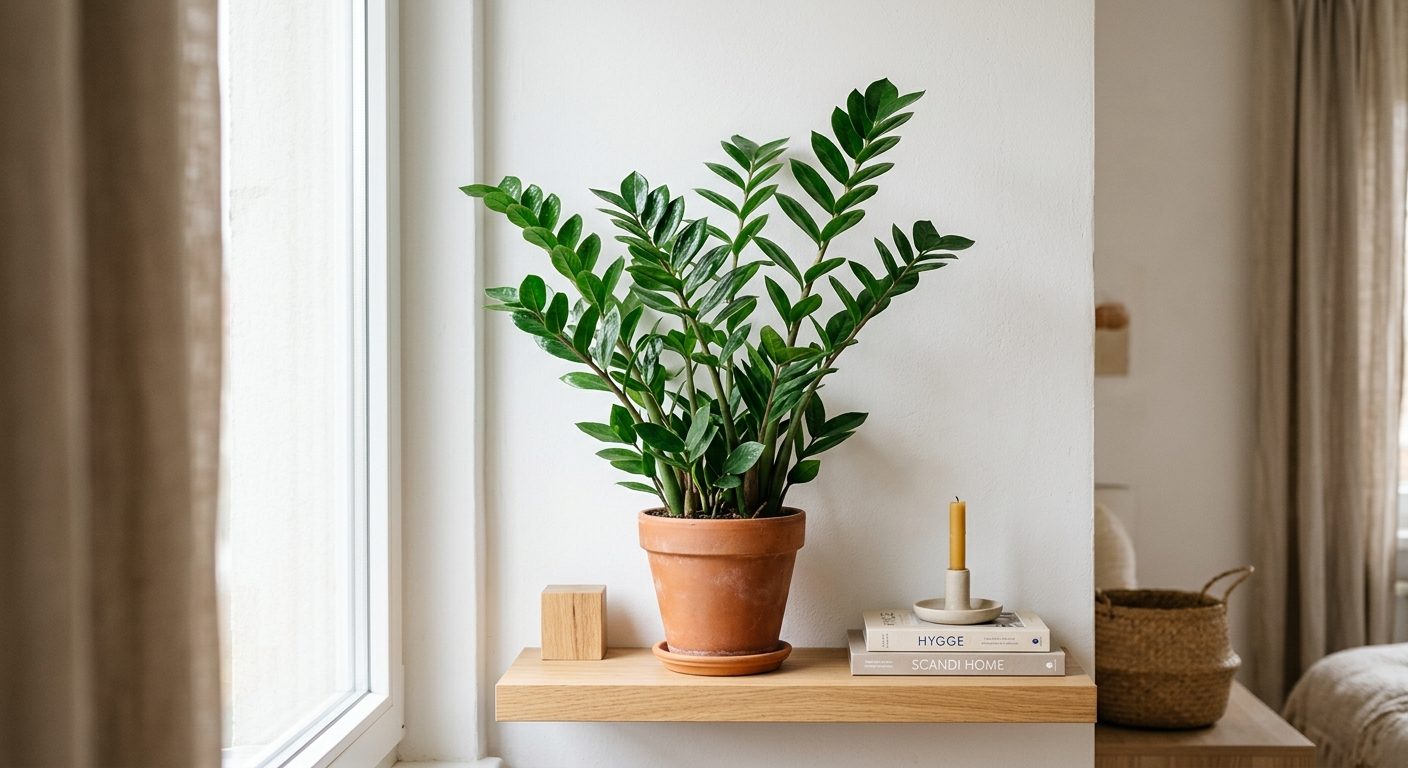
The Zamioculcas Zamiifolia: A Drought-Adapted Marvel for Canadian Homes
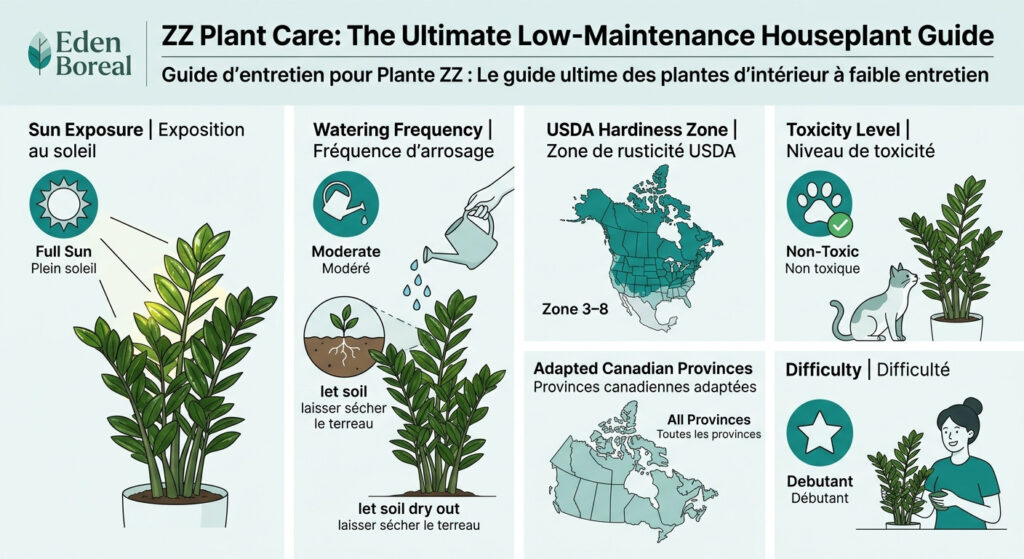
The ZZ plant (Zamioculcas zamiifolia), also known as the Zanzibar gem, has become a staple in Ontario and Quebec homes precisely because its East African origin equipped it with physiological adaptations that align perfectly with the challenges of Canadian indoor environments. Unlike most houseplants that rely solely on root systems for water uptake, the ZZ plant stores water in underground rhizomes and thick, waxy leaflets, creating a dual-reserve system that allows it to survive weeks of neglect. This rhizome-based architecture, combined with a photosynthetic efficiency that functions at light intensities as low as 50 foot-candles, makes the species uniquely forgiving for beginners navigating the dry furnace heat of Alberta winters or the dim north-facing apartments common in British Columbia’s Lower Mainland. Understanding the ZZ plant’s water-storage physiology is the key to avoiding the single most common failure mode: overwatering that triggers root rot in the rhizomes.
| Characteristic | Value |
|---|---|
| Botanical name | Zamioculcas zamiifolia |
| Plant type | Succulent-like tropical perennial |
| Mature size | 60-90 cm height, 45-60 cm spread |
| Light | 50-200 foot-candles (low to moderate indirect) |
| Watering | Every 3-4 weeks in winter, every 2 weeks in summer when soil is fully dry |
| Ideal temperature | 18-26°C year-round |
| Humidity | 30-50% (tolerates typical indoor dryness) |
| Hardiness zones (outdoors) | Zone 10-11 (indoor-only in Canada) |
| Toxicity | Yes, toxic to cats and dogs (calcium oxalate crystals) |
| Difficulty level | Beginner |
The ZZ Plant’s Unique Water-Storage System: Why Rhizomes Change Everything

The rhizome system beneath a ZZ plant’s soil line is not a typical root structure but rather a modified stem that stores water and carbohydrates, similar to a potato. Each rhizome can swell to twice its dormant diameter during periods of adequate moisture, then slowly release that reserve over weeks or months of drought. In practical terms for Canadian growers, this means a mature ZZ plant in a 20 cm pot in Saskatchewan (zone 3b indoor conditions) can survive 4-6 weeks without irrigation during winter when furnace heating drops indoor humidity below 25%. The leaflets themselves contain additional water-storage tissue, visible as a glossy, turgid surface that wrinkles only when reserves are nearly depleted. This dual-reserve architecture evolved in the seasonal drought cycles of eastern Africa, where Zamioculcas zamiifolia experiences months without rain followed by sudden flooding.
How Rhizomes Prevent Drought Stress in Canadian Interiors
The rhizome’s water-storage capacity creates a buffer that allows the plant to maintain photosynthesis even when soil moisture drops to zero. Laboratory measurements show ZZ plant rhizomes can hold up to 40% of the plant’s total water mass, compared to 5-10% in typical fibrous root systems. For a grower in Montreal, Quebec (zone 5b), this translates to a watering interval of 18-21 days during summer when the plant is actively growing, extending to 28-35 days in winter dormancy. The rhizome system also explains why overwatering is the primary failure mode: when soil remains saturated for more than 48 hours, anaerobic bacteria colonize the rhizome surface, causing soft rot that spreads rapidly through the stored carbohydrate tissue. A rotted rhizome cannot be salvaged, making prevention through proper drainage and watering discipline the only reliable strategy.
Comparing ZZ Rhizomes to Other Houseplant Storage Organs
Unlike the tuberous roots of Dracaena species or the pseudobulbs of orchids, ZZ rhizomes are true stems that produce adventitious roots along their lower surface and leaf petioles from their upper nodes. This architecture allows a single rhizome segment with at least one node to regenerate an entire plant, a trait exploited in commercial propagation. In comparison, a Pothos cutting relies on a single node to produce both roots and shoots simultaneously, while a ZZ rhizome division arrives with pre-formed root initials and stored energy reserves, giving it a 3-4 week head start in establishment. For Canadian propagators working in Ontario (zone 6a), this means rhizome divisions can be potted in early March and show new growth by late April, whereas leaflet propagation (discussed below) requires 8-12 months to produce a plantlet of equivalent size.
Light Thresholds for ZZ Plants: Surviving Indoors Without Compromise
Quantified light measurements reveal the ZZ plant’s true adaptability: it maintains positive net photosynthesis at intensities as low as 50 foot-candles, a threshold reached 2-3 metres from a north-facing window in Vancouver, British Columbia during December. At this minimum, growth slows to near-dormancy, with the plant producing one new leaflet every 4-6 months, but existing foliage remains healthy and the rhizomes continue storing reserves. Optimal growth occurs between 100-200 foot-candles, equivalent to an east-facing window with sheer curtains or 1.5 metres from a south-facing window in Calgary, Alberta (zone 4a). Above 300 foot-candles, leaflets develop a pale yellow-green cast as chlorophyll concentration decreases in response to excess light, and prolonged exposure above 500 foot-candles (direct afternoon sun through unshaded glass) causes brown scorch patches on leaflet margins.
Measuring Light Intensity in Canadian Homes
A smartphone light meter app calibrated to foot-candles provides immediate feedback on whether a proposed ZZ plant location meets the 50 foot-candle minimum. In practical terms, if you can comfortably read newsprint at midday without artificial light, the location provides at least 100 foot-candles. Rooms with only overhead LED lighting typically deliver 20-40 foot-candles at plant height, insufficient for long-term health. For Toronto, Ontario apartments with north-facing windows, supplemental LED grow lights (full-spectrum, 15-20 watts) positioned 30 cm above the canopy can boost ambient light to the 100-150 foot-candle range, extending the viable growing season through the November-February period when natural daylight drops below 8 hours.
Etiolation Versus Healthy Slow Growth
True etiolation (light-starvation stretching) in ZZ plants manifests as elongated petioles with sparse leaflets spaced 8-10 cm apart, compared to the normal 4-5 cm spacing seen in adequate light. The petioles also lose their characteristic upright posture, leaning toward the light source at angles exceeding 30 degrees from vertical. Healthy slow growth, in contrast, produces compact new shoots with normal leaflet density but at a reduced frequency of one shoot per rhizome every 6-8 months. If a ZZ plant in Winnipeg, Manitoba (zone 3a) shows etiolation symptoms after 4-6 months in a dim corner, relocating it to a brighter spot will not reverse the stretched growth, but new shoots will emerge with correct proportions within 2-3 months.
Watering Frequency Based on Soil Drying Patterns and Season
The ZZ plant’s watering schedule must synchronize with complete soil drying cycles, not calendar intervals. A moisture meter inserted to mid-pot depth should read zero (fully dry) before the next irrigation, a state typically reached in 14-18 days during the May-August growing season in heated Canadian homes, extending to 25-35 days during the November-February dormancy when lower light levels reduce transpiration demand. In Edmonton, Alberta (zone 4a), where winter indoor humidity often drops below 20% due to forced-air heating, the soil surface may appear dry within 5-7 days, but the lower half of the root ball retains moisture for another 2-3 weeks. Watering based on surface dryness alone leads to chronic overwatering and rhizome rot within 3-4 months.
Seasonal Watering Adjustments for Canadian Climates
During the March-April transition in Halifax, Nova Scotia (zone 6b), increasing daylight triggers new shoot emergence from rhizomes, signaling a shift from winter’s 4-week watering interval to a 2-week summer schedule. The plant’s water demand peaks in July-August when temperatures reach 24-26°C and daylight exceeds 15 hours, then gradually declines through September-October as growth slows. By November, most ZZ plants enter a semi-dormant state where metabolic activity drops by 60-70%, and watering frequency should match this reduction. A common mistake among Quebec growers is maintaining summer watering schedules through winter, resulting in waterlogged soil that promotes fungal root rot even in well-draining substrates.
Irrigation Technique and Volume
Each watering event should saturate the entire root ball, with excess water draining freely from the pot’s drainage holes within 5-10 minutes. For a ZZ plant in a 25 cm pot, this typically requires 500-700 mL of water applied slowly over 2-3 minutes to allow soil absorption. Pouring water rapidly causes channeling, where liquid flows down the pot’s inner wall without wetting the central root mass. After watering, the pot should feel noticeably heavier, and any water collecting in the saucer must be discarded within 30 minutes to prevent root contact with standing water. In British Columbia’s Lower Mainland, where municipal water is naturally soft (low mineral content), ZZ plants can be irrigated directly from the tap, but in regions with hard water (southern Ontario, Saskatchewan), allowing tap water to stand for 24 hours before use permits chlorine to dissipate and reduces calcium buildup on rhizome surfaces.
Soil Composition and Drainage: Preventing Root Rot in Humid Climates
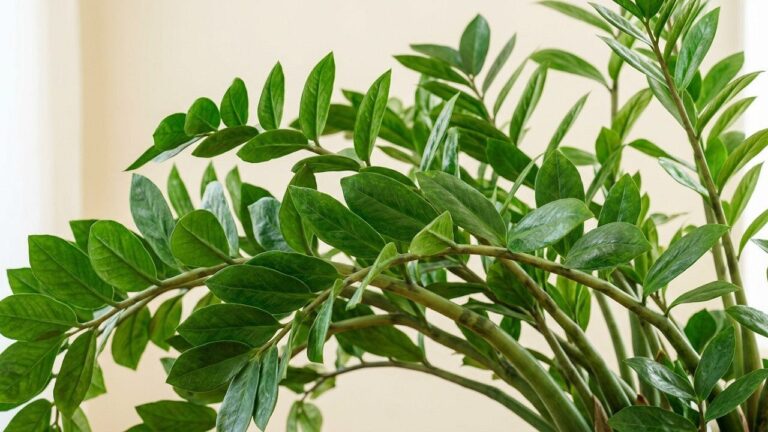
The ideal substrate for ZZ plants in Canadian conditions balances moisture retention for the brief period after watering with rapid drainage that prevents saturation beyond 48 hours. A proven recipe combines 50% standard potting soil (peat-based or coir-based), 30% perlite (horticultural grade, 3-5 mm particles), 15% pine bark fines (2-5 mm chips), and 5% coarse sand or pumice. This mixture drains freely within 10-15 minutes of watering while retaining enough moisture to extend the dry-down cycle to 2-3 weeks in summer. In Ottawa, Ontario (zone 5a), this substrate performs reliably in both terracotta (faster drying) and glazed ceramic pots (slower drying), provided drainage holes are unobstructed.
Commercial Substrate Options at Canadian Garden Centres
Pre-mixed cactus and succulent soil available at Canadian retailers (e.g., Pro-Mix Cactus Mix, Miracle-Gro Cactus Palm & Citrus) provides a suitable base but benefits from additional perlite to reach the 30% target. A 10-litre bag of cactus mix combined with 3 litres of perlite yields approximately 13 litres of ZZ-appropriate substrate. Avoid general-purpose potting soils without amendments, as their peat or coir content retains moisture for 7-10 days in a 20 cm pot, double the safe saturation window for ZZ rhizomes. For growers in Montreal or Toronto seeking local suppliers, independent garden centres often stock Fafard Professional Potting Mix and bulk perlite in spring (March-May), allowing custom blending at lower cost than pre-mixed specialty soils.
Repotting Frequency and Pot Sizing
ZZ plants grow slowly enough that repotting is required only every 3-4 years, or when rhizomes visibly crowd the pot’s interior and push upward through the soil surface. When repotting, select a container only 5-8 cm larger in diameter than the current pot; oversized pots hold excess moisture that the root system cannot absorb quickly enough, recreating overwatering conditions even with appropriate substrate. In Calgary (zone 4a), where low humidity accelerates soil drying, a ZZ plant can tolerate a slightly larger pot jump (8-10 cm), but in humid coastal Vancouver (zone 8a), conservative sizing is critical. Repotting is best performed in April-May when new growth begins, giving the plant the entire growing season to establish roots in fresh substrate before winter dormancy.
Temperature Tolerance and Adaptation to Indoor Climate Fluctuations
The ZZ plant’s native range in eastern Africa experiences daily temperature swings of 10-15°C, a variability that pre-adapts it to the fluctuations common in Canadian homes. The species tolerates a range of 15-29°C without stress, with optimal growth occurring at 21-24°C. Temperatures below 13°C trigger dormancy and halt new growth, while prolonged exposure below 10°C causes cellular damage visible as water-soaked lesions on leaflets within 48-72 hours. In Saskatoon, Saskatchewan (zone 3b), where windows can drop to 8-10°C on winter nights despite interior heating, ZZ plants positioned within 30 cm of glass may experience cold damage on the nearest leaflets, while the rest of the plant remains healthy. Moving the pot 50-60 cm from the window eliminates this microclimate risk.
Heat Tolerance During Canadian Summers
Summer temperatures in southern Ontario and southern Quebec frequently reach 28-32°C indoors in non-air-conditioned homes, a range the ZZ plant tolerates without intervention provided humidity remains above 30%. At temperatures above 30°C, transpiration demand increases, and the soil dry-down cycle shortens from 14 days to 10-12 days, requiring closer monitoring of moisture levels. Leaflets exposed to direct sun through south- or west-facing windows can experience surface temperatures exceeding 35°C, leading to brown scorch patches within 2-3 hours of peak exposure. A sheer curtain or 1-metre setback from the glass prevents this thermal stress while maintaining adequate light intensity for growth.
Winter Heating Systems and Humidity Impact
Forced-air heating systems in Alberta and Manitoba reduce indoor humidity to 15-25% during the December-February period, well below the ZZ plant’s preferred 40-50% range but still within its tolerance. At these low humidity levels, leaflet tips may develop slight browning (1-2 mm), a cosmetic issue that does not affect overall health. Positioning the plant away from direct heat vents prevents desiccation of the nearest foliage. In contrast, baseboard electric or radiant floor heating maintains more stable humidity (30-40%), reducing the need for environmental adjustments. ZZ plants do not require supplemental humidification even in the driest Canadian interiors, distinguishing them from tropical species like Calathea or Ficus lyrata that suffer at humidity below 50%.
Propagating ZZ Plants Through Fallen Leaflets and Rhizome Division
The ZZ plant offers two propagation methods with dramatically different timelines: rhizome division produces a mature plant in 3-4 months, while leaflet propagation requires 8-14 months to generate a plantlet with visible rhizomes. Rhizome division is performed during repotting by severing the underground stem with a sterilized knife, ensuring each division retains at least two growth nodes and a portion of the root system. A division taken in April in Toronto (zone 6a) will produce new shoots by July and reach 30-40 cm height by October. Leaflet propagation exploits the ZZ plant’s ability to generate adventitious roots and rhizome tissue from a single detached leaflet, a process that begins with root formation (4-6 weeks), followed by rhizome initiation (8-12 weeks), and finally shoot emergence (16-24 weeks).
Step-by-Step Leaflet Propagation Protocol
- Select a mature leaflet (fully expanded, dark green, no damage) from the lower third of a petiole.
- Detach the leaflet by gently twisting and pulling; a clean break at the base is ideal.
- Allow the cut end to dry for 24 hours to form a callus, reducing rot risk.
- Insert the leaflet base 1-2 cm deep into moist propagation substrate (50% perlite, 50% peat or coir).
- Place the container in bright indirect light (100-150 foot-candles) at 21-24°C.
- Water sparingly, keeping substrate barely moist (not saturated), every 10-14 days.
- Roots appear in 4-6 weeks; a small rhizome bulge is visible at the base by week 10-12.
- First shoots emerge 16-24 weeks after insertion; transplant to standard substrate when shoots reach 5-8 cm.
In Vancouver, British Columbia (zone 8a), where ambient temperatures remain above 18°C year-round, leaflet propagation can be initiated in any season. In colder regions like Winnipeg (zone 3a), starting propagation in March-April ensures the plantlet reaches transplant size by autumn, avoiding the stress of moving a fragile propagule into winter dormancy.
Comparing Propagation Success Rates
Rhizome division has a success rate exceeding 95% when performed with sterile tools and appropriate aftercare (reduced watering for 2-3 weeks post-division). Leaflet propagation shows 60-70% success, with failures typically occurring in the first 6 weeks due to rot at the cut end or desiccation from insufficient substrate moisture. The extended timeline of leaflet propagation makes it impractical for growers seeking quick results, but it offers a way to generate multiple plants from a single specimen without disturbing the parent’s root system. For Ontario growers with access to mature ZZ plants, taking 5-6 leaflet cuttings in April yields 3-4 viable plantlets by the following spring, a cost-free alternative to purchasing new specimens at $25-40 per plant from Canadian nurseries.
Identifying Stress Signals: Yellow Leaves, Brown Tips, and Wrinkled Stems
The ZZ plant communicates stress through a limited set of visual symptoms, each corresponding to a specific environmental factor. Yellowing leaflets that remain turgid (firm to the touch) indicate overwatering and incipient rhizome rot; affected leaflets typically yellow from the base upward and detach easily when tugged. In contrast, yellowing accompanied by wrinkled, flaccid leaflets signals severe underwatering, a rare condition given the plant’s drought tolerance but possible if a specimen in Calgary (zone 4a) is neglected for 8-10 weeks during summer. Brown leaflet tips (1-3 mm of necrotic tissue) result from low humidity (below 25%) or fluoride accumulation from tap water, common in Saskatchewan municipalities that fluoridate water supplies. Wrinkled petioles (the thick stems supporting leaflets) indicate depleted rhizome reserves, occurring only after months of inadequate watering or when a plant is root-bound and unable to access soil moisture.
Diagnosing and Correcting Overwatering
Overwatering damage progresses in stages: initial symptoms include 1-2 yellowing leaflets on a single petiole, followed within 2-3 weeks by softening of the petiole base where it emerges from the soil. If intervention occurs at this stage, reducing watering frequency and improving drainage (by adding perlite to the substrate during repotting) can halt progression. Once the rhizome itself softens (detectable by gently pressing the soil surface near the stem base), rot has spread through the stored carbohydrate tissue, and the affected rhizome section must be excised. In Montreal (zone 5b), where summer humidity averages 60-70%, overwatering is the leading cause of ZZ plant failure, typically resulting from watering every 7-10 days rather than waiting for complete soil drying.
Pest Identification: Scale Insects and Spider Mites
Scale insects appear as 2-3 mm brown or tan oval bumps adhered to leaflet undersides and petioles, often concentrated near the base of the plant where new growth emerges. These sap-feeding pests excrete honeydew that supports sooty mold growth, creating a black film on lower leaves. Manual removal with a cotton swab dipped in rubbing alcohol is effective for light infestations (fewer than 20 individuals), while heavier infestations require horticultural oil spray (2% solution) applied weekly for 3-4 weeks. Spider mites (Tetranychus urticae) are less common on ZZ plants due to the thick, waxy leaflet cuticle but can establish during prolonged dry periods (humidity below 20%). Early signs include fine webbing between leaflets and stippled yellow spots on leaf surfaces; a forceful water spray dislodges mites, and increasing ambient humidity above 40% prevents re-infestation. In Edmonton (zone 4a), where winter indoor humidity drops to 15-20%, inspecting ZZ plants monthly for mite activity prevents population explosions that can defoliate a specimen in 4-6 weeks.
ZZ Plant Varieties: Raven, Zenzi, and Emerald Green Compared
The standard Zamioculcas zamiifolia cultivar, often sold simply as “ZZ plant,” features glossy, dark green leaflets on upright petioles reaching 60-90 cm at maturity. ZZ Raven, introduced to North American markets in 2018, displays new growth in bright lime green that transitions to deep purple-black over 4-6 weeks as anthocyanin pigments accumulate in response to light exposure. This colour shift requires light intensities above 100 foot-candles; Raven plants grown in low light (50-75 foot-candles) retain more green pigmentation and never achieve the full black colouration seen in brighter conditions. ZZ Zenzi, a compact cultivar released in 2015, reaches only 30-45 cm at maturity with leaflets spaced more densely along shorter petioles, making it suited to small spaces or desktop placement. All three varieties share identical care requirements (light, water, temperature), differing only in mature size and pigmentation.
Availability and Pricing in Canadian Markets
Standard ZZ plants are widely available at Canadian garden centres, big-box retailers (Home Depot, Lowe’s), and independent nurseries year-round, priced at $15-30 for a 15 cm pot and $40-60 for a 25 cm pot. ZZ Raven remains less common, typically found at specialty houseplant retailers in Toronto, Vancouver, and Montreal, with pricing 30-50% higher than standard cultivars due to slower propagation rates (Raven produces fewer offsets per rhizome division). ZZ Zenzi occupies a middle ground in availability, appearing seasonally (March-June) at larger garden centres and commanding a 20-30% price premium over standard plants of equivalent pot size. Online Canadian retailers (e.g., Plantsome, The Stem, local growers on Etsy) offer all three varieties with Canada-wide shipping, though winter shipping (November-March) to zones 3-4 requires heat packs to prevent cold damage during transit.
Growth Rate and Mature Size Comparison
Standard ZZ plants produce 2-4 new petioles per rhizome annually under optimal conditions (100-150 foot-candles, consistent watering), reaching 60 cm height within 2-3 years from a 15 cm starter plant. ZZ Raven grows at approximately 70-80% the rate of standard cultivars, producing 1-3 new shoots per year, with mature specimens in Ottawa (zone 5a) reaching 50-70 cm after 3-4 years. ZZ Zenzi produces new growth at a similar frequency to standard plants but with petioles that max out at 30-35 cm, creating a compact, mounded form. For growers in British Columbia seeking a statement plant for a large room, the standard cultivar offers the most dramatic scale, while Zenzi suits bookshelf or countertop placement in smaller Quebec apartments.
Sourcing Healthy ZZ Plants and What to Inspect Before Purchase
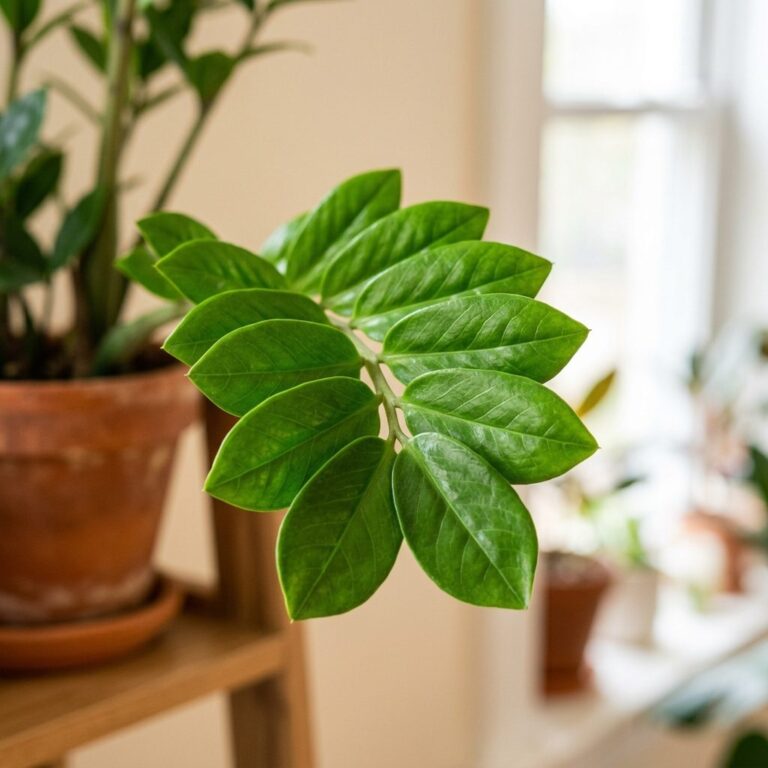
Selecting a healthy ZZ plant at a Canadian nursery or retailer requires inspecting both visible foliage and the hidden rhizome/root system. Begin by examining leaflets for uniform dark green colouration (or appropriate Raven/Zenzi pigmentation) with no yellow, brown, or water-soaked spots. Gently tug on a leaflet; it should resist detachment, indicating firm attachment to the petiole. Inspect petiole bases where they emerge from the soil: they should be firm and upright, not soft or leaning. If possible, gently lift the plant by the base of the petioles to check pot weight; a properly watered ZZ plant in a 15 cm pot should feel moderately heavy (800-1,200 grams), while an excessively light pot suggests severe underwatering, and an unusually heavy pot may indicate waterlogged soil.
Rhizome and Root Inspection Checklist
- Gently press the soil surface near the stem bases; it should feel firm, not mushy or excessively soft.
- Check for visible rhizomes pushing up through the soil surface; this indicates a mature, well-established plant but also suggests repotting may be needed within 6-12 months.
- Inspect drainage holes (if accessible) for visible roots; healthy roots are white to light tan, while brown or black roots suggest rot.
- Smell the soil near the base of the plant; a sour or musty odour indicates anaerobic conditions and possible rhizome rot.
- Avoid plants with more than 1-2 yellowing leaflets, as this often signals overwatering damage that may not be reversible.
In Toronto and Vancouver, where independent houseplant boutiques often source from small-scale Canadian growers, plants tend to be healthier and better-established than big-box specimens, which may have experienced inconsistent care during shipping and retail display. Purchasing in April-June ensures the plant has the entire growing season to acclimate to your home conditions before winter dormancy.
Post-Purchase Acclimation for Canadian Homes
After bringing a ZZ plant home, allow it to acclimate for 7-10 days in its nursery pot before repotting or making major environmental changes. Position the plant in its intended long-term location (100-150 foot-candles, 18-24°C) and water only when the soil dries completely, which may take 2-3 weeks if the nursery watered immediately before sale. Avoid fertilizing for the first 6-8 weeks, as nursery soil typically contains slow-release fertilizer sufficient for 3-4 months. In Calgary (zone 4a), where tap water is moderately hard, flushing the soil with distilled water during the first watering leaches excess salts accumulated during nursery production, reducing the risk of brown leaflet tips from mineral buildup. Monitor the plant weekly for the first month, checking for signs of stress (yellowing, wilting) that may indicate the need for environmental adjustment, but resist the urge to overwater in response to minor cosmetic changes, as the rhizome system provides a substantial buffer against short-term stress.