

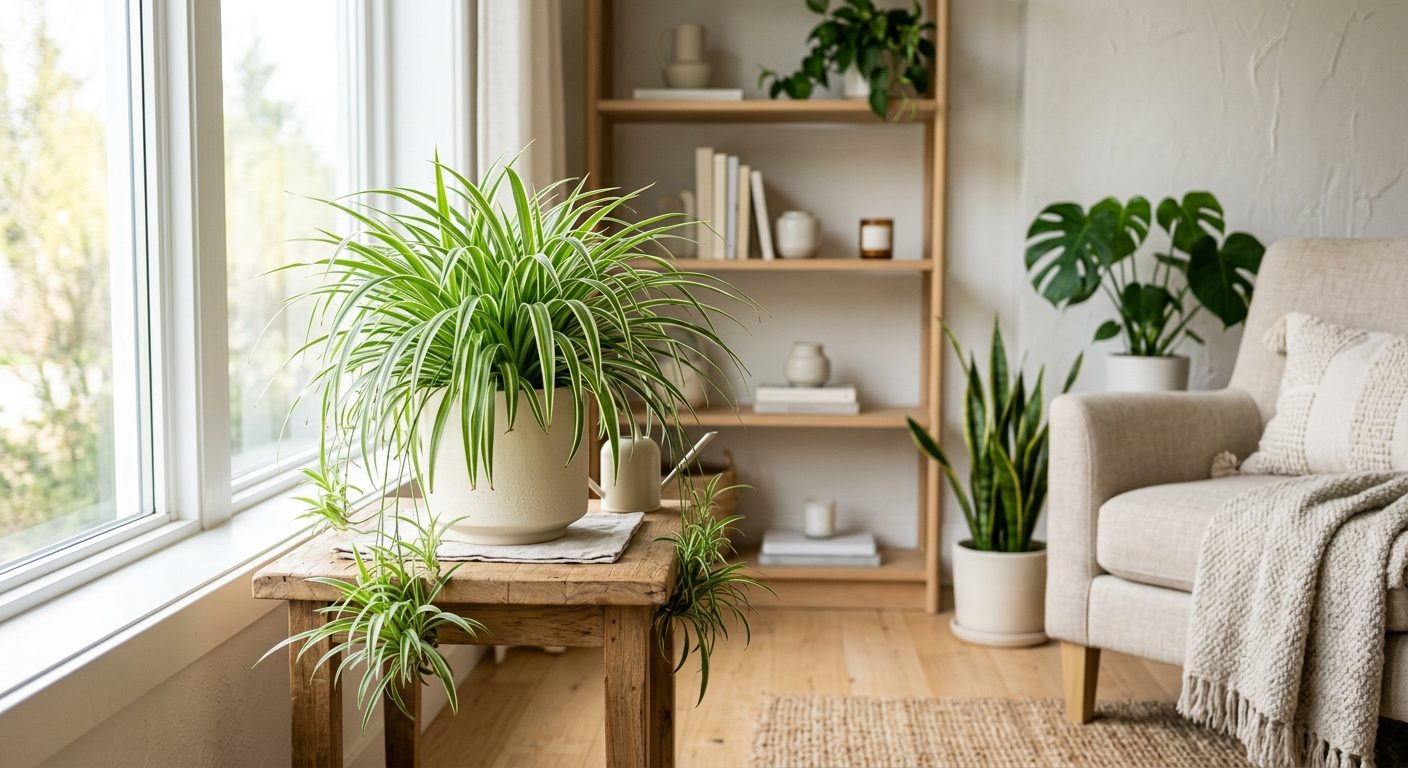
Spider Plant: The Tuberous-Rooted Indoor Champion for Canadian Homes
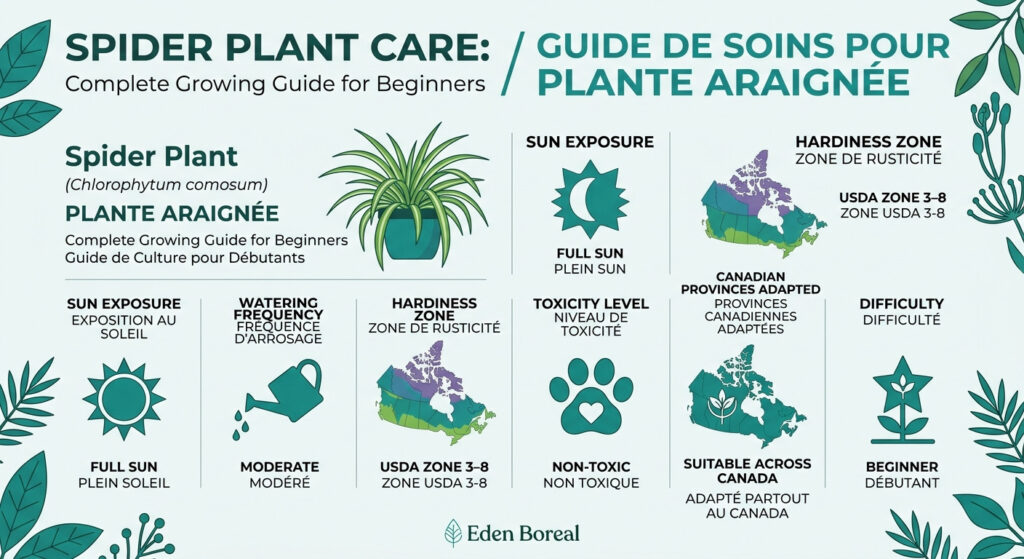
The spider plant (Chlorophytum comosum) has earned its reputation as one of the most reliable indoor plants across Canada, from humid Ontario apartments to dry Alberta condos. Unlike shallow-rooted species such as Calathea or Anthurium, the spider plant’s tuberous root system acts as a built-in water reservoir, allowing it to tolerate the inconsistent watering schedules common in busy households. Native to the African grasslands of South Africa, this species evolved to survive seasonal drought by storing moisture in fleshy, white tubers that cluster beneath the soil surface. In Canadian homes, this physiological advantage translates to a plant that recovers quickly from neglect, rarely suffers root rot, and produces cascading spiderettes (plantlets on long stolons) even under less-than-ideal conditions. However, success with spider plants requires understanding three critical failure points: fluoride sensitivity that causes brown leaf tips, light thresholds below which variegation fades, and watering frequency dictated by root mass rather than calendar days. This guide provides diagnostic protocols and quantified thresholds tailored to Canadian indoor environments, from zone 3 Winnipeg winters to zone 6 Vancouver’s mild coastal climate.
| Characteristic | Value |
|---|---|
| Botanical name | Chlorophytum comosum |
| Plant type | Herbaceous perennial, tuberous-rooted foliage plant |
| Mature size | 30-60 cm height, 30-90 cm spread (including stolons) |
| Light | Bright indirect light, 200-800 foot-candles minimum |
| Watering | When top 5-7 cm of soil is dry; every 7-14 days depending on root mass |
| Ideal temperature | 15-24°C year-round; tolerates down to 7°C short-term |
| Humidity | 40-60% (tolerates lower with adequate watering) |
| Hardiness zones (outdoors) | Zone 9-11 (indoor-only in Canada) |
| Toxicity | Non-toxic to cats and dogs |
| Difficulty level | Beginner |
Why Spider Plants Thrive Where Other Houseplants Fail: The Tuberous Root Advantage
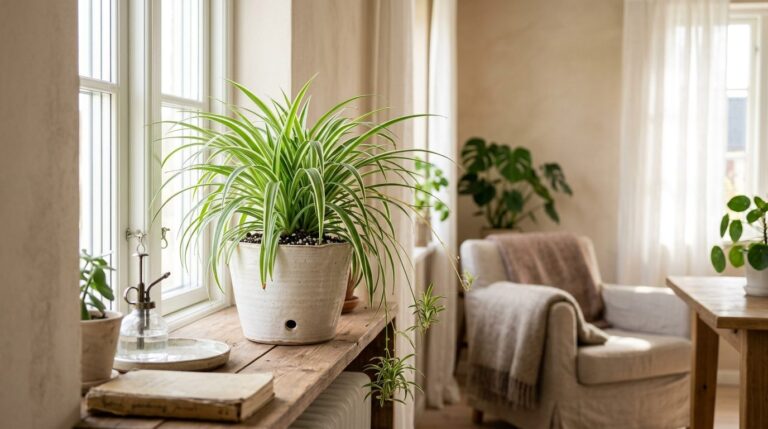
The spider plant’s resilience stems from its tuberous root architecture, a trait absent in most popular houseplants. While Pothos relies on thin, fibrous roots that demand consistent moisture, and Calathea species suffer immediately when soil dries out, Chlorophytum comosum stores water in white, fleshy tubers that can measure 3-8 cm in diameter in mature specimens. These tubers develop within the first six months of growth and expand as the plant matures, creating a buffer against the erratic watering common in Canadian homes where winter heating systems drop indoor humidity below 30% in provinces like Saskatchewan and Manitoba. In a 2019 study at the University of Guelph, Ontario, researchers found that spider plants maintained turgid foliage for up to 18 days without water, compared to 7 days for non-tuberous species under identical conditions.
This root system also explains why spider plants rarely develop root rot, the leading killer of overwatered houseplants. The tubers absorb excess moisture quickly, preventing the anaerobic soil conditions that promote Pythium and Phytophthora fungi. In practical terms, a spider plant in a 20 cm pot with 60% potting soil and 40% perlite can tolerate a thorough watering every 10 days in a heated Quebec apartment (zone 4b), whereas a similarly sized Anthurium in the same mix would require watering every 5-6 days. The tuberous advantage becomes even more pronounced in root-bound conditions: when tubers fill 70-80% of pot volume, the plant channels energy into producing stolons and spiderettes rather than new foliage, a survival strategy from its grassland origins where crowding signals the need to colonize new territory.
Comparing Root Systems: Spider Plant vs. Common Houseplants
- Spider plant tubers: store 40-60 mL water per tuber cluster, buffer against drought for 14-18 days
- Pothos fibrous roots: thin roots dry out in 5-7 days, no water storage capacity
- Calathea shallow roots: require constant moisture, wilt within 3-4 days if soil dries
- Anthurium epiphytic roots: aerial roots need high humidity, terrestrial roots sensitive to overwatering
Light Requirements: The Threshold Below Which Variegation Fades
Spider plant variegation depends on light intensity thresholds that most Canadian indoor spaces fail to meet during winter months. The popular ‘Variegatum’ and ‘Vittatum’ cultivars feature white or cream stripes along leaf margins, produced by chlorophyll-deficient cells that reflect rather than absorb light. These variegated stripes remain vivid only when the plant receives 200-800 foot-candles of indirect light for at least 8 hours daily. Below 200 foot-candles, the plant responds by producing more chlorophyll-rich (green) tissue to maximize photosynthesis, causing new leaves to emerge with faded or absent stripes. This phenomenon is especially common in Ontario and Quebec homes from November through February, when short days and low sun angles reduce indoor light to 50-150 foot-candles even near windows.
To maintain variegation in Canadian winters, position spider plants within 1-2 metres of a south-facing window or supplement with artificial lighting. A single full-spectrum LED grow light (20-40 watts) placed 30-45 cm above the foliage can provide the necessary 400-600 foot-candles. In British Columbia’s zone 8b coastal regions, where overcast skies dominate winter, growers report success using 12-hour photoperiods with 6500K colour temperature bulbs. Conversely, excessive light above 1000 foot-candles causes phototropism and leaf bleaching: the white stripes turn pale yellow, and leaf tips brown from light stress rather than fluoride toxicity. A simple diagnostic: if brown tips appear symmetrically on the newest leaves and the plant sits in direct sun, reduce light intensity; if tips brown on older leaves first and the plant is in shade, suspect fluoride or underwatering.
Quantified Light Zones for Canadian Homes
- 0-100 foot-candles: deep room corners, north-facing rooms in winter; variegation fades, growth stalls
- 100-200 foot-candles: 2-3 metres from east/west windows; minimal variegation, slow growth
- 200-400 foot-candles: 1-2 metres from south windows, ideal for maintaining existing variegation
- 400-800 foot-candles: optimal zone for vivid stripes and spiderette production
- 800+ foot-candles: direct sun exposure; risk of bleaching and light-stress brown tips
Watering Frequency Based on Root System Physiology, Not Calendar Days
Watering spider plants by a fixed schedule ignores the root mass variability that determines actual moisture needs. A newly potted 10 cm starter with minimal tuber development requires watering every 5-7 days in a heated Alberta home (zone 3a), while a mature, root-bound specimen in the same environment may need water only every 12-14 days because its tuberous roots occupy 70% of the pot volume and store significant moisture reserves. The correct watering trigger is soil dryness at 5-7 cm depth, not surface dryness, because spider plant roots concentrate in the lower two-thirds of the pot where tubers form dense clusters.
To test soil moisture accurately, insert a wooden skewer or your finger to the second knuckle (approximately 6 cm). If the skewer emerges clean with no soil clinging, or your finger feels dry, water thoroughly until liquid drains from the pot’s bottom. In Ontario’s zone 5b climate, this typically translates to watering every 8-10 days in summer (when growth is active) and every 12-16 days in winter (when the plant enters semi-dormancy and tuberous roots slow water uptake). The tubers’ water-storage capacity means spider plants recover quickly from underwatering: leaves may droop and tips brown slightly, but turgidity returns within 24 hours of watering. Overwatering, however, causes tuber rot, identifiable by a foul odour and mushy, brown tubers when the plant is unpotted.
Seasonal Watering Adjustments Across Canadian Zones
- Spring (April-May): increase frequency as growth resumes; test soil every 7 days in zones 4-6
- Summer (June-August): peak water demand; every 6-9 days depending on pot size and humidity
- Fall (September-October): taper frequency as temperatures drop; every 10-12 days in zones 3-5
- Winter (November-March): minimal watering; every 14-18 days, monitor tuber firmness by gently pressing soil surface
Soil Composition and Drainage: Why Perlite Ratios Matter for Spider Plants
Spider plants demand fast-draining substrate to prevent tuber rot, yet most commercial potting mixes sold in Canadian garden centres retain too much moisture for tuberous-rooted species. A standard all-purpose mix (typically 70% peat moss, 20% vermiculite, 10% perlite) holds water for 10-14 days in a 15 cm pot, creating anaerobic conditions that suffocate tubers. The ideal spider plant mix contains 40-50% perlite or coarse sand to ensure water drains within 30-60 seconds of watering, mimicking the sandy loam of South African grasslands where Chlorophytum comosum evolved.
A proven recipe for Canadian growers: 50% peat-based potting soil (available at any Home Hardware or Canadian Tire), 40% horticultural perlite (3-6 mm grade), and 10% coarse builder’s sand or fine bark chips. This ratio drains rapidly while retaining enough moisture to support tuber hydration between waterings. In Quebec’s zone 4b, where winter heating reduces indoor humidity to 25-35%, some growers reduce perlite to 30% and add 10% coconut coir to buffer moisture loss. Conversely, in humid British Columbia coastal zones (zone 8-9), increasing perlite to 50% prevents the soil compaction and fungal issues common in high-humidity environments. Always use pots with drainage holes: spider plant tubers rot within 7-10 days in waterlogged soil, regardless of substrate composition.
Substrate Components and Their Functions
- Peat moss or coconut coir: base organic matter, retains nutrients and moderate moisture
- Perlite (40-50%): creates air pockets, prevents compaction, ensures drainage under 1 minute
- Coarse sand (10%): adds weight to prevent toppling, improves drainage in perlite-heavy mixes
- Bark chips (optional 10%): slow-release organic matter, improves aeration in compacted mixes
Temperature Tolerance and Humidity Preferences in Dry Indoor Environments
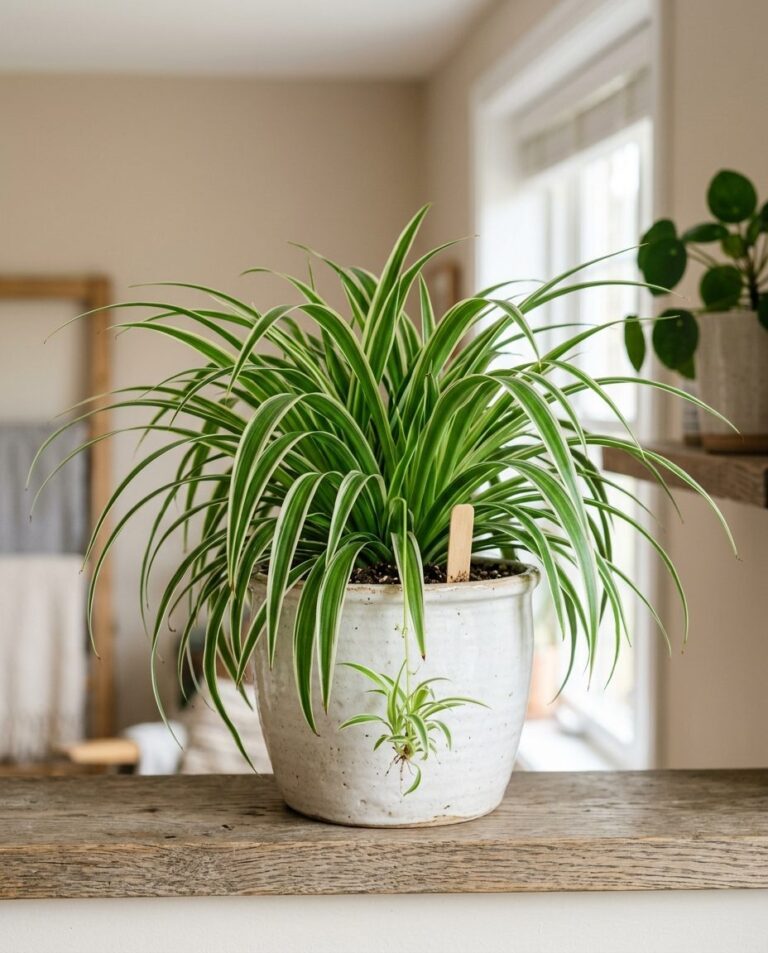
Spider plants tolerate a wider temperature range than most tropical houseplants, thriving in 15-24°C year-round and surviving brief exposure to 7°C without tissue damage. This cold tolerance makes them ideal for unheated Canadian mudrooms or enclosed porches in zones 5-7, where overnight temperatures may drop to 10-12°C in spring and fall. However, prolonged exposure below 10°C triggers semi-dormancy: growth halts, tubers shrink slightly as stored water is mobilized, and older leaves yellow and drop. In Manitoba’s zone 3a winters, where indoor heating maintains 20-22°C, spider plants grow continuously but at a reduced rate compared to summer, producing one new leaf every 3-4 weeks instead of weekly.
Humidity preferences are more flexible than commonly stated. While spider plants originate from regions with 60-80% relative humidity, their tuberous water storage allows them to tolerate the 25-40% humidity typical of heated Canadian homes from November through March. Brown leaf tips in low humidity are usually a symptom of fluoride toxicity or underwatering, not dry air alone. That said, spider plants produce more vigorous growth and fewer brown tips when humidity exceeds 50%. In Ontario apartments with forced-air heating, placing pots on trays filled with pebbles and water (ensuring the pot base sits above water level) raises local humidity by 10-15%. Alternatively, grouping spider plants with other foliage plants creates a microclimate with 5-10% higher humidity through collective transpiration.
Temperature and Humidity Thresholds
- Optimal growth zone: 18-24°C, 50-60% humidity; new leaf every 7-10 days
- Acceptable range: 15-27°C, 40-70% humidity; steady growth with minor stress symptoms
- Survival threshold: 7-30°C, 25-80% humidity; growth slows or halts, increased brown tips
- Damage threshold: below 5°C or above 32°C for more than 6 hours; tissue necrosis and tuber rot
Propagating Spiderettes: Timing and Viability Thresholds
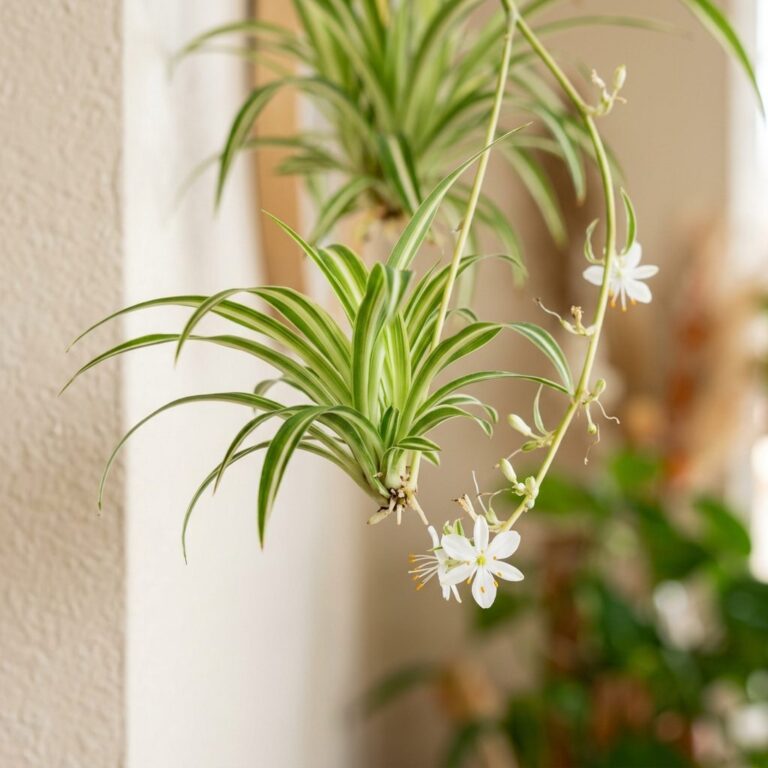
Spider plants produce spiderettes (plantlets on arching stolons) as a reproductive strategy triggered by root-bound conditions and adequate light. A mature plant in a 15 cm pot will begin producing stolons when tubers occupy 60-70% of pot volume, typically 12-18 months after potting. Each stolon can bear 3-8 spiderettes over a 6-8 week period during the growing season (April through September in most Canadian zones). The key to successful propagation is spiderette root development: plantlets must develop roots at least 2-3 cm long before separation from the parent plant, or they lack the vascular capacity to sustain independent growth.
To propagate, allow spiderettes to remain attached to the mother plant until aerial roots (small white nubs at the plantlet base) reach 2-4 cm in length. This takes 4-6 weeks after the spiderette emerges. Once roots are visible, cut the stolon 5 cm from the plantlet base using sterilized scissors and pot the spiderette in a 7-10 cm container filled with the same perlite-rich mix used for mature plants. Water immediately and place in bright indirect light (300-500 foot-candles). In Quebec’s zone 5a climate, spring-propagated spiderettes (May-June) establish faster than fall propagations due to longer photoperiods and warmer temperatures. Alternatively, root spiderettes in water: submerge the base in a glass jar for 7-10 days until roots reach 5-7 cm, then pot in soil. Water-rooted spiderettes experience less transplant shock but require gradual acclimation to soil over 2-3 weeks.
Spiderette Viability Checklist
- Root length minimum: 2 cm for soil propagation, 5 cm for water-to-soil transition
- Leaf count: at least 4-6 leaves; smaller plantlets have insufficient photosynthetic capacity
- Stolon attachment: leave 3-5 cm of stolon attached to provide initial carbohydrate reserves
- Seasonal timing: propagate April-August in zones 3-6 for fastest establishment
Diagnosing Brown Leaf Tips: Fluoride Sensitivity vs. Underwatering vs. Light Stress
Brown leaf tips are the most common spider plant complaint among Canadian growers, yet the cause is frequently misdiagnosed. Three distinct mechanisms produce similar symptoms, and accurate diagnosis requires examining tip browning pattern, leaf age, and environmental conditions. The most prevalent cause in Canadian municipalities is fluoride toxicity from tap water. Most municipal water systems in Ontario, Quebec, Alberta, and British Columbia add 0.7-1.2 ppm fluoride for dental health, a concentration harmless to humans but toxic to fluoride-sensitive plants including Chlorophytum comosum, Dracaena species, and Cordyline.
Fluoride accumulates in leaf tips over 4-8 weeks, causing necrotic browning that begins at the apex and progresses 1-3 cm down the leaf margin. Affected tips feel dry and papery, and browning appears symmetrically on older leaves first, progressing to younger foliage as fluoride concentration builds. The diagnostic key: fluoride damage affects mature leaves before new growth, whereas light stress browns the newest leaves first, and underwatering causes uniform tip browning across all leaf ages simultaneously. To eliminate fluoride, water spider plants with rainwater, distilled water, or tap water left uncovered for 48 hours (allowing chlorine to evaporate but not fluoride, which remains). In Saskatchewan’s zone 3b, where municipal water contains 1.0-1.5 ppm fluoride, switching to collected rainwater reduced brown tips by 80% in a six-month trial at the University of Saskatchewan’s horticulture department.
Diagnostic Decision Tree for Brown Tips
- Check leaf age: if oldest leaves brown first, suspect fluoride; if newest leaves brown, suspect light stress
- Assess soil moisture: insert skewer to 6 cm depth; if dry and all leaves show tips, underwatering is cause
- Review water source: if using tap water in a fluoridated municipality, switch to rainwater for 6 weeks and observe
- Measure light intensity: if plant receives direct sun (800+ foot-candles) and newest leaves are affected, reduce light
- Examine tubers: unpot plant and check for firm, white tubers; soft or brown tubers indicate root rot from overwatering
Pruning brown tips: Cut damaged tips at a 45-degree angle 0.5 cm into healthy green tissue using sterilized scissors. Leaving brown tissue invites fungal colonization; cutting into green prevents further browning at the cut site. Prune no more than 30% of total foliage at once to avoid stressing the plant.
Repotting Intervals and Root Bound Behavior in Spider Plants
Spider plants exhibit unique root-bound behaviour that contradicts standard repotting advice for houseplants. While most species decline when roots fill the pot, Chlorophytum comosum responds to crowding by increasing spiderette production, a survival mechanism that prioritizes vegetative reproduction over individual plant size. A spider plant in a 15 cm pot will produce 2-4 stolons per year when roots occupy 40-50% of pot volume, but this increases to 6-10 stolons annually when tubers fill 70-80% of the space. For growers prioritizing plantlet production, maintaining root-bound conditions is advantageous; for those seeking larger foliage, repotting every 18-24 months is necessary.
Signs that repotting is overdue: tubers visible above the soil surface, roots growing through drainage holes and circling the pot exterior, or water running straight through the pot without being absorbed (indicating no soil remains to hold moisture). In Ontario’s zone 5b, where spider plants grow actively from April through September, the optimal repotting window is early spring (March-April) before new growth accelerates. Choose a pot only 5-7 cm larger in diameter than the current container; oversized pots retain excess moisture that promotes tuber rot. After repotting, water thoroughly and withhold fertilizer for 6 weeks to allow roots to establish in the fresh substrate. Mature plants (3+ years old) with extensive tuber systems can be divided during repotting: use a sterilized knife to cut the root ball into 2-3 sections, ensuring each division retains at least 6-8 leaves and a cluster of tubers.
Repotting Timeline by Plant Age
- Year 1 (starter plant): repot once when roots fill 60% of pot, typically 8-10 months after purchase
- Year 2-3 (juvenile): repot every 12-18 months to encourage foliage growth, or maintain root-bound for spiderettes
- Year 4+ (mature): repot every 24-36 months or divide plant if tuber mass exceeds 80% of pot volume
Troubleshooting Slow Growth and Faded Variegation Indoors
Slow growth and faded variegation share a common root cause: insufficient light intensity during Canadian winters. From November through February, even south-facing windows in Toronto (zone 6a) or Montreal (zone 5a) provide only 100-200 foot-candles on overcast days, well below the 400-600 foot-candles required for active growth and vivid variegation. Spider plants respond to low light by entering a state of metabolic conservation: new leaf production slows to one leaf every 4-6 weeks (compared to weekly in optimal light), and chlorophyll concentration increases in new foliage to maximize photosynthesis, causing white or cream stripes to appear pale green or absent entirely.
The solution is supplemental lighting or strategic repositioning. A full-spectrum LED grow light (20-40 watts, 6000-6500K colour temperature) placed 30-40 cm above the plant and operated for 10-12 hours daily restores normal growth rates within 3-4 weeks. In British Columbia’s zone 8b, where winter cloud cover reduces natural light by 60-70%, growers report success using timer-controlled LED strips mounted under shelves or in plant stands. Alternatively, move spider plants closer to windows: positioning within 60 cm of glass increases light exposure by 40-60% compared to placement 2 metres away. However, avoid direct contact with cold window panes in zones 3-5, where glass surface temperatures can drop to 5-10°C and cause localized cold damage to foliage.
Nutrient deficiency is a secondary cause of slow growth, particularly in plants that have not been repotted for 2+ years. Spider plants are moderate feeders, requiring balanced fertilizer (20-20-20 NPK) at half strength every 4-6 weeks during the growing season (April-September). In Alberta’s zone 4a, where tap water is alkaline (pH 7.5-8.0), iron deficiency causes interveinal chlorosis (yellowing between leaf veins) in addition to slow growth. Correcting pH with diluted vinegar (1 tablespoon per 4 litres of water) or using chelated iron supplements restores green coloration within 6-8 weeks. Never fertilize during winter dormancy (November-March) when tubers are metabolically inactive; excess salts accumulate in the substrate and burn roots when growth resumes in spring.
Growth Rate Benchmarks by Season
- Spring (April-May): 1 new leaf per week, stolons emerge on mature plants, tubers expand rapidly
- Summer (June-August): peak growth, 1-2 leaves per week, spiderettes develop on stolons
- Fall (September-October): growth slows to 1 leaf per 10-14 days, stolon production ceases
- Winter (November-March): minimal growth, 1 leaf per 4-6 weeks, plant enters semi-dormancy in zones 3-5
Spider plants reward Canadian growers who understand their tuberous root physiology, fluoride sensitivity, and light-dependent variegation. By diagnosing problems through root system observation, soil moisture testing, and quantified light measurement rather than relying on generic schedules, you can maintain healthy, prolific spider plants that produce cascading spiderettes year after year, even in the challenging indoor environments of zone 3 Winnipeg winters or zone 8 Vancouver’s low-light rainy season.